Dublin
Come near, come near, come near – Ah, leave me still
A little space for the rose-breath to fill!
Lest I no more hear common things that crave;
The weak worm hiding down in its small cave,
The field-mouse running by me in the grass,
And heavy mortal hopes that toil and pass;
But seek alone to hear the strange things said
By God to the bright hearts of those long dead,
And learn to chaunt a tongue men do not know.
Come near; I would, before my time to go,
Sing of old Eire and the ancient ways:
Red Rose, proud Rose, sad Rose of all my days.
– from ‘To the Rose upon the Rood of Time’ (Poems, 1895)
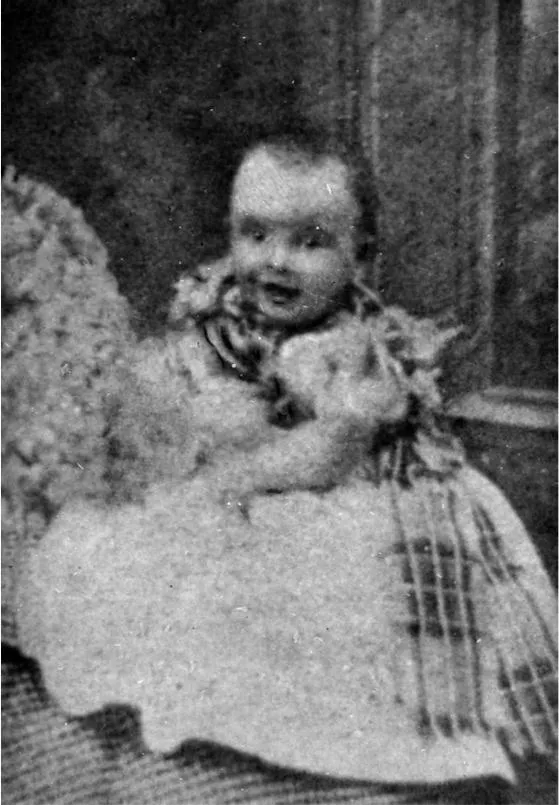
The poet William Butler Yeats was born on June 13th, 1865, at a two-storey semi-detached brick house called Georgeville at 5 Sandymount Avenue, Dublin. This was the first home that the poet’s parents, John Butler Yeats (JBY) and Susan Pollexfen, shared after they were married in St. John’s Church of Ireland church in Sligo, in 1863. JBY, twenty-four years old at that time, was still pursuing a career as a barrister that seemed to promise all the respectability and, more importantly, the financial and social security that Susan’s successful Sligo business family desired and expected for their daughter. In January of 1866 he was indeed called to the Irish Bar. However, by the spring of 1867, with a second child, Susan Mary (Lily), and much to the consternation of the Pollexfens, John Butler Yeats had given up the law and decided instead to become an artist. With this decision began JBY’s life of impecuniousness that was to exasperate those who knew and admired him, no one so much as his wife.
The Yeats family already had a connection to Sandymount through the poet’s grandfather, also named William Butler Yeats, whose brother-in-law Robert Corbet was then a successful stockbroker and a representative for the Royal Exchange Assurance Company. The Corbets lived in Sandymount Castle, an eighteenth-century turreted mansion to which battlements, a clock-tower and other neo-Gothic modifications had been added. Now absorbed into the south Dublin suburb and overlooking the village green, in Yeats’s childhood it was still a walled, secluded estate with maintained gardens where fruit and vegetables were grown for the house. JBY, in his memoirs, describes the building and its occupants:
William Butler Yeats, the poet’s grandfather, retired to a pretty house on the estate that was separated from the castle grounds by a wicket gate. This house later became a Presbyterian college.
Robert Corbet’s own story ended tragically when, in 1870 and mired in bankruptcy, he threw himself into the Irish Sea from the Holyhead mailboat. On his death the house was sold, and the eagles were donated to the Zoological Gardens.
In 1867, when W.B. Yeats was two, he, his mother and sister Lily followed JBY to London to support him in his efforts to become a successful artist. Willie’s childhood was spent between London and Sligo, where they would stay with Susan’s relations, the Pollexfens and Middletons. Then in the summer of 1881, John Butler Yeats’s precarious financial circumstances forced the family to return to Dublin. He believed he could get work as an artist and found a studio to rent at 44 York Street, just off St. Stephen’s Green. The family were able to stay at a cottage in Howth, then a small fishing village at the northern end of Dublin Bay. (Younger brother Jack stayed on in Sligo.) Balscadden House is a long, high-walled cottage on Balscadden Road with views across Howth Harbour towards Ireland’s Eye, a small island just off the coast. The sixteen-year-old described the family’s new lodgings:
In the spring of 1882, no doubt escaping the ravages of the sea at Balscadden House, which had been intended as a summer holiday home for its owners, the Yeatses moved down to Island View on the Harbour Road. Susan felt at home among the people of Howth, who reminded her of those of her youth in Sligo, as Yeats reveals in Reveries:
In his essay ‘Village Ghosts’ (The Celtic Twilight, 1893), Yeats investigates the streets and ghostly lore of Howth: