- 152 pages
- English
- PDF
- Available on iOS & Android
About this book
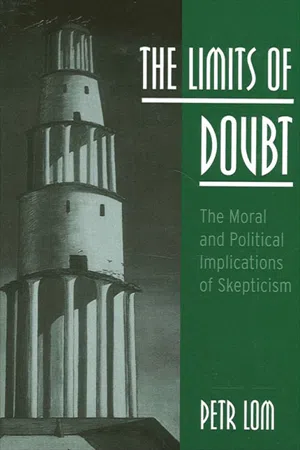
The Limits of Doubt studies the skepticism of Nietzsche, Sextus Empiricus, Hobbes, Diderot, and Montaigne in order to illustrate how different forms of skepticism can produce remarkably different implications. These include toleration; chastening of character; the prohibition of cruelty; indifference; corrosiveness of liberal principles; and freeing of the will from moral restraint. Demonstrating how skepticism is an underdetermined and unstable category, accompanied by varying unquestioned intentions and beliefs, this book shows how these limits of doubt shape its various possible implications. A unique examination of skepticism from a moral and political perspective, The Limits of Doubt will interest all those concerned with the possibilities for life in an age of doubt.
Frequently asked questions
- Essential is ideal for learners and professionals who enjoy exploring a wide range of subjects. Access the Essential Library with 800,000+ trusted titles and best-sellers across business, personal growth, and the humanities. Includes unlimited reading time and Standard Read Aloud voice.
- Complete: Perfect for advanced learners and researchers needing full, unrestricted access. Unlock 1.4M+ books across hundreds of subjects, including academic and specialized titles. The Complete Plan also includes advanced features like Premium Read Aloud and Research Assistant.
Please note we cannot support devices running on iOS 13 and Android 7 or earlier. Learn more about using the app.
Information
Table of contents
- The Limits of Doubt
- Contents
- Acknowledgments
- List of Abbreviations
- Introduction
- 1. Skepticism and the Politics of Domination
- 2. Ancient Skepticism: Happiness Above Truth
- 3. Hobbes and the Peace of Dogmatic Skepticism
- 4. Denis Diderot and Doubt: Constructive Skepticism
- 5. Skepticism, Cruelty, Custom, and Toleration: Michel de Montaigne
- Notes
- Bibliography
- Index of Proper Names