Hundreds of Hollywood-on-Hollywood movies can be found throughout the history of American cinema, from the days of silents to the present. They include films from genres as far ranging as musical, film noir, melodrama, comedy, and action-adventure. Such movies seduce us with the promise of revealing the reality behind the camera. But, as part of the very industry they supposedly critique, they cannot take us behind the scenes in any true sense.
Through close analysis of fifteen critically acclaimed films, Christopher Ames reveals how the idea of Hollywood is constructed and constructs itself. Films discussed: What Price Hollywood? (1952), A Star Is Born (1937), Stand-In (1937), Boy Meets Girl (1938), Sullivan's Travels (1941), In a Lonely Place (1950), Sunset Boulevard (1950), The Star (1950), Singin' in the Rain (1952), The Bad and the Beautiful (1952), Pennies from Heaven (1981), The Purple Rose of Cairo (1985), The Player (1992), Last Action Hero (1993).
- 264 pages
- English
- ePUB (mobile friendly)
- Available on iOS & Android
eBook - ePub
About this book
Information
Publisher
The University Press of KentuckyYear
2021Print ISBN
9780813109381
9780813120188
eBook ISBN
9780813187389
Subtopic
Film & Video1 Cautionary Tales
What Price Hollywood? (RKO 1932). Producer: David O. Selznick. Director: George Cukor. Screenwriters: Jane Murfin, Ben Markson, Rowland Brown, Gene Fowler, based on a story by Adela Rogers St. Johns.
A Star Is Born (United Artists 1937). Producer: David O. Selznick. Director: William Wellman. Screenwriters: Dorothy Parker, Alan Campbell, Robert Carson, based on a story by Robert Carson and William Wellman.
The Star (20th Century-Fox 1952). Producer: Bert Friedlob. Director: Stuart Heisler. Screenwriters: Dale Eunson and Katherine Albert.
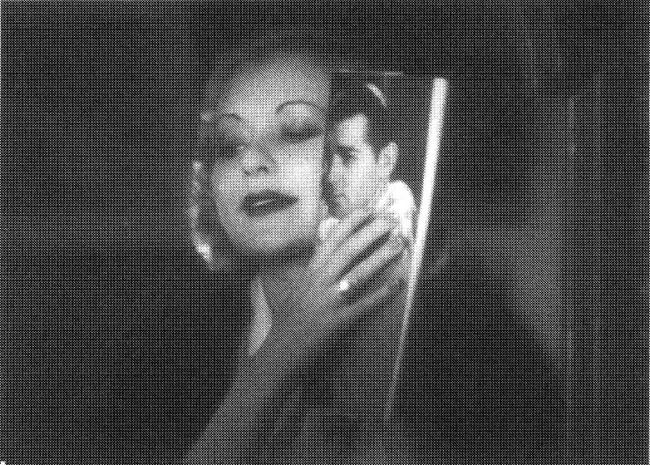
What Price Hollywood? illustrates the power of fan magazines in advertising the Hollywood Dream. Young hopeful, Mary Evans (Constance Bennett), places herself in a magazine photograph with Clark Gable, demonstrating how the fan imaginatively identifies with the pictured star.
When David O. Selznick defended A Star Is Born to the Hays Office during production, he wrote that the film would function as “a warning to girls of how strong the chances are against them.”1 Indeed, the movie includes at least one such explicit cautionary scene at Central Casting. As Esther Blodgett observes a host of switchboard operators telling hopefuls that no extra work is available, the receptionist warns her that her chances are “one in a hundred thousand.” But, of course, A Star Is Born is not a disillusioning movie in this sense. Esther responds tentatively, “But—maybe—I’m that one,” and A Star Is Born proves her right. This little scene—and Selznick’s moralistic synopsis of the story’s meaning—epitomizes the mixed message that is inherently a part of Hollywood exposé films. Cautionary tales about stardom end up glamorizing the phenomenon they are cautioning viewers about.
The simplest cautionary tale in Hollywood fiction follows the dreamer who comes to Hollywood in search of stardom and finds only poverty and exploitation. Examples include the silent films The Extra Girl (1923, directed by Mack Sennett), Stranded (1927, written by Anita Loos), and Hollywood (1923, directed by James Cruze and based on a story by Frank Condon). The cautionary story also frequently organizes Hollywood novels of disillusionment, such as Horace McCoy’s They Shoot Horses, Don’t They? (1935) and I Should Have Stayed Home (1938). But this cautionary tale needs to be understood as a reaction to the more familiar rags-to-riches tale of achieving fabulous success in Hollywood. Particularly popular in the twenties and thirties, these films follow the formula made famous in Harry Leon Wilson’s popular novel Merton of the Movies (1922) and the play and films based directly on it.2 Patrick Anderson in his In Its Own Image catalogs a host of films—silents and talkies—that evoke “this first and most fundamental myth about Hollywood ... a belief that opportunity was unlimited (and hence available to everyone)” (74). These success stories are generally given a comic twist and become stories of “accidental success” where a screen hopeful’s dramatic acting is unintentionally but successfully comical, or where a resemblance to a star helps an unknown’s career. Against the background of these formula films, movies in which the screen hopeful does not succeed stand out. The film Hollywood (of which no copies survive) is a particularly interesting case of a movie’s explicitly serving a cautionary function, since James Cruze made it at the suggestion of Will Hays. The original story by Frank Condon, published in Photoplay, was a deliberate satire of the success myth, in which the heroine, Angela Whitaker (played in the movie by the aptly named Hope Drown), fails to find work in pictures while the members of her horrified family who come out to rescue her blunder into screen roles by accident.
But, for obvious reasons, films about the wholly unsuccessful quest for stardom have a limited appeal. As a result, the most common cautionary tale in Hollywood works a distinct variation on the straightforward tale of disillusionment. It follows the dreamer who achieves stardom and then encounters tragedy and unhappiness. We see this complexly mixed message in three excellent films about stardom: George Cukor’s What Price Hollywood?; the William Wellman film based on it, A Star Is Born; and Stuart Heisler’s The Star. All three of these films conceive of stardom within the paradigm of rise and fall, the ancient pattern of Fortune’s wheel given a contemporary Hollywood spin. What Price Hollywood? and A Star Is Born have an hourglass structure: the rise of the female star parallels the decline of the male star, while the movie chronicles their fruitful but doomed intersection. The trajectory of The Star, on the other hand, is remorselessly downward (except for a glimmer of hope at the end): it begins with an auction of the possessions of one-time star Margaret Elliot. Her rise to stardom and success precede the film, which shows us only her decline. Thus all three films ostensibly serve the cautionary function. They warn the viewer that the privileges of fame and riches do not guarantee happiness and that the height of the celebrity’s rise predicts the pain of the eventual fall.
The theme of happiness sacrificed to ambition was popular in fan magazines, although the fan magazines extolled the Hollywood dream more powerfully than they cautioned against it. “Fame is the consolation prize which is given when everything else has been sacrificed,” writes one fan-magazine reporter in an article entitled “The Price They Pay for Fame” (Busby 94).3 Richard Maltby and Ian Craven note how such articles purporting to show “the price they pay for fame” “obscure the profit motive that drives [movies] by substituting a discourse on loss” (94). But the catalog of heroic risks taken by devoted actors only heightens their romantic appeal, and though fan magazines frequently published warnings to young girls and cautionary tales about the perils and disappointments of Hollywood, they played an unquestionably major role in creating actors’ fame and representing the luxury of their lives to the public. Gaylyn Studlar argues that, “by providing glimpses of the stars’ most personal thoughts and relying on the reader’s wealth of pre-established knowledge,” the fan magazine made readers complicit with the stars even while demystifying the star system (13).4 Films about movie stars tend to create the same sort of complicity by offering an insider’s view of stardom. In particular, the Cukor and Wellman movies inevitably glamorize the Hollywood they warn against and invite the viewer to identify with the lucky star.
Stardom is Hollywood’s most powerful and most mysterious phenomenon. Everyone knows the story of how early film producers failed to predict audiences’ interest in the actors and actresses who portrayed characters in photoplays.5 But when that interest emerged in about 1909, studios were quick to capitalize on it, as the formation of the Famous Players film company by Adolph Zukor signifies. In the glory days of Hollywood, the nature of stardom shaped how films were written, produced, and marketed, and this remains true in the post-studio-system era. Interest in stars as individuals propelled the fan magazines and newspaper gossip columns that in turn fed audience interest in the movies themselves. What Price Hollywood?, A Star Is Born, and The Star reveal Hollywood exploring its greatest fictional creation. They ask: What makes someone a star? What is the experience of being a star like? What is the relationship between celebrity and audience? What causes stars to fade into obscurity? In treating those questions, these films display honesty and insight, but not at the expense of glamour. If anything, celebrity glamour is enhanced by depictions of the stars as strong individuals wrestling with the extraordinary demands of a larger-than-life existence. These films ask us to sympathize with figures we would ordinarily envy, and in doing so they create a complicated reciprocal desire that ultimately enhances star appeal.
In What Price Hollywood? and A Star Is Born the double message is reflected in the doubling of the protagonists: though both of these films show the decline and suicide of a once successful Hollywood figure, they juxtapose that tragedy with the spectacular rise of an actress to superstardom. A Star Is Born ends explicitly with Vicki Lester returning to film, after mourning the death of her husband. What Price Hollywood? finds Mary Evans renewing her marriage and attempting a comeback after the scandal that results from the death of the director who made her a star. Both films render the rags-to-riches myth but make that myth seem more truthful by placing it in the context of another star’s tragic decline.
The Star critiques the myth evoked in these earlier films; remarkably, it ends with the star’s flight from Hollywood. Here, the two characters of these other films have become one: the actress who has risen to tremendous fame now falls herself into unpopularity, drunkenness, and mental breakdown. No rising star provides a hopeful myth to place alongside the cautionary tale (except for a minor figure, a youthful actress whom the main character envies and despises). Perhaps it is just as useful to see the other films dividing the single story of a rise and fall into two characters (and thus lessening the cautionary elements). In any case, The Star provides an instructive contrast to the related earlier films, What Price Hollywood? and A Star Is Born, perhaps because it is a product of the fifties, a period of unease, reorganization, and financial decline in the film industry.6
What Price Hollywood? (originally titled “The Truth about Hollywood”) follows the fate of a Brown Derby waitress, Mary Evans (Constance Bennett). Mary meets the drunken director Max Carey (Lowell Sherman) at the restaurant. They attend a premiere together and become friends. He gets her a test at the studio, and, after two tries, her work impresses the benevolent producer Julius Saxe (Gregory Ratoff), who gives her a contract and makes her a star. Mary Evans and Max Carey become great friends, though never lovers, and she witnesses his drunken decline. She marries a dapper playboy, Lonny Borden (Neil Hamilton), who exhibits a growing dislike of Max, Mary’s other Hollywood friends, and being married to a celebrity—being “Mr. Evans.” Before long, he leaves Mary. Max eventually hits bottom and has to be bailed out of a drunk tank by Mary. Recovering in her house, he is overcome by despair and shoots himself. His death in her house creates a scandal, and Mary flees Hollywood for seclusion in France. Lonny has a change of heart and goes to France to revitalize his marriage; he brings with him a comeback movie offer from Julius Saxe. Mary accepts Lonny’s return and the film ends with their embrace.
A Star Is Born follows a similar pattern. It traces the trip to Hollywood from North Dakota of young Esther Blodgett (Janet Gaynor) and follows her abortive attempts to get employment as an actress. Her fortunes turn when she meets a drunken actor, Norman Maine (Fredric March), at a party where she is a waitress. He falls for her and gets her a screen test that leads to a contract. Eventually Esther stars opposite Norman and her popularity eclipses his. The success of Esther’s fresh-faced vitality seems linked to the decline of the mature screen star Norman Maine. Under the stage name Vicki Lester, she becomes a sensation, and she marries Norman. Though he experiments with sobriety, he continues to falter in his career. Eventually he retires and tries to be happy as Esther’s husband. After a stint in a sanitarium, a fight with his old agent sets Norman on a drunken spree that ends in jail. After Esther bails him out, he fears that he is standing in the way of her career, and he kills himself by walking into the Pacific Ocean. Following his death, Esther decides to retire, but her grandmother, Lettie (who lent her the money to come to Hollywood years earlier), urges her to continue her career. Esther agrees to stay in Hollywood and attends the premiere of her latest picture, identifying herself at the microphone as “Mrs. Norman Maine.”
What Price Hollywood? begins with a fan magazine. The pages are flipping, and the viewer is looking over the shoulder of the as-yet-unseen Mary Evans. Three times we see a photo in the movie magazine fade to a glimpse of Mary copying it: trying on first stockings, then a dress, then “kissable lipstick.” Then we see Mary in a medium shot looking from the movie magazine in one hand to a hand mirror in the other. Content with her successful imitation, she folds over a picture of an actress kissing Clark Gable, places her own face against his, and speaks in a Garbo imitation. Cukor then disrupts her fantasy in three ways: she switches from the Swedish accent to her normal tough-girl voice (“Time to scram”); she shuts off the record player (so that what had seemed extra-diegetic soundtrack is revealed as merely her Victrola); and she puts up her Murphy bed and hurries to her job as a waitress at the Brown Derby. It is a wonderfully revealing scene. The opening alternation from the perspective of Mary Evans to shots of her demonstrates how these movies invite us to identify with the star at the same time that they objectify and ostensibly demystify the star. They invite us to participate in the very action they depict: identifying with a movie star. When the camera places us over Mary’s shoulder reading her magazine, it engages us in the same sort of action as Mary’s holding Gable’s picture next to her face.
That Mary Evans is copying styles from fan magazines is hardly a surprise: Vogue magazine told readers in 1937 that “the way you make up your lips, apply your rouge ... ten to one it came from Hollywood” (Webb 187). The emphasis on photographic and mirror images recurs frequently in Hollywood films about movie stars. The photo magazine and mirror call attention to the importance of the visual image in screen celebrity, a significant difference from stage acting. The mirror and magazine also suggest the dynamics of imitative desire. To make the image in the mirror match the image on the screen—that is the key to the magical transformation that celebrity brings about. And, of course, acting is imitation itself. When Mary gets a job serving hors d’oeuvres at a big Hollywood party, she tries to impress the directors and producers by imitating Greta Garbo, Mae West, and Katharine Hepburn. But imitation is not just an onscreen technique: the movie magazine, showing the stars off camera, encourages fans to imitate celebrities’ styles in order to be more like the stars’ supposed offscreen selves. Makeup, costume, and fake accents point out the extent to which stardom involves a literal remaking, a physical transformation of ordinary person into screen image.
Of course Mary Evans is not a star yet, but Constance Bennett is— a familiar double focus in Hollywood films. The self-referential quality of Hollywood films about Hollywood invites speculation about how the actors relate to the characters they portray. Often there are interesting parallels: Lowell Sherman was a director as well as an actor, for example, and Bette Davis of The Star was an aging actress dissatisfied with the roles she was being offered (as we will see, the most famous and most discussed parallel of this sort occurred in the casting of Gloria Swanson in Sunset Boulevard as the silent-picture actress Norma Desmond). At other times, a contrast between actor and role is apparent: Fredric March, for example, was at the height of his career (and a far bigger star than Janet Gaynor) when A Star Is Born was made, and in the 1954 remake, Judy Garland, who portrays Esther, was in a career decline more similar to Norman Maine’s. That we see the figure on screen both as a character and as an actor/celebrity generates ambiguities that the movies about the movies exploit.
Star movies reveal the multiple fictions of which stardom is compounded: the ordinary person—whether Mary Evans or Esther Blodgett—imitates celebrity photos, which are posed “candid” shots representing the fictional personality invented by the studio for the actor or actress whose job on screen is the impersonation of other fictional characters. Richard Dyer in Stars notes how the characters portrayed by actors were often perceived as “revealing the personality of the star, [but] that personality was itself a construction known and expressed only through films, stories, publicity, etc.” (22-23). In these rags-to-riches star stories, the humble aspiring actress is portrayed by a glamorous and already famous star—so her success seems strangely assured.7 Such multiple fictions become commonplace in films about Hollywood.
A Star Is Born begins far from Los Angeles geographically, but not far from the reach of the movies. Esther Blodgett returns to her Dakota farmhouse from the local movie theater, a fan magazine clutched in her hand. Her mother mocks her love for Hollywood and recounts the sort of imitative behavior that Mary Evans exhibits in What Price Hollywood? The mother complains about “the house all cluttered up with movie magazines” and asserts with horror that “the other day I caught [Esther] talking to the horse in a Swedish accent” and “making faces in the mirror and talking to herself.” Ring Lardner and Budd Schulberg, working as backup (and ultimately uncredited) writers on the script, wanted to cut these pre-Hollywood scenes and essentially begin the story in Los Angeles, the same way What Price Hollywood? begins. But these scenes in the Dakota wilds not only establish Esther’s naïveté and the long reach of Hollywood, but also introduce the resonant metaphor of moviemakers as pioneers.
Grandmother Lettie, played by May Robson, makes the comparison explicit. She urges Esther to ignore the warnings of her mother because “everyone in this world who’s ever dreamed about better things has been laughed at.” But she asserts that “there’s a difference between dreaming and doing” and adduces for support her own experience crossing t...
Table of contents
- Cover
- Half title
- Title
- Copyright
- Contents
- Acknowledgments
- Introduction: Hollywood Stories
- 1. Cautionary Tales
- 2. Singin’ on the Screen
- 3. Let a Smile Be Your Umbrella
- 4. Screen Passages
- 5. No Business Like
- 6. Picturing Writers
- 7. Offing the Writer 193
- Epilogue: California Dreams
- Appendix: Film and Videotape Availability
- Notes
- Bibliography
- Index
Trusted by 375,005 students
Access to over 1.5 million titles for a fair monthly price.
Study more efficiently using our study tools.
Frequently asked questions
Yes, you can cancel anytime from the Subscription tab in your account settings on the Perlego website. Your subscription will stay active until the end of your current billing period. Learn how to cancel your subscription
No, books cannot be downloaded as external files, such as PDFs, for use outside of Perlego. However, you can download books within the Perlego app for offline reading on mobile or tablet. Learn how to download books offline
Perlego offers two plans: Essential and Complete
- Essential is ideal for learners and professionals who enjoy exploring a wide range of subjects. Access the Essential Library with 800,000+ trusted titles and best-sellers across business, personal growth, and the humanities. Includes unlimited reading time and Standard Read Aloud voice.
- Complete: Perfect for advanced learners and researchers needing full, unrestricted access. Unlock 1.5M+ books across hundreds of subjects, including academic and specialized titles. The Complete Plan also includes advanced features like Premium Read Aloud and Research Assistant.
We are an online textbook subscription service, where you can get access to an entire online library for less than the price of a single book per month. With over 1.5 million books across 990+ topics, we’ve got you covered! Learn about our mission
Look out for the read-aloud symbol on your next book to see if you can listen to it. The read-aloud tool reads text aloud for you, highlighting the text as it is being read. You can pause it, speed it up and slow it down. Learn more about Read Aloud
Yes! You can use the Perlego app on both iOS and Android devices to read anytime, anywhere — even offline. Perfect for commutes or when you’re on the go.
Please note we cannot support devices running on iOS 13 and Android 7 or earlier. Learn more about using the app
Please note we cannot support devices running on iOS 13 and Android 7 or earlier. Learn more about using the app
Yes, you can access Movies About the Movies by Christopher Ames in PDF and/or ePUB format, as well as other popular books in Media & Performing Arts & Film & Video. We have over 1.5 million books available in our catalogue for you to explore.