- 242 pages
- English
- ePUB (mobile friendly)
- Available on iOS & Android
eBook - ePub
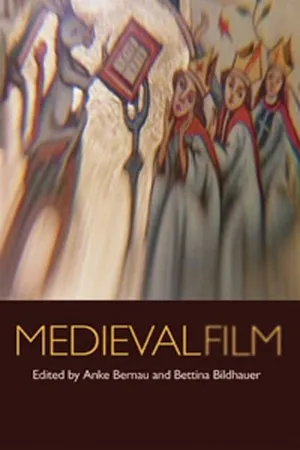
Medieval film
About this book
Medieval film explores theoretical questions about the ideological, artistic, emotional and financial investments inhering in cinematic renditions of the medieval period. What does it mean to create and watch a 'medieval film'? What is a medieval film and why are they successful? This is the first work that attempts to answer these questions, drawing, for instance, on film theory, postcolonial theory, cultural studies and the growing body of work on medievalism. Contributors investigate British, German, Italian, Australian, French, Swedish and American film, exploring topics such translation, temporality, film noir, framing and period film - and find the medieval lurking in inexpected corners. In addition it provides in-depth studies of individual films from different countries including The Birth of a Nation to Nosferatu, and Robin Hood: Prince of Thieves. Medieval Film will be of interest to medievalists working in disciplines including literature, history, to scholars working on film and in cultural studies. It will also be of interest to undergraduates, postgraduates and to an informed enthusiast in film or/and medieval culture.
Information
1
Cinematic authenticity-effects and medieval art: a paradox
Sarah Salih
Authenticity, agreed to be an impossible goal, still haunts discussion of films about the past. As Richard Burt argues, the critical consensus has decisively rejected the ‘fidelity model’.1 In the wake of the linguistic turn it has become apparent that historical films are not academic histories, and that academic histories are not themselves the past, but representations of it governed by certain discursive conditions. Historical films are, likewise, constructed according to their own generic requirements. Examining the points of contact and divergence between these two modes of representing the past can be most informative, but their purposes and criteria for success are quite different.2 Academic historians and literary critics who comment on historical film recognise, as Paul Halsall puts it, that they do not own the past, and that their past is not the only one.3 Historical film is of the category of representation of the past which Pierre Nora distinguishes from the professionalised discipline of history as ‘memory’, ‘embodied in living societies and as such in permanent evolution, subject to the dynamic of remembering and forgetting, unconscious of the distortions to which it is subject, vulnerable in various ways to appropriation and manipulation’.4 Memory is a practice common to medieval and to modern popular culture’s uses of the past: it continually reshapes the past to answer the shifting questions put to it by the present.
And yet, as David Williams argues, ‘the demand for authenticity, for the real thing, works subtly in the minds of all watchers of film’.5 King Arthur (2004), for example, was advertised as ‘The Untold True Story That Inspired The Legend’, a self-deconstructing slogan which begs the question of how such an untold story might have been accessed.6 A kind of authenticity may be expected even of films with overtly fantastic settings, such as the adaptations of J. R. R. Tolkien’s Lord of the Rings (2001–3).7 The desire for authenticity may recur in the very academic discourse which has apparently banished it. John Aberth, for example, cites Robert Rosenstone to caution that ‘movies occupy a world apart from the historical, and if historians trespass onto that realm, they should acknowledge the different rules of the game’, but nevertheless goes on to castigate the ‘historical blunders’ and ‘sheer historical nonsense’ of certain medieval films.8 Although authenticity may not be a reasonable criterion to apply to historical film, academics and audiences continue to register the failure or absence of authenticity effects, those conventions of representing the past which, though arbitrary, are established signifiers of period. As Jonathan Rosenbaum says: ‘It doesn’t matter if the historical details of the film are authentic. They just have to look authentic to the audience.’9 None of us knows what the Middle Ages looked like: our perceptions of authenticity relate, both positively and negatively, to representations of the period with which we are already familiar. As William F. Woods argues: ‘Our feeling for the authentic can be sustained by what seems typical, the kinds of clothes, gestures, and so forth that we expect of medieval reality.’10
However, medieval films have a period-specific difficulty with producing an effect of authenticity. If, as Natalie Zemon Davis argues, the effect of authenticity is ‘most frequently … a matter of the “look” of the past … “the period look”, “period props” and “period costume”’, the medieval is troubled by its lack of a secure visual identity.11 Hence medieval films are not, on the whole, heritage film, this being the subgenre of films about the past which invests most thoroughly in producing a period look. Heritage films take part in what Andrew Higson identifies as a museum aesthetic, in which ‘the mise-en-scène … is crammed with period artefacts plundered from the nation’s heritage archives’, to produce the illusion that the camera has captured the past as it really looked.12 The heritage film is so named because it belongs to the same discourse of representations of the past as the heritage industry of historical sites, museums and souvenirs. It requires periods to be recognisable, and thus indicates them with a set of visual codes familiar enough to be deciphered with ease. If ancient Romans, as Roland Barthes famously noted, can be recognised by the ‘Roman fringe’ – an arbitrary sign, unrelated to historical practice, which nevertheless functions as a period marker and sign of Romanitas in certain films set in ancient Rome – British history has its own period signifiers.13 Elizabethan films are populated with people wearing ruffs in wood-panelled rooms, Regency films by empire-line dresses and striped wallpaper. Such objects simultaneously specify the historical period and the mode of its representation within the generic conventions of the heritage film, which signify authenticity. The strategy is museum-like in that it assembles a selection of period objects and displays them enclosed in the film as in a vitrine, insulating the objects from the contaminating touch of other periods, and especially from the present-day of the viewer.
This strategy, however, is not the normal mode of representation of the medieval. It has been argued more than once that the period is typically the vehicle, but not the content, of medieval films. Rather than attempt to apprehend medieval alterity, films use the period to allegorise contemporary concerns.14 Kingdom of Heaven (2005), for example, revisited the crusades at a moment when relations between the West and the Middle East were again a pressing issue, linking past and present in its closing caption, ‘the Kingdom of Heaven is still not at peace’. Considerable popular interest in the medieval coexists with a lack of precise information about it, so that its image is multiple, fragmentary and visually unclear. Umberto Eco famously subdivided the plethora of contemporary manifestations of the medieval into ‘ten little Middle Ages’, and commentators on medievalism regularly generate further lists: the four cinematic approaches to the period analysed by David John Williams; Valerie Lagorio’s seven modes of modern Arthurianism; Arthur Lindley’s five functions of the medieval.15 The Middle Ages are, indeed, extremely multiple: the term can cover a millennium of European and near-Eastern history as well as several fantasy domains. If the same period can be identified by its piety and its violence, its barbarism and its courtliness, then its profile is too fragmented for it to have a secure identity in modern culture. Hence there is no single style of representing the medieval on film, but a variety of looks, from the monochrome murk of the medieval scenes of The Navigator: A Medieval Odyssey (1988) to the bright palette and sharp detail of A Knight’s Tale (2001).
We know the medieval, through its extant material culture, in the form of fragments. In Britain the period is distanced by the political upheaval of the Reformation and its material consequences. Margaret Aston argues that the presence of the ruins of former monastic buildings throughout British landscapes following the Dissolution produced a ‘visible rupture with the past’ through which the medieval became irrevocably associated with inaccessibility and ruination.16 Ruins continue to signify the medieval. Heritage sites regularly display reconstructions of post-medieval interiors, but medieval sites are more commonly left in the ruined state which thus comes to be felt to be proper to them. Conservation may involve maintaining them at just the right pitch of ruination. The remains of Fountains Abbey (Yorkshire), for example, are still viewed in their eighteenth-century state, ‘landscaped … as a picturesque folly’, according to the Abbey’s website; and a plaque at the remains of Bury St Edmunds Abbey (Suffolk) forbids ‘damaging the ruins’.17 Reformation iconoclasm also ensured that insular medieval religious art typically survives in mutilated or fragmentary forms, as headless figures or glass scraps. The survival rate of medieval secular art is even lower. The heritage industry thus does not foster the kind of instant visual recognition of the Middle Ages as a living environment on which a medieval heritage film would depend. Medieval art and architecture in contemporary Britain are almost always visibly marked by the passage of time.
Even when medieval artefacts survive more or less intact, their non-mimetic style is often an obstacle to the non-expert viewer, as Williams argues: ‘The art of the period is a natural source of images for the historical film-maker intent on realism, but the stylization of much medieval art is a special obstacle.’18 It may be true, as Raphael Samuel writes, that ‘the Bayeux tapestry … is probably most people’s idea of the Norman Conquest’, but the tapestry’s stylisation would not transfer easily to film.19 That the tapestry has in fact been cited in film proves the point, for it functions as a ‘metaphor … for the inability of filmed history to represent the past accurately and convincingly’, as Richard Burt shows.20 One of the few medieval films to refer explicitly to the art of the period, Perceval le Gallois (1978), uses it to construct a nonmimetic aesthetic.21 The uncertain visual identity of the Middle Ages means that the period is resistant to many forms of realism. The anti-mimetic Monty Python and the Holy Grail (1975), in which various modes of the illusory medieval – chivalric glamour, earthy squalor, quotations of medieval forms – jostle with the rude interruptions of modernity, may be the paradigmatic medieval film, and is certainly a favourite of many medievalists.
It is, then, problematic for film-makers to connote the Middle Ages by putting medieval art-works on screen. Instead they have recourse to representational strategies which they share with the Middle Ages. Medieval artists and viewers would have found the ‘Roman fringe’ an entirely comprehensible signifying system. It is not, in principle, different from the strategy adopted by the illustrator of the presentation manuscript of John Lydgate’s Life of St Edmund for marking Viking invaders by putting them in oriental headgear.22 Their turbans, like the Roman fringe, or indeed like the horned helmets which twentieth-century cinematic Vikings wer...
Table of contents
- Cover
- Half Title Page
- Title Page
- Copyright Page
- Contents
- List of figures
- Acknowledgements
- List of contributors
- Introduction: The a-chronology of medieval film
- 1 Cinematic authenticity-effects and medieval art: a paradox
- 2 Forward into the past: film theory’s foundation in medievalism
- 3 A time of translation: linguistic difference and cinematic medievalism
- 4 ‘Poison to the infant, but tonic to the man’: timing
- 5 The medieval imaginary in Italian films
- 6 Towards a theory of medieval film music
- 7 Border skirmishes: weaving around the Bayeux Tapestry and cinema in Robin Hood: Prince of Thieves and El Cid
- 8 Medieval noir : anatomy of a metaphor
- 9 ‘Medievalism’, the period film and the British past in contemporary cinema
- Further reading Bettina Bildhauer
- Index
Trusted by 375,005 students
Access to over 1.5 million titles for a fair monthly price.
Study more efficiently using our study tools.
Frequently asked questions
Yes, you can cancel anytime from the Subscription tab in your account settings on the Perlego website. Your subscription will stay active until the end of your current billing period. Learn how to cancel your subscription
No, books cannot be downloaded as external files, such as PDFs, for use outside of Perlego. However, you can download books within the Perlego app for offline reading on mobile or tablet. Learn how to download books offline
Perlego offers two plans: Essential and Complete
- Essential is ideal for learners and professionals who enjoy exploring a wide range of subjects. Access the Essential Library with 800,000+ trusted titles and best-sellers across business, personal growth, and the humanities. Includes unlimited reading time and Standard Read Aloud voice.
- Complete: Perfect for advanced learners and researchers needing full, unrestricted access. Unlock 1.5M+ books across hundreds of subjects, including academic and specialized titles. The Complete Plan also includes advanced features like Premium Read Aloud and Research Assistant.
We are an online textbook subscription service, where you can get access to an entire online library for less than the price of a single book per month. With over 1.5 million books across 990+ topics, we’ve got you covered! Learn about our mission
Look out for the read-aloud symbol on your next book to see if you can listen to it. The read-aloud tool reads text aloud for you, highlighting the text as it is being read. You can pause it, speed it up and slow it down. Learn more about Read Aloud
Yes! You can use the Perlego app on both iOS and Android devices to read anytime, anywhere — even offline. Perfect for commutes or when you’re on the go.
Please note we cannot support devices running on iOS 13 and Android 7 or earlier. Learn more about using the app
Please note we cannot support devices running on iOS 13 and Android 7 or earlier. Learn more about using the app
Yes, you can access Medieval film by Anke Bernau,Bettina Bildhauer, Anke Bernau, Bettina Bildhauer in PDF and/or ePUB format, as well as other popular books in Media & Performing Arts & Medieval & Early Modern Literary Criticism. We have over 1.5 million books available in our catalogue for you to explore.