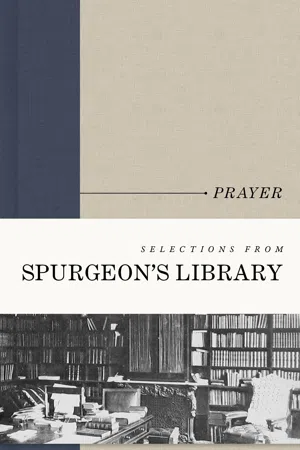
The Selections from Spurgeon's Library series celebrates the foundation of faith upon which C. H. Spurgeon stood. Asa voracious reader, Spurgeon gleaned wisdom from his predecessors and contemporaries that deeply impacted his preaching, writing, and ministry. B&H Academic, in partnership with the Spurgeon Center at Midwestern Baptist Theological Seminary, has culled through more than 6, 000 volumes in Spurgeon's personal library to present a curated collection of essays and sermons on prayer that shaped Spurgeonhimself. Addressing such topics as the privilege of prayer, imitating Christ in prayer, and prayer without ceasing, this volume is sure to help readers grow in their faith and experience the true power in prayer.
eBook - ePub
About this book
Information
Topic
Theology & ReligionSubtopic
Christian Theology1
Selections from James Hamilton
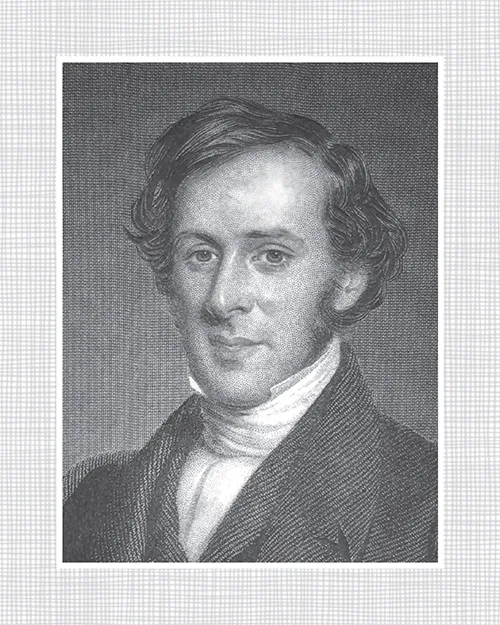
The Privilege of Prayer
“Rejoice evermore. Pray without ceasing.”
—1 THESS. V. 16, 17.
The Athenians spent their time in nothing else, but either to tell or to hear some new thing;” and whatever may have become of the Attic elegance and the Attic genius, modern society is not deficient in the Athenian curiosity. Nor do we blame it. The desire of novelty is not in itself blameworthy; but there is one form of it which we would like to see more frequent. To freshen old truths is nearly as important as to discover new ones: and instead of telling or hearing some new thing, our time would often be as advantageously occupied in thinking over and brightening up the meaning of some old thing.
Few expressions in theology are older than that which speaks of the “privilege of prayer;” but nothing could be a greater novelty in the history of some who now hear me, than to find prayer an actual privilege. Am I wrong? “The privilege of prayer!” Do not some feel that the burden of prayer—the obligation, the duty, would be a truer name for it? Do not some of you feel, that to call it a privilege is just to give a pleasant name to an irksome thing? If so, instead of acquainting you with a new fact, that individual would do you a better service who should give you fresh light on this old truth, and make you feel, that not only has prayer power with God, but is very nearly the highest privilege of man.
Let us make a supposition.1 Suppose that the individual in this kingdom who combines in himself the greatest wisdom and goodness were accessible to you. Suppose that when anything pressed upon you,—a difficulty from which your own sagacity could not extricate you, or an undertaking which your own resources could not compass,—you had only to send him a statement of the case, and were sure, in good time, to get his best and kindest counsel,—would not you deem this a great privilege? Would not something of this sort just meet the case of many here? One is entering on a new course of occupation, and at its very outset meets with problems that fairly baffle him, but which a friend of a little more experience or perspicacity could instantly solve. Another is overtaken by a sea of troubles,—a concourse of trials which quite overwhelm him, but through which he perfectly believes that a stronger arm or a more buoyant spirit could carry him. But where shall he look for that wiser friend—that stronger arm? Suppose, again, that when in sudden danger or in deep distress, there were some way by which you could make known your situation to a spirit departed. That spirit is now far wiser than he was when on earth. He has sources of knowledge that are not open to you, and he has powers not yet possessed by you. Suppose that in grief or in difficulty you could invoke him. Suppose that there were some process by which you could arrest his ear among the glorified, and in a moment bring him though unseen to your side; and suppose that, to this spirit made perfect—the spirit of your departed parent, or of some one remarkable for his wisdom and sanctity—you could detail the whole matter that grieves and perplexes you, and though there should be no response from the viewless shade, you knew that he had heard you, and was away to interpose effectively on your behalf,—would you not feel much comforted and lightened? Would you not resume your own active exertions with far greater hopefulness,—assured that there would now attend them a power beyond what was proper to them, or inherent in yourself? But further, suppose that, instead of any wise or influential personage on earth, or any glorified spirit in paradise, it was possible for you to secure the ear and engage the help of one of the principalities or powers in the heavenly places; some being of such bright intelligence, that he can smile at all our wisdom, and such commanding might, that he can do in a moment what would occupy our race for a millennium; could you for an instant bespeak his attention, and gain assurance of his willingness to help, would you not feel that your object was unspeakably promoted, or your burden amazingly lightened? To have enlisted such ability and skill upon your side,—the few minutes spent in securing such superhuman help—would you not feel that they were a larger contribution towards eventual success than a lifetime of your personal efforts? But rise a step higher—an infinite step!—and suppose that it were possible to arrest the ear and secure the help of the Most High; suppose that you could, by any possibility, gain the attention of the living God,—that you could secure, not the cold and distant on-looking, but the interested regard and the omnipotent interposition of Jehovah himself,—would not this be a privilege? But this is precisely what prayer is. Some have no friend of extraordinary sagacity or power to go to. The spirits of the departed cannot come to us; and neither to them nor to angels are we warranted to pray. And even though we could evoke a Samuel from the sepulchre, or bring down Gabriel from above the sky,—the blessings which are most needful for us are such as neither Samuel nor Gabriel can give,—blessings of which the treasure lies within the light inaccessible, and of which Omnipotence alone preserves the key. That almighty hand prayer moves. That incommunicable key prayer turns. That unapproachable treasury prayer opens. The blessings which Solomon in all his glory, and Abraham in the bosom of his God, and the seraphs who overshadow the throne,—the blessings which these have not to impart, it is the privilege of prayer to procure.
But set it in another light. Imagine that there had been certain limitations on prayer. Imagine that there had only been one spot on the earth from which prayer could arise with acceptance. Imagine—by no means inconceivable, for there was once something very like it—imagine that the Lord had selected some little spot of earth—a Mount Zion, or a Holy Land—and said that here, and here only, was the place to worship. Imagine that from this hallowed spot alone there had existed a passage into heaven for the prayers of earth, and that all supplications, however earnest, uttered on the profane soil of the common globe, had gone for nothing. What a resorting we should have seen to this place of only prevalency! When there occurred some conjuncture decisive of weal or woe to an individual or a family, or when a man became so anxious about his soul’s salvation that nothing could content him save light from above, we should have seen the busy trader arranging for his protracted absence, and the cautious, untravelled husbandman preparing for the perilous pilgrimage, and multitudes, on their own behalf or on behalf of others, resorting to the place where prayer is heard and answered. And imagine, further, that there had just been one day in the year when prayer was permitted; that those who arrived at the appointed place too late, found the gate of access closed for the next twelve months, and however sudden the emergency, and however extreme its exigency, that it was impossible to do anything for it till the weary year moved round, and brought back the one propitious day;—even thus restricted, would not prayer have been felt to be a privilege worth a pilgrimage and worth a long on-waiting? Just fancy that in our earth’s yearly revolution round the sun there was disclosed a crevice in the sky;—that on one night in the year, and on one mountain-top, there was a vista opened through the encircling vault, and a sight of dazzling glories revealed to all who gazed from the favoured summit;—and fancy that through the brilliant gap there fell a shower of gold and gems, and that this recurred regularly on the self-same evening every year—what a concourse to that Pisgah might you count upon! How many eager eyes would strain the breathless hour beforehand till the first streak of radiance betokened the bursting glory! How many emulous hands would rush together to catch the flaming rubies and the diamond rain!
And just conceive—the only other supposition we shall make—that certain costly or arduous preliminaries were essential in order to successful prayer; suppose that a day’s strict abstinence, or some painful self-punishment, were exacted; or that each worshipper were required to bring in his hand some costly offering—the choicest of his flock, or a large percentage on his income. And who would say that this was unreasonable? Would not access into God’s own presence—a favour so ineffable—would it not be wisely purchased at any price; and might not sinful “dust and ashes” marvel that after any ordeal or purifying process it was admitted near such Majesty?
But how stands the case? Prayer is not a consultation with the highest wisdom which this world can supply. It is not intercourse with an angel or a spirit made perfect. But it is an approach to the living God. It is access to the High and Holy One who inhabiteth eternity. It is detailing in the ear of Divine sympathy every sorrow. It is consulting with Divine wisdom on every difficulty. It is asking from Divine resources the supply of every want. And this not once in a lifetime, or for a few moments on a stated day of each year, but at any moment, at every time of need. Whatever be the day of your distress, it is a day when prayer is allowable. Whatever be the time of your calamity, it is a time when prayer is available. However early in the morning you seek the gate of access, you find it already open; and however dark the midnight moment when you find yourself in the sudden arms of death, the winged prayer can bring an instant Saviour near. And this wheresoever you are. It needs not that you climb some special Pisgah or Moriah. It needs not that you should enter some awful shrine, or put off your shoes on some holy ground. Could a memento be reared on every spot from which an acceptable prayer has ascended, and on which a prompt answer has come down, we should find Jehovah-shammah—“the Lord hath been here”—inscribed on many a cottage hearth and many a dungeon floor. We should find it not only in Jerusalem’s proud temple and David’s cedar galleries, but in the fisherman’s cottage by the brink of Gennesaret, and in the upper chamber where Pentecost began. And whether it be in the field where Isaac went to meditate, or the rocky knoll where Jacob lay down to sleep, or the brook where Israel wrestled, or the den where Daniel gazed on the hungry lions and the lions gazed on him, or the hill-sides where the Man of Sorrows prayed all night, we should still discern the prints of the ladder’s feet let down from heaven—the landing-place of mercies because the starting-point of prayers. And all this whatsoever you are. It needs no saint, no proficient in piety, no adept in eloquent language, no dignitary of earthly rank. It needs but a simple Hannah, or a lisping Samuel. It needs but a blind beggar, or a loathsome lazar. It needs but a penitent publican, or a dying thief. And it needs no sharp ordeal, no costly passport, no painful expiation, to bring you to the mercy-seat; or rather, I should say, it needs the costliest of all; but the blood of atonement—the Saviour’s merit—the name of Jesus—priceless as they are, cost the sinner nothing. They are freely put at his disposal, and instantly and constantly he may use them. This access to God in every place, at every moment, without any price or any personal merit, is it not an amazing privilege?
And yet in this old truth I am anxious, before we part, that you should find a new significance; and, therefore, to make it somewhat more specific, let me apply it to a few cases, probably all represented here.
1. “Is any among you afflicted? Let him pray.” “In agony, nature is no atheist. The mind which knows not where to fly, flies to God.”2 And to spring into the arms of Omnipotence, to find refuge in the bosom of Mercy, is to weep no longer. The drowning man whose last sensation was the weltering brine; who felt the seething flood go over him, and as he settled down among the trailing weeds, the memory of home darted like a death-shot through his heart and put an end to other anguish;—when that rescued man opens his eyes beneath some friendly roof, and instead of the watery winding-sheet, and the crawling gulf-monsters, finds himself on a couch of warm comfort, his chamber glowing with the cheerful fagot, a friendly face ready to greet his first waking, and sees through the window the ship that is waiting to bear him back to his native isle,—it may be true that he had treasures in the foundered vessel, and that some curious or precious things he was carrying home may never he fished up from the devouring deep: but how different his lot from the poor castaway, whom the billows have landed on a desolate rock, and who, creeping about in his dripping rags, can find no food but the limpets, no fuel but the crackling wrack, no hovel to shelter him, and no sail to waft him away! Both have been wrecked, and both have lost their all; but in the joy of his rescue the one forgets his poverty, and in his wretched asylum from the waves the other recognises nothing but a prison and a tomb. Precisely similar is the case of the afflicted man who prays, and of him who, when afflicted, cannot pray—the man whom the billows land on the desolate rock of worldliness or atheism, and the man who, from the embrace of drowning waters, wakes up in the pavilion of God’s own presence. Both may have suffered equal losses. Both may have left a treasure in the deep. Both may have been washed empty-handed ashore. But the man of prayer is like the man who comes to himself in the asylum of the friendly home. The bliss of pleasant fellowship with God abates or banishes the grief of recent loss. On the lee-shore, which has shattered his frail bark, he is astonished to lift up his eyes and find himself the inmate of a beloved friend and familiar dwelling. He knows that he will land safe at last, and is happy even now. “Is any among you afflicted? Let him pray.”
2. Is any among you perplexed? “If any of you lack wisdom, let him ask of God, who giveth to all men liberally, and upbraideth not; and it shall be given him.”
There is an instructive Greek story which tells of a noble youth who had a more than mortal guide. The Prince was frank and manly and docile; but on account of his inexperience often found himself in straits, through which his own sagacity could not steer him. On such occasions, when in danger of falling into designing hands, or committing himself to disastrous counsels, or when actually involved in distresses from which he could not extricate himself, this faithful friend was sure to speed to his rescue. Whatever was the scene of anxiety and affright, he had only to bethink himself of his kind and sagacious counsellor, and that moment Mentor was beside him. What Homer dreamed, the Gospel verifies. It tells that, veiled from our view only by the curtain of this corporeal, but nearer to us than that flesh and blood which hides us from our truest selves, there is an ever-present Friend, who needs only to be remembered in order to prove a present help. It tells us that amidst all our embarrassments and sorrows, grief is never so near but deliverance is nearer still. And it tells us that the confusion and blundering, the foolish bargains and infatuated proceedings which often make us so affronted or indignant at ourselves, might all have been avoided had we timeously resorted to that wonderful Counsellor who encompasses all our ways. In other words, the Bible assures us that, however much we may suffer from the deficiency of our talents and the darkness of our understandings, we suffer still more from not taking advantage of that Wisdom from above who can enlighten our darkness and elevate all our powers. No man, by taking thought, can add a faculty to his mind, any more than he can add a feature to his countenance or a cubit to his stature; but the man who has learned to pray can, at the throne of grace, procure what really is the enhancement of his intellect and the augmentation of his faculties—that Divine wisdom which will either supersede or supplement his own.
His must be a very easy calling who has never felt the need of more skill and prudence—more wisdom than is indigenous to himself. Take the most common instances. You are a father or a mother—perhaps a widowed father or a widowed mother. There are your children rising around you. Allowing that their minds are ever so susceptible and plastic, how important are your every movement and entire demeanour in their bearing on them! A single inconsistency, the most trivial inadvertency, coming with all the sanction of a parent’s example, how influential for evil is it sure to be! How possible for a father, by mere inconsiderateness, to perpetuate his own worst qualities in the persons of many survivors; and, just because they loved him so well, and copied him so closely, how possible is it to transmit in his children’s characters the facsimile of his worser self—the image of his frivolity, or peevishness, or indolence! Nay, how possible is it to convert a child into the perennial monument of a few occasional follies—to prolong, in its habitual character, the sayings and doings of a few unguarded moments! Then, again, there may be among these children more puzzling problems—some who are neither affectionate nor docile—who are not likely, by a mere moral imbibition, to take in the good influences with which they are surrounded—problems in whose management more than patience and tenderness is needful—refractory, selfish, or peculiar natures, on which nothing but the decisive measures of a deep-seeing sagacity—the bold strokes of a forceful nature—can make any permanent impression. Whosoever occupies a station of moral influence—a station where his labour lies amongst the most perilous materials with which man can intermeddle—the affections and dispositions—the wills of other people—must have amazing self-reliance, or a deplorable callousness, if he is not frequently crushed down by the solemnity of his position. It was by one in such a position that a most considerate and magnanimous prayer was offered—a prayer whose spirit every parent, and teacher, and pastor should emulate, just as a similar answer is what every parent, and teacher, and pastor who offers it is encouraged to expect:—“In Gibeon the Lord appeared to Solomon in a dream by night: and God said, Ask what I shall give thee. And Solomon said, Thou hast showed unto thy servant David my father great mercy, according as he walked before thee in truth, and in righteousness, and in uprightness...
Table of contents
- Series Introduction by B&H Academic
- Introduction by Jason Allen
- 1. Selections from James Hamilton
- 2. Selection from William Paley
- 3. Selections from Thomas Boston
- 4. Selections from William Jay
- 5. Selections from Isaac Barrow
- 6. Selections from Robert Hawker
- Scripture Index
- Name and Subject Index
Trusted by 375,005 students
Access to over 1.5 million titles for a fair monthly price.
Study more efficiently using our study tools.
Frequently asked questions
Yes, you can cancel anytime from the Subscription tab in your account settings on the Perlego website. Your subscription will stay active until the end of your current billing period. Learn how to cancel your subscription
No, books cannot be downloaded as external files, such as PDFs, for use outside of Perlego. However, you can download books within the Perlego app for offline reading on mobile or tablet. Learn how to download books offline
Perlego offers two plans: Essential and Complete
- Essential is ideal for learners and professionals who enjoy exploring a wide range of subjects. Access the Essential Library with 800,000+ trusted titles and best-sellers across business, personal growth, and the humanities. Includes unlimited reading time and Standard Read Aloud voice.
- Complete: Perfect for advanced learners and researchers needing full, unrestricted access. Unlock 1.5M+ books across hundreds of subjects, including academic and specialized titles. The Complete Plan also includes advanced features like Premium Read Aloud and Research Assistant.
We are an online textbook subscription service, where you can get access to an entire online library for less than the price of a single book per month. With over 1.5 million books across 990+ topics, we’ve got you covered! Learn about our mission
Look out for the read-aloud symbol on your next book to see if you can listen to it. The read-aloud tool reads text aloud for you, highlighting the text as it is being read. You can pause it, speed it up and slow it down. Learn more about Read Aloud
Yes! You can use the Perlego app on both iOS and Android devices to read anytime, anywhere — even offline. Perfect for commutes or when you’re on the go.
Please note we cannot support devices running on iOS 13 and Android 7 or earlier. Learn more about using the app
Please note we cannot support devices running on iOS 13 and Android 7 or earlier. Learn more about using the app
Yes, you can access Prayer by in PDF and/or ePUB format, as well as other popular books in Theology & Religion & Christian Theology. We have over 1.5 million books available in our catalogue for you to explore.