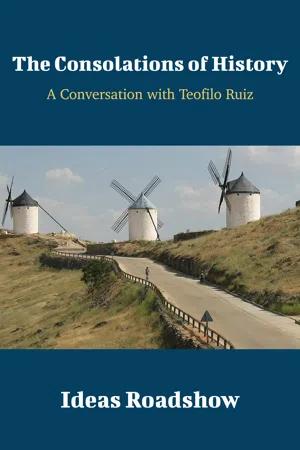
This book is based on an in-depth conversation between Howard Burton and Teofilo Ruiz, Professor Emeritus of History at UCLA. Teo Ruiz is a scholar of the social and popular cultures of late medieval and early modern Spain and the Western Mediterranean. He received the University's Distinguished Teaching Award and was awarded the National Humanities Medal by President Barack Obama for his "inspired teaching and writing". This wide-ranging conversation provides captivating insights into his Cuban origins, how he became a professional historian, the challenges and excitement of teaching, and what the future might hold for historical research..This carefully-edited book includes an introduction, In the Marrow, and questions for discussion at the end of each chapter: I. The Terror of History - The story of a bookII. Becoming a Historian- From Cuba to City College to NYU to PrincetonIII. Historical Ruminations - Meditations on the bigger pictureIV. Progress? - Do we actually learn from the past?V. Connecting - Technology and personal factorsVI. Looking Ahead - Pondering history's futureAbout Ideas Roadshow Conversations: This book is part of a series of 100 Ideas Roadshow Conversations. Presented in an accessible, conversational format, Ideas Roadshow books not only explore frontline academic research featuring world-leading researchers but also reveal the inspirations and personal journeys behind the research.
- English
- ePUB (mobile friendly)
- Available on iOS & Android
eBook - ePub
The Consolations of History - A Conversation with Teofilo Ruiz
About this book
Trusted by 375,005 students
Access to over 1.5 million titles for a fair monthly price.
Study more efficiently using our study tools.
Information
Subtopic
British HistoryIndex
HistoryThe Conversation
I. The Terror of History
The story of a book
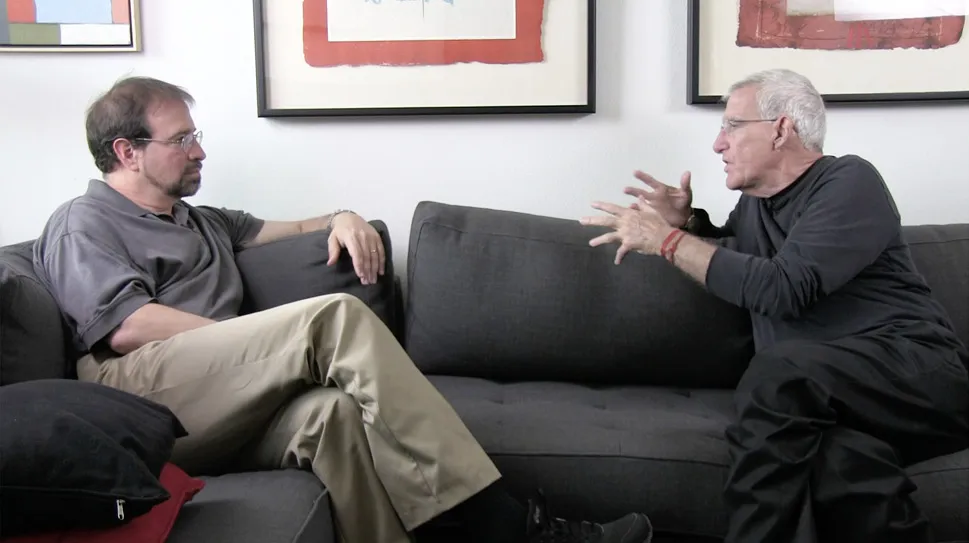
HB: I picked up this book called The Terror of History not too long ago. It begins with a portrayal of 14th-century Florence during the bubonic plague amongst all the death and dying. We begin with The Decameron by Giovanni Boccaccio, where he discusses how people react to the utter catastrophe that has befallen them.
As Boccaccio tells the tale, people respond to this overwhelming crisis in three different ways: there are those who turn to religion, those who begin to live exclusively for the moment—indulging in drinking, fornicating and generally having as good a time as possible—and those who leave, and might later, like Boccaccio, write books. To this outline, you add a fourth category: those who stay and tend the sick and the weak, those who struggle through the darkness and the despair all around them at great personal risk to themselves.
So this is the way your tale begins. And I think to myself, “That is what this book, The Terror of History, is all about: it’s a historical account of how we respond to the terrors and traumas that have consistently befallen us throughout history.”
I’ve got my finger on it now. I’ve figured it out. And since it’s written by a historian, I’m expecting a cool, objective account of things, perhaps with some grand thesis linking different cataclysmic events thrown in for good measure.
But then the book starts to change. The author mixes in personal reminiscences. Questions arise of a more metaphysical and philosophical nature: How can we ascribe meaning to existence? How can we pursue the good life amid so much pain and struggle? What can we learn from history? Can we change for the better?
At the beginning, this was pretty off-putting, because I wasn’t expecting it and wasn’t at all sure how to react. I generally like to have a clear sense of what a book’s about when I start: what the author’s angle is, what he or she is trying to tell me.
But then I began to loosen up and enjoy the experience, seizing the opportunity to more personally engage with you rather than simply read a standard book on history. Is that the sort of effect you were striving for?
TR: This book had a very long genesis. It’s really a bit of a narcissistic endeavour, because while I am concerned with the world at large and how people react to catastrophes (like Florence under the plague, but other cases as well), to a large extent, it’s also about me. I can tell you something about how it got finished. For over 40 years, I’ve taught a class on mysticism, religion and witchcraft, which I named “The Terror of History” because, essentially, it is a way in which people react to these catastrophes.
It dealt mostly with religion, both orthodox and heterodox. I made a recording of this course for The Teaching Company; and there had long been the possibility of also publishing it as a book, because that way it could also be a sort of manual that could be used in my classes.
But as I was doing this, a very perceptive reader said, “No, this is something different. It’s about you. It’s about what you want to do.” So I began to write this thing with no intention whatsoever of publishing it. I really did it for myself. In that sense, then, there really is that element of faux-memoir: it’s not a memoir, it’s not an autobiography, it’s more about letting out little pieces of myself.
That is something that I began doing in a very difficult period in my life when I was having serious issues with my personal life. I began to write little stories, one per year. These were not intended for publication: they were little anecdotes, little stories. Sometimes I couldn’t write directly about what was bothering me. When my father died, I couldn’t write about that, so I wrote something else instead, something comic: describing what happens to Cubans when they go to the airport.
HB: What happens to Cubans when they go to the airport?
TR: Well, Cubans love airports. Everybody goes to welcome you when you arrive: there are at least 20 people at the airport waiting for each incoming passenger, while everyone looks around them wondering who is arriving. It’s always like that. If you say to a Cuban that you’re going to the airport, he’ll reply, “Oh, you’re going to the airport? I’ll come with you, why not?”
HB: You too?
TR: Absolutely. It’s inconceivable for someone to arrive and for me to not be there waiting. It’s a cultural thing, a kind of, shall we say, cultural vestige that remains.
Anyway, I began writing these pieces for The Terror of History in much the same fashion as these stories that I used to write. Then I began, more or less, to connect them. And the book lingered on. Frankly, I thought that it was such a self-indulgent book that I didn’t ever want to publish it, but Brigitta van Rheinberg at Princeton University Press actually liked it a lot. I also had a scholarly book coming out on festivals and kings’ travels in the 16th century at the time (A King Travels: Festive Traditions in Late Medieval and Early Modern Spain), for which the great Spanish historian John Elliott was one of the readers, and somehow it became a reasonable thing to publish them both at the same time. So that’s how the book came out.
My favourite part of the book is actually the last chapter about aesthetics, this understanding of the world through aesthetics, through a search for beauty or knowledge. I wrote that in Paris, and one of the things that emerges at that point is the deep awareness of being in Paris and reading Proust and connecting all of that.
At any rate, the book is two books: one about me—disguised in many ways, presented in a kind of very hesitant and restricted fashion—and another one about historical processes.
The point here is not an original one, it’s one inspired by Walter Benjamin and other people: that the world as it exists is a particularly painful place to be; and we try to make meaning of it in many different ways.
It’s not even a question of facing a tragedy or facing a catastrophe, it’s simply, “What do we do? How do we come to terms with the lives we live? What do we do that gives meaning to our lives, when deep inside we know that there is no meaning?”
HB: Because this searching for meaning is a fundamental aspect of the human condition: it would happen whether or not our society is being ravaged by the bubonic plague.
TR: Right. If there is not one thing, there is another.
HB: Your self-deprecating nature, your lack of bombast, is definitely something that comes across in print as well as in person. You used the word “narcissistic” a few moments ago, and you seem almost compelled to point out that what you are saying is not always original. But I can say that as a reader, it’s enjoyable to see you forthrightly air your views. I hope you will continue to do so throughout this discussion.
TR: Well, I always have difficulties doing that. I don’t think it’s so much a sense of modesty, but more a deep understanding that I can’t pontificate, I can’t pretend to really know more than I truly know. And what I do know is that there is always this knowing doubt, this sense that I am sort of faking my way through life. I really me...
Table of contents
- A Note on the Text
- Introduction
- The Conversation
- Continuing the Conversation
Frequently asked questions
Yes, you can cancel anytime from the Subscription tab in your account settings on the Perlego website. Your subscription will stay active until the end of your current billing period. Learn how to cancel your subscription
No, books cannot be downloaded as external files, such as PDFs, for use outside of Perlego. However, you can download books within the Perlego app for offline reading on mobile or tablet. Learn how to download books offline
We are an online textbook subscription service, where you can get access to an entire online library for less than the price of a single book per month. With over 1.5 million books across 990+ topics, we’ve got you covered! Learn about our mission
Look out for the read-aloud symbol on your next book to see if you can listen to it. The read-aloud tool reads text aloud for you, highlighting the text as it is being read. You can pause it, speed it up and slow it down. Learn more about Read Aloud
Yes! You can use the Perlego app on both iOS and Android devices to read anytime, anywhere — even offline. Perfect for commutes or when you’re on the go.
Please note we cannot support devices running on iOS 13 and Android 7 or earlier. Learn more about using the app
Please note we cannot support devices running on iOS 13 and Android 7 or earlier. Learn more about using the app
Yes, you can access The Consolations of History - A Conversation with Teofilo Ruiz by Howard Burton in PDF and/or ePUB format, as well as other popular books in History & British History. We have over 1.5 million books available in our catalogue for you to explore.