This book is based on an in-depth conversation between Howard Burton and Elizabeth Loftus, renowned expert on human memory and Distinguished Professor of Psychological Science; Criminology, Law, and Society; Cognitive Science and Law at UC Irvine. This extensive conversation covers her ground-breaking work on the misinformation effect, false memories and her battles with "repressed memory" advocates, how getting expert memory testimony introduced in legal proceedings and the effect of DNA evidence on convincing judges of the problematic nature of eyewitness testimony. This carefully-edited book includes an introduction, The Benefit of the Doubt, and questions for discussion at the end of each chapter: I. Memory, Eventually - From mathematics to yellow birdsII. Legal Attraction - A critical lunch leads to the misinformation effectIII. Inside the Courtroom - Real witnesses, real cases, real effectsIV. The Landscape Shifts - DNA evidence and the winds of changeV. Inception - Implanting childhood mall traumaVI. Confirmation - Extensive reproducibilityVII. The Temperature Mounts - Jane Doe and the podium defenseVIII. Sociological Speculations - How did we get there?IX. Science and Pseudoscience - In search of hard evidenceX. Structural Reform - Learning from New JerseyXI. Scanning Memories - Lies, deliberate lies, and statisticsXII. Increasing Awareness - From Sesame Street to SwedenAbout Ideas Roadshow Conversations Series: Presented in an accessible, conversational format, Ideas Roadshow books not only explore frontline academic research featuring world-leading researchers but also reveal the inspirations and personal journeys behind the research.
- English
- ePUB (mobile friendly)
- Available on iOS & Android
eBook - ePub
The Malleability of Memory - A Conversation with Elizabeth Loftus
About this book
Information
Topic
PsicologiaSubtopic
Diritto penaleThe Conversation
I. Memory, Eventually
From mathematics to yellow birds
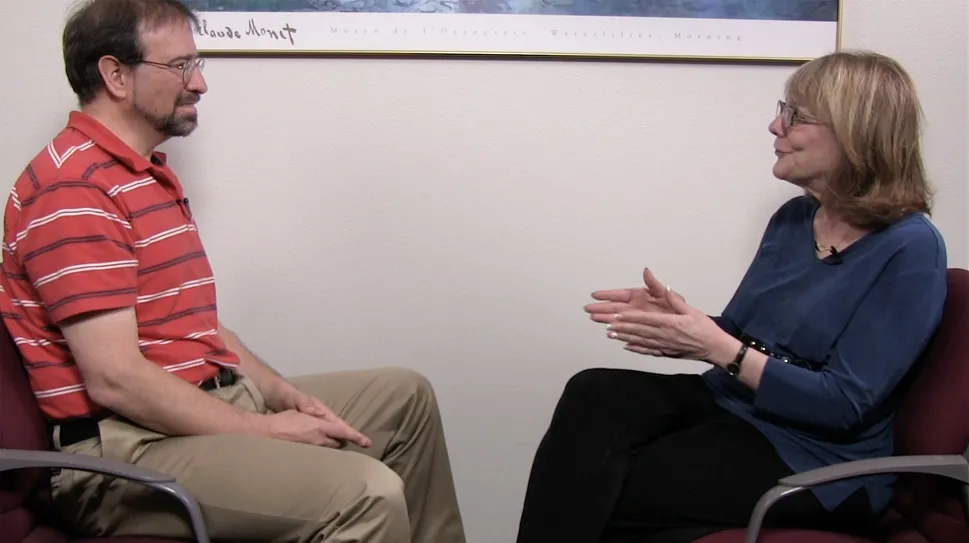
HB: Before we even get into your research, I should say that I was quite intrigued by your early research interests. As I understand it, you were keen on mathematics when you were an undergraduate. The world of mathematics was your entry point and you wound up somewhere completely different.
EL: Ah, we’re going way back. Yes, I loved math. Maybe I loved math because my father was a math whiz. He was kind of a cold, unemotional person, but we could relate when he was helping me with my math homework. So I got very good at math, and when I went to UCLA as an undergraduate I majored in mathematics. Then I took a course in introductory psychology and I just absolutely loved it.
HB: So what was it that attracted you? What was it that piqued your interest when you took that course in introductory psychology?
EL: First of all, what I really loved about math was algebra and geometry, even trigonometry. But I didn’t really love calculus that much. So I was getting a little unenthusiastic about math when I took this introductory psychology course as an elective. It was all about people and real things, and I had a great professor.
So I took more psychology courses. And by the time I was done with college, I had enough credits and courses for a double major in math and psych. So that’s what I did, and then I ended up going into a graduate program in mathematical psychology.
HB: What is mathematical psychology?
EL: Mathematical psychology is about using mathematics and formulas to try to describe behaviour.
HB: So sort of like economics? In the sense that economists often use the process of maximizing utility functions as a way of modelling choices, and things like rational choice theory. Is it something like that, or is it a little bit different?
EL: It’s a little bit different, but the idea is to develop formulas that predict or describe behaviour.
But I was not enthralled with mathematical psychology in graduate school. And later in my graduate school days at Stanford, I began to do a project with a professor on memory and got interested in that. And that’s what I stuck with.
HB: So it was from that experience that your interest in memory research began. It wasn’t as if, as a small child, you were constantly wondering about memory. It wasn’t so much that at all.
EL: No. When I was in college being a math major, I thought I was going to end up teaching high school mathematics or something like that. I didn’t have a thought about memory.
HB: So these first experiments you did as a graduate student at Stanford, they were the ones that piqued your interest in memory and started to push you, or drive you, along that road?
EL: Yes. But it’s a little more complicated than that, because those initial studies with my supervisor at Stanford that we ultimately published together were pretty theoretical studies of memory.
For example, give me the name of a bird that’s yellow.
HB: Hmm. Uh…uh…how about a chickadee? Is that yellow?
EL: Well, I don’t know if it is, but whatever. We’d measure how long it took you to answer that question.
And we found that people were faster if you asked, “Give me the name of a bird that’s yellow,” than they were if you asked, “Give me the name of a yellow bird.”
It turns out that people are usually about 250 milliseconds faster doing the first task than the second. This was an important result in terms of helping to assess how people search: how we do it so fast with all the millions of things we have stored there in our brains. How do you search through your long-term memory system to find that? That’s what I was working on.
I wrote some papers on semantic memory—that’s what it’s called—our memory for words and concepts and so on. But even that was a little too theoretical for me so, one day—this was after I got my PhD—
HB: You did your PhD on semantic memory?
EL: No, I did my PhD on yet something else. The semantic memory work was a side project. In fact, my PhD was on computerized mathematics instruction.
HB: Oh, really? Something completely different, then.
EL: Yes, completely different. Something that I never pursued after I got out of graduate school. While I was in graduate school doing my dissertation on mathematics instruction, I had this side project on memory, so that was the work I did for the first couple of years after I got out of grad school when I was at The New School in New York.
Questions for Discussion:
- What do you think Elizabeth’s career path suggests about the breadth of subjects that high-school students should be exposed to?
- To what extent do you think the status of being “good at math” sometimes drives people towards studying subjects that they are not actually interested in?
II. Legal Attraction
A critical lunch leads to the misinformation effect
EL: Then, one day I was having lunch with a cousin of mine who was a lawyer in New York. She asked me, “Well, you’re an experimental psychologist. Have you made any discoveries?” When I told her about the yellow bird study, it did nothing for her and she replied, “So how much did we pay for that finding?” And I thought to myself, You know, I do want to do something that has more social relevance.
So there I was. I had expertise in the area of memory, but also a long-standing interest in legal issues.
HB: Had you ever thought about going to law school? Did that cross your mind at some point?
EL: Only later did it cross my mind, but there was no way I was going to go back to school at that point. Besides, as I would ultimately discover, if you have something valuable to contribute to the law, they’ll come to you—even if you don’t have a law degree.
HB: Right. So you had this meeting with your cousin and she sowed some seed of doubt in your mind as to the lack of social relevance of the work you were doing, or at least gave you some motivation to perhaps look a little deeper into things that were more socially transformative. Is that a fair way to say it?
EL: I think that’s pretty much right. She got me thinking, Do I really care about the structure of knowledge in our long-term memories? Am I working as hard as I do because I actually care about that topic, or am I working as hard as I do for other rea...
Table of contents
- A Note on the Text
- Introduction
- The Conversation
- Continuing the Conversation
Trusted by 375,005 students
Access to over 1.5 million titles for a fair monthly price.
Study more efficiently using our study tools.
Frequently asked questions
Yes, you can cancel anytime from the Subscription tab in your account settings on the Perlego website. Your subscription will stay active until the end of your current billing period. Learn how to cancel your subscription
No, books cannot be downloaded as external files, such as PDFs, for use outside of Perlego. However, you can download books within the Perlego app for offline reading on mobile or tablet. Learn how to download books offline
Perlego offers two plans: Essential and Complete
- Essential is ideal for learners and professionals who enjoy exploring a wide range of subjects. Access the Essential Library with 800,000+ trusted titles and best-sellers across business, personal growth, and the humanities. Includes unlimited reading time and Standard Read Aloud voice.
- Complete: Perfect for advanced learners and researchers needing full, unrestricted access. Unlock 1.5M+ books across hundreds of subjects, including academic and specialized titles. The Complete Plan also includes advanced features like Premium Read Aloud and Research Assistant.
We are an online textbook subscription service, where you can get access to an entire online library for less than the price of a single book per month. With over 1.5 million books across 990+ topics, we’ve got you covered! Learn about our mission
Look out for the read-aloud symbol on your next book to see if you can listen to it. The read-aloud tool reads text aloud for you, highlighting the text as it is being read. You can pause it, speed it up and slow it down. Learn more about Read Aloud
Yes! You can use the Perlego app on both iOS and Android devices to read anytime, anywhere — even offline. Perfect for commutes or when you’re on the go.
Please note we cannot support devices running on iOS 13 and Android 7 or earlier. Learn more about using the app
Please note we cannot support devices running on iOS 13 and Android 7 or earlier. Learn more about using the app
Yes, you can access The Malleability of Memory - A Conversation with Elizabeth Loftus by Howard Burton in PDF and/or ePUB format, as well as other popular books in Psicologia & Diritto penale. We have over 1.5 million books available in our catalogue for you to explore.