Word Mingas is an English-language translation by Paul M. Worley and Melissa Birkhofer of the award-winning book Mingas de la palabra written by Miguel Rocha Vivas (Casa de las Américas, 2016). It is an encompassing study of oralitures — multilayered cultural knowledge shared through the power of orality — and written literatures by authors from Colombia and other regions in the hemisphere who self-identify as Indigenous. In consequential dialogue with the most recent theories of decoloniality and interculturality, the book weaves and compares two threads of literary critique Rocha Vivas names as oralitegraphies and mirrored visions. The study focuses on texts produced from the early 1990s to the present, and offers productive avenues to discuss, understand, and foster dialogue with the wide array of symbolic-literary systems of the original peoples. Rocha Vivas offers a valuable contribution to the much-needed dialogue on the basic rights of self-representation, self-determination, and the coexistence of multiple systems of representation and identity.
eBook - ePub
Word Mingas
Oralitegraphies and Mirrored Visions on Oralitures and Indigenous Contemporary Literatures
- 344 pages
- English
- ePUB (mobile friendly)
- Available on iOS & Android
eBook - ePub
Word Mingas
Oralitegraphies and Mirrored Visions on Oralitures and Indigenous Contemporary Literatures
About this book
Information
Topic
LiteraturaSubtopic
LingüísticaPART I
READING ORALITEGRAPHIES
1
MIRRORED VISIONS AND ORALITEGRAPHIES IN A “NEW” READING OF COLOMBIA’S CARTOGRAPHY
IN 2010, the Indigenous Peoples’ National Commission for Labor and Collective Action on Education (CONTCEPI) convened the National Minga on Higher Education and Indigenous Peoples in Colombia. In order to promote the Minga’s [collective work] call for participation, they designed and printed a poster in which Colombia was represented from multiple Indigenous perspectives through a map created from Indigenous ideograms, some of which are centuries old (see fig. 1).
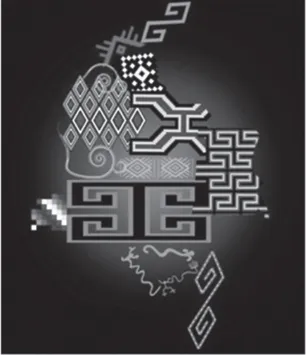
Figure 1: Map from the National Minga on Higher Education and Indigenous Peoples. Juan Carlos Jamioy. Mapa Minga Nacional de Educación Superior de los Pueblos Indígenas.
According to statistics cited by the historian Ilse Gröll, it is estimated that there were “more than 300 languages [in Colombia] prior to the Spanish Conquest” [se calcula que antes de la conquista española existían más de 300 lenguas] (21), and “from six to ten million people in what is today Colombia’s national territory” [seis a 10 millones de personas en el actual territorio colombiano] (42). As published by Colombia’s National Administration for Statistics, in Colombia’s 2018 National Census 4.4% of the country’s population, some 1,900,000 people, self-identified as Indigenous. In the 2005 National Census more than 500,000 of these people reported not speaking an Indigenous language (“Censo”). Overall, Colombia recognizes 115 Indigenous nationalities and 65 Indigenous languages, the latter being grouped into twenty-one branches composed of eight discrete languages and thirteen linguistic families (Landaburu 4). Despite the existence of numerous linguistic/cultural maps that locate and represent these Indigenous languages and populations, the perspective found in the Educational Minga’s map questions and destabilizes the self-authorized, official power to cartographically represent the country’s Indigenous Peoples, Peoples who were labeled “infidels” or “naturales” during the colonial period, and frequently referred to as “minorities” or ethnic “groups” at present.
Through a surprising aesthetic comprised of polychromatic icons and figures drawn from multiple Indigenous systems of visual communication, systems popularly conceived of as artisanal or folkloric, the map in the center of the poster re-signifies arbitrary borders found in conventional cartography. That is, the image I will refer to here as “the Minga’s map” is a multigraphic proposal from the field of intercultural education that is rooted in contemporary Indigenous movements’ aspirations for a multi-ethnic and pluri-lingual country, aspirations which can also be observed in the 1991 Constitution. In this sense, here I argue that we can expand our reception of contemporary Indigenous literary texts by understanding these within the context of and as resonating with different textualities, graphic representations, and/or visual ideosymbolic expressions. It is thus problematic that these modes of communication are typically constructed as extraliterary or preliterate by the phono-centric criteria that currently dominates literary studies, a field in which literature is limited to works written and published in alphabetic script. Given the map’s self-representational character, I will also show how we can use it as a valid and important point of reference—although certainly not the only point of reference, nor necessarily the most representative one—when talking about a number of the verbal, visual, and literary proposals articulated by Colombia’s Indigenous writers.
CONSIDERATIONS FOR CONSTRUCTING ORALITEGRAPHIC READINGS BASED UPON THE EDUCATIONAL MINGA’S MAP
Led by the National Indigenous Organization of Colombia (ONIC) and a group of Indigenous university students, the Indigenous movement commissioned the Camëntsá audiovisual creator Juan Carlos Jamioy to design a map for the Educational Minga. A relative of the Camëntsá poet Hugo Jamioy, the artist says that as he designed the map he researched Indigenous writing systems and consulted with members of different Indigenous nations, in particular with a Kankuamo friend of his from the Sierra Nevada de Santa Marta.1 The map was then created by using the iconography of a number of different Indigenous nations, as in his mind an image is, as they say, worth a thousand words. Given the impossibility of creating a map containing graphic representations from each of the country’s Indigenous nations, Jamioy carefully selected figures from specific visual systems and placed them on the map in relation to their respective territories. As such, he feels that the “textures” or “forms” that he selected for inclusion in the map express graphic elements that encourage different Indigenous peoples self-identify with the map. He has also said that by using Colombia’s outline as a framework to produce the Educational Minga’s map, the map responds to the need for dialogue among the country’s Indigenous and non-Indigenous peoples.
A detailed reading of the map reveals the presence of what I am referring to as oralitegraphies insofar as it represents the creative intersections of literary, oral, and graphic texts. The makers and Indigenous authors who work in these communicative modalities thus create intersectional fields or textualities through their syntheses of literary, oral, and graphic expressions.
In my theoretical discussion of the Minga map, oralitegraphies function as multiple textualities in which diverse systems of picto-ideographic writing intersect with literary texts that, as in the case of proposals arising from oraliture, privilege voices based in orality (testimonies, verbal genres, the transcription or evocation of myths). Within my reading, textualities, in the plural, unites oral, graphic, and alphabetic-literary expressions that, at present, are given different values in contemporary textual production. These textualities can be expressed as texts but, given that oralitegraphies are part of broader webs of interaction among diverse systems of communication that authors are capable of interweaving, cannot be reduced to them. Alternatively, a text can capture a particular interaction or interweaving of textualities, being, in essence, a concrete manifestation of these, as in the case of a poem or a story. As mentioned in the introduction, my way of thinking here coincides with how Denise Arnold and Juan de Dios Yapita understand the use of the word ‘text’ (from the Latin textus) in its sense of ‘doing’ and, more specifically, of ‘weaving.’ Here it is relevant to stress the word’s dynamism of ‘joining,’ interweaving or ‘intertwining,’ things such as the voice and writing; ‘text’ evokes the idea of something woven or constructed like a net (14).
We can also think of the Educational Minga’s map map as a “mirrored vision,” the notion I will use to construct literary analyses of texts in the second part of this work. By “mirrored vision” I am referring to images or series of images produced by self-identified Indigenous authors that are about people, institutions, cultural practices, worlds and paradigms from or associated with the people who are (or consider themselves to be) non-Indigenous. Specifically, “mirrored visions” represent a particular kind of ideosymbolic production that tends or aspires to subvert conventional, stereotyped, dominant, or hegemonic readings and views about the Indigenous world.
Given that oralitegraphies and mirrored visions are developed in or interconnected with spaces of confluence, collision, and/or collaboration between different worldviews, languages, and situations of contact, I feel that both notions are tools that we can use to generate, revise, or explain processes of intercultural dialogue, in the sense alluded to by Catherine Walsh, as they offer us a perspective that exists between cultures (15). Further, they are of particular relevance here insofar as this book focuses on the graphic and scriptural projects of Indigenous authors who publish for themselves, their communities, and beyond, who routinely participate in local, national, and international politics, and whose locus of enunciation derives its authority from their cultural identities without necessarily making them a spokesperson for or representative of their communities.
On one level, when I allude to mirrored visions, the dynamics of subversion in images or texts, or utterances that come from the multiple linguistic and cultural borders, we understand that things here are re-signified via a change in position: what was once on top is now below; things as they were are now upside down. This idea clearly relates to the Central Andean concept of Quechua-Aymara pachakuti, whose most basic image of overturning or transforming the world is derived from chaquitaclla, the foot plow, that the Andean farmer uses to dig in the earth, bringing buried dirt to the surface in order to begin a new planting cycle. However, I agree with Gutiérrez Aguilar that, “conceptualizing the transformation of the ‘inside to outside’ does not suggest an inversion produced by a symmetrical ‘rotation’ of top to bottom and vice versa. Instead, it is a ‘turning around’” (51). In short, mirrored visions invert things in order to observe, relate to, and construct from multiple centers that are in a constant process of being turned over, and not simply an inversion of a hierarchical order from binary categories that replaces what is privileged with something similar or better, nor is it about a mere revolutionary response in the macropolitical field.2
For example, at the 2008 edition of Chile’s International Book Fair, Hugo Jamioy put forward the idea that non-Indigenous people can be illiterate regarding Indigenous Peoples, or what I will refer to here as reverse illiteracy. From the perspective of this kind of illiteracy, Indigenous Peoples, the country’s rural population, and those at the fringes of its urban centers more generally, peoples who are typically stigmatized as illiterate and needing literacy due to their limited access to Greco-Roman phonetic writing, can reverse this stigmatization. In his view, those who are unfamiliar with Indigenous writing systems can also be, in a sense, “illiterate.”
Diverse Indigenous scriptural systems are characterized by the visual communication of ideas as opposed to speech, as well as by their use of a wide variety of media to transmit messages within their ancestral territories and beyond. These media include weavings (baskets, bags, hammocks, girdles, bands, pins, beaded necklaces), ceramics (painted or sculpted), sculpture (in stone, wood, bone), painting (on the body, on canvas, on rocks, on fabric such as the yanchama), and even extend to more recent technological audiovisual developments and interactive virtual media like blogs, book objects, and web pages. Following Jamioy, ignorance of these media, their intracultural connotations, codes, and possible intercultural readings, is what makes non-Indigenous peoples “illiterate.” It’s worth noting that Jamioy himself makes use of multiple media, writing both in alphabetic script and in the ideographic signs of weaving chaquira (small round beads of plastic or glass). As such, Jamioy is conscious of the fact that alphabetic writing is a colonial imposition on Indigenous scriptural media, saying that “when I think back now on the beautiful way of writing they made me forget when I learned to write in Spanish, back then not being illiterate was more important” [pienso ahora en aquella bonita escritura, que me hicieron olvidar cuando aprendí a escribir en español, era más importante por entonces no ser analfabeta] (“Pensando” 150). In effect, and as Arnold and Yapita affirm in the context of the Bolivian Andes, “the conquest initiates a textual struggle arising from the forced contact between different ‘texts’ and ‘writings,’ between different textual, numeric, and literary practices” [con la conquista, comienza una lucha textual resultado del forzoso contacto entre diferentes “textos” y “escrituras”, diferentes prácticas textuales, numéricas y literarias] (67).
Within the framework of the Educational Minga’s map, the readings in the following section are interwoven with images produced by the following authors: Hugo Jamioy (Camëntsá), Anastasia Candre (Okaina-Uitoto/Murui), Yenny Muruy (Andoke-Uitoto/Murui), Fredy Chikangana (Yanakuna Quechua), Miguelángel López (Wayuu), and Berichá (U’wa). Owing to their relatively recent authorship and the intercultural projects they seek to communicate, certain visual expressions that arise from Indigenous movements, like the map from the Minga and its vision of a pluri-scriptural Colombia, can broaden our understanding of works of oraliture and Indigenous literature. However, as I think/feel within the context of intersecting fields, I am not necessarily proposing that we understand these texts as being determined by the aims of social movements, nor that we generate a number of different critical perspectives, even on those movements themselves. What I am referring to here is the possibility, not yet fully explored, of understanding certain educational and intercultural projects in concert with visual, literary, and verbal texts that they dialogue with. From this perspective, the philosophical conception and artistic realization of the so-called Minga map can be seen as a mirrored vision whose reception can be expanded if we look at it through the notion of oralitegraphic textuali...
Table of contents
- Front Cover
- Title Page
- Copyright Page
- Dedication
- Contents
- Acknowledgments
- Introduction
- Part I. Reading Oralitegraphies
- Part II. Mirrored Visions
- Works Cited
- Backcover
Trusted by 375,005 students
Access to over 1.5 million titles for a fair monthly price.
Study more efficiently using our study tools.
Frequently asked questions
Yes, you can cancel anytime from the Subscription tab in your account settings on the Perlego website. Your subscription will stay active until the end of your current billing period. Learn how to cancel your subscription
No, books cannot be downloaded as external files, such as PDFs, for use outside of Perlego. However, you can download books within the Perlego app for offline reading on mobile or tablet. Learn how to download books offline
Perlego offers two plans: Essential and Complete
- Essential is ideal for learners and professionals who enjoy exploring a wide range of subjects. Access the Essential Library with 800,000+ trusted titles and best-sellers across business, personal growth, and the humanities. Includes unlimited reading time and Standard Read Aloud voice.
- Complete: Perfect for advanced learners and researchers needing full, unrestricted access. Unlock 1.5M+ books across hundreds of subjects, including academic and specialized titles. The Complete Plan also includes advanced features like Premium Read Aloud and Research Assistant.
We are an online textbook subscription service, where you can get access to an entire online library for less than the price of a single book per month. With over 1.5 million books across 990+ topics, we’ve got you covered! Learn about our mission
Look out for the read-aloud symbol on your next book to see if you can listen to it. The read-aloud tool reads text aloud for you, highlighting the text as it is being read. You can pause it, speed it up and slow it down. Learn more about Read Aloud
Yes! You can use the Perlego app on both iOS and Android devices to read anytime, anywhere — even offline. Perfect for commutes or when you’re on the go.
Please note we cannot support devices running on iOS 13 and Android 7 or earlier. Learn more about using the app
Please note we cannot support devices running on iOS 13 and Android 7 or earlier. Learn more about using the app
Yes, you can access Word Mingas by Miguel Rocha Vivas, Paul M. Worley, Melissa Birkhofer, Paul M. Worley,Melissa Birkhofer in PDF and/or ePUB format, as well as other popular books in Literatura & Lingüística. We have over 1.5 million books available in our catalogue for you to explore.