Make your portraits and character drawings even more realistic with these step-by-step instructions and tips.
Grab your sketchbook, pens, and pencils, and follow along as this instructional drawing guide teaches you everything you need to know about creating true-to-life human faces. With more than 150 easy-to-follow illustrations,
Drawing Faces is the perfect guide for aspiring artists looking to develop their portrait skills. Start off simple with learning how to draw basic facial features. By the end of the book, you will have gained the knowledge you need to make your characters' faces as realistic as possible, including learning to draw:
*Various facial expressions
*Side profiles
*Lifelike portraits
*and much more!
Whether you're a beginner or a drawing pro,
Drawing Faces is the perfect book to hone your technical drawing skills and take your illustrations to the next level.
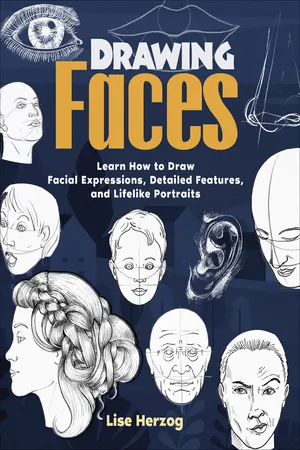
eBook - ePub
Drawing Faces
Learn How to Draw Facial Expressions, Detailed Features, and Lifelike Portraits
- 96 pages
- English
- ePUB (mobile friendly)
- Available on iOS & Android
eBook - ePub
Drawing Faces
Learn How to Draw Facial Expressions, Detailed Features, and Lifelike Portraits
About this book
Information
Topic
ArtSubtopic
Art GeneralBEFORE YOU BEGIN
Drawing a face can seem difficult. How do you convey a certain
realism? How do you capture the expression of features, faithfully depict your
subject, or find a way to accurately draw the nose and eyes?

First of all, you can use a few fairly simple rules of proportion.
But you don’t have to apply them to the letter to give your drawing style
and expression. Rules of proportion help you put each facial element more or
less in its place so that the face does not “break down.” Once you
internalize a few of these guidelines, you can free yourself to experiment a
little.
Because each face is different, how you draw a person’s face will
depend on whether they are real or from your imagination, whether they are a man
or woman, or where they are from. All of this information will help you modify
the proportions of the face and, of course, change the shape of the different
features that make it up.
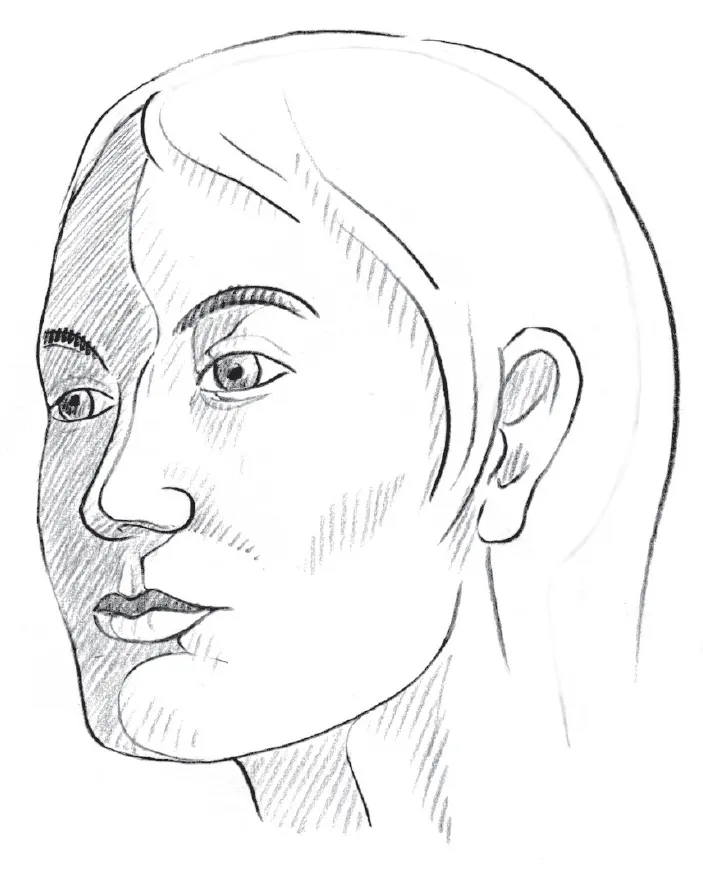
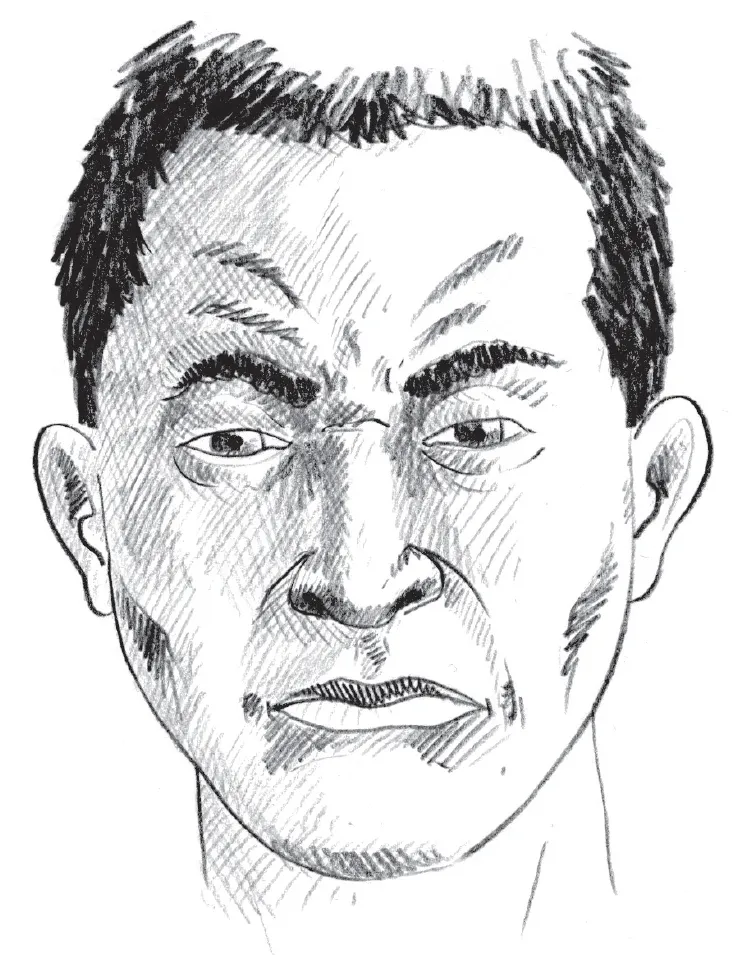
People
often want to draw someone they know. And after the drawing is done, it’s not
uncommon to find that the result doesn’t seem to look like the model at all.
However, if you look at the drawing without comparing it to the model (a real
subject or photo), you may realize that you can still recognize the person in the
drawing.
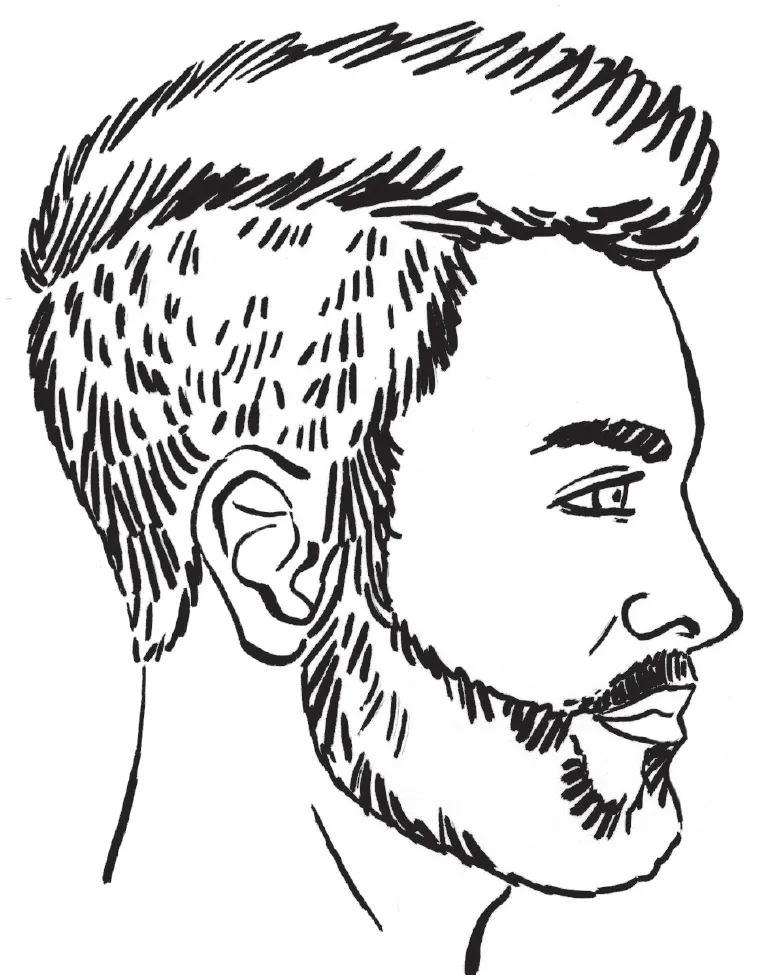
Furthermore, if you show your drawing to someone else, there’s
a good chance that person will recognize the subject also. How is this possible?
Even if your drawing doesn’t reproduce every detail of a face, it may
still capture the model’s characteristic features.
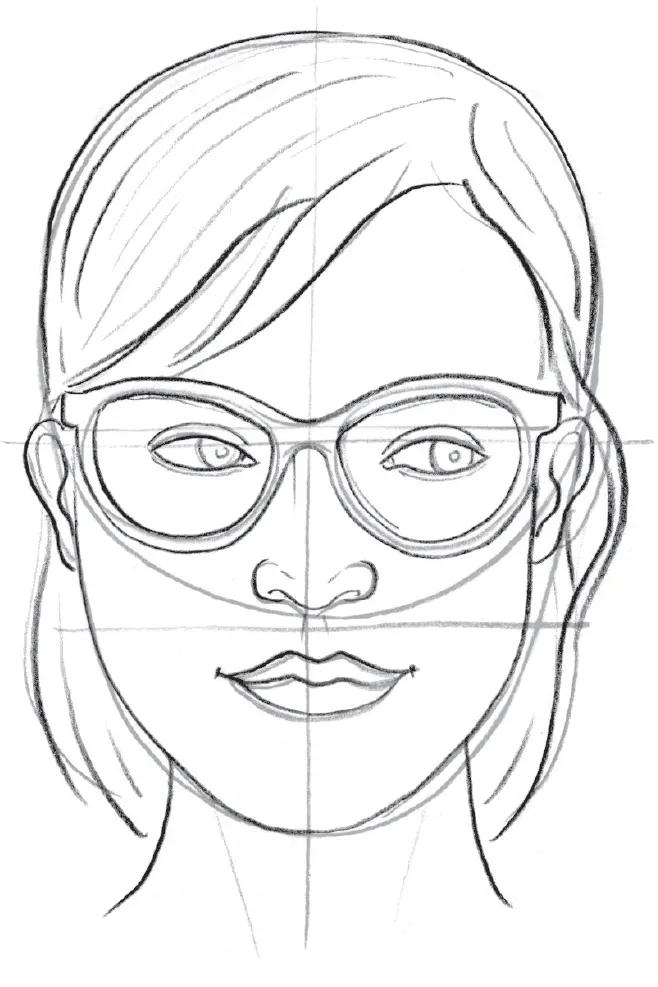
When you draw someone’s face, first try to pinpoint what that
person’s identifying features are, such as the shape of the chin, the
droop of the eyes, or the length of the forehead. Then focus on these defining
elements and build the rest of the face around them. Don’t hesitate to
caricature them a bit. Accessories, like a pair of glasses or a beard, are
invaluable aids.

To
accurately represent expressions or emotions, try observing yourself in a
mirror. Smile and watch where your face creases—which part goes up or
down, etc. Imagine invisible arrows that show the direction of your facial
movements.

There
are a thousand ways to represent the nose, mouth, or eyes and to make your drawing
realistic. Depending on your perspective, you can simplify or exaggerate certain
details.
The more you observe and draw, the more you will refine your
perception skills. It may be that one day you think your drawing is perfectly
proportioned, but the next day your impression of that same drawing has changed.
Consider why and make a new drawing without getting discouraged. Each drawing,
easy or difficult, is an essential step along the road of progress.
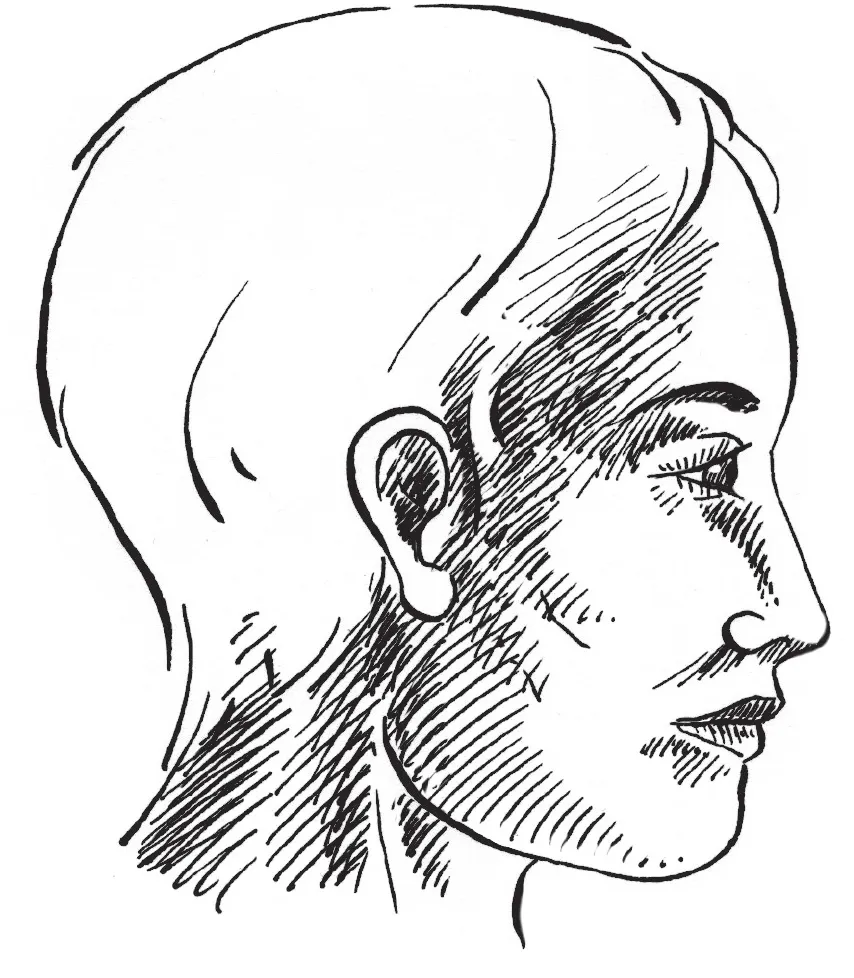
There are many tools available to help you refine your drawing and
achieve your desired look. Some tools, such as regular pencils, graphite drawing
pencils, and old felt-tip markers, allow you to make lighter or darker lines
depending on the pressure you use. Others, like some pens and India ink, are dark
from the start and leave little room for error. However, these darker materials make
it easier to erase a base sketch. Ballpoint pens are interesting because they can be
very soft and unobtrusive while still providing beautifully dark colors. And
indelible ink can allow you to rework a drawing with a wet technique.
As
complicated as a face is, it’s made up of simple angles and shapes,
including circles, ovals, and straight lines. You can therefore begin by
sketching a “frame” of simple shapes, which can then be
“dressed” by redrawing the face in more detail and with contours.
For these base sketches, it’s best to use graphite pencils, which are
forgiving and allow you to easily shade and erase your lines.

Whichever medium you prefer, take time to observe the subject, and
embrace mistakes. Each error sharpens your gaze, and each attempt gives you more
confidence!
THE BASICS OF THE FACE
To draw a face, follow a few rules of simple proportions. These rules of proportion bring consistency and realism to your drawing.
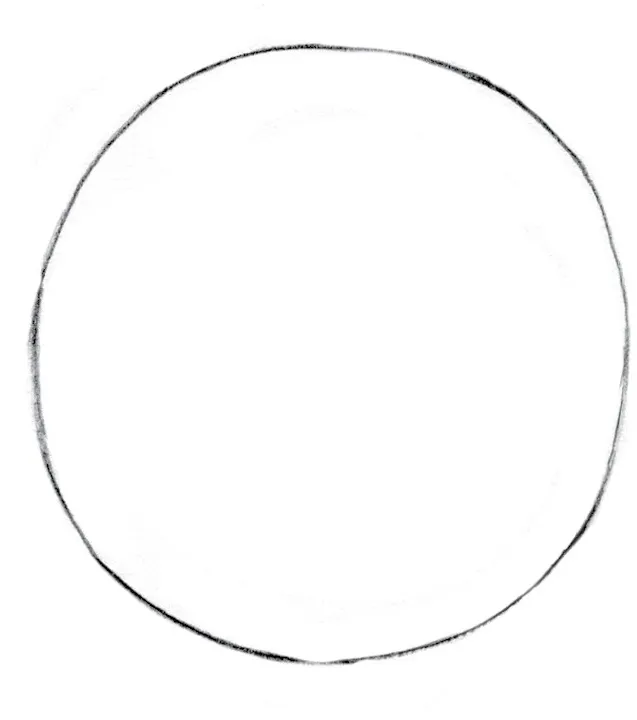
Start by drawing a large circle.
Then draw a vertical line down the center of the circle.
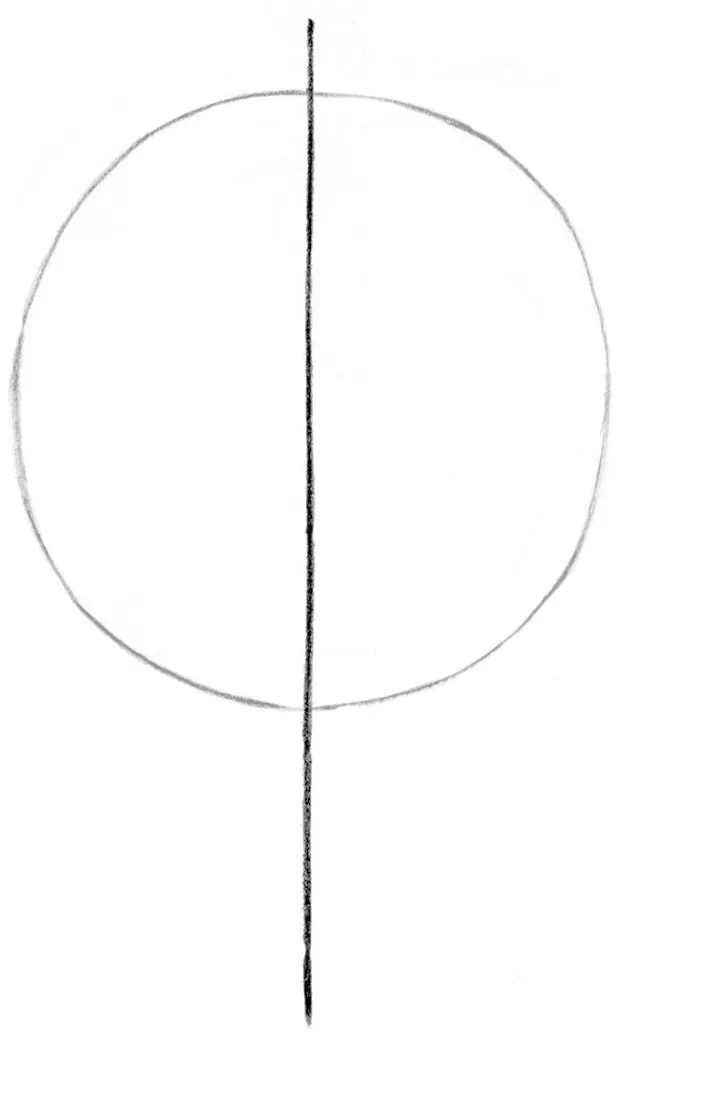
Draw half of an oval at the bottom of the circle to extend it downward.
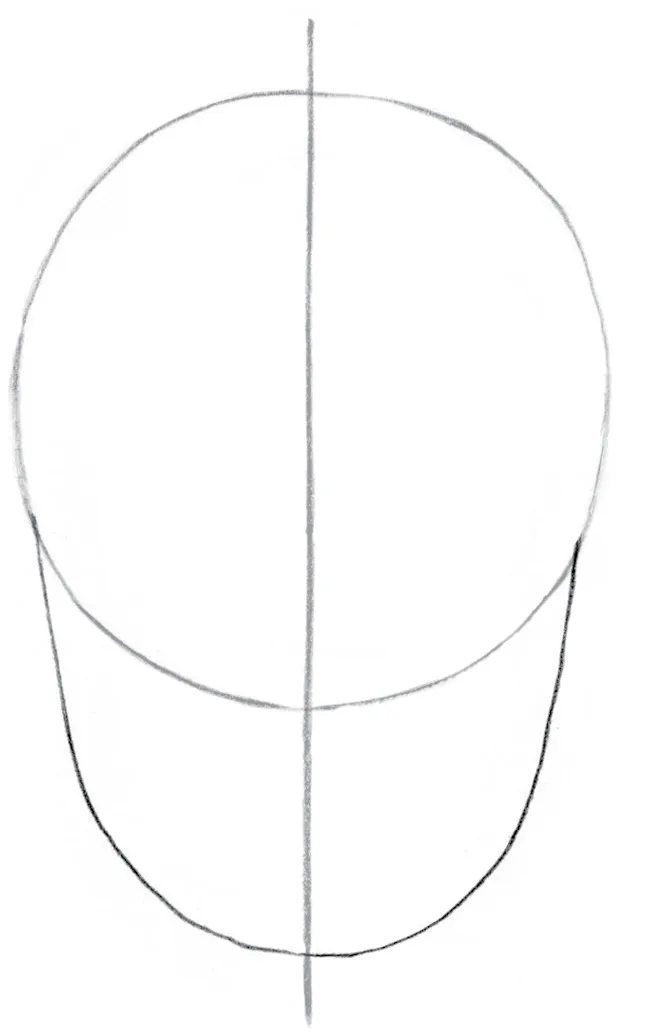
Frame the top and bottom of the face with two horizontal lines, then draw a third line halfway between them. Throughout this book, I’ll call this line...
Table of contents
- Cover
- Title Page
- 1. Before You Begin
- 2. The Basics of the Face
- 3. The Basics of the Face in Profile
- 4. The Basics of the Three-Quarters Perspective
- 5. The Face from Below or Above
- 6. Eyes
- 7. Noses
- 8. Mouths
- 9. Ears
- 10. Masculine Faces
- 11. Feminine Faces
- 12. Elderly Faces
- 13. Young Faces
- 14. Smiles
- 15. Joy
- 16. Sadness
- 17. Anger
- 18. Surprise
- 19. Doubt
- 20. Fear
- 21. Disgust
- About the Author
- Copyright
Trusted by 375,005 students
Access to over 1.5 million titles for a fair monthly price.
Study more efficiently using our study tools.
Frequently asked questions
Yes, you can cancel anytime from the Subscription tab in your account settings on the Perlego website. Your subscription will stay active until the end of your current billing period. Learn how to cancel your subscription
No, books cannot be downloaded as external files, such as PDFs, for use outside of Perlego. However, you can download books within the Perlego app for offline reading on mobile or tablet. Learn how to download books offline
Perlego offers two plans: Essential and Complete
- Essential is ideal for learners and professionals who enjoy exploring a wide range of subjects. Access the Essential Library with 800,000+ trusted titles and best-sellers across business, personal growth, and the humanities. Includes unlimited reading time and Standard Read Aloud voice.
- Complete: Perfect for advanced learners and researchers needing full, unrestricted access. Unlock 1.5M+ books across hundreds of subjects, including academic and specialized titles. The Complete Plan also includes advanced features like Premium Read Aloud and Research Assistant.
We are an online textbook subscription service, where you can get access to an entire online library for less than the price of a single book per month. With over 1.5 million books across 990+ topics, we’ve got you covered! Learn about our mission
Look out for the read-aloud symbol on your next book to see if you can listen to it. The read-aloud tool reads text aloud for you, highlighting the text as it is being read. You can pause it, speed it up and slow it down. Learn more about Read Aloud
Yes! You can use the Perlego app on both iOS and Android devices to read anytime, anywhere — even offline. Perfect for commutes or when you’re on the go.
Please note we cannot support devices running on iOS 13 and Android 7 or earlier. Learn more about using the app
Please note we cannot support devices running on iOS 13 and Android 7 or earlier. Learn more about using the app
Yes, you can access Drawing Faces by Lise Herzog in PDF and/or ePUB format, as well as other popular books in Art & Art General. We have over 1.5 million books available in our catalogue for you to explore.