From the first sketch to handling a prototype, Fashion Design: The Complete Guide is an all-inclusive overview of the entire design process. This second edition begins with an exploration of fashion in the context of different histories and cultural moments, before fashion designer, and educator John Hopkins walks you through fashion drawing, colour, fibres, research methods, and studio must-knows such as pattern making, draping and fitting. You'll also learn how to develop your portfolio and practice as a professional designer. Each of the six chapters ends with activities to help you hone your skills. Interviewees include Stefan Siegel (founder and CEO of Not Just A Label), Maggie Norris (Founder of Maggie Norris Couture and former designer at Ralph Lauren), Samson Soboye (Creative Director and Founder of Soboye Boutique) and Jessica Bird (a fashion illustrator, whose clients include Vivienne Westwood and matchesfashion.com). With discussion of the evolving role of social media and the practicalities of incorporating sustainability at the centre of the design process this is an essential text for any aspiring fashion designer.
- 168 pages
- English
- ePUB (mobile friendly)
- Available on iOS & Android
eBook - ePub
Fashion Design: The Complete Guide
About this book
Information
1
Fashion in context
Objectives
•To introduce a range of critical frameworks for fashion
•To appreciate the temporal nature of fashion
•To consider fashion in relation to gender and the body
•To explore the context of fashion as a system
•To recognize cultural contexts for fashion
•To consider fashion as more than clothes
Understanding fashion
Fashion is a multifaceted subject that can be deceptively difficult to define and constrain. It may be considered and understood from different perspectives simultaneously. Fashion may be viewed as objects, that is to say styles of clothing and ways of dressing. Fashion may also be associated with ideas and ways of thinking that give rise to modes of expression and self-expression, primarily through the medium of clothing and accessories. This in turn may elicit some complex emotional responses from groups and sections of society and even shape the behaviours, values and attitudes of groups or societies. Fashion design therefore is neither passive nor neutral in its stance or intent.
Fashion may also be understood as a system, with competing hierarchies and loyalties that exist and coexist as part of societal and cultural frameworks. From a practical and economic perspective, fashion also represents an industry that operates across borders, defines labels and brands and can even shape the national character of nations. Think of straplines such as ‘Made in Italy’ or ‘Le Style Anglais’ for example. Fashion design may therefore be viewed as dynamic, with the capacity to innovate, challenge established norms and practices, shape values and offer new insights and approaches as a means of remaining relevant and contemporary.
It is worth noting some limitations to the scope and understanding of what may be considered as fashion. Fashion is not costume. That is to say it is not historical dress or an authentic national, religious or cultural form of dressing. The terms ‘fashion’, ‘clothing’ and ‘dress’ should also be understood as distinct from one another. A piece of clothing may exist without being fashionable, such as a laboratory coat worn as utility clothing or a corporate uniform worn by cabin crew on an aircraft. The term dress is also distinct from fashion in that dress may refer to a way of dressing or a tradition of dressing usually associated with customs and beliefs. In this way costume and dress operate outside fashion but are no less relevant to or distinct from fashion. Rather, they are different and can sometimes provide useful foundations or contexts for studying the role and origins of clothing. Fashion, and specifically fashion design, is more ideologically and practically attached to notions of modernity and systems of change as part of a dynamic process that encourages active participation and imagination.

Figure 1.2 FASHION STREET STYLE
Guests arriving at the Michael Kors runway show, New York City, September 2019.
Credit: Christian Vierig © Getty Images.
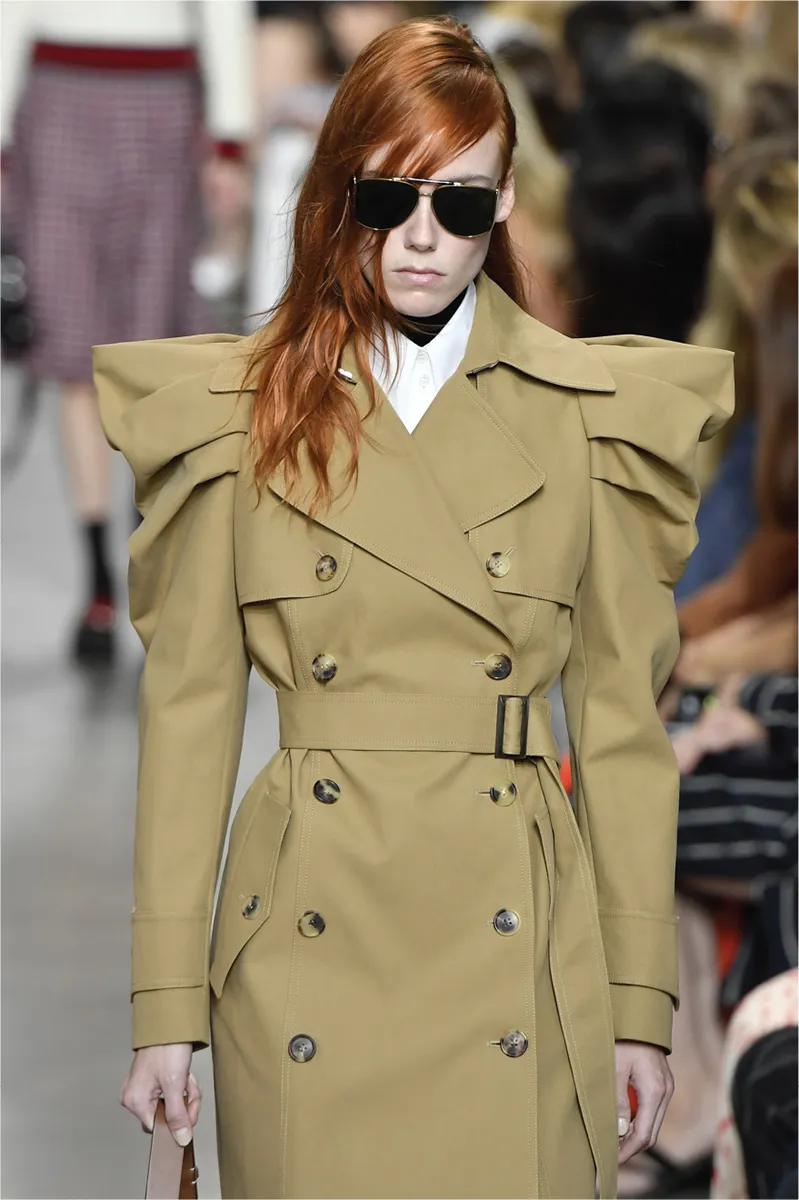
Figure 1.3 MICHAEL KORS RUNWAY PRESENTATION
Model wears a Michael Kors double-breasted coat as part of the designer’s runway presentation for spring/summer 2020.
Credit: Victor Virgile © Getty Images.
Fashion as change
Fashion is often characterized by its association with change. It may also be understood as an agent of change. Although scholars and academics have debated and proposed competing theories and models over many years to try to explain the processes and motives for fashion change, the ephemeral nature and essence of fashion continues to stimulate academic and popular discourse. The nineteenth-century English sociologist and philosopher Herbert Spencer suggested that body modification and ornamentation constituted early forms of dress that served as trophies, thereby asserting humans’ supremacy over the animal kingdom. In turn this imbued early forms of dress with symbolic meaning, rank and social position that could be understood as an evolutionary progression of fashion change. Spencer saw fashion as an act of conformity with an imperative to keep up with the ruling classes. The German sociologist Georg Simmel viewed fashion change as a process of imitation rather than an evolutionary process where clothing is more of a decorative impulse and a way of standing out or apart that is both a way of ‘looking’ and a way of ‘being’.
It is worth mentioning at this point that although fashion does change this doesn’t mean that it is always new. In one of his theoretical discourses, Simmel asserted that emulation leads to imitation rather than any type of linear evolution and through the process of imitation styles gain social equalization. This in turn acts as an agent for further differentiation and in this way fashion change may be understood as cyclic. Simmel’s theory also proposed that fashion originates from an elite social class, and while it unites one class it also intentionally excludes others that aspire to emulate the elite. In this way fashion requires societal differentiation; however, when subordinate groups imitate the elite, the elite abandon the original fashion in favour of a newer fashion.
Simmel’s contribution to ideas of fashion change has informed subsequent historical and marketing theories about cyclical fashion, including the ‘trickle-down’ theory in fashion. In this theoretical model, conspicuous consumption is usually represented by haute couture as the elite high fashion, attainable only to a privileged few. Mass-produced versions or ‘copies’ of high fashion represent imitation and could be explained as emulation by a subordinate group for wider consumption. The ‘copies’, however, remained differentiated from the original elite fashion. In Thorstein Veblen’s late nineteenth-century economic study The Theory of the Leisure Class, he refers to conspicuous consumption and built-in obsolescence as a means of economic expression and an index of wealth. For Veblen, being fashionable was a moral concern as it was essentially about being wasteful in a pecuniary culture that relied on divisions of labour and gender inequalities in the role of fashion.
More recent studies looking at fashion change have included the significance of ‘novelty’ as well as critiques on the origins of clothing like those by the notable dress historian James Laver who built on some aspects of Veblen’s work to classify his three principles of hierarchy, utility and seduction. However, Laver’s principles have been challenged by contemporary theorists and scholars who continue to test established and historical theories of fashion change in a contemporary fashion landscape that is rapidly shifting and reshaping itself in the face of disruptive forces and technologies, including the rise of digital platforms and economies as well as ethical and sustainable models of fashion production and consumption.
Fashion design, gender and the body
The relationship between the body, clothing and representations of gender is multifaceted and complex in the context of fashion. It also remains central to the raison d’être of fashion design and notions of dressing. Early attempts to construct a philosophy of clothing included beliefs and suppositions that humans were somehow incomplete without clothing and that, since there was no conclusive evidence for the single origin of dress, dressing represented a type of collective unconscious behaviour that shaped human evolution. Later theories and approaches would begin to form around anthropological and psychoanalytical perspectives. In the context of fashion design, gender and the body are inextricably linked to theories and constructs of identity.
Two distinct approaches have been studied and debated from opposing viewpoints. The model of gender essentialism, which has been vigorously challenged by many contemporary scholars and academics, considered that men and women acted differently for intrinsic reasons and because of innate qualities that are largely rooted in biology, which served to reinforce and maintain social stereotypes, such as ...
Table of contents
- Cover
- Title Page
- CONTENTS
- Introduction
- 1.0 Fashion in context
- 2.0 Visual language of fashion
- 3.0 Colour and fabrics
- 4.0 Research and design
- 5.0 Concept to prototype
- 6.0 Portfolio and professional practice
- Conclusion
- Acknowledgements
- Index
- eCopyright
Trusted by 375,005 students
Access to over 1.5 million titles for a fair monthly price.
Study more efficiently using our study tools.
Frequently asked questions
Yes, you can cancel anytime from the Subscription tab in your account settings on the Perlego website. Your subscription will stay active until the end of your current billing period. Learn how to cancel your subscription
No, books cannot be downloaded as external files, such as PDFs, for use outside of Perlego. However, you can download books within the Perlego app for offline reading on mobile or tablet. Learn how to download books offline
Perlego offers two plans: Essential and Complete
- Essential is ideal for learners and professionals who enjoy exploring a wide range of subjects. Access the Essential Library with 800,000+ trusted titles and best-sellers across business, personal growth, and the humanities. Includes unlimited reading time and Standard Read Aloud voice.
- Complete: Perfect for advanced learners and researchers needing full, unrestricted access. Unlock 1.5M+ books across hundreds of subjects, including academic and specialized titles. The Complete Plan also includes advanced features like Premium Read Aloud and Research Assistant.
We are an online textbook subscription service, where you can get access to an entire online library for less than the price of a single book per month. With over 1.5 million books across 990+ topics, we’ve got you covered! Learn about our mission
Look out for the read-aloud symbol on your next book to see if you can listen to it. The read-aloud tool reads text aloud for you, highlighting the text as it is being read. You can pause it, speed it up and slow it down. Learn more about Read Aloud
Yes! You can use the Perlego app on both iOS and Android devices to read anytime, anywhere — even offline. Perfect for commutes or when you’re on the go.
Please note we cannot support devices running on iOS 13 and Android 7 or earlier. Learn more about using the app
Please note we cannot support devices running on iOS 13 and Android 7 or earlier. Learn more about using the app
Yes, you can access Fashion Design: The Complete Guide by John Hopkins in PDF and/or ePUB format, as well as other popular books in Design & Fashion Design. We have over 1.5 million books available in our catalogue for you to explore.