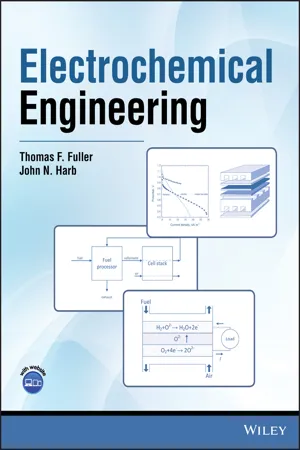
A Comprehensive Reference for Electrochemical Engineering Theory and Application
From chemical and electronics manufacturing, to hybrid vehicles, energy storage, and beyond, electrochemical engineering touches many industries—any many lives—every day. As energy conservation becomes of central importance, so too does the science that helps us reduce consumption, reduce waste, and lessen our impact on the planet. Electrochemical Engineering provides a reference for scientists and engineers working with electrochemical processes, and a rigorous, thorough text for graduate students and upper-division undergraduates.
Merging theoretical concepts with widespread application, this book is designed to provide critical knowledge in a real-world context. Beginning with the fundamental principles underpinning the field, the discussion moves into industrial and manufacturing processes that blend central ideas to provide an advanced understanding while explaining observable results. Fully-worked illustrations simplify complex processes, and end-of chapter questions help reinforce essential knowledge.
With in-depth coverage of both the practical and theoretical, this book is both a thorough introduction to and a useful reference for the field. Rigorous in depth, yet grounded in relevance, Electrochemical Engineering:
- Introduces basic principles from the standpoint of practical application
- Explores the kinetics of electrochemical reactions with discussion on thermodynamics, reaction fundamentals, and transport
- Covers battery and fuel cell characteristics, mechanisms, and system design
- Delves into the design and mechanics of hybrid and electric vehicles, including regenerative braking, start-stop hybrids, and fuel cell systems
- Examines electrodeposition, redox-flow batteries, electrolysis, regenerative fuel cells, semiconductors, and other applications of electrochemical engineering principles
Overlapping chemical engineering, chemistry, material science, mechanical engineering, and electrical engineering, electrochemical engineering covers a diverse array of phenomena explained by some of the important scientific discoveries of our time. Electrochemical Engineering provides the critical understanding required to work effectively with these processes as they become increasingly central to global sustainability.