The Mission House
eBook - ePub

The Mission House

  1. 272 pages
  2. English
  3. ePUB (mobile friendly)
  4. Available on iOS & Android
eBook - ePub

The Mission House

About this book

The Sunday Times (London) Novel of the Year
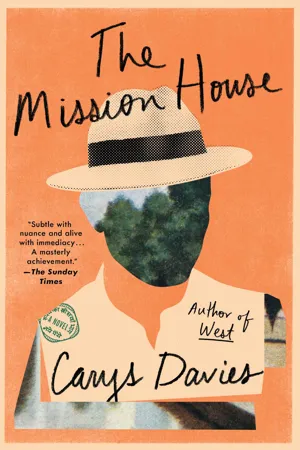
"Luminous…a writer to watch—and to savor." — Oprah Daily From the award-winning author of West and The Redemption of Galen Pike, a "sublime" ( The Toronto Star ) and propulsive novel that follows an Englishman seeking refuge in a remote hill town in India who gets caught in the crossfire of local tensions. In this "jewel of a novel" ( The Observer ), Hilary Byrd flees his demons and the dark undercurrents of contemporary life in England for a former British hill station in south India. Charmed by the foreignness of his new surroundings and by the familiarity of everything the British have left behind, he finds solace in life's simple pleasures, travelling by rickshaw around the small town with his driver Jamshed and staying in a mission house beside the local presbytery where, after a chance meeting, the Padre and his adoptive daughter Priscilla take Hilary under their wing. The Padre is concerned for Priscilla's future, and as Hilary's friendship with the young woman grows, he begins to wonder whether his purpose lies in this new relationship. But religious tensions are brewing and the mission house may not be the safe haven it seems. A "skillful drama of well-meant misunderstandings and cultural divisions" ( The Wall Street Journal ), The Mission House boldly and imaginatively explores postcolonial ideas in a world fractured between faith and nonbelief, young and old, imperial past and nationalistic present. Tenderly subversive and meticulously crafted, it is a deeply human story of the wonders and terrors of connection in a modern world.
Frequently asked questions

Yes, you can cancel anytime from the Subscription tab in your account settings on the Perlego website. Your subscription will stay active until the end of your current billing period. Learn how to cancel your subscription.
No, books cannot be downloaded as external files, such as PDFs, for use outside of Perlego. However, you can download books within the Perlego app for offline reading on mobile or tablet. Learn more here.
Perlego offers two plans: Essential and Complete
  • Essential is ideal for learners and professionals who enjoy exploring a wide range of subjects. Access the Essential Library with 800,000+ trusted titles and best-sellers across business, personal growth, and the humanities. Includes unlimited reading time and Standard Read Aloud voice.
  • Complete: Perfect for advanced learners and researchers needing full, unrestricted access. Unlock 1.4M+ books across hundreds of subjects, including academic and specialized titles. The Complete Plan also includes advanced features like Premium Read Aloud and Research Assistant.
Both plans are available with monthly, semester, or annual billing cycles.
We are an online textbook subscription service, where you can get access to an entire online library for less than the price of a single book per month. With over 1 million books across 1000+ topics, we’ve got you covered! Learn more here.
Look out for the read-aloud symbol on your next book to see if you can listen to it. The read-aloud tool reads text aloud for you, highlighting the text as it is being read. You can pause it, speed it up and slow it down. Learn more here.
Yes! You can use the Perlego app on both iOS or Android devices to read anytime, anywhere — even offline. Perfect for commutes or when you’re on the go.
Please note we cannot support devices running on iOS 13 and Android 7 or earlier. Learn more about using the app.
Yes, you can access The Mission House by Carys Davies in PDF and/or ePUB format, as well as other popular books in Literature & Literature General. We have over one million books available in our catalogue for you to explore.

Information

Publisher
Scribner
Year
2021
Print ISBN
9781982144845
eBook ISBN
9781982144852

1

As they climbed, the air cooled; by the time they were halfway up, it was chilly and fresh. ā€œThank God!ā€ said Byrd, gulping the breeze from the open window, and when the Padre asked him, what brought him here, up into the hills? Byrd said—and it felt like the truthā€”ā€œThe weather.ā€
At Modern Stores he bought milk and NescafĆ© and a packet of Highfield Premium Tea, a very expensive jar of Hartley’s raspberry jam, two eggs in a paper bag, and what looked and smelled like a banana muffin, which he planned to eat in the morning for his breakfast.
The Padre had told him about a shortcut that would bring him up out of the hectic town to the presbytery on the hill above the church, and from the high pavement outside Modern Stores he could see the church’s white spire, pointing like a compass needle into the misty sky above the messy pattern of tiled and corrugated roofs and the floaty, lightly moving tops of the trees.
ā€œThere it is,ā€ he said aloud, because it was reassuring to be able to see exactly where he was going. Carrying his shopping and his straw hat and pulling his suitcase over the broken surface of the road, he moved towards it until he came to the broad concrete steps the Padre had described. Up he went. On his left a group of women in bright clothes hacked at the ground with small sharp tools that flashed in the weak sunlight. Then, just as the Padre had told him they would, the steps delivered him out onto a steep road above the town at a gateless opening surrounded by thick vegetation; a crooked sign on the right-hand side said dog is on duty.
Byrd walked in under a canopy of dripping trees along a red earth driveway puddled with water.
There was no sign of any dog, or the Padre. The bungalow was there, though, in the garden next to the presbytery, as the Padre had promised, the door open invitingly.
How tired he was!
How exhausted after his weeks wandering about down on the plains: the temples and the dusty museums, the endless hotel rooms, the uncomfortable nights spent on buses and trains, the awful clamor of the auto rickshaw drivers, the intolerable heat.
At the beginning of his travels, it had all gone well enough. At his hotel next to the Danish fort in Tranquebar, a pleasant breeze had blown in off the Bay of Bengal. In the middle of the night he’d looked out of his window to see the lights of fishing boats strung out across the water, like fallen stars. In the morning, waiters had arrived at his table in crisp white jackets and scarlet headdresses and his tea had come in a silver pot. His bedroom had overflowed with sequined bolsters and gorgeous rugs, and when he’d strolled along the shore past the fishermen mending their fine white nets, they’d seemed to be sitting cross-legged in a bank of cloud.
But the hotel was more expensive than he could afford (more expensive than he thought a hotel in this country should reasonably be) and he’d moved up the coast to Pondicherry, but the Pondicherry hotels had been expensive too, and he’d been obliged to move on. For a month he’d shuttled between the cities of the interior, and everywhere he went, he found them alive with unbearable numbers of people and cars and scooters, bright lights and noise, horns and clatter and an endless beeping, the roar of engines, steam and smoke and diesel, with street vendors thronging the pavements in front of phone shops and newspaper kiosks, calling out to him about their vegetables and their fruit; he’d fought his way past men in flowing robes and men in white-collared shirts and dark trousers carrying briefcases, women in blue jeans and women in glittering saris, children in polished shoes and no shoes at all. It was overwhelming. The crippled beggars repulsed and terrified him, and he’d hurried past them with his suitcase, praying they would not reach out and catch hold of his ankle or the hem of his shorts. On top of everything, there’d been the heat.
But he was here now, and though there’d been clamor and hustle as he’d made his way through the town, it seemed to him like a gentler version of everything he’d encountered down on the plains, and best of all, he was no longer sweating.
In the cool of the evening he walked through the small, square rooms of the little bungalow: a sitting room with a fireplace and an etching of a Scottish loch and a neat, round table, in the corner a green fridge; a veranda-like room closed in with windows, containing a desk and a huge extraordinary chair like a dentist’s; a bedroom with a three-quarter bed, an embroidered placard on the wall above it that said I will be your Shield, your High Tower, the Horn of your Salvation; a bathroom with a toilet and a sink and a big pink plastic bucket like a dustbin; a kitchen with a blue propane bottle and a two-burner stove, another sink, and shelves lined with clean newspaper. Ideal Pigeon, it said in black script on the front of the stove’s white enamel.
ā€œWell, isn’t this nice?ā€ he said aloud.
He boiled the eggs and made himself a cup of tea. He unpacked his things and stowed his suitcase under the bed. He walked through all the rooms again, closing the open windows and drawing all the curtains. It was hard to imagine anything more cozy and snug.
In the kitchen he put a pan of water on to boil, then two more, until there was enough hot water in the pink bucket in his bathroom for him to stand in it and wash himself. There was still a crust of salt around his middle from the sweat that had collected there, in the heat of the morning, and dried when the train reached the cool air of the mountains. It gave him such pleasure to see it dissolve and disappear beneath his wet sponge. And then there was the novelty of putting on his pajamas, which he hadn’t worn since leaving home.
It was late when he noticed the other man’s clothes, hanging limply from a forked hook on the back of the bedroom door. The door was open against the wall, and when he closed it, there they were: a red-and-blue plaid shirt and a pair of dark, many-pocketed trousers; a hat with earflaps and a pom-pom.
It amazed him, what he felt when he saw them—how much he would have preferred it if they weren’t there; how much, in the few short hours since he’d arrived, he’d come to think of the place as his own.
He pushed the door back against the wall so that the clothes of the absent missionary were, as they’d been before, out of sight.
On his pillow, a hot water bottle lay in a woolen cover, and he thought about boiling another pan to fill it, but he was so very tired now, and instead he climbed into the three-quarter bed and let his head sink into the cool pillow. For a little while, he read, but soon his eyes began to close, and his last thought before he slept was how lucky it was, that he and the Padre had boarded the same carriage at Mettupalayam; how lucky that they’d fallen into conversation after his joyous Thank God! when, halfway up, the air had cooled; what a stroke of good fortune it was, that this little bungalow was lying here in this pretty, if slightly neglected and overgrown garden, empty and available.

2

At the railway terminus the Padre had parted with Mr. Hilary Byrd and they had gone their separate ways, Mr. Byrd to Modern Stores to buy his supplies, the Padre to the presbytery to prepare the bungalow for his arrival.
When he had beaten the rugs and put a quilt and a hot water bottle on the bed and pegs on the wire washing line outside, when he had put fresh newspaper on the kitchen shelves and dry sticks in the grate and a bag of milk in the small green fridge in the sitting room, the Padre sat down on the stone steps outside and told the dog, Ooly, that they were expecting a visitor.
The dog’s ears twitched. At the edge of the garden the leaves of the eucalyptus trees waved about in the breeze and a light rain began to fall. It fell on the Padre’s head and on the dog lying in the old kitchen sink. A shallow, rust-colored lake began to form around her but she didn’t seem to mind. She stayed where she was, her long throat resting on the sink’s lip, her dark liquid eyes looking out across the garden, past the hydrangea bush and the banana tree and the Dorothy Perkins rose towards the cratered driveway and the gateless entrance and the road, as if this was the first piece of news that had interested her in a very long time.

3

In the days that followed, Byrd toured the town.
He visited the Botanical Gardens and the lake. He called at the King Star Chocolates shop and bought six ounces of Fruit & Nut in a vacuum-sealed foil bag. He replenished his supplies in the market and at Modern Stores. He ate lunch at the Nazri Hotel. He walked through the jewelry district. He visited the library and Higginbotham’s Bookshop. At the bank opposite the Collector’s Office, he changed his money, and at the CTR barbershop he had his hair trimmed and watched the cricket that was playing on a small television high up on the wall, and everywhere he went things were, as they had been down on the plains, both strange and familiar, predictable and wholly unexpected; easy to understand and indecipherable. A lot of people spoke English but a lot didn’t. Some of the newspapers were in English but most weren’t. Some of the buildings reminded him of home but many didn’t.
In the Global Internet Cafe he composed an email to his sister, Wyn, full of details and description and the little saga of his lucky meeting with the Padre and how it had brought him to his bungalow, and when it was finished he sent it to her, like a peace offering.
Nothing could have prepared him for the claggy, oppressive heat of the plains. He’d felt as if he were being slowly cooked, basted in the sweat with which his pale body was permanently awash, and eventually he could no longer face doing battle with it. For a whole week he didn’t go outside; he stayed in his hotel room with the ceiling fan going and the air-conditioning on, and then one evening he’d gone down to the bar and heard a group of German tourists talking about a slow blue train with decorated glass windows that would bring him up out of the roasting cauldron of the plains into the cool air of the mountains. In the morning he’d packed his suitcase and taken a taxi to Mettupalayam and by seven o’clock he’d been in his seat, high up on the winding track, looking down upon a brown river sliding between big boulders and small, broken rocks.

He liked his bungalow more and more.
He’d been shopping again, at Modern Stores and in the market, and all his jars and packets were arranged on the newspaper-covered shelves in his kitchen; his fruit and his vegetables stowed away on the tiered orange plastic stand next to the Ideal Pigeon stove; his books in a pile on his desk, his pajamas under his pillow. Through the windows of the veranda-like room at the front, he could see out across the valley to the other side, beyond the town, to the mist-shrouded forests and bright, tea-covered slopes.
He also liked the presbytery garden—its combination of the exotic and the familiar: the rhubarb and the multicolored asters, the penstemons and the snapdragons, the elderflower and the sweet williams, all mixed in with the banana tree and the eucalyptus and some kind of huge, almost plastic-looking green shrub with giant red flowers, which Wyn might have known the name of but which he couldn’t identify.
The only irritating thing was the black dog. He hadn’t noticed it the day he arrived, but it lay, almost all the time, in a white sink on the ground next to the boiler house behind the presbytery. The only time he’d seen it move was when it climbed out of the sink and followed him to the door of his bungalow, as if it expected to be allowed inside.
The Padre himself came and went quietly and unobtrusively. Byrd saw him most mornings, setting off on an ancient motorbike with a spare tire on the back, inside a beige vinyl cover that said Padre Andrew.
He and his brothers had all been named for the apostles, said the Padre cheerfully when he saw Hilary Byrd looking at the tire. They’d been baptized at the Immanuel Church in Coimbatore—their father had worked at the post office there. ā€œMy older brother is Thaddeus. The others are James and Philip. Thaddeus is dead now. The other two are in Chennai. I am the only one of us who went into the church.ā€
He was short and round and very dark, bald and old, and most of the time he was dressed as he’d been on the day of their first meeting, in a too-large fleece hat and a green jacket; long trousers and a scarf wound around his neck like a snowman’s. He looked a little, thought Byrd, like Paddington Bear.
ā€œSettling in, Mr. Byrd, sir?ā€ he said at the end of a few days from the seat of his motorbike at the presbytery’s gateless opening when he was coming in and Byrd was going out, and Byrd said, ā€œYes!ā€ He liked his bungalow very much, he liked the town. There was a lot he didn’t understand but even so, he was feeling very much at home.
The Padre tilted his head to one side. He looked pleased—no, he looked more than pleased. He looked delighted, as if nothing in the world could make him happier than Mr. Hilary Byrd settling in and liking the town and feeling very much at home. Perhaps, he said, Mr. Byrd would have dinner with him one evening, in the presbytery? Tomorrow, perhaps? If he would like that?
Byrd said he would like that very much.
The Padre beamed and clapped his hands. He seemed ready to explode with delight.
ā€œGood. I will tell Priscilla.ā€
And then he was moving off, bouncing away along the puddled red driveway towards the front door of the presbytery.
Byrd watched him kick out the stand on his motorbike and disappear into the house.
Priscilla?
He had not known there was anyone else here. He had thought he was alone with the Padre and the dog.

4

At the terminus, the day Byrd arrived, the auto rickshaw drivers had called out to him, Sir! Sir! They had folded back the dripping blue tarpaulins of their tiny black-and-yellow vehicles and gestured for him to enter their damp and ramshackle interiors.
One of them—a short, old, desperate-looking man in tracksuit bottoms and a flapping shirt—had moved towards him, advancing at a steady forward-tilting trundle and already speaking to him. Sir! Byrd had taken a step back. His hand moved lightly, instinctively, to the nylon money belt around his middle. He hated the way these people made him feel both guilty and afraid. He wished he’d gone with the Padre—wished he had not said that he would do his shopping first, and then make his own way up to the presbytery by himself. He’d raised his chin and fastened his gaze on the white spire of the church in the middle distance that the Padre had promised would lead him in the right direction. Even so, he could still feel, and smell, the old man—close to him now, just a little to his left. Please, sir. Dark creased hands with stubby prayer-laced fingers, separated to fan a wallet of cracked and faded photographs, had appeared at the edge of Byrd’s vision. Glancing down, he saw a pair of dirty feet, one wearing a black flip-flop and the other a red plastic clog. Close to Byrd’s face, a lilting obsequious voice spoke. ā€œBotanical Gardens, sir. Lake. Tea Plantation. Savoy Hotel. King Star Chocolate Shop. Racecourse. Five hundred rupees. Whole day. Please, sir.ā€
If Wyn had been with him, she would have gone striding off into the throng by now, plied her way through the press of bodies saying, Excuse me, excuse me, and found someone reliable to take them shopping and on up to the presbytery. She would have come back smiling and certain and taken him by the arm and said, ā€œThis way, Hilary, this way.ā€ She would have fought off anyone who had the impression that Hilary Byrd was adrift, somehow, here in the hills; that his long-wristed hand was there for the taking, to be led away through the teeming streets or off into the tree-choked forests of wattle and eucalyptus. But Wyn was not with him, and Byrd had been quite alone and very anxious about being drawn into anything unwanted; about being taken to someplace he didn’t want to go. It had happened to him everywhere, time and again: in Chennai and Trichy and Thanjavur, when he was making his aimless and uncomfortable way across the roasting plains...

Table of contents

  1. Cover
  2. Title Page
  3. Dedication
  4. Chapter 1
  5. Chapter 2
  6. Chapter 3
  7. Chapter 4
  8. Chapter 5
  9. Chapter 6
  10. Chapter 7
  11. Chapter 8
  12. Chapter 9
  13. Chapter 10
  14. Chapter 11
  15. Chapter 12
  16. Chapter 13
  17. Chapter 14
  18. Chapter 15
  19. Chapter 16
  20. Chapter 17
  21. Chapter 18
  22. Chapter 19
  23. Chapter 20
  24. Chapter 21
  25. Chapter 22
  26. Chapter 23
  27. Chapter 24
  28. Chapter 25
  29. Chapter 26
  30. Chapter 27
  31. Chapter 28
  32. Chapter 29
  33. Chapter 30
  34. Chapter 31
  35. Chapter 32
  36. Chapter 33
  37. Chapter 34
  38. Chapter 35
  39. Chapter 36
  40. Chapter 37
  41. Chapter 38
  42. Chapter 39
  43. Chapter 40
  44. Chapter 41
  45. Chapter 42
  46. Chapter 43
  47. Chapter 44
  48. Chapter 45
  49. Chapter 46
  50. Chapter 47
  51. Chapter 48
  52. Chapter 49
  53. Chapter 50
  54. Chapter 51
  55. Chapter 52
  56. Chapter 53
  57. Chapter 54
  58. Chapter 55
  59. Chapter 56
  60. Chapter 57
  61. Chapter 58
  62. Chapter 59
  63. Chapter 60
  64. Chapter 61
  65. Chapter 62
  66. Chapter 63
  67. Chapter 64
  68. Chapter 65
  69. Chapter 66
  70. Chapter 67
  71. Chapter 68
  72. Chapter 69
  73. Chapter 70
  74. Chapter 71
  75. Acknowledgments
  76. Reading Group Guide
  77. About the Author
  78. Copyright