Wolf Pack
eBook - ePub
Available until 23 Dec |Learn more

Wolf Pack

  1. English
  2. ePUB (mobile friendly)
  3. Available on iOS & Android
eBook - ePub
Available until 23 Dec |Learn more

About this book

The 281st AHC gun platoon named the "Wolf Pack" was the 3d platoon where a select and well-known platoon of professional helicopter pilots and crew flying the C-model Huey UH-1C known as the Charlie Model from 1965 through 1971 in Vietnam. These men were like the knights of old, going day after day in twos or threes, to hold the battlefield against all comers and to do battle in defense of the Fifth Special Forces and its long-range reconnaissance unit. Detachment B-52, Project Delta. Pilots and aircrews felt like they were invincible, 6 Feet Tall, bulletproof, and kin to the gun-slingers of the old west. Unfortunately, some made the ultimate sacrifice, others were wounded, and to this day, some still have to deal with that time. Indeed, the legacy of the 281st Wolf Pack is a story of a remarkable, unyielding spirit and uncompromisingly fierce defiance in the face of death with a determined enemy.

This book is a work of respect and honor covering the life and times of the U.S. Army's first special operations helicopter company, the "Wolf Pack." As an element of the 281st Assault Helicopter Company, the Wolf Pack provided armed helicopter support for the special forces units in Vietnam, with emphasis on aerial weapons support for Project Delta and the MACV Recondo School, which was recognized as the deadliest school in the armed forces. This book contains the real-time stores of the men who flew and maintained the helicopters that operated under the banner; "Hell From Above." For the most part, these young men were fresh out of school and had been expeditiously trained to fly and maintain their helicopters. Few had previous combat experience. In performing one of the most dangerous missions of the war, these young men, proudly known as the "Wolf Pack, " developed aerial gunnery and support skills that identified them as one of the top helicopter gun units of the war! This book tells their story and honors each of them.

John "Jack" Mayhew was a major and the 281st AHC commander in 1967-68. He later retired as a colonel with more than 30 years of service. William McCollum was the NCOIC of flight operations in 1967-68. He later retired as a Sergeant First Class with more than 20 years of service

Keywords - Vietnam, Army, Special Operations, Helicopter, 281 st Assault, Wolf Pack, Pilots, Aircrew, Special Forces, Platoon, Sacrifice

Frequently asked questions

Yes, you can cancel anytime from the Subscription tab in your account settings on the Perlego website. Your subscription will stay active until the end of your current billing period. Learn how to cancel your subscription.
No, books cannot be downloaded as external files, such as PDFs, for use outside of Perlego. However, you can download books within the Perlego app for offline reading on mobile or tablet. Learn more here.
Perlego offers two plans: Essential and Complete
  • Essential is ideal for learners and professionals who enjoy exploring a wide range of subjects. Access the Essential Library with 800,000+ trusted titles and best-sellers across business, personal growth, and the humanities. Includes unlimited reading time and Standard Read Aloud voice.
  • Complete: Perfect for advanced learners and researchers needing full, unrestricted access. Unlock 1.4M+ books across hundreds of subjects, including academic and specialized titles. The Complete Plan also includes advanced features like Premium Read Aloud and Research Assistant.
Both plans are available with monthly, semester, or annual billing cycles.
We are an online textbook subscription service, where you can get access to an entire online library for less than the price of a single book per month. With over 1 million books across 1000+ topics, we’ve got you covered! Learn more here.
Look out for the read-aloud symbol on your next book to see if you can listen to it. The read-aloud tool reads text aloud for you, highlighting the text as it is being read. You can pause it, speed it up and slow it down. Learn more here.
Yes! You can use the Perlego app on both iOS or Android devices to read anytime, anywhere — even offline. Perfect for commutes or when you’re on the go.
Please note we cannot support devices running on iOS 13 and Android 7 or earlier. Learn more about using the app.
Yes, you can access Wolf Pack by John "Jack" Mayhew,William McCollum in PDF and/or ePUB format, as well as other popular books in History & Vietnam War. We have over one million books available in our catalogue for you to explore.

Information

A Bit of History

In 1963 and '64, the US Army was scrapping to meet the aviation needs of the new MACV (Military Assistance Command Vietnam) in Vietnam. The methodology they selected was based on supply and demand. The supply-side meant that all UH-1 Helicopters were reassigned and relocated to the newly formed Aviation Platoons located at various military posts throughout the States. The same applied to Aviators, NCO’s, Crew Chiefs, and Maintenance Technicians.
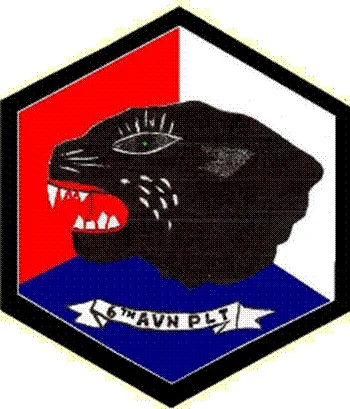
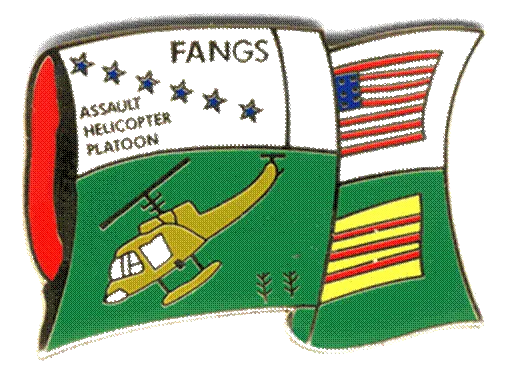
The 6th Aviation Platoon was one of the first aviation platoons to be designated as an aerial weapons platoon (gunships). In Vietnam, the platoon was known as the “Fangs.”
fang-trans.png
A group of men posing for a photo

Description automatically generated with medium confidence
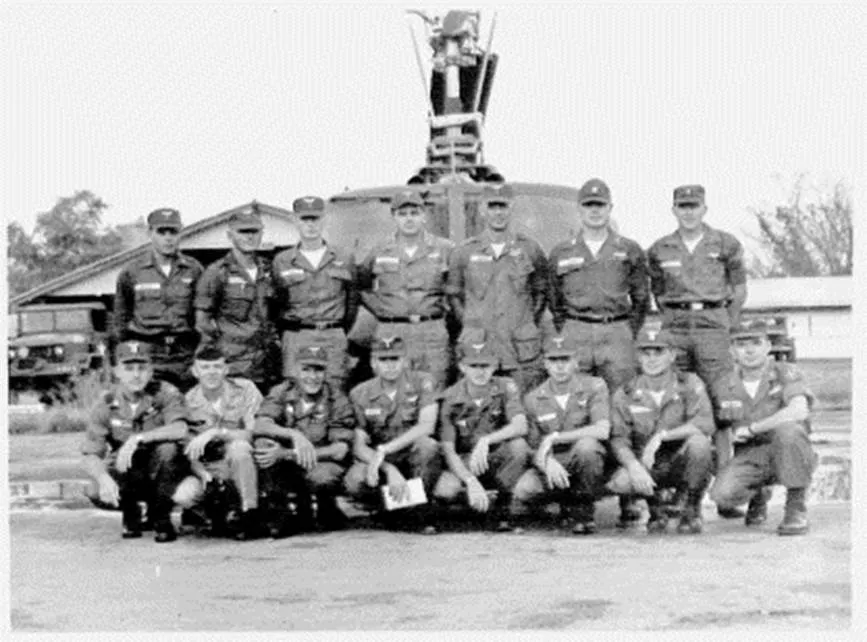
6th Aviation Platoon pilots, photo taken at Tan Son Nhut in October 1965.
Front Row: Lee Smith, Unknown (Dobbs?), Chuck Baird, Jon Osgood,
John Parziale, Bill Hale, Dale Le Clerc, John Meadows.
Back Row: Clayton Wright, Thompson, Larry Joe Hicks, Dave Gehling,
Vic Holmes, Phil Haan, John Hyatt.
Under the command of Major Charles A. Lioha, the 6th Aviation Platoon was formed at Fort Riley, Kansas, in early 1964 and arrived in Vietnam in September 1964. The Platoon was initially attached to the 121st Aviation Company for their initial in-country training. After the unit was declared Combat Ready, it was assigned the mission of supporting IV Corps HQ and the 5th Special Forces Group (SFG)(ABN). The unit was awarded the Distinguished Unit Citation in December of 1964. In early 1965 the 6th Aviation Platoon was moved to the I Corps Tactical Zone, where it joined up with its sister unit, the 7th Aviation Platoon (Airlift). After a short but illustrious stint in I Corps, the team was moved south to Tan Son and then to Bien Hoa. In early 1966 the 6th was combined with the 145th Aviation Platoon (Airlift) to form the 2nd Platoon of the 2nd of the 171st Aviation Company (Provisional) located in Nha Trang. Their new mission was to provide airborne weapons support to the 5th SFG (ABN), Detachment B-52, Project Delta, and the MACV Recondo School. They subsequently became the 3rd Platoon (Wolf Pack) of the 281st AHC.

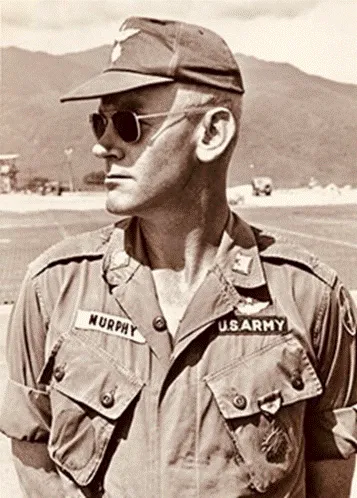
Major Kevin Murphy Recalls

Commander, 145th, and the 2nd of the 171st (Provisional). Major Murphy recalls the beginning.
What sketchy records, email, and memory I can summon indicates that Bob Lada had the 145th from Sept. 64 to March 65; Dan Smith from March 65 until July 65. I took over at Nah Trang, and with the exception of a pair of gun birds TDY to Vung Tau, for a month, we were flying VIPs from General Swede Larsons new Field Force Victor. After several years of VIP work at Davison and other AVN detachments, this didnt thrill me. This is combat? Apparently, Bill McKeen (Bulldog 6) CO. 5th SF got tired of my whimpering and complaining about what a job we could do for the SF if he would get us assigned. Approximately 1 Dec 65, we were placed OPCON to the 5th SFG. Our main job was support of Project Delta, but since I outranked Charlie Beckwith, we were OPCON to the 5th SF.
We were under the 52nd Aviation Battalion, Pleiku. Approximately November 1965, we were assigned to support Project Delta. I believe the unit was transferred to the 10th Aviation Battalion in December 1965.
At the same time, the 6th ALP was assigned to the 10th Aviation Battalion and also placed under my command. If I recall correctly, the liaison officer from 10th (A most helpful major) rounded up all of the personnel and pay records from both platoons and consolidated them at Battalion Headquarters, as the 2nd of the 171st. He explained that this was a stopgap measure until a company HQ was shipped in or authority was provided to 10th Bn. to form a new company.
The 6th Platoon was operating out of Bien Hoa and was scheduled to receive new C model gunships to replace their old B’s. They were starting to transition their pilots into the C models. The 6th was to stay at Bien Hoa until the training and aircraft swap was complete. In the interim, I was tagged to train them and accept missions from the XO of the 5th SF Group for Project Horse. Word came down that the 281st was on the way, with Major Hackett bringing the unit in as Commanding Officer in late Apr. '66.
I spent about two weeks running classes and briefings for the new 281st people, then 5th SF sent me to Bien Hoa to wrap up training of the old 6th Platoon and take them on Project Horse missions. I was on a mission with them (Ban Me Thuot) when my DEROS went by, so I didnt get out of country till the last of July 66.
In July of 1966, the 2/171st was absorbed by the newly arrived 281st Assault Helicopter Company and what had been the 6th Platoon became the 3rd Platoon of the 281st, which became known throughout the country as the Wolf Pack.

What’s In A Name?

The Army, in its wisdom, assigned the name "Iroquois” to the new UH-1 Helicopter but left the door open to the creation of a new industry through Vietnam. Few aviation units had previous history and or individual names. This was like leaving candy in the schoolyard. In each separate aviation unit, there were creative individuals who applied their skills to developing individual descriptive names and patches for their unit and or platoon. In response, thousands of locals went into business, creating, producing, and selling unofficial unit patches that depicted the new unofficial names created and adopted by the aviation units. The name Wolf Pack was one of these names.

Fred Philips Recalls the Naming Process
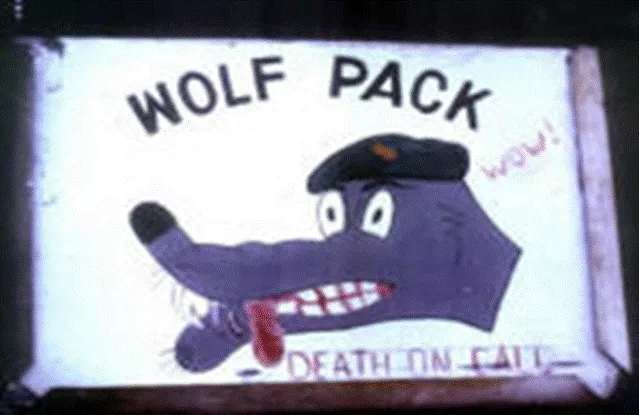
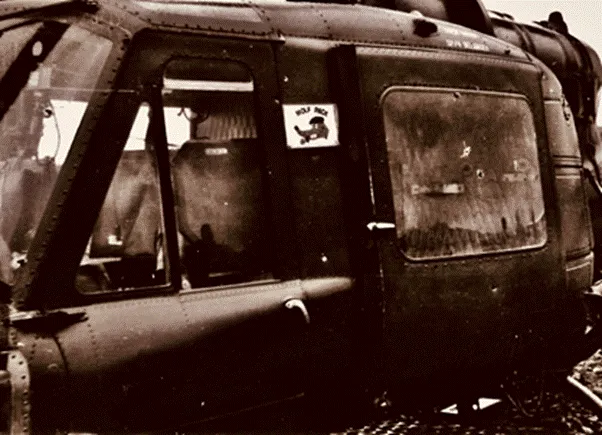
The aviators of the new 3rd Platoon gathered at the bar, where they took on the task of creating a unit patch. The new designation and corresponding patch would tell the Viet Cong, the North Vietnamese Army, and the rest of the world they were here to bring death and destruction to the VC and NVA. Their session ended with a lot of ideas and no agreement on a name. However, the next morning, they discovered that a young door gunner had painted a wolf head on the door of a gunship. Thanks to the young door gunner, their pressing problem was solved! The new Wolf logo, created and painted by a door gunner named David Bitle, proudly identified the 3rd platoon of the 281st AHC as the “Wolf Pack.”
Lieutenant Fred Philips, WP 66

No Door Gunners

The Army was having difficulty in finding crew members to meet the ever-expanding needs of MACV aviation units. Also, there was a critical shortage of individuals trained in the skill of operating an M60 machine gun from a moving helicopter. To solve this problem, the 25th Infantry Division, located in Hawaii, was tasked with the mission of recruiting, training, and deploying door gunners to Vietnam on a temporary duty basis (TDY). PFC David Bitle was one of the first volunteers and one of the last to leave the battlefield. David served as a door gunner, crew chief, and Wolf Pack platoon serge...

Table of contents

  1. Support Magic
  2. Dedication
  3. SPECIAL RECOGNITION
  4. A note from the Editors
  5. Map
  6. Preface
  7. Introduction
  8. A Bit of History
  9. Sixth Wolf Pack Platoon Leader
  10. The Rescue, The way I remember it
  11. The Battle of Duc Lap
  12. Almost the best day of my Vietnam experience
  13. Good Bye Vietnam
  14. Another Delta Mission out of FOB An Hoa
  15. Special Forces Medics in Vietnam Were Unique
  16. Baptism by Fire
  17. Flying with Captain Brown
  18. FROM WOBBLY ONE TO REAR ADMIRAL
  19. Duane “Tubby” Brudvig Presentation
  20. A Very Special Thanks
  21. Turning off the Lights and Going Home
  22. Lost And Unaccounted Intruders
  23. Flying A Heavy Gun Ship with A Dead Engine