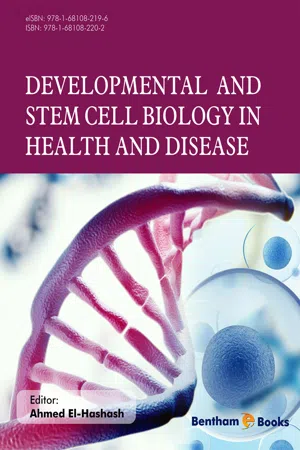
Research into stem cells started in the 1960s with experiments on spleen cultures. Evans and Kaufman made a breakthrough in mouse embryo culturing and embryonic stem cell extraction in 1981, followed by the work of Thomson in 1998 on the technique for extracting human embryonic stem cells. Since then, stem cell research has rapidly expanded as a therapeutic avenue for different diseases in humans. This book explains the basic developmental biology of stem cells including the development of stem cells during the implantation stage in utero to the regulation of stem cell division. Medical applications of stem cells in the therapy of diseases such as cancer, neurodegenerative diseases, and bone diseases are also explained in subsequent chapters. The book also explains the effect of parasitic cells on stem cell growth. Concepts in the book are explained in a simple clear manner, making this book an informative reference for non-experts, students and professionals in the field of biology and medicine.
- English
- ePUB (mobile friendly)
- Available on iOS & Android
eBook - ePub
Developmental and Stem Cell Biology in Health and Disease
About this book
Information
A Scope on Stem Cells and Human Parasites
Marwa Adel HasbySaad*
Faculty of Medicine, Tanta University, Tanta, Egypt
In this chapter, the aim is to shed the light if the new era of stem cells can play a role in the field of Medical Parasitology. We will try to answer certain questions. First; would parasites be friends or foes in the process of stem cell culture and therapy? Another question is that; can stem cells be a novel therapy against the notorious parasites that attack the human being and heal the permanent damage that some parasites may induce in organs? Finally, could the parasite stem cells be a potential target for new anti-parasitic therapy, especially in resistant chronic debilitating parasitism?
Keywords: ADMSCs, Alveolar ecchinochoccosis, Chronic Chagas Cradiomyopathy, Cryptosporidium, HPSCs, Malaria, Leishmaniasis, Neoblast-like stem cells, Parasites, Schistosomiasis, Toxoplasmosis.
* Correspondence author Marwa Adel HasbySaad: Faculty of Medicine, Tanta University, Tanta, Egypt; E-mails: [email protected], [email protected]
1. Medical Parasitology; What Does it Mean?
Although Parasitology had been originally a zoological science, the more précising term "Medical parasitology" would refer to the study of a group of pathogens classified as eukaryotes, kingdom Animalia, that cause a wide range of diseases in the human beings. Parasites infecting the humans can be generally divided into three broad categories; parasitic protozoa, parasitic helminths (worms), and arthropods. While the first two categories affect humans by tissue invasion and irritation, the third one can cause diseases either directly by tissue invasion, envenomization, allergic manifestations after biting or by acting as
vectors or vehicles that transmit various infectious agents to the humans, bio-logically and mechanically [1]. Generally, parasitic diseases fall under the broader term "infectious diseases" which include bacterial, viral, mycotic and parasitic diseases. They are considered the second most common cause of deaths all over the world after cardiovascular diseases, proceeding malignant neoplasms which come in the third grade [2]. Malaria which is caused by the parasitic protozoan "Plasmodium" ranks early in the list [3]. The human infections inflicted by parasites are numbered in billions. They vary between relatively innocuous infections to fatal diseases, especially with the ability of some of them to spread all over the body systems. The diseases caused by parasites are considered a worldwide major health problem. For example, Ascaris lumbricoides infection has reached 30% of the world's population [4]. Also, the incidence of schistosomiasis and malaria has been increasing rather than decreasing. Some parasitic illnesses are known to be opportunistic (e.g., cryptosporidiosis, toxoplasmosis, and strongyloidiasis) [5]. The hazards of opportunistic parasites have drawn much attention in the last century due to the epidemics of AIDS, and immune suppression after radiotherapy and immunosuppressive drugs [6]. Unfortunately, parasites have a wide range of modes and routes for transmission. They can reach humans in civilized areas due to pollution in the form of contaminated drinking water, improper sewage disposal (e.g. Cryptosporidium oocysts, Entamoeba histolytica and Giardia lamblia cysts), bad hygiene, exposure to soil contaminated with the helminth larvae and eggs (e.g. Hook worms & Trichuris trichuira) or after exposure to insects' bites like Mosquitoes that transmit malaria and Tse tse fly that transmit sleeping sickness. Parasites can get access to our bodies through almost all the routes of transmission; oral, inhalation, contact, skin penetration either passive or active, congenital, blood transfusion and by organ transplantation [7, 8]. Though parasites are famous for being endemic in the neglected tropical areas, lately, many people from the temperate and subtropical areas have become also infected with parasites. This can be explained by the phenomenon of global warming and the changes in climate conditions, which, for example, enhance the parasites to continue its life cycle. Migration from or visiting tropical countries also consist an important factor in increasing the spread of parasitic diseases [7, 9]. Parasites vary greatly during their life cycle. Some helminths have larval stages that little resemble the adult stage (for example, tapeworms and flukes). Also parasites may undergo many changes during their life cycle. They may be transmitted to humans from animals (zoonotic infections) but with a completely different clinical picture. When Toxoplasma gondii, which is an intestinal coccidian protozoan in cats, infects the human beings it takes a different form and become localizes in deep tissues [1]. The broad spectrum of parasites, starting from unicellular parasites (protozoa) to multicellular parasites (helminths, arthropods) does not show only changes in morphology but also in biochemical, antigenic and genetic library during their life aspects [10]. This makes the battle against parasites in prevention, control and treatment not an easy task. Hence, parasites are common to have a chronic course causing debilitation and permanent tissue damage with common development of drug resistance. There is a tremendous interplaying between the parasite and the human immune system. It starts from invasion of the first defense line in the form of the skin and mucous membrane till reacting with, escaping, tuning or even hi-jacking the highly sophisticated cells and cytokines of our immune system. This made parasites suitable organisms in understanding the immune reactions in the human body and a rich environment for medical biochemical, genetic and immunological researches.
2. Parasitic Infection: Would it be a Hazard after Stem Cell Transplantation?
Protozoa are one-celled parasites, with a worldwide prevalence. In humans, infections range from asymptomatic to fatal diseases, depending on the protozoan species and strain and the host resistance. The unicellular character of protozoa with the ability of some species to invade human cells makes some protozoa easily transmitted during blood transfusion and organ transplantation. Five % of more than 340 known infectious diseases reported after transplantation have been caused by protozoa, either due to a transmitted infection from the donor or the relapse of a dormant infection in the recipient after immune suppression.
The fact that several protozoa (e.g. Toxoplasma, Cryptosporidium, and Plasmodium species) could create a risk factor in stem cell transplantations has been reported in several studies.
2.A. Relapse of a Dormant Infection
2.A.1. Cryptosporidiosis
Recently, the world has witnessed an obvious increase in bone marrow stem cell transplantation for the treatment for leukemia and other hematological malignancies. There has been a growing fear of the risk that these patients may catch an infection with the opportunistic protozoan "Cryptosporidium" after bone marrow transplantation [11]. Cryptosporidium is a parasitic protozoan that is present in the form of oocyst. There are many species of Cryptosporidium, which infect humans and animals to habitat the brush border of the small intestine. In the external environment, the parasite is protected by an outer shell in the form of a thick walled oocyst to allow survival for a long time outside the body [12]. Water is the most common route of transmission, beside several different ways including faeco-oral transmission and contact with animals. The microscopic size of this protozoan (4-6 µ) makes it easily transmitted and inhaled through the air. Watery diarrhea and abdominal cramps are often the main complaints. Other symptoms may include nausea, vomiting and weight loss. Symptoms are either continuous or remittent and usually occur a week after exposure [13]. Cryptosporidium is well known for causing severe life-threatening manifestations in immunocompromised patients like in AIDS. The severity of AIDS is related to the CD4 count. Cryptosporidium has been also reported to cause gastritis, sclerosing cholangitis, pancreatitis and pneumonitis in patients with lukaemia and receiving chemotherapy, in addition to harsh diarrhea in during or after bone marrow transplantation [14]. There have been several reports of [15]. An Italian paper reported the...
Table of contents
- Welcome
- Table of Contents
- Title Page
- BENTHAM SCIENCE PUBLISHERS LTD.
- PREFACE
- List of Contributors
- Stem Cells, Developmental Biology and Reparative/ Regenerative Medicine: Tools and Hope for Better Human Life
- The First Morphogenetic Events During Mammalian Development
- Gene and Signals Regulating Stem Cell Fates
- Stem Cell Biology: Flies As Models and Examples
- Behavior and Asymmetric Cell Divisions of Stem Cells
- Adult Stem Cell Niches and Their Regulatory Molecular Mechanisms
- Stem Cell Regulatory Mechanisms During Wound Healing and Cancer
- Stem Cells in Cancer Development and Therapy
- Stem Cells and Neurodegenerative Diseases
- Stem Cells and Bone Disorders
- A Scope on Stem Cells and Human Parasites
Trusted by 375,005 students
Access to over 1.5 million titles for a fair monthly price.
Study more efficiently using our study tools.
Frequently asked questions
Yes, you can cancel anytime from the Subscription tab in your account settings on the Perlego website. Your subscription will stay active until the end of your current billing period. Learn how to cancel your subscription
No, books cannot be downloaded as external files, such as PDFs, for use outside of Perlego. However, you can download books within the Perlego app for offline reading on mobile or tablet. Learn how to download books offline
Perlego offers two plans: Essential and Complete
- Essential is ideal for learners and professionals who enjoy exploring a wide range of subjects. Access the Essential Library with 800,000+ trusted titles and best-sellers across business, personal growth, and the humanities. Includes unlimited reading time and Standard Read Aloud voice.
- Complete: Perfect for advanced learners and researchers needing full, unrestricted access. Unlock 1.5M+ books across hundreds of subjects, including academic and specialized titles. The Complete Plan also includes advanced features like Premium Read Aloud and Research Assistant.
We are an online textbook subscription service, where you can get access to an entire online library for less than the price of a single book per month. With over 1.5 million books across 990+ topics, we’ve got you covered! Learn about our mission
Look out for the read-aloud symbol on your next book to see if you can listen to it. The read-aloud tool reads text aloud for you, highlighting the text as it is being read. You can pause it, speed it up and slow it down. Learn more about Read Aloud
Yes! You can use the Perlego app on both iOS and Android devices to read anytime, anywhere — even offline. Perfect for commutes or when you’re on the go.
Please note we cannot support devices running on iOS 13 and Android 7 or earlier. Learn more about using the app
Please note we cannot support devices running on iOS 13 and Android 7 or earlier. Learn more about using the app
Yes, you can access Developmental and Stem Cell Biology in Health and Disease by Ahmed El-Hashash in PDF and/or ePUB format, as well as other popular books in Biological Sciences & Biotechnology. We have over 1.5 million books available in our catalogue for you to explore.