6G Wireless Communications and Mobile Networking introduces the key technologies behind 6G wireless communication and mobile networking to the reader. The book starts with a general vision of 6G technology, which includes the motivation that drives 6G research, the international organizations working on 6G standardization and recent progress in 6G research. Separate chapters on millimeter-wave and terahertz-wave technologies in 6G, the development of latest 6G antenna technology as well as related wireless communication applications are included in the contents. The book also provides details about the 6G network layer, such as self-organizing network driven by network slicing, software-defined networking and network function virtualization. Finally, it covers some popular research topics, including the challenges and solutions to massive 6G IoT networks, 6G cloud/edge computing and big data systems that may appear in the foreseeable future. Key Features: - Provides a complete introduction to 6G vision and technology - Consists of both basic theories and frontier technologies - Separate chapters on key topics such as 6G physical layers, millimeter wave and terahertz technology and advanced antenna arrays - Covers future trends and applications such as intelligent management systems, 6G IoT networks, cloud/edge computing and big data applications This focused reference will significantly enhance the knowledge of engineering students and apprentices involved in the field of telecommunications. Readers interested in cutting edge wireless networking technologies will also benefit from the information provided.
eBook - ePub
6G Wireless Communications and Mobile Networking
- English
- ePUB (mobile friendly)
- Available on iOS & Android
eBook - ePub
6G Wireless Communications and Mobile Networking
About this book
Information
Antenna Evolution for Massive MIMO
Min Wang1, *, Brian D. Gerardot2
1 College of Electronic Engineering, Chongqing University of Posts and Telecommunications, Chongqing, China
2 Institute of Photonics and Quantum Sciences, SUPA, Heriot-Watt University, Edinburgh, EH14 4AS, UK
Abstract
Massive MIMO technology is one of the key technologies of the 6G communication system and the basis of high-speed transmission in the wireless communication network. At the same time, massive MIMO puts forward new requirements for antenna devices in the communication system, such as active integration, miniaturization, broadband, etc. This chapter first reviews the development process and the latest progress of antenna technology in wireless communication. The requirement of a 6G communication network for the base station antenna and the terminal antenna is emphasized. The theoretical basis of massive MIMO technology in the 6G communication system is described in detail, and RIS technology which is closely related to massive MIMO, is introduced. The technical characteristics and development trends of massive MIMO antennas are discussed in detail, including antenna design and synthesis, feed network, and antenna selection technology. Finally, combined with the development of current antenna measurement and calibration technology, the measurement engineering technology closely related to the antenna feeder industry in 6G communication is introduced.
Keywords: Antenna array, Antenna measurements, Beam forming, Feed network, Massive MIMO.
* Corresponding author Min Wang: College of Electronic Engineering, Chongqing University of Posts and Telecommunications, Chongqing, China; Tel: 0086 23 62460016; Fax: 0086 23 62468309; E-mail: [email protected]
INTRODUCTION
With the further development of the multi-antenna technology theory and the progress of baseband processing ability, RF (radio frequency), and antenna technology, the standardization development of multi-antenna technology is gradually moving towards the direction of further improving the multi-antenna dimension, supporting more users and more parallel transmission of the data stream. In the 6G system, massive MIMO technology, supporting tens, hundreds, and thousands of antennas, will become an important technical way to further
improve the efficiency of the wireless access system, which can satisfy the explosive increase of the user quality and business volume.
The deployment of Massive MIMO can be divided into a distributed structure and a centralized structure. The antenna spacing of the distributed structure is far greater than 10 times the wavelength. In the hot spot area or indoor environment, multiple antennas are distributed in different geographical locations to form different access points [1]. Many access points can be gathered to baseband processing nodes or computing centers through optical fiber or other forms of back-propagation network. In order to achieve high-speed transmission and capacity improvement, the distributed large-scale antenna array is used based on the cooperation between antenna ports. For the centralized large-scale antenna array, the deployment model of small spacing is adopted (small spacing refers to 1/2 wavelength of the electromagnetic wave). By utilization of the characteristics of centralized massive MIMO antenna array with small antenna spacing and the strong correlation between antennas, high gain narrow thin beam with higher spatial resolution can be formed to achieve more functions, such as making space division multiple access with good efficiency, improving the received signal quality and reducing the interference between users greatly, and enhance the system capacity and the spectrum efficiency. The centralized large-scale antenna is also known as large-scale antenna beam forming technology or large-scale antenna due to the use of beam forming signal transmission. Based on the beam forming technology, the centralized small spacing large antenna array plays an important role in promoting the efficiency of frequency band utilization, improving coverage, and suppressing interference. And the centralized large-scale antenna is the most popular technology to design and standardize the large-scale antenna system.
The large-scale antenna beam forming technology plays an important role in different frequency bands. In the Sub-6 GHz frequency band, the large-scale antenna beam forming technology can realize the spatial differentiation of users and suppress the interference effectively through high gain narrow thin beam with higher spatial resolution. In the frequency band above 6 GHz, a two-stage shaping structure with mixed digital and analog signals is generally adopted due to the equipment cost, power consumption, and complexity. The digital phase shifter is used to roughly match the spatial characteristics of signals in the analog domain to overcome the path loss. Then, the user level and frequency selective digital beam forming technique is used to precisely match the channel characteristics in the lower dimensional digital domain. The transmission quality is improved and the interference is effectively suppressed finally. In this case, beam forming technology will play a more important role in making up for the imperfect propagation environment and ensuring system coverage.
The centralized Massive MIMO (referred to as Massive MIMO) and large-scale antenna beam forming technology (referred to as large-scale antenna), based on the small antenna spacing array, are analyzed in the following sections of this chapter., which can form high-resolution, high-gain narrow and thin beams.
Overview of Antenna in Wireless Communication
Evolution of Base Station Antenna
The antenna is a kind of converter to radiate and receive electromagnetic waves. It can be used as a transmitting device to convert high-frequency current into radio waves of the same frequency and can also be used as a receiving device to receive and convert radio waves into the high-frequency current of the same frequency. The antenna is widely used in mobile communication, broadcasting, radio, remote sensing, and other fields. For the mobile communication system, antenna is the converter of equipment circuit signal and electromagnetic wave signal. Since antenna is the entrance and exit of information, its performance affects the performance of the whole mobile network.
With the development of mobile communication systems, the research of base station antenna has entered broadband and multiple frequency era. On the one hand, the evolution of mobile communication systems is a step-by-step process, and the coexistence of 2G, 3G, and 4G systems will be maintained for quite a long time. Multi-system common station and multi-system common antenna are economical and effective solutions. On the other hand, it is urgent to develop a compact and wide band base station antenna with increasing attention to visual pollution and electromagnetic radiation pollution.
Since the 1980s, the development of mobile communication technology has comprehensively promoted the evolution of base station antenna technology. The early base station antenna is omni-directional, which requires four antenna elements arranged around the vertical axis to obtain the omni-directional radiation pattern. The sector division of coverage cell makes the base station antenna develop into directional antenna with the popularity of cellular mobile communication system. Due to the expansion of channel capacity, compatibility of operation system and the flexibility of service mode, the working frequency band of base station antenna is prominently extended in recent years. Therefore, broadband, multiple frequency, miniaturization and integrated base station antenna which can meet the requirements of various systems are the research hotspots of base station antenna [2]. Based on the long-term research, the development trend of the mainstream base station antenna are as follows.
Wide Band Antenna
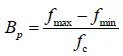
The frequency range, in which the antenna performance index such as beam width, impedance match, isolation and other characteristics meet the system requirements, is generally called the bandwidth of the antenna, also known as the operation bandwidth of the antenna. In particular, the bandwidth of base station antenna is described by standing wave ratio bandwidth and beam width bandwidth. Wide band is a relative measure of antenna, which varies according to different applications. fmax and fmin are the upper limit and lower limit of the operation bandwidth, and fc is the central frequency. The relative operation bandwidth is defined as:
 | (1) |
Generally speaking, there is no strict definition of the broadband antenna, which depends on the special antenna. If the relative bandwidth Bp is greater than 20%, it is often regarded as broadband antenna. In particular, the antenna which can cover two or more different standards simultaneously is called broadband antenna for the base station ante...
Table of contents
- Welcome
- Table of Content
- Title
- BENTHAM SCIENCE PUBLISHERS LTD.
- PREFACE
- List of Contributors
- Explaining 6G Spectrum THz, mmWave, Sub 6, and Low-Band
- Millimeter Wave Communication Technology
- Antenna Evolution for Massive MIMO
- Terahertz Technology Applied in Mobile Communications
- Intelligent Network Slicing Management and Control for 6G Mobile Networks
- Applications and Implementations of 6G Internet of Things
- Cloud/edge Computing and Big Data System with 6G
Trusted by 375,005 students
Access to over 1.5 million titles for a fair monthly price.
Study more efficiently using our study tools.
Frequently asked questions
Yes, you can cancel anytime from the Subscription tab in your account settings on the Perlego website. Your subscription will stay active until the end of your current billing period. Learn how to cancel your subscription
No, books cannot be downloaded as external files, such as PDFs, for use outside of Perlego. However, you can download books within the Perlego app for offline reading on mobile or tablet. Learn how to download books offline
Perlego offers two plans: Essential and Complete
- Essential is ideal for learners and professionals who enjoy exploring a wide range of subjects. Access the Essential Library with 800,000+ trusted titles and best-sellers across business, personal growth, and the humanities. Includes unlimited reading time and Standard Read Aloud voice.
- Complete: Perfect for advanced learners and researchers needing full, unrestricted access. Unlock 1.5M+ books across hundreds of subjects, including academic and specialized titles. The Complete Plan also includes advanced features like Premium Read Aloud and Research Assistant.
We are an online textbook subscription service, where you can get access to an entire online library for less than the price of a single book per month. With over 1.5 million books across 990+ topics, we’ve got you covered! Learn about our mission
Look out for the read-aloud symbol on your next book to see if you can listen to it. The read-aloud tool reads text aloud for you, highlighting the text as it is being read. You can pause it, speed it up and slow it down. Learn more about Read Aloud
Yes! You can use the Perlego app on both iOS and Android devices to read anytime, anywhere — even offline. Perfect for commutes or when you’re on the go.
Please note we cannot support devices running on iOS 13 and Android 7 or earlier. Learn more about using the app
Please note we cannot support devices running on iOS 13 and Android 7 or earlier. Learn more about using the app
Yes, you can access 6G Wireless Communications and Mobile Networking by Xianzhong Xie,Bo Rong,Michel Kadoch, Xianzhong Xie, Bo Rong, Michel Kadoch in PDF and/or ePUB format, as well as other popular books in Technik & Maschinenbau & Mobile & drahtlose Kommunikation. We have over 1.5 million books available in our catalogue for you to explore.