What happens when the written words of biblical scripture are transformed into experiential, choreographed environments? To answer this question, anthropologist James Bielo explores a diverse range of practices and places that "materialize the Bible," including gardens, theme parks, shrines, museums, memorials, exhibitions, theatrical productions, and other forms of replication. Integrating ethnographic, archival, and mass media data, case studies focus primarily on U.S. Christianity from the late 19th-century to the present.
Composed as 20 short chapters that may be read in any order, the book is divided into three sections. Section I, "Variations on Replication," analyzes examples that recontextualize elements from the (actual or imagined) biblical past. Section II, "The Power of Nature," turns to the natural world associated with Christian scripture and how it is mobilized as a privileged media. Section III, "Choreographing Experience," examines lived interactions with the affordances of materializing the Bible.
Bielo argues that materializing the Bible works as an authorizing practice to intensify intimacies with scripture and circulate potent ideologies. Performed through the sensory experience of bodies, physical technologies, and infrastructures of place, Bielo illustrates how this phenomenon is always, ultimately, about expressions of power.
- 288 pages
- English
- ePUB (mobile friendly)
- Available on iOS & Android
eBook - ePub
About this book
Information
Section I
Variations on Replication
In six chapters, Section I explores practices of material replication—that is, of isolating an aspect, event, or era of the past (actual or imagined) and physically recontextualizing it in the present. The chapters examine (1) so-called “full-size” replicas, such as biblical story spots located in contemporary Israel-Palestine and the Wilderness Tabernacle detailed in the book of Exodus; (2) miniature models of the city of Jerusalem; (3) a theatrical re-enactment of the Book of Job that toured in the United States and internationally for over twenty years; (4) a literalist recreation of Noah’s ark that fuses Disney entertainment and Protestant fundamentalism; (5) the linking of materiality with theology, such as stone’s durability and sand’s ephemerality; and (6) an aesthetic reimagining of first-century Nazareth.
As materializing the Bible performances engage with replication, they enact a consequential religious practice. Contrary to secular ideologies that devalue replication (Baudrillard 1994), Christians have a long history of using replication efficaciously. Ethiopian Orthodox churches mark sacred space by adding a consecrated replica of the Ark of the Covenant (Bolylston 2018: 25); Mormons remember the nineteenth-century pioneer experience of journeying west to Salt Lake City by performing Trek reenactments (Patterson 2020); Protestants create a range of biblical replications, from landscape models to panoramic views of biblical places (Long 2003); and, Catholics are serial replicators, channeling divine presence through prayers cards (Orsi 2005), portable Marian statues (Morgan 2009), and shrine complexes (McDannell 1995).
Replication accomplishes the powerful cultural work of promising experiential access to a sacralized past. Replication’s efficacy is grounded in a claim that material re-presentation enables a new or renewed relationship with the past element being recontextualized. Replication seeks to free moments of sacred history from a singular space-time location and collapses the temporal divide, creating an affective bridge between past and present. Irrespective of the scale (life-size or miniature) or relational claim (exacting or inspired by), this promise is anchored by the body’s experience of technology and infrastructure. The power of the replica rests on sensorial encounters; we feel our physical presence in relation to their materiality. And, as Chapters 5 and 6 explore, the materiality at stake is not merely instrumentalized by human actors but is itself an agentive force. The chapters in this section explore the sensory dynamics and ideological dimensions of materializing the Bible’s experiential promise, asking what replications of the biblical past have to say about their makers, visitors, and the social conditions of their making.
The examples profiled in this section also make clear that replication is always interdiscursive, integrating multiple discourse genres, frames, and histories (Bartesaghi and Noy 2015). For example, we see the non-scriptural discourse of science used to render scriptural expression. Chapters 1 and 2 engage with the dramatic increase in Christian Holy Land replicas in the wake of a scientific (re)discovery of Palestine in the early to mid-nineteenth century. As Protestants and Catholics mapped, measured, excavated, studied, and extracted from the “lands of the Bible,” a new confidence cohered for rendering the Holy Land authentically, gauged by the register of scientific accuracy.
Section I reveals important ways in which authority is claimed, negotiated, and performed through replication. The experiential promise of accessing the sacred past is about fostering spiritual intimacy, but in ways that classify experiences as legitimate, valuable, compelling, trustworthy, and, ultimately, authoritative. Biblical replication is certainly about reflecting and recreating textual ideologies of scriptural authority, but it is also about mobilizing the cultural power of other discourses (e.g., science, entertainment) to bolster the authoritative claims of actors who embody theologies, traditions, and identities.
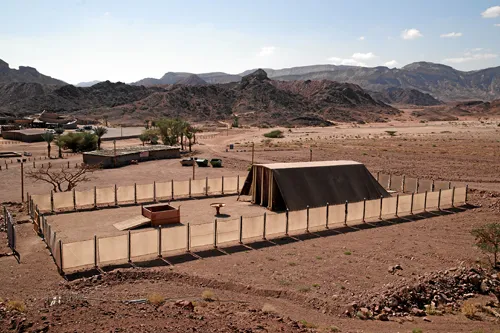
Figure 1 Tabernacle replica (Timna Park, Israel). Photo credit: Wikimedia Commons.
1
1:1
Life-size. Full-size. Full-scale. Exact scale. Exact copy. There are different ways to make the same claim about a replication: that its spatial dimensions are on a 1:1 scale with an original. This claim of direct proportionality can also extend to other physical elements, such as material contents, composition, and relations to forms of practice, such as movement. Ultimately, this is not strictly about physicality and is not merely a claim of accuracy. It is a promise of affective experience and is thoroughly sensorial.
The promise of being 1:1 is about the presence of the body in space and the body’s engagement with materiality. It’s about a body sensing the height of a ceiling, the width of a room or walkway, the proximity between objects, the density of matter, environmental scale and shape from a human vantage. Corporeal experience is vital for 1:1, but it is actually grounded in the limitations of the body. Without additional technological mediation, we can only know the world through our senses and 1:1 trades on this restricted capacity. Any promise of 1:1 is an illusion, a seduction to accept one sensory experience as standing in for another. What is the promise that masks this sleight of body? The promise is that the replication will deliver a direct and immediate sense of presence, of being elsewhere, of being connected to an original via the copy.
Claims of being 1:1 figure centrally in the history of materializing the Bible. From Noah’s ark to Moses’s Tabernacle in the Wilderness to Solomon’s Temple and Jesus’s tomb, producers have claimed to have made “life-size” replicas of biblical stories, scenes, and settings. The illusion of exactness is inevitably partial, full of gaps, distortions, omissions, and erasures. Consider, for example, the surrogate pilgrimage experience of an early twentieth-century Holy Land replication.
From April to December 1904, St. Louis, Missouri, hosted an extravagant World’s Fair, the Louisiana Purchase Exposition.1 Located at the fairgrounds’ center was one of the Exposition’s most elaborate displays, a roughly 10-acre exhibit of the Old City of Jerusalem. Designed as a 1:1 replication, Jerusalem in St. Louis included 300 structures and 22 streets. Several months before its opening, a San Francisco journalist assured readers and potential visitors of the model’s accuracy: “The architect visited Jerusalem personally and studied with minute care the construction of the walls, towers and interior dwellings and other edifices which they were to reproduce at St. Louis, so that in all essential respects the ‘New Jerusalem’ will be identical in appearance with the original.”
Centered on this recreated architecture, the exhibit’s promise of 1:1 faithfulness extended to other features. The land was graded to mimic Jerusalem’s hills and valleys. The feel of the ground in the Church of the Holy Sepulchre’s courtyard was to be copied: “pavement worn by the feet of innumerable pilgrims, is to be reproduced accurately.”2 And, a series of living imports would be an animate element of the experience: between several hundred and a thousand people—including Muslims, Jews, and Greek Orthodox Christians—were purported to be brought from Palestine; several hundred animals also from Palestine, including camels, donkeys, mules, and horses, and food items, “the luscious oranges, lemons, dates, and grapes which so attracted the spies of Israel.”3
Exhibitors celebrated the sensory promise of this new Jerusalem’s exactness, from the scale of buildings to the feel of “worn” pavement and those “luscious” fruits. Of course, they did not advertise the many ways in which Jerusalem in St. Louis distorted Jerusalem in Palestine. For example, only select sacred sites were included, most of which were geared toward Christian visitors (e.g., the Via Dolorosa). Walls were built of wood and buildings of plaster, not stone. Most of the houses were either empty or used as vending stations. The cardinal orientation was askew—for example, the Church of the Holy Sepulchre was in the replica’s southwest corner instead of the northwest. Many of the purported Jerusalemites were, in fact, from Syria, Lebanon, other areas of Palestine, or US cities. The replica only included four of eight city gates and added two additional gates that had no analogue in the actual Jerusalem. Several sites that exist outside the Old City were brought inside the replica, primarily to kindle Christian interest (e.g., a miniature Garden of Gethsemane and imagined Bethlehem manger). There were also anachronistic biblical additions, such as a miniaturized Solomon’s Temple and a painted canvas depiction of the Israelites at Mt. Sinai. The visual experience from outside the gates also differed dramatically from Palestine’s Jerusalem: namely, a large Ferris wheel was unavoidably visible behind the Dome of the Rock when looking southeast.
The point of cataloguing these distortions in the 1:1 promise is not to dismiss the skill of the designers or the immensity of the project; it was at the time, and still remains, the largest documented effort to replicate Jerusalem. The point is that all 1:1 projects are partial and that any suspension of disbelief entails an erasure of distortions and omissions. Indulging that suspension is common. The exhibitors for Jerusalem in St. Louis boastfully marketed the illusion and, based on reviews at the time, visitors seemed to embrace it.
The sensory promise of 1:1 replication exemplifies a cultural shift that took root among US Protestants in the second half of the nineteenth century. This shift was defined by a move from “a conceptual realism initiated by narrative and sermon heuristics to an external, materially based, simulated reality epitomized by various interactive and performative pedagogies” (Jackson 2009: 4) and was performed via diverse media, from traveling panoramas (Morgan 2007) to magic lantern (Schaefer 2017) and stereoscope (Lindsey 2017) shows. By training bodies to trust their experience of these material performances, this participatory pedagogy mobilized the senses in service of ideological ends. In the case of Jerusalem in St. Louis, the bodily experience of being immersed in a 1:1 replica drew together surrogate pilgrimage, a sense of scriptural intimacy, and an Orientalist gaze that recreated white Protestant claims of dominance.
The replica worked as virtual pilgrimage in multiple ways. Visitors could perform rituals that originated in the actual Jerusalem, such as walking and praying the Stations of the Cross. They could buy artisanal souvenirs from would-be Palestinians dwelling within the exhibit. They could eat “luscious” foods and rent a camel to ride (the latter being one of the distorted participatory elements, as renting a camel to ride inside the actual Old City walls was not common practice). Pilgrimage is defined by movement to places set apart (Coleman and Elsner 1995), which resonated with the replication’s setting: being centrally located inside the already set apart experiential frame of being inside the Exposition.
In the exhibit’s prospectus, a fundraising document used to entice investors, the creators emphasized the capacity of the replication to intensify visitors’ attachment to scripture. “A day spent here . . . will give Sunday-school scholars and teachers a more vivid and lasting impression of hundreds of Bible texts than months of study in the class room.”4 Much the same was declared in the exhibit’s opening address, July 11, 1904. The president of the Jerusalem Exhibition Company, a sitting US senator from Missouri, said to the gathered crowd: “There are many Scriptural passages, the full significance of which has never dawned upon even the close Bible students until they have become conversant with the architecture, topography, products and other features of the Holy Land, and the manners and habits of the people residing there.”5
The efficacy of the virtual pilgrimage and the renewed intimacy with scripture were both thoroughly grounded in an Orientalist vision of the Holy Land. Just after boasting about the “full significance” of scriptural meaning, the senator invoked a particularly audacious version of an ideology of biblical timelessness: “It is a remarkable fact that Palestine has changed but little since the days of Christ, and in some respects but little, if any, since the days of Abraham.” This replication’s sensory promise of 1:1 was full of such Protestant claims about the Holy Land, a yearning for the “land of the Bible” to be as biblical as imagined. The troubled ideology of timelessness was extended to the people who exhibition designers enthusiastically objectified. As Lindsey (2017) observes in her analysis of Jerusalem in St. Louis, “inhabitants of the Holy Land were simultaneously configured as ethnographic icon and biblical relic” (162).
The Wilderness Tabernacle
If Jerusalem in St. Louis represents an especially elaborate example of 1:1 biblical replication, then the most common example is the Tabernacle described in the book of Exodus. As of June 2020, there were at least twelve extant Tabernacle replicas.6 The appeal of the Tabernacle ensues partly from the level of detail provided in Exodus 25–30. As the story goes, the Israelites wandered in the desert for forty years. During this time, Moses encountered God on Mt. Sinai for forty days...
Table of contents
- Cover
- Half-Title
- Series
- Dedication
- Title
- Contents
- List of Figures
- Acknowledgements
- Introduction
- Section I: Variations on Replication
- Section II: The Power of Nature
- Section III: Choreographing Experience
- Design
- Classification
- Conclusion
- Notes
- Bibliography
- Index
- Copyright
Trusted by 375,005 students
Access to over 1.5 million titles for a fair monthly price.
Study more efficiently using our study tools.
Frequently asked questions
Yes, you can cancel anytime from the Subscription tab in your account settings on the Perlego website. Your subscription will stay active until the end of your current billing period. Learn how to cancel your subscription
No, books cannot be downloaded as external files, such as PDFs, for use outside of Perlego. However, you can download books within the Perlego app for offline reading on mobile or tablet. Learn how to download books offline
Perlego offers two plans: Essential and Complete
- Essential is ideal for learners and professionals who enjoy exploring a wide range of subjects. Access the Essential Library with 800,000+ trusted titles and best-sellers across business, personal growth, and the humanities. Includes unlimited reading time and Standard Read Aloud voice.
- Complete: Perfect for advanced learners and researchers needing full, unrestricted access. Unlock 1.5M+ books across hundreds of subjects, including academic and specialized titles. The Complete Plan also includes advanced features like Premium Read Aloud and Research Assistant.
We are an online textbook subscription service, where you can get access to an entire online library for less than the price of a single book per month. With over 1.5 million books across 990+ topics, we’ve got you covered! Learn about our mission
Look out for the read-aloud symbol on your next book to see if you can listen to it. The read-aloud tool reads text aloud for you, highlighting the text as it is being read. You can pause it, speed it up and slow it down. Learn more about Read Aloud
Yes! You can use the Perlego app on both iOS and Android devices to read anytime, anywhere — even offline. Perfect for commutes or when you’re on the go.
Please note we cannot support devices running on iOS 13 and Android 7 or earlier. Learn more about using the app
Please note we cannot support devices running on iOS 13 and Android 7 or earlier. Learn more about using the app
Yes, you can access Materializing the Bible by James S. Bielo in PDF and/or ePUB format, as well as other popular books in Social Sciences & Biblical Criticism & Interpretation. We have over 1.5 million books available in our catalogue for you to explore.