Allegories, fables, myths, legends, and other time-honored forms of storytelling have been used since the beginning of recorded history to convey important values and moral precepts to the young. Storytelling comes naturally to children, and also offers them an unparalleled means through which they may express the fantasies, anxieties, and conflicts of their inner lives.
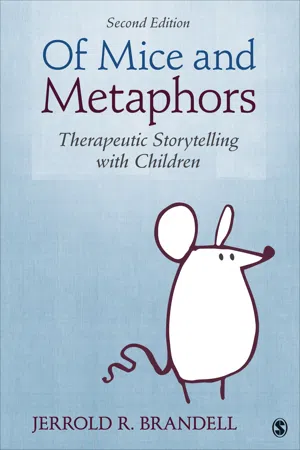
In Of Mice and Metaphors, Second Edition, psychoanalyst and child treatment specialist Jerrold R. Brandell introduces a variety of dynamic strategies for therapists to understand and incorporate a child's own creative story-narrative into an organic and reciprocal treatment process leading to therapeutic recovery and healing. Engaging case histories encompassing a wide spectrum of childhood problems and emotional disorders are used to illustrate complex, effective strategies that include actual clients' stories and the author's response to their narratives.
- 176 pages
- English
- ePUB (mobile friendly)
- Available on iOS & Android
eBook - ePub
About this book
Information
1 Stories and Reciprocal Storytelling in Dynamic Child Psychotherapy
The significant differences in psychotherapy with children, adolescents, and adults have multiple ramifications for the ways in which we approach the treatment process. As a general rule, few adolescents and even fewer children express interest in discussing their wishes or intrapsychic conflicts, nor are most very receptive to this idea. Not unrelatedly, the overwhelming majority of children and adolescents do not usually seek out psychotherapy independently for themselves but, rather, are brought, sometimes quite unwillingly, into treatment by their parents. Moreover, children and adolescents reside in an environment that has become a historical milieu for the adult patient: Children and adolescents are in the process of negotiating in real time those conflicts and crises that for the adult patient are only variously accessible memories. Children and adolescents are, in effect, still heavily engaged with both parents and siblings in multiple discourses that for most adults may have come to exist only at the level of the imaginary.
Aside from these distinctions and many others that we might focus on, there is a fundamental difference in the repertoire of treatment techniques suitable for clinical work with these three clinical populations. Because children, unlike their adolescent and adult counterparts, have often not achieved full mastery of either spoken language or secondary process thinking, the use of the full adult range of verbalized communications is rarely possible for them (Lieberman, 1983). Thus doll play, puppetry, therapeutic games, modeling, mud and clay, painting and drawing, and other “play” techniques are used either alone or in conjunction with elicited narratives, which, in turn, involve either direct verbal exchange or communication made per metaphor.
CHILDREN’S STORIES: AN OVERVIEW OF THE LITERATURE
In one form or another, stories and storytelling have constituted an important activity in psychodynamically oriented child therapy since the earliest clinical encounters with child patients in the first two decades of the twentieth century, although a review of the early child psychotherapy literature reveals relatively few instances in which storytelling is used systematically and independently of other psychotherapeutic techniques. Despite the relatively infrequent reports of techniques that made prominent use of stories and storytelling before the mid-1960s, the value of stories in both treatment and evaluation was recognized quite early. Indeed, it was over a century ago that pioneering child psychoanalyst H. von Hug-Hellmuth (Hug-Hellmuth, 1913, 1921; Gardner, 1993) first suggested that children’s projective stories and other fantasy play might provide the child analyst with dynamically meaningful information about a child’s characteristic conflicts and adaptations. J. Conn (1939, 1941, 1948) and J. Solomon (1938, 1940, 1951) were among the first clinicians to experiment with children’s stories both as projective media and as a technique in child psychotherapy; both are credited with early contributions to this literature (Gardner, 1993).
Louise Despert and her associate, H. W. Potter, reported in 1936 on a study undertaken to evaluate the story as a means of investigating psychiatric problems in children. Their subjects were 22 institutionalized children ranging in age from 4 to 13 years. Although their research was not methodologically rigorous, Despert and Potter offered several conclusions based upon the impressionistic evidence they amassed:
- The story is a form of verbalized fantasy through which the child may reveal his or her inner drives and conflicts.
- A recurring theme generally indicates the principal concern or conflict, which in turn may be corroborated with other clinical evidence (e.g., dream material).
- Anxiety, guilt, wish-fulfillment, and aggressiveness are the primary trends expressed.
- The use of stories appears to be most valuable when the child determines the subject matter of his or her own story.
- The story can be used as both a therapeutic and an evaluation device.
Often, stories have been elicited by a child therapist in conjunction with particular therapeutic media or activities, such as puppetry (Bender & Woltmann, 1936; Hawkey, 1951; Woltmann, 1940, 1951), finger painting (Arlow & Kadis, 1946), drawing and watercolor painting (Rambert, 1949; Tanaka, 2012), costume play (Marcus, 1966); clay modeling (Woltmann, 1950), letter writing (Knoetze, 2013), and sand-play (Burt, 2014; Heiko, 2010). Doll play (Millar, 1974) has also proved to be a rich source of stories and fantasies.
Some writers, among them L. Gondor (1957), have taken the position that the selection of a mode for communicating fantasies should depend on the child’s own preference, necessitating the therapist’s motivation and ingenuity in assisting the child to discover the best means of expression for such fantasies. Gondor illustrated this process with a clinical example involving a withdrawn 10-year-old patient who had difficulty with direct verbal communication but was able to express herself through the medium of a story, which was dictated to the therapist in weekly installments.
In fact, most techniques utilized in child psychotherapy have been designed to elicit fantasies, and not necessarily stories. Contemporary exponents of the Kleinian school of play therapy might conceivably object to a technique requiring the child to produce an autogenic or stimulus-independent story, on the grounds that it imposes an unnecessary structure on the flow of material from the unconscious or that it restricts expression to the level of verbal communication. Phenomenologically speaking, however, such a story may be thought of as possessing an intermediate level of organization “somewhere between the more fluid primary process—like ideational activity of free association, and the more orderly, secondary process thinking of logical, conscious syntactical communication” (Kritzberg, 1975, p. 92). In other words, the autogenic story, though perhaps restricted to the domain of expressive language, does appear to provide reasonably direct access to a child’s fantasy life, as do other techniques of play. One may even view the mandate to verbalize these fantasies in story form as a potential means of enhancing dynamic communication rather than diluting, masking, or distorting it. In one classic investigation of children’s verbalized fantasies, eliciting an autogenic communication is described as comparable to eliciting a “dream on demand” (Pitcher & Prelinger, 1963).
Storytelling and story materials are sometimes associated with highly specialized procedures used in the psychotherapeutic treatment of children. One such procedure is psychodrama, in which children are called upon to utilize sociodramatic play in order to achieve insight into their behavior and to enable them to learn other, more appropriate roles for meeting the challenge of different interpersonal situations (Dreikurs, 1975; Starr, 1977). Another is the structured therapeutic game method of child analytic psychotherapy (Kritzberg, 1971, 1975), a method that combines stimulus-based (as opposed to autogenic) storytelling with two therapeutic games: The first (TISKIT, or Therapeutic Imaginative Storytelling Kit), designed for pre-literate children, contains iconic objects; the second (TASKIT, or Tell-A-Story-Kit), designed for school-age children, contains word-cards. The mutual storytelling technique, originally conceived as a reciprocal storytelling procedure (Gardner, 1977), was the earliest effort to formalize the use of children’s autogenic stories. Children’s stories have also been combined with a variety of card and board games (Gardner, 1993). The creative characters technique (Brooks, 1981, 1993) is an interesting amalgam of N. Kritzberg’s structured therapeutic game method and R. Gardner’s mutual storytelling technique; more collaborative than reciprocal, it puts considerable focus on the strengthening of cognitive skills and various ego functions (e.g., anxiety-binding, promotion of mastery and competence). Yet another, more recent effort has involved the creative interweaving of therapeutic storytelling with the principles of EMDR or Eye Movement Desensitization Therapy (Turner, 2005, pp. 327–344).
The therapist’s collaborative participation in the co-construction of children’s stories has been used to clinical advantage by others. One example is J. Liebowitz’s (1972) study of a severely disturbed 7-year-old whose use of storytelling was less a means of communication than a way of holding onto his relationship with the therapist. This child’s stories had no plot or meaning—only characters with no apparent relationship to each other. Puppets and graphics materials were freely used to assist in the continuing therapeutic work with the child, and the therapist participated quite directly in altering or adding material to his autogenic stories. M. Robertson and F. Barford (1970) found therapist-constructed stories to be useful in therapeutic work with a chronically ill child hospitalized with respiratory failure. The stories were composed on a daily basis and incorporated not only the child’s view of his life within the hospital but also the therapeutic team’s perspective. The authors believed that the stories read to this child ultimately equipped him to involve himself “both psychologically and physiologically in the world beyond the hospital,” culminating in his separation from the respirator and his eventual discharge (1970, p. 106). Another collaborative model involved the use of drawings and what the author has termed “embedded therapeutic messages” (Handler, 2012, pp. 243–267) in the treatment of a “Billy,” a very bright, though controlling and resistant 6-year-old child, who was prone to troubling displays of aggression and primitive behavior. Additional modifications and applications of the basic reciprocal storytelling technique have been described by other authors as well (e.g., Claman, 1980; Davis, 1986; Gabel, 1984; Kestenbaum, 1985; Kottman & Stiles, 1990; Lawson, 1987; and Spees, 2002).
WHAT IS RECIPROCAL STORYTELLING?
The use of allegories, fables, parables, myths, and legends in the inter-generational transmission of important values and moral precepts has been traced to virtually every culture since the beginning of recorded history, underscoring the effectiveness of storytelling as a mode of communication with the young. Developmental psychology also tells us that children experience themselves from an early age “through the symbols they use to apprehend, encode, change, and describe experience,” and that self-composed stories may serve as the “most essential symbolic process” for reflecting on and describing such experiences (Engel, 1999, p. 185).
Reciprocal storytelling was specifically designed as a means of both eliciting children’s self-composed or autogenic stories and providing a therapeutic response to them in the context of psychoanalytic child psychotherapy. Compared to the dreams and free associations of adult patients, such stories and fantasy productions may indeed be less subject to the processes of censorship and distortion, and to other influences that obscure or disguise dynamic meaning. Autogenic stories, which, of course, are projective in nature, provide children with an opportunity to give expression to disturbing wishes, fears, and defensive adaptations in a “safe,” though largely unconscious, metaphorical form. Because such stories are composed without specific thematic direction or guidance from the therapist or the use of storytelling “props,” they are far more likely to represent faithfully the children’s concerns, conflicts, and resolutions than are stories linked either to specific play materials or to themes suggested by the therapist.
The technique of reciprocal storytelling calls for the child’s creation of an imaginary story with make-believe characters. The story must be original and there must be a beginning, some development, and an ending; sometimes, but not necessarily, a lesson or moral can be appended. The therapist then discerns the dynamic meaning of the story and responds within the story metaphor with a therapeutic version of his or her own. The responding story provides healthier, relatively conflict-free alternatives to the child’s original conflict-laden solutions (Gardner, 1993).
One distinct advantage to the technique of reciprocal storytelling is the manner in which it shapes the patient-therapist discourse. Without creating a rigid structure that is inimical to both the clinical process and the basic objectives of sound psychodynamic treatment, the stories enhance the therapist’s ability to apprehend and decode important primary process communications; at the same time, they offer a natural vehicle for therapeutic responses. The reciprocal storytelling process thus establishes an intersubjective discourse that can be maintained throughout treatment and serve as an undeniably powerful therapeutic tool for the child clinician.
WHEN IS RECIPROCAL STORYTELLING USEFUL AND WITH WHICH PATIENTS?
Storytelling procedures can be used selectively with children as young as 3 and as old as 15 years, although the most effective age range seems to be school age to early adolescence (roughly 5 to 12 years). Reciprocal storytelling, in particular, appears to be therapeutically effective across a wide spectrum of childhood problems and emotional disorders: phobias, anxiety disorders, depression, obsessive-compulsive problems; chronic depletion states, self-object disorders, and difficulty in the regulation of self-esteem; and sequelae of emotional neglect and physical and/or sexual abuse. It is especially helpful in work with children of divorce and those suffering from other environmental crises (e.g., loss of a parent or sibling, life-threatening illness of a close family member). In addition, children who have experienced trauma—that is, in cases where a massive paralysis of ego functions has occurred—may be receptive to the use of such story communications per metaphor. Therapists may also find reciprocal storytelling a useful adjunct in their clinical work with children suffering from chronic or life-threatening illnesses, or with those who have developmental disabilities. Even schizoid children, or those with nascent borderline personality disorders, may be good candidates for reciprocal storytelling.
Storytelling also seems to work well with resistant children. It may, in fact, provide the therapist with a vehicle for circumnavigating or surmounting initial resistance and establishing a basic working alliance despite the children’s disinclination to reveal much of themselves in more direct verbal discourse or even through other play activities. Owing to the fact that stories are “make-believe,” children seem reassured that they are not actually revealing anything of great import about themselves. So far as they are concerned, any disturbing wishes, conflicts, secrets, and the like are safely obscured from view. Precisely—and paradoxically—because the story is ostensibly about someone else, it permits the most important unconscious conflicts and disturbing fantasies, as well as other closely guarded or otherwise hidden parts of the self, to emerge in a disguised though decodable form.
On the other hand, storytelling isn’t for everyone, nor is it invariably effective even for the same patient at different points in the treatment process. Certain children with developmental disabilities may be incapable of the minimal cognitive organization required for even the most elementary story. Others whose expressive language is compromised by developmental or organic factors may prefer play activities that do not highlight spoken language. Still others may enjoy the reciprocal storytelling process early in the treatment relationship but later express a preference for alternative play activities. This is especially true over long courses of treatment that begin in preadolescence. In such instances, the child’s increasing developmental sophistication makes storytelling, as well as other play activities, seem infantilizing. Indeed, like any other technique in the child psychotherapist’s repertoire, storytelling should be deployed with sensitivity and in accord with a particular child’s preferences.
It is not essential for a...
Table of contents
- Cover
- Half Title
- Acknowledgements
- Publisher Note
- Title Page
- Copyright Page
- Brief Contents
- A Prefatory Note
- Acknowledgements
- Prologue
- 1 Stories and Reciprocal Storytelling in Dynamic Child Psychotherapy
- 2 Autogenic Stories, Projective Drawings, and the Clinical Assessment Process
- 3 Narrative and Historical Meaning in Child Psychotherapy
- 4 Applications to Special Clinical Issues and Problems of Childhood
- 5 The Unfolding of the Narrative in the Psychotherapy of a Traumatized 10-Year-Old Boy
- 6 Transference Dimensions of the Storytelling Process
- 7 Secrecy and Trauma: An Adopted Child’s Psychotherapy
- 8 What Else Can Stories Tell Us?: Using Children’s Metaphorical Communications as a Measure of Therapeutic Progress
- Epilogue
- Appendix: Informed Consent, Tape Recording, and the Security of Data
- References
- Index
- About the Author
Trusted by 375,005 students
Access to over 1.5 million titles for a fair monthly price.
Study more efficiently using our study tools.
Frequently asked questions
Yes, you can cancel anytime from the Subscription tab in your account settings on the Perlego website. Your subscription will stay active until the end of your current billing period. Learn how to cancel your subscription
No, books cannot be downloaded as external files, such as PDFs, for use outside of Perlego. However, you can download books within the Perlego app for offline reading on mobile or tablet. Learn how to download books offline
Perlego offers two plans: Essential and Complete
- Essential is ideal for learners and professionals who enjoy exploring a wide range of subjects. Access the Essential Library with 800,000+ trusted titles and best-sellers across business, personal growth, and the humanities. Includes unlimited reading time and Standard Read Aloud voice.
- Complete: Perfect for advanced learners and researchers needing full, unrestricted access. Unlock 1.5M+ books across hundreds of subjects, including academic and specialized titles. The Complete Plan also includes advanced features like Premium Read Aloud and Research Assistant.
We are an online textbook subscription service, where you can get access to an entire online library for less than the price of a single book per month. With over 1.5 million books across 990+ topics, we’ve got you covered! Learn about our mission
Look out for the read-aloud symbol on your next book to see if you can listen to it. The read-aloud tool reads text aloud for you, highlighting the text as it is being read. You can pause it, speed it up and slow it down. Learn more about Read Aloud
Yes! You can use the Perlego app on both iOS and Android devices to read anytime, anywhere — even offline. Perfect for commutes or when you’re on the go.
Please note we cannot support devices running on iOS 13 and Android 7 or earlier. Learn more about using the app
Please note we cannot support devices running on iOS 13 and Android 7 or earlier. Learn more about using the app
Yes, you can access Of Mice and Metaphors by Jerrold R. Brandell in PDF and/or ePUB format, as well as other popular books in Education & Education Counseling. We have over 1.5 million books available in our catalogue for you to explore.