A fascinating, full-color visual guide to the life of Paul exploring the social, cultural, political, religious, and historical background of the world in which he lived and ministered, and offering modern readers an engaging narrative of the man who laid the foundations of the first-century church.
The life and ministry of the apostle Paul were a sprawling adventure spanning thousands of miles across Roman roads and treacherous seas as he boldly proclaimed the gospel of Jesus to anyone who would listen, be they commoners or kings. His impact on the church--and indeed on Western civilization--is immeasurable.
From his birth in Tarsus to his rabbinic training in Jerusalem to his final imprisonment in Rome, An Illustrated Guide to the Apostle Paul brings his remarkable story to life. Drawing from the book of Acts and Paul's many letters, as well as historical and archaeological sources, this fully illustrated book
● explores the social, cultural, political, and religious background of the first-century Roman world
● sheds light on the places he visited and the people he met along the way
● helps us understand how and why God used Paul in such extraordinary ways
Breathe new life into your Bible study, your preaching, and your teaching with this indispensable and inspirational book.
eBook - ePub
An Illustrated Guide to the Apostle Paul
His Life, Ministry, and Missionary Journeys
- 192 pages
- English
- ePUB (mobile friendly)
- Available on iOS & Android
eBook - ePub
About this book
Information
Topic
Teologia e religioneSubtopic
Commento della BibbiaPart 1: Paul’s Upbringing, Conversion, and Early Ministry
Chapter 1
Early Years in Tarsus and Jerusalem
Paul, also known as Saul, was born in Tarsus (in modern-day Turkey) sometime around AD 5.1 The exact date is beyond knowing for certain, but AD 5 is derived from a few references to Paul’s age along with some good old-fashioned deduction. The first clue to Paul’s age is found in Philemon 1:9, where he refers to himself as an “elderly man” or “elder” (presbytēs). According to Jewish tradition, a man was considered to be an elder or elderly at the age of sixty.2 If Paul was in his late fifties or early sixties when he wrote Philemon sometime in the early AD 60s, then he would have been born within the first few years of the first century.3
When Saul is introduced at the trial of Stephen in Acts 7:58, Luke describes him as a “young man” (neaniou), which typically refers to an unmarried man between the ages of twenty-five and thirty-five. He was likely in his late twenties or early thirties. It is possible he was the prosecutor in the trial of Stephen, which could be why the ones stoning Stephen laid their outer clothes at Saul’s feet. According to Jewish tradition, a man needed to be thirty years old to gain authority as a religious leader, so it seems safe to conclude he was at least thirty or extremely close to it.4 Stephen’s martyrdom took place around AD 34 or 35, not too long after Jesus’s crucifixion on April 7, 33. Although we cannot arrive at a definitive birthday for Paul, we can safely conclude he was born within the first decade of the first century, making him a few years younger than Jesus.
A Jew from Tarsus
Paul was born into a devout Jewish family who ensured he would follow the requirements of the Torah (also known as the Pentateuch, which includes Genesis, Exodus, Leviticus, Numbers, and Deuteronomy) and the traditions of his ancestors. Paul describes his Jewish heritage and pedigree in terms of being “circumcised [on] the eighth day; of the nation of Israel, of the tribe of Benjamin, a Hebrew born of Hebrews; regarding the law, a Pharisee” (Phil. 3:5). That he was circumcised on the eighth day clearly indicates his parents were practicing Jews who observed the Torah. It’s not clear whether Paul’s father was a Pharisee, but it’s entirely possible that’s what Paul meant when he said, “I am a Pharisee, a son of Pharisees” (Acts 23:6). If his father was a Pharisee, then Paul’s family was possibly middle-class, but they would have chosen to live frugally and simply.5
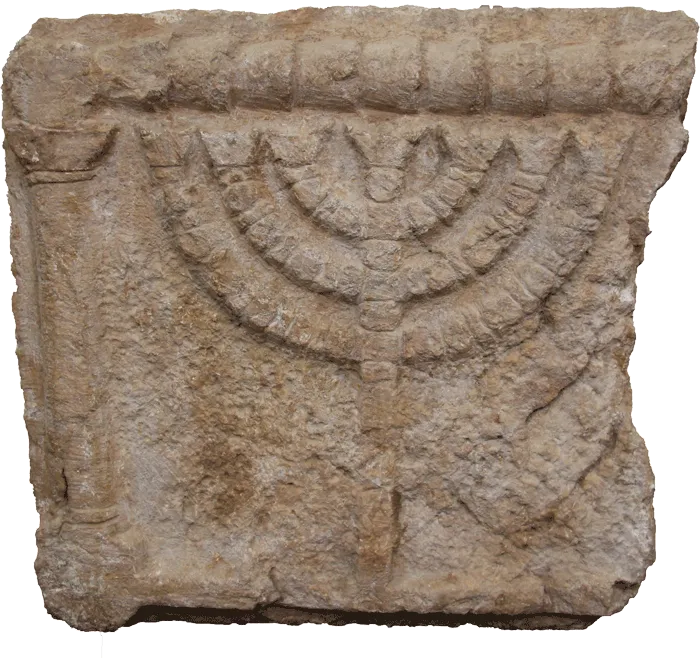
A menorah from the lintel on the entrance to a synagogue in Estemoa, Israel (third to fourth century AD).
Paul’s Jewish heritage is also emphasized as being an Israelite from the tribe of Benjamin, and as such, he was likely named after his family’s most famous ancestor—King Saul. What’s more, as a “Hebrew of Hebrews,” he grew up speaking Aramaic and reading Hebrew. Paul’s Jewish heritage is more than just an ethnic or religious affiliation; it is central to who he is as a person, how he lived, what he believed, and how he related to the world around him. These identity questions were even more pronounced for Diaspora Jews living outside the land of Israel and making their home in gentile communities. From his earliest years, Paul would have keenly felt the challenges of being a Jew in Tarsus.

Paul’s Jewish family members were also Roman citizens. We know this from Acts, where Paul states, “I am a Jewish man from Tarsus of Cilicia, a citizen of an important city” (Acts 21:39). Tarsus was the principal city of the Roman province of Cilicia, located a few miles inland from the Mediterranean coast along the Cydnus River. It is only mentioned in the Bible in connection with Paul (9:11, 30; 11:25; 21:39; 22:3). Although some have associated Tarsus with the Old Testament Tarshish (Gen. 10:4; Ps. 48:7; Isa. 23:1; Jon. 1:3), most scholars agree they are two different places.
Ancient Tarsus was a populous, prosperous, and important city in its own right.6 To the east it was flanked by the rugged, snowcapped Taurus Mountains, but the western portion of Cilicia was flat and very fertile, with lush vineyards and fields that grew a variety of grains and flax.7 Tarsus had a robust textile industry that produced fabric from flax, but it was better known for thick and sturdy goat-hair cloth, called cilicium, that was used for making tents and other items. Paul’s trade as a “tentmaker” was probably a family trade he practiced in Tarsus, and it continued to be a source of income during his travels (Acts 18:3).
How exactly did Paul’s family, being Jewish, come to live in Tarsus and gain Roman citizenship? According to one tradition, Paul’s ancestors were originally from the upper Galilean town of Gischala.8 One possibility is that his family voluntarily emigrated to Tarsus as part of a Jewish colony when the city was founded by the Seleucid king Antiochus IV Epiphanes (reigned 175–164 BC).9 If so, Paul’s ancestors migrated to Tarsus as Jewish colonists about a hundred years prior to his birth. Another possibility is that Paul’s ancestors were carried away from Gischala as prisoners of war and enslaved during the Roman period around 63 BC.10
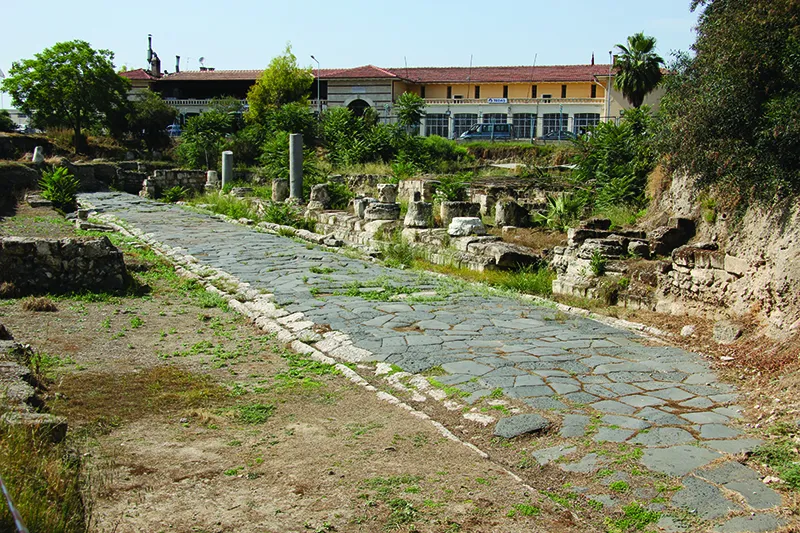
Ancient street and marketplace of Tarsus.

Fertile plains near Tarsus.
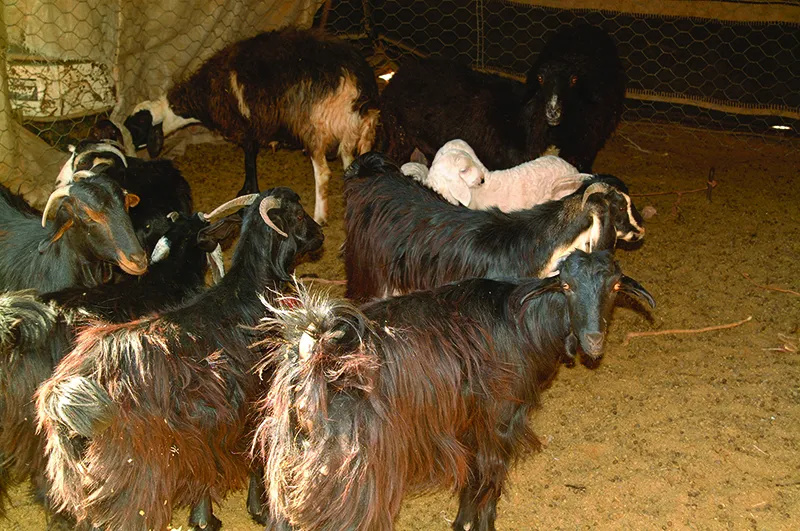
Goats with black hair used for making fabric called cilicium.
Regardless of how Paul’s family arrived in Tarsus, they likely gained Roman citizenship due to events that occurred shortly after the assassination of Julius Caesar. Cassius and Brutus, two of the conspirators in Julius Caesar’s murder, fled Rome with an army and went into Asia Minor. To fund their war against Octavian Augustus and Mark Antony, Cassius imposed a heavy tax on Tarsus in the summer of 43 BC. This tax depleted all the city resources, and a significant portion of the population was subsequently sold into slavery. Due to Cassius’s oppressive tactics, the people of Tarsus sided with and supported Octavian Augustus. When Octavian defeated Cassius and Brutus at the Battle of Philippi (42 BC), he granted Tarsus status as a “free city” in appreciation for their support. Octavian also freed those who were sold into slavery and granted them Roman citizenship.11 Paul’s father or grandfather may have been freed and given Roman citizenship at that time. While there would have been several possible paths to citizenship for Paul’s family, this one seems to fit the history of Tarsus quite well.12
A Roman Citizen
More than once Paul laid claim to the fact that he was a Roman citizen (Acts 16:37–38; 22:25–28), even specifying that he was a citizen by birth (22:28). Parents were required to register a child within thirty days of birth to have legal acknowledgment of the child’s citizenship.13 While citizens could carry documentation to prove their citizenship, claims of citizenship were generally trusted since the penalty for impersonating a Roman citizen was death.14 Roman citizens enjoyed prestige and privilege far exceeding that of the general population of the empire. The basic rights of Roman citizenship were the right to make an appeal, the right to vote in an assembly, and the right to choose between having a local trial or being tried in Rome. Citizens were also protected from degrading forms of punishment.15
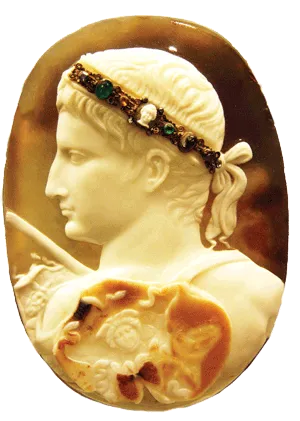
A cameo portrait of Octavian Augustus.
Emperor Augustus passed a law (i.e., lex Iulia de ui publica) that forbade any magistrate invested with the right of capital punishment (imperium) to kill, scourge, chain, or torture a Roman citizen if they made an appeal. A magistrate who disregarded the appeal and carried out a capital sentence was guilty of murder.16 Most importantly, Roman citizens were exempt from death by crucifixion, so citizens were executed by beheading.17 As a citizen, Paul had a measure of status in the Roman world that would not have been granted to noncitizens.
The fact that he has both the name Saul and the name Paul also points to his Roman citizenship, because Roman citizens used a three-name formula (tria nomina) consisting of the praenomen, nomen, and cognomen. The praenomen was like a first name. The nomen was the family surname. The cognomen was like a modern middle name. Paul’s parents gave him the very Jewish name Saul as his first name (praenomen). It is unclear why they would have given him the relatively rare Roman name Paul. One possibility is that Paul was not one of his formal legal names but was more like a nickname.18 Another suggestion is that he might have adopted the name Paul in honor of the governor of Cyprus, Lucius Sergius Paulus, who was one of his first named converts (Acts 13:8).19 However, since the name Paul (Paulus) means “small” or “little” in Latin, it was probably his middle name (cognomen), because that usually described a physical quality or character trait of the person (e.g., Cicero, which means “chickpea,” was so named because he had a chickpea-sized growth on his face).
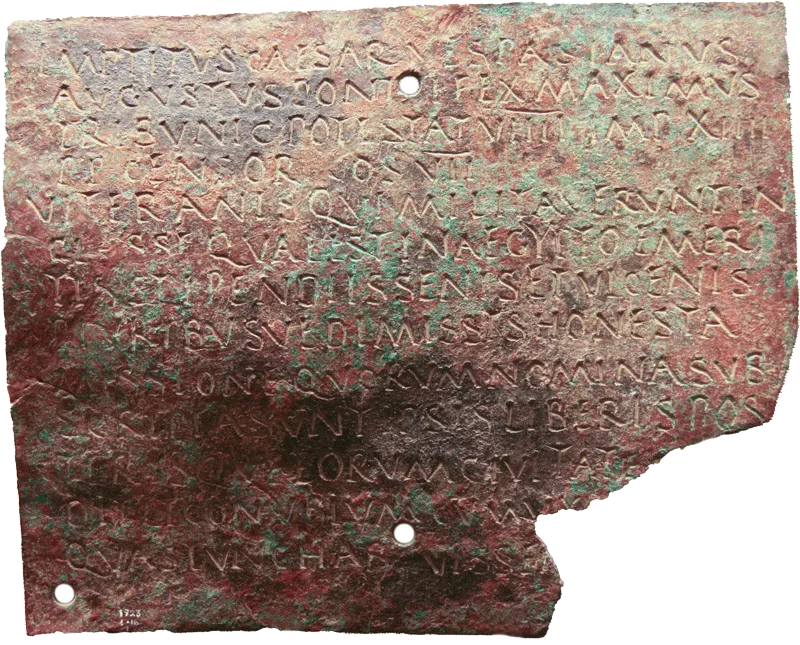
A bronze diploma of a citize...
Table of contents
- Cover
- Half Title Page
- Title Page
- Copyright Page
- Dedication
- Contents
- Acknowledgments
- List of Abbreviations
- Introduction
- Part 1: Paul’s Upbringing, Conversion, and Early Ministry
- Part 2: Paul’s Ministry in Cyprus and Galatia -First Missionary Journey
- Part 3: Paul’s Ministry in Galatia, Macedonia, Achaia, and Asia Minor -Second and Third Missionary Journeys
- Part 4: Paul in Prison -Caesarea to Rome
- Notes
- Image Credits
- About the Author
- Back Ad
- Back Cover
Trusted by 375,005 students
Access to over 1.5 million titles for a fair monthly price.
Study more efficiently using our study tools.
Frequently asked questions
Yes, you can cancel anytime from the Subscription tab in your account settings on the Perlego website. Your subscription will stay active until the end of your current billing period. Learn how to cancel your subscription
No, books cannot be downloaded as external files, such as PDFs, for use outside of Perlego. However, you can download books within the Perlego app for offline reading on mobile or tablet. Learn how to download books offline
Perlego offers two plans: Essential and Complete
- Essential is ideal for learners and professionals who enjoy exploring a wide range of subjects. Access the Essential Library with 800,000+ trusted titles and best-sellers across business, personal growth, and the humanities. Includes unlimited reading time and Standard Read Aloud voice.
- Complete: Perfect for advanced learners and researchers needing full, unrestricted access. Unlock 1.5M+ books across hundreds of subjects, including academic and specialized titles. The Complete Plan also includes advanced features like Premium Read Aloud and Research Assistant.
We are an online textbook subscription service, where you can get access to an entire online library for less than the price of a single book per month. With over 1.5 million books across 990+ topics, we’ve got you covered! Learn about our mission
Look out for the read-aloud symbol on your next book to see if you can listen to it. The read-aloud tool reads text aloud for you, highlighting the text as it is being read. You can pause it, speed it up and slow it down. Learn more about Read Aloud
Yes! You can use the Perlego app on both iOS and Android devices to read anytime, anywhere — even offline. Perfect for commutes or when you’re on the go.
Please note we cannot support devices running on iOS 13 and Android 7 or earlier. Learn more about using the app
Please note we cannot support devices running on iOS 13 and Android 7 or earlier. Learn more about using the app
Yes, you can access An Illustrated Guide to the Apostle Paul by Alan S. Bandy in PDF and/or ePUB format, as well as other popular books in Teologia e religione & Commento della Bibbia. We have over 1.5 million books available in our catalogue for you to explore.