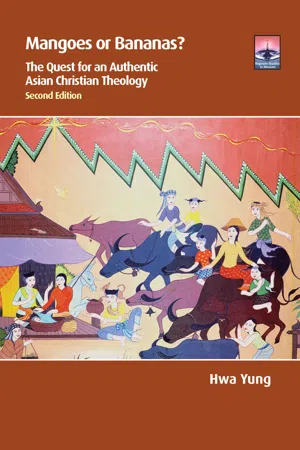
Over the past few decades there has been a growing awareness of the need for contextual theologies throughout Asia. But how genuinely contextual are these? Based on the premise that theology and mission are inseparable, the author applies four missiological criteria to representative examples of Protestant Asian writings to assess their adequacy or otherwise as contextual theologies. These are relevance to sociopolitical challenges, enhancing evangelism and pastoral care, inculturation, and faithfulness to the Christian tradition. The study reveals certain discernible trends in Asian ecumenical and conservative theologies respectively, and also distinctive strengths and weaknesses. But the greatest problem with most of these theologies appears to be that, at heart, they have been domesticated by western dualism and Enlightenment thought. Authentic Asian Christian theologies will only emerge with the dual recovery of confidence in both gospel and culture within Asian Christianity. In this new edition, the author has further shared his personal journey that brought him to this conclusion.
eBook - ePub
Mangoes or Bananas?
About this book
Information
Topic
Theology & ReligionSubtopic
Christian MinistryChapter 1
Introduction
Over the last few hundred years the Church in the Western world has not only brought the gospel to Africa, Asia and Latin America, but it has also done so in a deeply enculturated Western form. Whereas this may have often been welcomed in the past by Christians in the Two-Thirds World, because of its associations with a more advanced technology and an apparently more advanced civilization, increasingly this perceived imposition of alien cultural categories and forms is being questioned and even rejected. The two main reasons for this are, first, an increasing dissatisfaction with a ‘western’ Christianity as against an indigenous variety, and second, a quest for a clearer sense of self-identity on the part of Christians throughout the Two-Thirds World. This is particularly so in the realm of theology.
Reasons for Dissatisfaction with Western Theology
The increasing sense of dissatisfaction with Western theology is not without good reasons.
Different Histories and Realities Presupposed
To begin with, Western theologies are the products of the histories, cultures and realities of the West. They cannot, therefore, adequately address the existential realities of the rest of the world because these differ so much from those of the West. The Asian theologian, Kosuke Koyama (1989:217), lists the six themes characterizing Asian theological concerns as follows: the relation or relevance of Christ to revolutionary social change, widespread poverty, ethnic and economic minorities, both the positive and negative aspects of culture, the plurality of religions, and ecclesiastical divisions.1 While some Western writers may have worked with some of these issues, the majority of Western theological writings can hardly be expected to deal with these issues in detail or with the same degree of sensitivity of those who wrestle with these as daily existential realities. They do not and they cannot.
To take but one example, consider the German theologian, Jurgen Moltmann, who is often perceived as one who does seek to identify at least to some extent with Two-Thirds World issues. In one of his most important books, The Crucified God (1974), he powerfully expounds the notion that Christ by dying as a blasphemer, subversive and godforsakened, identifies himself with the oppressed, unrighteous and abandoned of this world. This interpretation of the death of Christ naturally would have a great appeal in Asia against the background of its political and socioeconomic realities. Yet it is clear that one of the key driving forces behind his exposition is the concern for a ‘theology after Auschwitz’2 which can deal adequately with the problem of evil and suffering and gives us hope ‘for the future of man in God’ (Moltmann 1974:278). His concern here is easily understood when it is remembered that during World War Two he was a member of the German Air Force.
Few Asian Christians who have read Moltmann’s book can fail to be impressed with its passionate wrestling towards a ‘theology after Auschwitz’. But the question they would ask however is: Does this address directly the six issues that Koyama raises? Even if it does, are not the imagery used and historical background presupposed rather foreign and distant from the Asian mind? Would not a wrestling towards a ‘theology after the Rape of Nanjing’, a ‘theology after the Death Railway’, or a ‘theology after Hiroshima’, to use images from the same historical epoch, stir up more passionate cords in the Asian context? As it is, even when Western writers deal with concerns similar to those in the Asian scene at the rational level, the very approaches taken have tended to leave the treatment emotionally cold to the Asian heart.
A Different Worldview Presupposed
A second reason for dissatisfaction with Western theology is that it presupposes a worldview which has been heavily influenced by the Enlightenment. The anthropologist Charles H. Kraft (1989:27-34) characterizes the Western worldview as naturalistic, with the supernatural largely disregarded; as being governed by materialistic values; as being humanistic, thus making God largely irrelevant; as being rationalistic, thus rejecting anything that appears to fall outside the purview of rigorous rational analysis; and as valuing individualism and independence above community and group-identity. These have inevitably strongly shaped Western theology. That being the case, how can such a theology adequately address the concerns of Asian and other Two-Thirds World cultures which are generally much more holistic, without the sharp separation between the natural and the supernatural with its emphasis on the world of spirits and the dead; decidedly less materialistic; no less humanistic, but not so at the expense of denying the divine; no less rational but nevertheless open to knowledge through intuition and other non-rational media; and group and community-oriented rather than ruggedly individualistic?
Missionary anthropologists have noted that it is often the different worldviews presupposed by the Western missionary and the non-western recipient of the missionary’s message that have resulted in the concerns of the latter’s worldview being inadequately addressed by the missionary’s gospel. This is one of the key hindrances to the genuine indigenization of the gospel in non-western cultures. For example, Paul Hiebert (1982), has noted that the religious worldview of the non-westerner includes both a level of ‘high religion’, e.g. Hinduism, Islam, etc., and another of ‘folk religion’, related to magic, astrology, and spirit worship. The Western missionary, accustomed as he is at dealing with only questions of ultimate truth and meaning, effectively addresses only the ‘high religion’ level of the non-westerner’s worldview, but excludes the other. Similarly, Darrell Whiteman (1983:411-443) notes that the Western missionary, in failing to take the non-westerner’s worldview and culture seriously, often ends up converting others to a ‘Western Christianity’ rather than to a Christianity within their own indigenous culture. At best, this leads to a ‘split-level’ religion wherein only the rational belief level of the indigenous Christian’s mind is Christianized, but the sub-rational level of consciousness remains decidedly pagan (Hiebert 1985:222-224). This type of nominal Christianity is prevalent in many parts of the Two-Thirds World, including that of the present writer’s home country.3 At worst, it paves the way for the eventual reversion to various forms of Christopaganism, like that of Melanesian Cargo Cults (Whiteman 1983:436-439).
The above being the case, what sensitive Asian Christians are asking for today is a genuinely indigenous or contextual Christianity and theology that is firmly rooted in the Asian soil, and not one premised on the Western worldview, even if it has been given an Asian dress.
The Negative Impact of Enlightenment Thought
This leads to the third point which is closely related to the second. Much of Western theology have been controlled by Enlightenment rationalism and empiricism, which together have combined to produce a climate of skepticism that hampers the genuine expression of biblical faith. The manner in which Enlightenment thought has given rise to this is complex. We shall examine this in greater detail later. For the moment I merely wish to delineate the negative consequence of its anthropocentric rationalism and narrow empiricism.
To begin with, the European rationalist philosophers of the seventeenth and eighteenth centuries like Rene Descartes (1596-1650), Baruch Spinoza (1632-1677), and others were basically concerned to affirm the rationality of the universe and the ability of reason to grasp it. Behind the complexity of nature was a rational mind who could be understood through the proper use of reason. They were not ultimately concerned with debunking faith in God. But wittingly or unwittingly, some of their ideas, taken together with those of some other traditions like Deism, have paved the way for rationalism, understood in the narrower sense as, the attempt to judge everything in light of reason after which process ‘reason will have completely disposed of the supernatural, and that we will be left with nothing but nature and hard facts’ (Brown 1990:173).
Descartes, generally considered to be the founder of modern philosophy, obviously is the most important of the rationalists. His philosophy begins with the resolve to reject as false anything whose existence can in anyway be doubted. Thus he posited his famous ‘Cogito, ergo sum’ (‘I think, therefore I am’ (Descartes 1984:127). The net result of this is that, whether or not he is indeed guilty, Descartes has been often perceived as the one who led the shift to making the individual self-consciousness the final criterion of truth in philosophy, and to Cartesian doubt.4 Thus, among others, Helmut Thielicke (1974:34) states that ‘Descartes paves the way for making the relevance of the knowing self the center of thought.’
Thielicke goes on to argue that this focus on the individual self-consciousness is what characterizes ‘modern’ (in contrast to ‘conservative’) or, better, ‘Cartesian’ theology, which includes those of Lessing, Schleiermacher, Bultmann and Tillich. The dominant interest is on the addressee of the kerygma, the one who is to appropriate it (Thielicke 1974:38). Whereas before the so-called ‘modern’ period, theology was not focused on the individual addressed, the conditions of credibility or the understandability of the message, all that have changed. In Cartesian theology,
a general and pre-Christian self-understanding of man is a separate theme which must be dealt with before the theological agenda is tackled…. Since these matters concern man’s general situation, since they are pre-theological… the implied existential analysis can be left to secular philosophy; Bultmann, Tillich, and their predecessors all have philosophical sponsors. Even when the theologians do the analysis on their own, like Schleiermacher, they stress the fact that they have no privileges as believers but are in solidarity with the men of the world, even those who despise the faith. The whole point of Schleiermacher’s apologetic is to bring to light this solidarity and to make its own secular self-consciousness plain to these men without the aid of revelation (Thielicke 1974:50).
The problem with this is that theology is henceforth reduced to anthropology as the prior condition of credibility and appropriation, derived from analysis of the human self-consciousness. This effectively filters out parts of the kerygmatic content. Thus, as Thielicke (1974:53ff) notes, despite protestations of openness, the autonomy of the addressee in Cartesian theology ends up regulating the kerygma, and limiting what one is prepared to receive in it instead. Here we see the final consequence on theology of the shift set in motion by Descartes’ emphasis on the individual self-consciousness as the final criterion for truth. What began as an emphasis on the proper use of reason to understand a rational universe ended up in the elevation of instrumental theoretical reason into an autonomous principle by which the Christian message is judged. Inevitably, skepticism ensues.
A second stream of Enlightenment thought that has contributed to the skepticism in Western theology is the impact of empiricism, the view that the sole source of knowledge comes from sense perception. It arose in part out of the reaction to philosophical rationalism and its belief that reason was the basis of certain knowledge. David Hume (1711-76) is by far the most well-known exponent. Towards the end of his Enquiry Concerning Human Understanding, he wrote:
When we run over libraries, persuaded of these principles, what havoc must we make? If we take in our hand any volume; of divinity or school metaphysics, for instance; let us ask, Does it contain any abstract reasoning concerning quantity or number? No. Does it contain any experimental reasoning concerning matter of fact and existence? No. Commit them to the flames: for it can contain nothing but sophistry and illusion (1975:#132; cited in Brown 1990:257).
Colin Brown (1975:238f) has suggested that the unifying thought in Hume’s approach was what he himself calls ‘mitigated skepticism’. This combined with his brand of empiricism led to his skepticism concerning the human self, the denial of causation, the rejection of miracles and religious beliefs in general.
Over the years, those who have followed Hume in his narrow interpretation of empiricism have continued to maintain an unwarranted skepticism toward metaphysics and religious beliefs in general. Probably the most celebrated example in recent years was Logical Positivism, associated with A. J. Ayer’s Language, Truth and Logic (1946). It advanced the ‘Verification Principle’ as the one criterion of meaningfulness and declared all statements, apart from purely logical ones, nonsensical unless they can be verified by sense experience. By one stroke the Logical Positivists thought they had succeeded in removing all metaphysical and ethical statements from the realm of meaningful discourse – until it was noted that the Verification Principle itself was unverifiable by its own criterion, and therefore is, at best, a piece of ‘useful nonsense’ (Brown 1969:166-176).
While few Western theologians would identify with the Logical Positivist school, yet the same sort of commitment to a narrow empiricism has led often to a similar skepticism. Thus miracles are denied because they are perceived to violate scientific laws in a closed universe – an unwarranted assumption to say the least.5 Concurrently, there is a rejection of much of the historicity of the biblical narratives, e.g. the Bultmannian school, and, consequently, many of the cardinal doctrines of faith based on these, because the former supposedly do not conform to the accepted norms of empirical history. Such a skeptical theology, quite apart from its own inherent weaknesses, is hardly able to address the concerns of the Asian worldview(s) which takes seriously not just metaphysics and theological truths, but also the whole spiritual realm of angels and demons, and of the miraculous as well.
We shall later elaborate further on the negative impact of the Enlightenment on Christian theology. For the moment it suffices for our purpose to draw attention to what Diogenes Allen (1989) says in his Christian Belief in a Modern World: The Full Wealth of Conviction. He notes the massive revolution taking place at the present moment as we enter into the postmodern world. The principles of the Enlightenment which formed the foundations of the modern intellectual framework are now rapidly breaking down (Allen 1989:2-6). Admittedly the future is rather uncertain, ‘but it is clear that a fundamental reevaluation of the Christian faith – free of the assumptions of the modern mentality that are generally hostile to a religious outlook – is called for’ (:2). He goes on to argue that, as the barriers to the Christian faith erected by the modern mentality collapse, both philosophy and science, which were once seen as inimical to religious belief, are now in some respects seen to be pointing the way back to it (:23-96).
Given the above, and the further fact that much of Western theology, especially of the modern or Cartesian variety, has been heavily shaped by the modern mentality which even Western scholars themselves are now beginning to seriously question, there is therefore even less reason for non-western Christians today to give a place of primacy to something which Western Christians themselves find increasingly dissatisfying.
An ‘Unengaged’ Theology
Finally, Western theology is often perceived as being built on an idealistic conception of truth which sharply distinguishes it from its practice. This leads to a theology which is ‘unengaged’ and, therefore, lacks the power for human and social transformation. This criticism was first raised sharply in recent times...
Table of contents
- Cover
- HalfTitle
- Title
- Copyright
- Dedication
- Contents
- Preface
- Preface to the Second Edition
- Abbreviations
- Chapter 1 Introduction
- Chapter 2 Toward a Theology of Mission
- Chapter 3 Criteria for a Missiological Theology – Part One
- Chapter 4 Criteria for a Missiological Theology – Part Two
- Chapter 5 Asian Theologies up to World War Two
- Chapter 6 Ecumenical Asian Theologies After World War Two
- Chapter 7 Conservative Asian Theologies After World War Two
- Chapter 8 Toward an Asian Christian Theology
- Chapter 9 A Personal Journey
- Bibliography
- Index of Names
Trusted by 375,005 students
Access to over 1.5 million titles for a fair monthly price.
Study more efficiently using our study tools.
Frequently asked questions
Yes, you can cancel anytime from the Subscription tab in your account settings on the Perlego website. Your subscription will stay active until the end of your current billing period. Learn how to cancel your subscription
No, books cannot be downloaded as external files, such as PDFs, for use outside of Perlego. However, you can download books within the Perlego app for offline reading on mobile or tablet. Learn how to download books offline
Perlego offers two plans: Essential and Complete
- Essential is ideal for learners and professionals who enjoy exploring a wide range of subjects. Access the Essential Library with 800,000+ trusted titles and best-sellers across business, personal growth, and the humanities. Includes unlimited reading time and Standard Read Aloud voice.
- Complete: Perfect for advanced learners and researchers needing full, unrestricted access. Unlock 1.5M+ books across hundreds of subjects, including academic and specialized titles. The Complete Plan also includes advanced features like Premium Read Aloud and Research Assistant.
We are an online textbook subscription service, where you can get access to an entire online library for less than the price of a single book per month. With over 1.5 million books across 990+ topics, we’ve got you covered! Learn about our mission
Look out for the read-aloud symbol on your next book to see if you can listen to it. The read-aloud tool reads text aloud for you, highlighting the text as it is being read. You can pause it, speed it up and slow it down. Learn more about Read Aloud
Yes! You can use the Perlego app on both iOS and Android devices to read anytime, anywhere — even offline. Perfect for commutes or when you’re on the go.
Please note we cannot support devices running on iOS 13 and Android 7 or earlier. Learn more about using the app
Please note we cannot support devices running on iOS 13 and Android 7 or earlier. Learn more about using the app
Yes, you can access Mangoes or Bananas? by Hwa Yung in PDF and/or ePUB format, as well as other popular books in Theology & Religion & Christian Ministry. We have over 1.5 million books available in our catalogue for you to explore.