Anyone can draw and this complete coursebook will show you how, written by bestselling practical art author Barrington Barber.
Beginning with the basics of mark-making, this drawing book guides readers through the fundamentals of line, tone, proportion, and careful observation, and how they can be combined to create convincing, realistic drawings.
Sections include:
• Marks and materials
• Line drawing
• Tonal drawing
• Observation in drawing
• Properties and perspective
• Composition
• Useful practices and projects
Designed with absolute novices in mind, as well as those who would love to revive their skills, this book will enable all users to take pleasure in the activity of drawing.
- English
- ePUB (mobile friendly)
- Available on iOS & Android
eBook - ePub
About this book
Information
Topic
ArtSubtopic
Art TechniquesCHAPTER 1 MARKS AND MATERIALS
When you first begin to draw it can be hard to know just what you should do to set off on the right track, so here we’ll look at what drawing is about at the most basic level. Put simply, it’s making marks on paper, and initially any marks will do.
Also in this chapter I’ll show you the materials that you’ll need to draw with, giving you some choices so that you’ll have fun and explore different possibilities.
PENCIL
The most common medium for drawing is pencil. Use B-grade pencils as they make a darker mark with less pressure required than the harder H pencils. Ideally you should have B, 2B, 4B, 6B and 8B as a range.
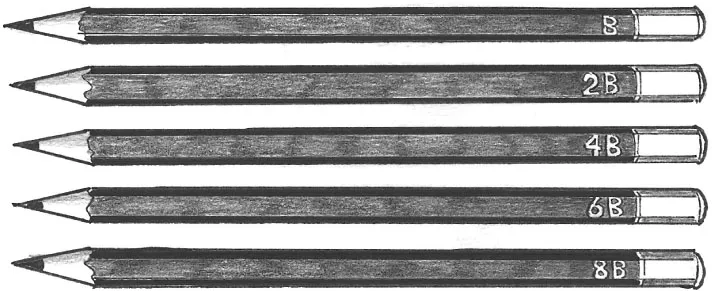
B-grade pencils are soft and wear down quite fast, so have several sharp pencils to hand. It will interrupt the flow of your work if you have to keep stopping to sharpen your pencil.
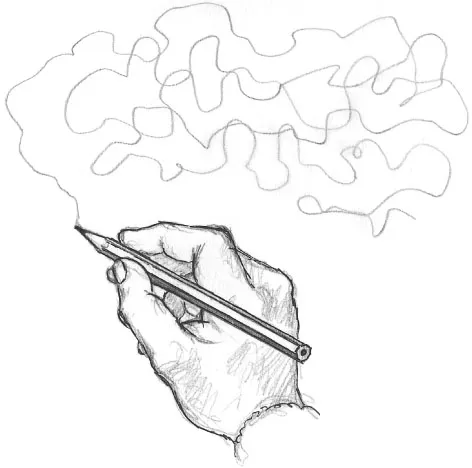
1. When you’re ready, start drawing a wavy line in any direction just to get the feel of the pencil on the paper. This is more important than it may seem, because experiencing through your hand the way the pencil meets the paper gives your drawing greater sensitivity.
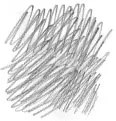
2. Scribble lines in all directions to make a patch of dark tone.
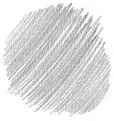
3. Then try a series of quickly made lines, all in the same direction and as close together as you can, to make a patch of tone.
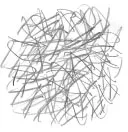
4. Next, draw a number of lines in all directions, but shorter and spaced around to build up like a layer of twigs.
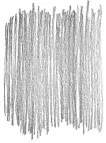
5. Draw a tonal patch with all the lines going in one direction in vertical strokes.
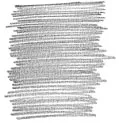
6. Next, draw horizontal strokes in the same manner.
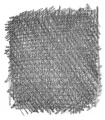
7. Now combine horizontal and vertical lines with diagonals to produce a very dark patch of tone.
Now we are taking a further step towards picture-making, because you are going to attempt a shape that resembles something that you might want to draw.
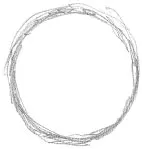
8. Draw a circle as accurately as you can. Although it’s easy enough to imagine a perfect circle, drawing one takes careful work and yours will probably look like the one shown.
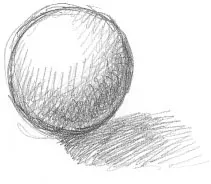
9. Now add a bit of tone to one side of your circle to give the impression of a three-dimensional sphere. Put a patch of tone underneath the sphere, to look like a shadow.
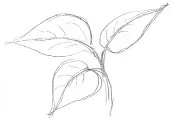
10. Now try a drawing of a group of leaves, keeping it simple and just aiming to express the feel of the plant’s growth.
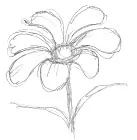
11. Similarly, draw a flower shape – don’t try to be too exact at this stage.
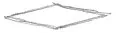
12. First draw a diamond shape that is flatter horizontally than vertically.
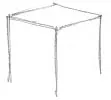
13. Then draw three vertical lines down from the left corner, the lower centre corner and the right corner. All the lines should be parallel to each other, with the outer two about the same length and the central one a little l...
Table of contents
- Cover
- Title
- Contents
- Introduction
- Chapter 1: Marks and materials
- Chapter 2: Line drawing
- Chapter 3: Tonal drawing
- Chapter 4: Observation in drawing
- Chapter 5: Proportions and perspective
- Chapter 6: Composition
- Chapter 7: Useful practices and projects
- Copyright
Trusted by 375,005 students
Access to over 1.5 million titles for a fair monthly price.
Study more efficiently using our study tools.
Frequently asked questions
Yes, you can cancel anytime from the Subscription tab in your account settings on the Perlego website. Your subscription will stay active until the end of your current billing period. Learn how to cancel your subscription
No, books cannot be downloaded as external files, such as PDFs, for use outside of Perlego. However, you can download books within the Perlego app for offline reading on mobile or tablet. Learn how to download books offline
Perlego offers two plans: Essential and Complete
- Essential is ideal for learners and professionals who enjoy exploring a wide range of subjects. Access the Essential Library with 800,000+ trusted titles and best-sellers across business, personal growth, and the humanities. Includes unlimited reading time and Standard Read Aloud voice.
- Complete: Perfect for advanced learners and researchers needing full, unrestricted access. Unlock 1.5M+ books across hundreds of subjects, including academic and specialized titles. The Complete Plan also includes advanced features like Premium Read Aloud and Research Assistant.
We are an online textbook subscription service, where you can get access to an entire online library for less than the price of a single book per month. With over 1.5 million books across 990+ topics, we’ve got you covered! Learn about our mission
Look out for the read-aloud symbol on your next book to see if you can listen to it. The read-aloud tool reads text aloud for you, highlighting the text as it is being read. You can pause it, speed it up and slow it down. Learn more about Read Aloud
Yes! You can use the Perlego app on both iOS and Android devices to read anytime, anywhere — even offline. Perfect for commutes or when you’re on the go.
Please note we cannot support devices running on iOS 13 and Android 7 or earlier. Learn more about using the app
Please note we cannot support devices running on iOS 13 and Android 7 or earlier. Learn more about using the app
Yes, you can access Anyone Can Draw by Barrington Barber in PDF and/or ePUB format, as well as other popular books in Art & Art Techniques. We have over 1.5 million books available in our catalogue for you to explore.