The unexamined life is not worth living. - Plato (c.427-347BC)
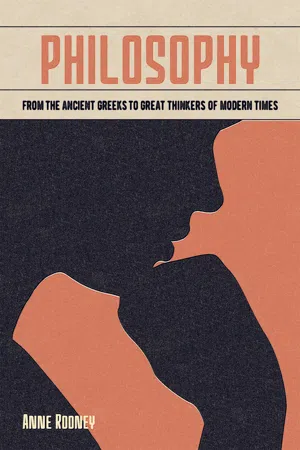
This illustrated book traces the historical development of philosophical thought from the Ancient Greeks through the Enlightenment to the present day. It explores the five main branches of philosophy - metaphysics, epistemology, logic, ethics, and aesthetics - and includes biographies of significant philosophers and accounts of important texts. It is an accessible and fascinating account of the preoccupations of some of the world's greatest thinkers.
Topics include:
• The nature of being and reality
• The existence of God
• Free will and predestination
• Ethics in daily life
• How we might make a good society
ABOUT THE SERIES: Arcturus Fundamentals Series explains fascinating and far-reaching topics in simple terms. Designed with rustic, tactile covers and filled with dynamic illustrations and fact boxes, these books will help you quickly get to grips with complex topics that affect our day-to-day living.
- English
- ePUB (mobile friendly)
- Available on iOS & Android
eBook - ePub
About this book
Information
Topic
PhilosophieTable of contents
- Title
- Contents
- Introduction: The examined life
- Chapter 1: The problem of ‘being’
- Chapter 2: Does God exist?
- Chapter 3: What is it to be human?
- Chapter 4: What can we know?
- Chapter 5: How should we live?
- Chapter 6: How do we make a good society?
- Conclusion: The applications of philosophy
- Copyright
Trusted by 375,005 students
Access to over 1.5 million titles for a fair monthly price.
Study more efficiently using our study tools.
Frequently asked questions
Yes, you can cancel anytime from the Subscription tab in your account settings on the Perlego website. Your subscription will stay active until the end of your current billing period. Learn how to cancel your subscription
No, books cannot be downloaded as external files, such as PDFs, for use outside of Perlego. However, you can download books within the Perlego app for offline reading on mobile or tablet. Learn how to download books offline
We are an online textbook subscription service, where you can get access to an entire online library for less than the price of a single book per month. With over 1.5 million books across 990+ topics, we’ve got you covered! Learn about our mission
Look out for the read-aloud symbol on your next book to see if you can listen to it. The read-aloud tool reads text aloud for you, highlighting the text as it is being read. You can pause it, speed it up and slow it down. Learn more about Read Aloud
Yes! You can use the Perlego app on both iOS and Android devices to read anytime, anywhere — even offline. Perfect for commutes or when you’re on the go.
Please note we cannot support devices running on iOS 13 and Android 7 or earlier. Learn more about using the app
Please note we cannot support devices running on iOS 13 and Android 7 or earlier. Learn more about using the app
Yes, you can access Philosophy by Anne Rooney in PDF and/or ePUB format, as well as other popular books in Philosophie & Geschichte & Theorie der Philosophie. We have over 1.5 million books available in our catalogue for you to explore.