Who killed JFK?
What happened to Malaysian Airways plane MH370, the flight 'that disappeared'?
Who poisoned ex-KGB man Alexander Litvinenko with radioactive polonium?
How did the body of GCHQ codebreaker Gareth Williams end up in a sports bag?
What really happened to Jeffrey Epstein?
Featuring government cover-ups, secret societies, unsolved mysteries and brazen experiments, Conspiracy explores the range of conspiracy theories from the most outlandish to the most plausible, and gets to the bottom of what really happened. Whether discussing strange goings on at CERN or the meetings of the Bilderberg Group, authors Charlotte Greig and Mike Rothschild examine the facts with a clear and critical eye and tell you what it is we really need to worry about.

- English
- ePUB (mobile friendly)
- Available on iOS & Android
eBook - ePub
About this book
Information
CHAPTER 1
THEY’VE GOT YOUR NUMBER
JUST BECAUSE they call you paranoid doesn’t mean they aren’t out to get you. I mean, who can you trust these days? It’s now proven beyond reasonable doubt that countries today spend billions spying on their own citizens, hoovering up vast quantities of information, usually in the name of counter-terrorism. But why did they never tell us what they were up to? And why did they wait until troubled insiders gave the game away? Perhaps we should be grateful to the whistle-blowers who let us in on state secrets.
WIKILEAKS: BITING BACK
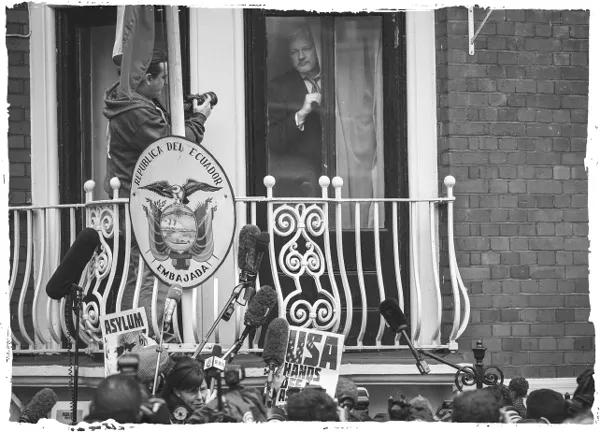
On 19 June 2012, WikiLeaks founder Julian Assange walked into the Ecuadorian Embassy in London and claimed political asylum. This was granted a month later. However, Assange was wanted on a European Arrest Warrant for alleged sexual offences in Sweden. British police guarded the embassy and Assange would be arrested and deported to Sweden if he stepped outside the door.
His fear was that the Swedes would hand him over to the United States where he risked prosecution for espionage, among other things, over the Chelsea Manning case – Manning (born Bradley Edward Manning) had culled hundreds of thousands of diplomatic cables and sensitive material concerning the wars in Iraq and Afghanistan which WikiLeaks had published. In the US, Assange could face the death penalty. But although he was confined to a single room while the work of the Ecuadorian Embassy went on around him, Assange is thought to have influenced the outcome of the 2016 American presidential election – with the help of the Russians. While WikiLeaks was set up to expose conspiracies, Assange was accused of using it to participate in one himself.
Anti-Hillary
Assange had a personal beef against Hillary Clinton, accusing her of pushing to have him indicted after WikiLeaks published a quarter of a million diplomatic cables from her term as secretary of state provided by Manning. Having read thousands of her cables, he said: ‘Hillary lacks judgement and will push the United States into endless, stupid wars which spread terrorism.… She certainly should not become president of the United States.’
During the Democratic Party primaries, WikiLeaks published more emails from Hillary’s private email server, leading to calls for her to be indicted. Then while making it clear to Robert Peston of the UK’s ITV News that he viewed Hillary as a personal enemy, he made an attempt to appear impartial. After the Republican Convention confirmed Donald Trump as its candidate, Assange said that choosing between Clinton and Trump was like opting for ‘cholera over gonorrhoea – personally, I would prefer neither’.
While the FBI concluded that Hillary had been ‘extremely careless’ with her emails, no charges were ever filed. However, the State Department did reopen its investigation.
On the eve of the Democratic Convention, WikiLeaks released emails from the Democratic National Convention that appeared to show the committee favouring presumptive Democratic nominee Hillary Clinton over Bernie Sanders during the primaries. This led to the resignation of DNC chairwoman Debbie Wasserman Schultz.
But where had these emails come from? Cybersecurity experts quickly concluded that the Russians had hacked the DNC. Bob Gourley, former Chief of Technology for the Defense Intelligence Agency, said: ‘The software code that I have seen from the hack had all the tell-tale signs of being Russian, including code re-used from other attacks. This is a really big deal. Some people in the community are saying this is the Russians pretending to be a hacker, then giving that information to Julian Assange all as part of an operation.’
The security firm Crowstrike, who had previously investigated hacks at the White House, Pentagon and State Department, also concluded that the DNC hacks were carried out by the Russians. It found that there were ‘two separate Russian intelligence-affiliated adversaries present in the DNC network’. Assange retaliated by accusing Clinton of causing ‘hysteria about Russia’.
‘There is no proof of that whatsoever,’ he said. ‘We have not disclosed our source, and of course, this is a diversion that’s being pushed by the Hillary Clinton campaign.’
Hillary’s hell
WikiLeaks went on to produce an ‘October surprise’ – that is, a damaging political furore before the election in early November – by leaking the emails of John Podesta, chairman of the Clinton campaign. The FBI then discovered fresh emails on a laptop belonging to Clinton aide Huma Abedin’s husband, Anthony Weiner, during an investigation of his sexting scandals and the investigation was opened up again. The Washington Post pointed out that the subject of Hillary’s emails came up in the news agenda every time her lead in the polls grew.
‘But perhaps the real culprit is WikiLeaks, strategically releasing hacked emails, and thereby demanding media attention, whenever Clinton’s lead expands,’ said the newspaper.
During the second presidential debate, Clinton accused Russian hackers, working on the orders of President Vladimir Putin, of leaking information through WikiLeaks in an attempt to influence the election in favour of Trump. In response, Trump refused to condemn Putin, but said he would not condone hacking by Russia or by anyone else.
Assange defended WikiLeaks’ actions, saying: ‘We publish material given to us if it is of political, diplomatic, historical or ethical importance and which has not been published elsewhere. When we have material that fulfils these criteria, we publish.’
So was the release of Hillary Clinton’s emails part of a conspiracy by Vladimir Putin to ensure Trump was elected? Not if you listen to Assange. He insists WikiLeaks had received leaked emails from the DNC, but none from the Trump campaign and they could not publish what they did not have. After Trump won the election, President Barack Obama expelled 35 Russian diplomats in retaliation for the alleged hacking of email accounts linked to the Democratic Party. Assange then accused Obama of ‘trying to delegitimize the Trump administration as it goes into the White House’. With Hillary Clinton retiring into private life while Donald Trump initially seemed intent on continuing his policy of rapprochement with Moscow, it seemed that Assange had won – though he might not have spent too long savouring the sweet smell of success for he was still holed up in a room at the Ecuadorian Embassy when the Trump presidency began.
EDWARD SNOWDEN: BIG BROTHER IS WATCHING YOU
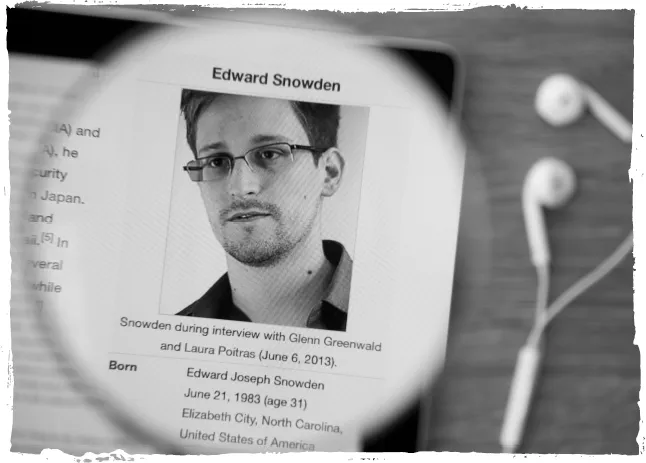
National Security Agency whistle-blower Edward Snowden revealed that America’s NSA had used a top-secret ‘black budget’ to spy on some of the US’s closest allies, including France, Germany, Spain, Mexico, Brazil, China and even Britain, whose Government Communications Headquarters (GCHQ) operated in collaboration with the NSA under the Five Eyes agreement, along with Canada, Australia and New Zealand. It also tapped the phones of 122 world leaders, including Angela Merkel’s. Indeed, the NSA and GCHQ operated a worldwide conspiracy monitoring the phone calls, texts and emails of countless individuals, companies and institutions, including those of its own citizens.
Snowden joined the CIA in 2006 as a computer systems administrator at the global communications division in the agency’s headquarters at Langley, Virginia. After ten months, he was posted to Geneva where he learned the tricks of the intelligence trade, such as getting ‘targets’ drunk enough to end up in jail, then bailing them out so that they would be in your debt and become informants.
In 2009, he quit the CIA and joined Dell, a major contractor to the NSA. Posted to the NSA offices at Yokota air base outside Tokyo, he taught officials and military officers how to defend their networks from Chinese hackers. There he was exposed to live NSA monitors showing targeted killings in the Middle East, watching as military and CIA drones turned people into body parts. He also learned about the NSA’s mass surveillance capabilities and their ability to map the movement of everyone in a city by monitoring their MAC addresses, a unique identifier emitted by each mobile phone, computer and electronic device.
State snooping
Three years later, he was posted to the CIA’s information-sharing office in Hawaii. This was supposed to be monitoring activities in China and North Korea. Instead it was global exchange and he was horrified to discover that the content of communications – as well as the metadata – from millions of emails and phone calls made by Palestinian- and Arab-Americans was being handed over to the Israelis. No attempt was made to disguise their identities even though they might have had relatives living in the occupied territories who could become targets on the basis of these intercepts.
The NSA also spied on the pornography-viewing habits of political radicals in case it could be used against them. Snowden said he complained to his superiors about these illegal activities. When nothing was done, he began to download files which he would later leak to the media. He then moved on to the NSA’s Threat Operations Center at Fort Meade, Maryland, where he collected more evidence of the agency’s illegal surveillance.
Traitor or patriot?
Snowden said that the moment he decided to blow the whistle was when he saw the Director of National Intelligence James Clapper lie under oath to Congress. On 12 March 2013, Clapper was testifying to the Senate Select Committee on Intelligence, when Senator Ron Wyden asked him: ‘Does the NSA collect any type of data at all on millions, or hundreds of millions, of Americans?’
Clapper responded: ‘No, sir.… Not wittingly. There are cases where they could inadvertently, perhaps, collect, but not wittingly.’
Snowden knew this was untrue. The NSA logged nearly every telephone call Americans make. It also bugged European Union offices in Washington and Brussels and, with GCHQ, has tapped the Continent’s major fibre-optic communications cables. Thirty-eight embassies and missions were on its list of surveillance targets, including those belonging to allies such as France, Japan and Mexico.
As an ‘infrastructure analyst’, Snowden’s job was to look for new ways to break into internet and telephone traffic around the world. This gave him access to lists of devices all over the world that the NSA had hacked. He also discovered that, as well as hoovering up staggering amounts of information, the NSA had developed cyberweapons so it could, if necessary, go on the attack. The NSA and Israel co-wrote the Stuxnet computer worm used to sabotage Iran’s nuclear programme.
On the run
In May 2013, Snowden fled to Hong Kong with four laptop computers thought to contain the files he had downloaded. There he began briefing journalists. On 6 June, the Guardian printed a story saying that the NSA had been given permission to collect the telephone records of the millions of customers of the US telecoms giant Verizon. The order had been granted by the secret Foreign Intelligence Surveillance Court. The following day the Guardian and the Washington Post reported the NSA was accessing the systems of US internet giants including Google and Facebook, and collecting d...
Table of contents
- Cover
- Title
- Contents
- Introduction
- Chapter 1: They’ve Got Your Number
- Chapter 2: Murder Mysteries
- Chapter 3: Secret Societies
- Chapter 4: Political Conspiracies
- Chapter 5: War Stories
- Chapter 6: Mysteries and the Unknown
- Chapter 7: Cover-Ups
- Picture Credits
- Copyright
Trusted by 375,005 students
Access to over 1.5 million titles for a fair monthly price.
Study more efficiently using our study tools.
Frequently asked questions
Yes, you can cancel anytime from the Subscription tab in your account settings on the Perlego website. Your subscription will stay active until the end of your current billing period. Learn how to cancel your subscription
No, books cannot be downloaded as external files, such as PDFs, for use outside of Perlego. However, you can download books within the Perlego app for offline reading on mobile or tablet. Learn how to download books offline
Perlego offers two plans: Essential and Complete
- Essential is ideal for learners and professionals who enjoy exploring a wide range of subjects. Access the Essential Library with 800,000+ trusted titles and best-sellers across business, personal growth, and the humanities. Includes unlimited reading time and Standard Read Aloud voice.
- Complete: Perfect for advanced learners and researchers needing full, unrestricted access. Unlock 1.5M+ books across hundreds of subjects, including academic and specialized titles. The Complete Plan also includes advanced features like Premium Read Aloud and Research Assistant.
We are an online textbook subscription service, where you can get access to an entire online library for less than the price of a single book per month. With over 1.5 million books across 990+ topics, we’ve got you covered! Learn about our mission
Look out for the read-aloud symbol on your next book to see if you can listen to it. The read-aloud tool reads text aloud for you, highlighting the text as it is being read. You can pause it, speed it up and slow it down. Learn more about Read Aloud
Yes! You can use the Perlego app on both iOS and Android devices to read anytime, anywhere — even offline. Perfect for commutes or when you’re on the go.
Please note we cannot support devices running on iOS 13 and Android 7 or earlier. Learn more about using the app
Please note we cannot support devices running on iOS 13 and Android 7 or earlier. Learn more about using the app
Yes, you can access Conspiracy by Charlotte Greig,Mike Rothschild in PDF and/or ePUB format, as well as other popular books in Social Sciences & Political Institutions & Public Administration. We have over 1.5 million books available in our catalogue for you to explore.