
Claude Monet's tranquil water-lily paintings and rural landscape scenes are among some of the most treasured artworks of the 19th and 20th centuries. Hailed as the 'Prince of Impressionism' for his pioneering role in the French artistic movement, Monet is widely recognised for his free brushstroke and experimentation with colour and natural light.
In this beautifully illustrated book, Ann Sumner explores the life of this prodigious painter and the subjects that obsessed him: the cliffs of the Normandy coastline, the palazzos of Venice, the railway stations of Paris, the great edifice of Rouen Cathedral, and his beloved garden at Giverny.
Showcasing a selection of his best-loved and lesser-known paintings alongside fascinating biographic detail, this guide serves as a perfect introduction to Monet and the evolution of his iconic style.
ABOUT THE SERIES: The Great Artists series by Arcturus Publishing introduces some of the most significant artists of the past 150 years, looking at their lives, techniques and inspirations, as well as presenting a selection of their best work.
eBook - ePub
Claude Monet
About this book
Information
Topic
ArtSubtopic
Artist Biographies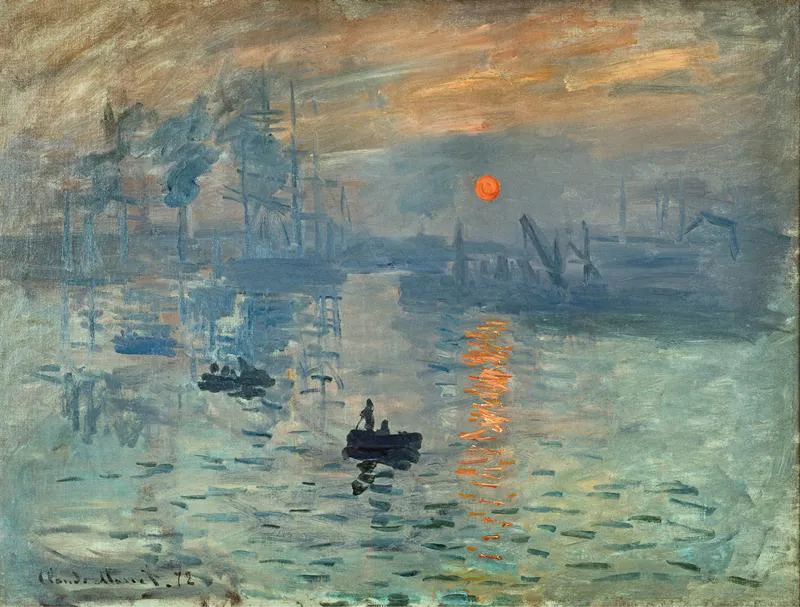
Chapter 1
Context and Reputation
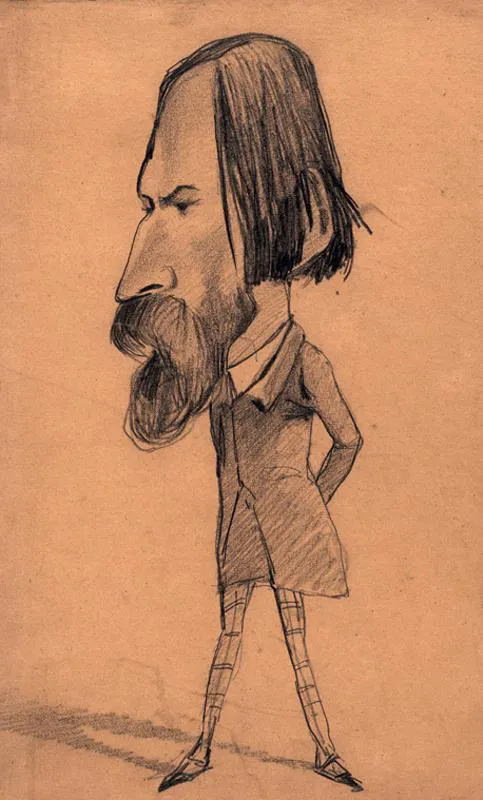
A hugely talented and versatile artist, Monet was raised in Le Havre, on the Normandy coast. Initially an artistic prodigy who flourished as a caricaturist, he was introduced to landscape painting in the open air by his mentor Eugène Boudin, and as a result went to Paris to study art. After a brief period of military service in Algiers, he returned to France, and in 1862 he was enrolled at the Académie Atelier of the Swiss artist Charles Gleyre. During the Franco-Prussian War (1870–1), Monet spent a formative period in exile in London working with Pissarro, and met the dealer Paul Durand-Ruel, who would transform his career. He returned to France again, focusing on landscape painting, and in 1873 he began planning an exhibition with like-minded artists – Renoir, Pissarro, Degas, Sisley, Berthe Morisot and Cézanne. This was the group who became known as the Impressionists. They all shared an interest in subjects taken from modern life, a light and luminous palette, and the attentive study of the effects of light and atmosphere on people and landscapes. They were influenced by the older artist Édouard Manet too. Since their work had been consistently rejected for display at the official Salon, they took matters into their own hands, and the first independent Impressionist exhibition opened in 1874.
Monet has been described as the ‘ultimate Impressionist’, the ‘Prince of Impressionism’, the ‘head of the school’ and the Impressionist who stayed true to the idea of capturing light in all its fleeting sensations. At that first exhibition in 1874, his painting – Impression, Sunrise (1872), showing the harbour at Le Havre – caught the eye of the critic Louis Leroy, who mocked the title, but it was from this potentially bad press that the term ‘Impressionism’ originated, so familiar to us all now and defining an artistic movement.
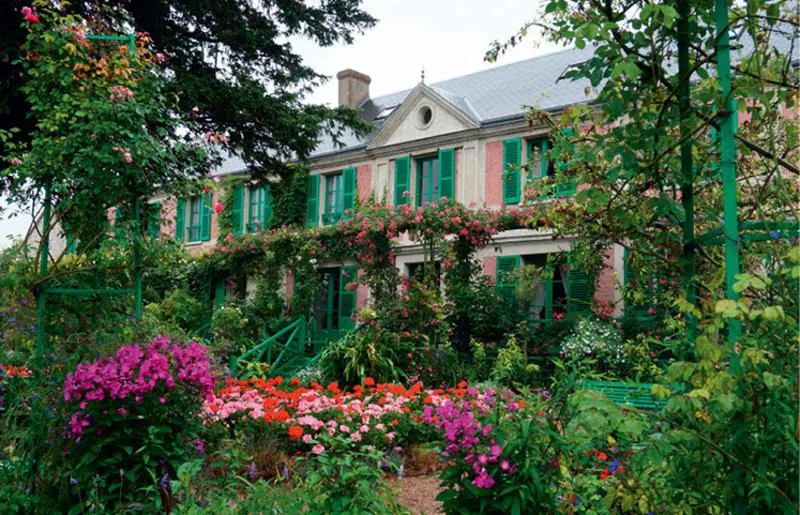
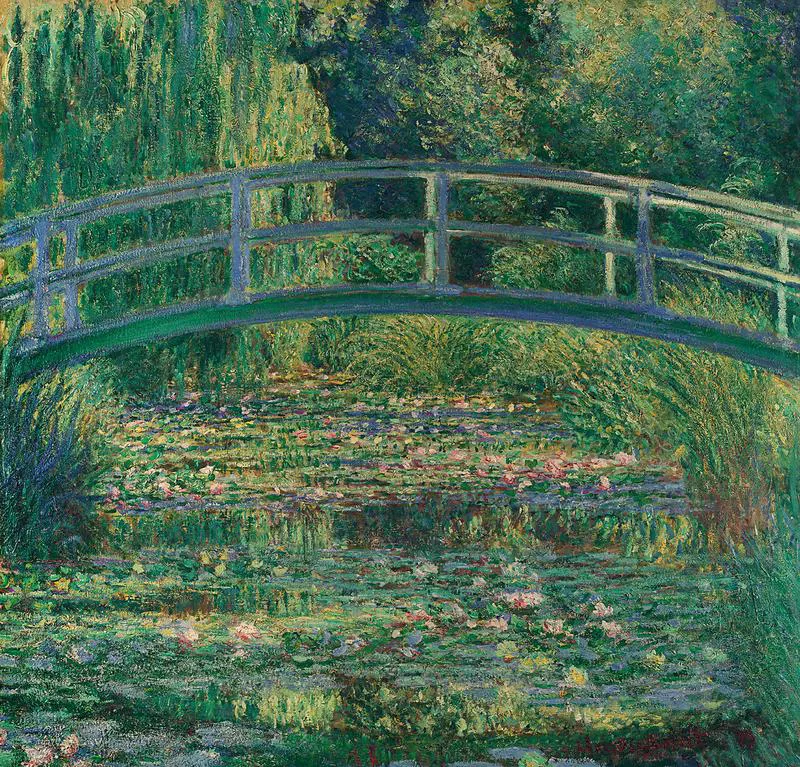
Although Monet painted many bright sunlit views of the Normandy coast and the dappled sunlight in suburban gardens or views of the River Seine, it is his studies of waterlilies for which he is probably best known. He painted these in his garden at Giverny and they were a source of prolonged inspiration for him. Monet settled there in 1883, purchasing the house and land in 1890. Today, these waterlily paintings, some with the Japanese-inspired bridge, are extraordinarily familiar to us. His house and garden at Giverny are visited by more than half a million tourists each year, and are especially busy in the summer months. In Monet’s day there were constant visitors too, one of the first being the painter Gustave Caillebotte, his friend and patron. Later, other visitors included friends such as the writer Octave Mirbeau (who would often write his catalogue entries), artists who admired his work – from Bonnard to Singer Sargent – and the politician Georges Clemenceau, whom he had known since the 1860s.
Monet’s personal life was somewhat complex and unconventional at times. He initially had to conceal his relationship with his first wife Camille from his disapproving family, and the exact timing of the beginning of his relationship with his beloved second wife Alice, widow of department-store magnate and art collector Ernest Hoschedé, is unclear. They lived openly together with their blended families at Vétheuil, Poissy and later at Giverny, although she was still married to Hoschedé. Her husband died in 1891, and Alice finally married Monet in 1892. His letters to her offer a remarkable insight into their relationship, and often his struggles with his artistic practice.
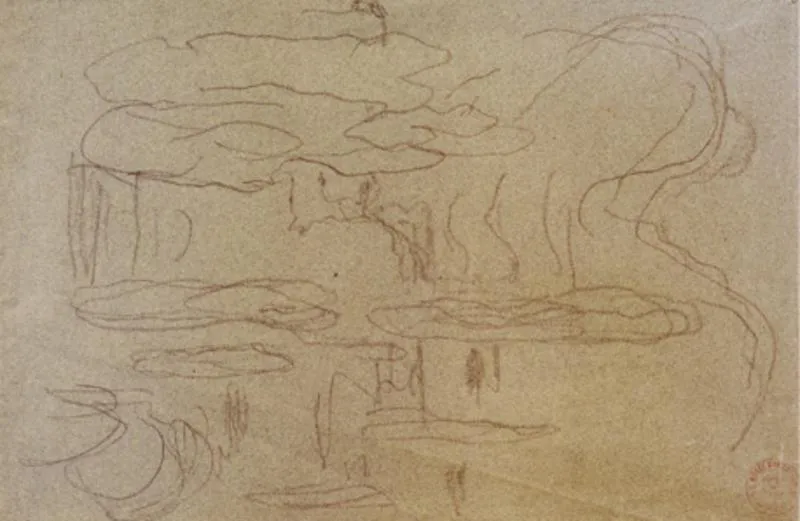
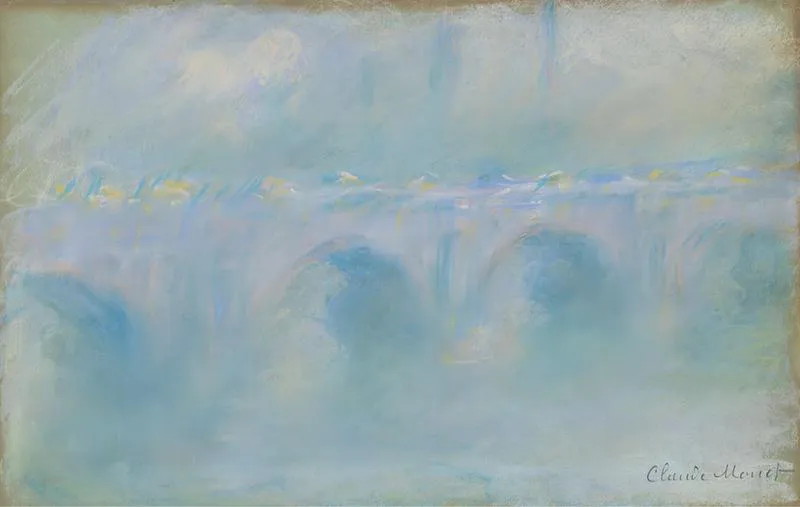
Blessed with a long life, his successful career spanned 60 years of painting, from the realism of the 1860s via the heights of Impressionism in the 1880s and ’90s to his evolving, increasingly abstract painting of waterlilies in the early twentieth century. This longevity meant that he was able to exert a strong influence over his official biography, public image and legacy, perpetuating myths about his working methods and his use of drawings. Monet’s work has always been associated with painting en plein air (in the open air) and it is true that he himself encouraged the notion that his art was ‘impulsive, unrehearsed creativity’, but it is now accepted that the complexity of his canvas surfaces, with intricate layers of paint and coloured highlights, suggests many were begun in front of the image but finished in the studio while maintaining the appearance of being rapidly and spontaneously painted outside. Not only does examination of the paint surfaces of his pictures suggest this; so too do the documented recollections of contemporaries. Monet also denied the role of draughtsmanship in his art, and sold very few drawings in his lifetime, but his approach to this medium has been revised as well. His early caricatures demonstrate his technical ability and it is now accepted that he had a structured working method, employing preparatory drawings mid-career, and that he also worked in pastel – producing some striking examples in this medium of the cliffs at Étretat, dating from the 1880s, and a group of pastels of London’s bridges in fog from 1901. Sketchbooks in the Musée Marmottan even contain studies directly related to his later waterlily paintings at Giverny. They may be somewhat sketchy and abstract but were clearly important as part of the design process.
Monet attained major fame in his own lifetime, not only in France but worldwide, most especially in America and Japan. He was an artist with an acute sense of business, understanding the importance of cultivating numerous dealers and patrons, and of putting on one-man shows. In later life he was a collector of art himself, owning the work of his teacher Boudin and paintings by Delacroix, Corot, Jongkind, Manet, Renoir, Pissarro, Cézanne and Signac. He also brought together a collection of Japanese prints by Kitagawa Utamaro, Katsushika Hokusai and Ando Hiroshige, openly acknowledging his debt to Japanese art, most especially in the bold manner in which these artists cropped their subjects. The collection hung in the private apartments upstairs at Giverny, and was rarely shown to the many visitors, who included dealers, artists (especially young Americans), collectors (including a number of Japanese, such as Takeko Kuroki and Ko¯jiro¯ Matsukata) plus a steady stream of journalists coming to see the great man. Monet only occasionally gave interviews in his later years, increasing the aura around him. His wealth was by that time conspicuous too – as one visitor recalled, he was ‘surrounded by every comfort’. He employed a chauffeur and had a number of smart cars – which he enjoyed driving fast – and his wider staff included a butler, a cook and six gardeners to tend his water gardens.
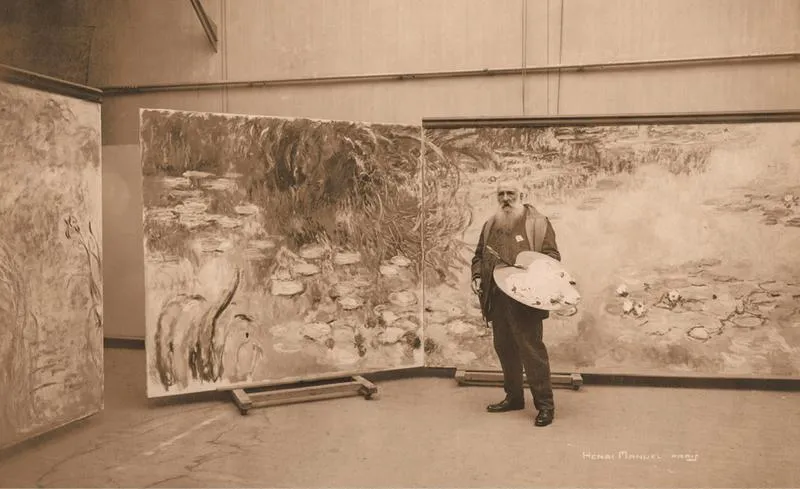
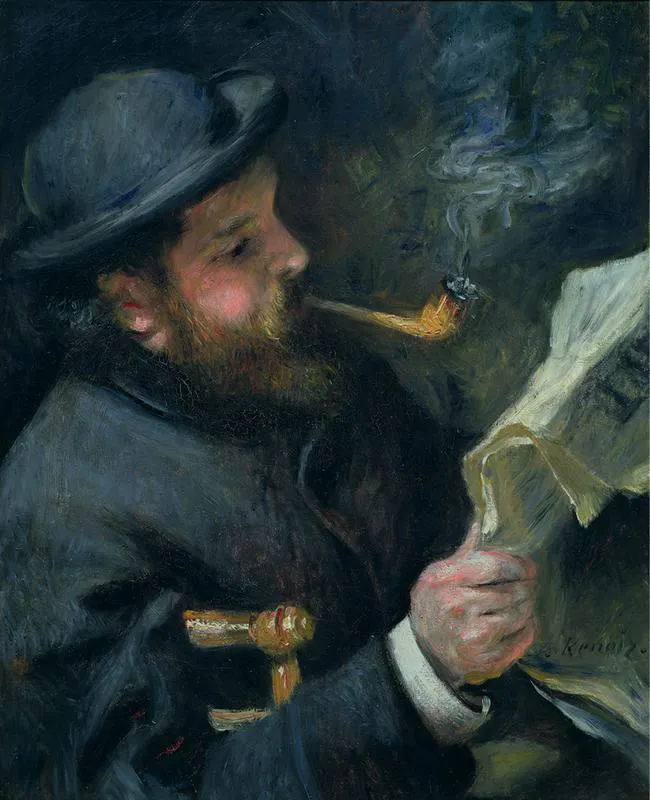
In old age, Monet famously suffered from problems with his eyesight, an appalling condition for any artist, and underwent painful and debilitating cataract operations. Despite this setback and the loss of loved ones in later life, he produced some of his most remarkable waterlily paintings as World War I raged about him, and ultimately he donated his final great waterlily series to the French nation as a war memorial. When his dear friend Renoir died in 1919, he grieved greatly. He wrote to his friend the critic Geffroy, ‘It’s very hard. There’s only me left, the sole survivor of the group.’ He was the last living Impressionist, dying eventually in 1926, aged 86.
Chapter 2
The Young Artist
Early Years and Influences in Le Havre
Monet’s formative years are crucial to understanding how he developed as a key artist in the Impressionist movement. Normandy, where he grew up, was important to him throughout his life and his family’s support was vital to his early career. The coastal towns of Normandy had been transformed by the advent of the railways into popular tourist destinations, where artists also flourished. Both Eugène Boudin and Johan Barthold Jongkind worked there and exercised influence over Monet in his early career. His training in the studio of Charles Gleyre was also key because it was there that he met Frédéric Bazille, Alfred Sisley and Pierre-Auguste Renoir, all talented young artists with whom he would work closely. Monet is typically seen as a painter of landscape and yet as his style developed during this formative period, he was much preoccupied with painting figures in landscape too.
Oscar-Claude Monet was born in Paris on 14 November 1840, the second son of Adolphe and Louise Justine Monet of 45 rue Laffitte. Both his parents’ families had been established for two generations in Paris. While we know the artist as Claude, he was called Oscar by his family. There is little information about his father’s early career except that he was a shopkeeper. The entire family, including his father’s parents, relocated to Le Havre on the Normandy coast of north-western France, around 1845. His father’s half-sister, Marie-Jeanne Lecadre, was already established there, married to a successful wholesale grocer and supplier for ships. Monet’s father joined his brother-in-law’s retail business and prospered. The family settled in the Ingouville suburb of Le Havre, at 30 rue d’Epremenil, a large house where they initially took in lodgers. The nephew of one lodger recorded sometime later the life of the Monet household when he visited in 1853, explaining that he stayed with ‘Monsieur Monet, his wife, who had an exceptional voice, and their two sons, the second of whom, though then called Oscar, was to attain fame as Claude Monet’. He described his short holiday: ‘there were walks and seabathing’ and ‘in the evening improvised concerts and balls; everyone came together and brought the house alive with laughter.’ Le Havre was flourishing and expanding at the time, and the Monet family summered at their aunt’s holiday home at Sainte-Adresse.
At school, Monet’s artistic talent for drawing was noted and encouraged by a teacher, Jacques-François Ochard, who had been a pupil of Jacques-Louis David. By the mid 1850s, when he was around 15 years old, Monet was p...
Table of contents
- Title Page
- Contents
- Introduction
- Chapter 1. Context and Reputation
- Chapter 2. The Young Artist
- Chapter 3. Impressionism Takes Shape
- Chapter 4. Refining Impressionism
- Chapter 5. The Series Paintings
- Chapter 6. Giverny and the Waterlilies
- Timeline
- Further Information
- List of Illustrations
- Copyright
Trusted by 375,005 students
Access to over 1.5 million titles for a fair monthly price.
Study more efficiently using our study tools.
Frequently asked questions
Yes, you can cancel anytime from the Subscription tab in your account settings on the Perlego website. Your subscription will stay active until the end of your current billing period. Learn how to cancel your subscription
No, books cannot be downloaded as external files, such as PDFs, for use outside of Perlego. However, you can download books within the Perlego app for offline reading on mobile or tablet. Learn how to download books offline
Perlego offers two plans: Essential and Complete
- Essential is ideal for learners and professionals who enjoy exploring a wide range of subjects. Access the Essential Library with 800,000+ trusted titles and best-sellers across business, personal growth, and the humanities. Includes unlimited reading time and Standard Read Aloud voice.
- Complete: Perfect for advanced learners and researchers needing full, unrestricted access. Unlock 1.5M+ books across hundreds of subjects, including academic and specialized titles. The Complete Plan also includes advanced features like Premium Read Aloud and Research Assistant.
We are an online textbook subscription service, where you can get access to an entire online library for less than the price of a single book per month. With over 1.5 million books across 990+ topics, we’ve got you covered! Learn about our mission
Look out for the read-aloud symbol on your next book to see if you can listen to it. The read-aloud tool reads text aloud for you, highlighting the text as it is being read. You can pause it, speed it up and slow it down. Learn more about Read Aloud
Yes! You can use the Perlego app on both iOS and Android devices to read anytime, anywhere — even offline. Perfect for commutes or when you’re on the go.
Please note we cannot support devices running on iOS 13 and Android 7 or earlier. Learn more about using the app
Please note we cannot support devices running on iOS 13 and Android 7 or earlier. Learn more about using the app
Yes, you can access Claude Monet by Ann Sumner in PDF and/or ePUB format, as well as other popular books in Art & Artist Biographies. We have over 1.5 million books available in our catalogue for you to explore.