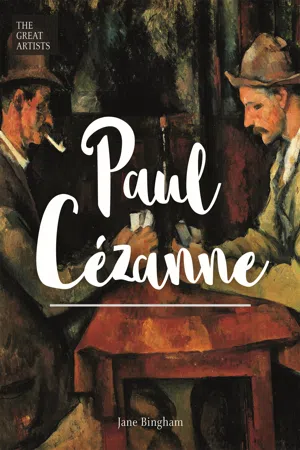
In the words of Matisse and Picasso, Paul Cézanne was the 'father of us all', his approach to color and perspective paving the way for later modernist art movements such as Cubism and Expressionism, as he moved beyond the figurative tradition and towards abstraction.
This book charts Cézanne's journey as an artist, his involvement with the Impressionist movement and his importance as a leading Post-Impressionist. It explores the places where he lived and worked, his personal life and friendships, and the artistic influences that helped to shape his remarkable vision of the world. This biographical detail is set alongside a selection of his brilliant paintings, allowing you to trace the evolution of his artwork.
ABOUT THE SERIES: The Great Artists series by Arcturus Publishing introduces some of the most significant artists of the past 150 years, looking at their lives, techniques and inspirations, as well as presenting a selection of their best work.
eBook - ePub
Paul Cézanne
About this book
Information
Topic
ArtSubtopic
Artist Biographies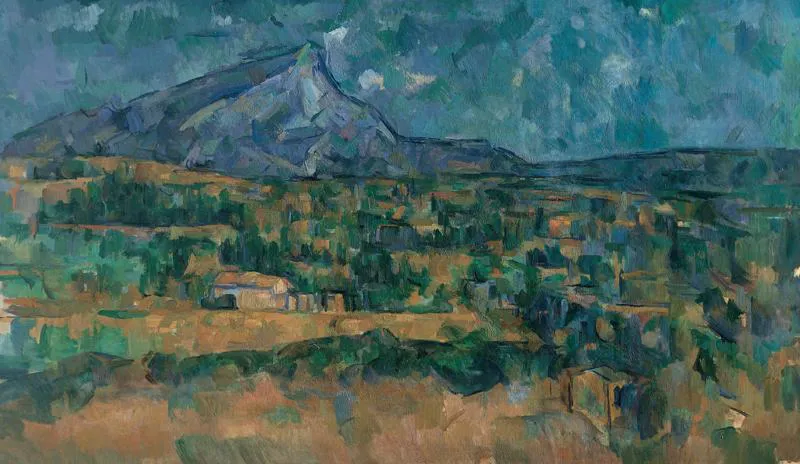
Chapter 1
Early Years
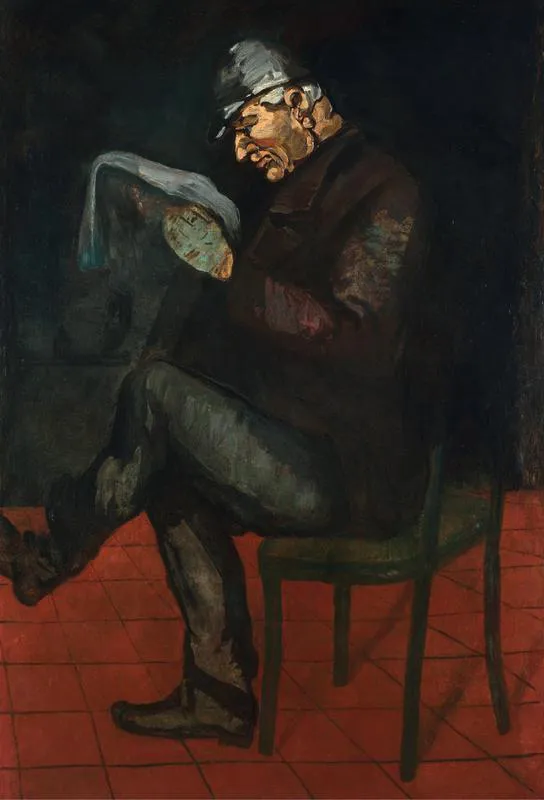
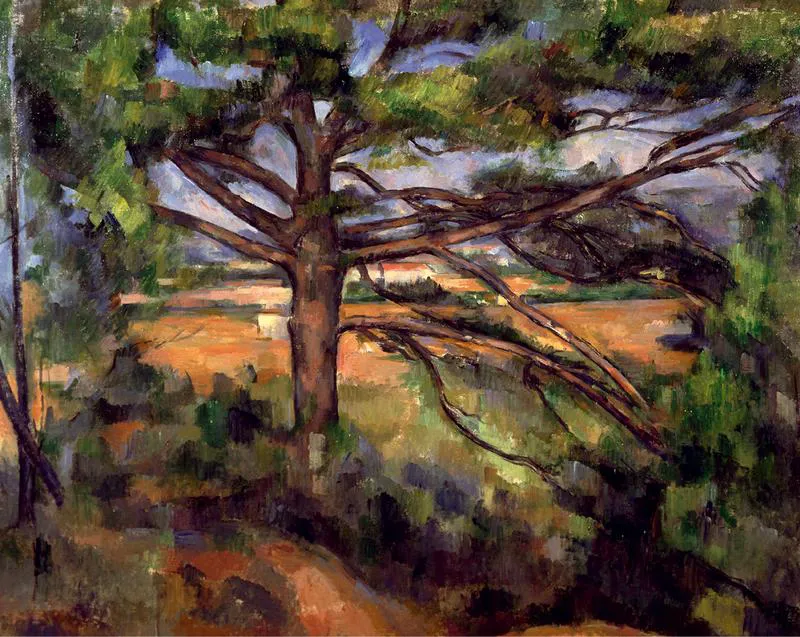
The picturesque town of Aix-en-Provence lies at the heart of Paul Cézanne’s life and art. It was there he was born in 1839 and there he died, 67 years later, having devoted much of his life to painting the surrounding landscape. The countryside of Provence – its woods, fields and rivers, its rocky outcrops and isolated farms – was a source of inspiration to the young Cézanne, but his childhood was not a time of perfect happiness. While his mother was loving and supportive, his father, Louis-Auguste Cézanne, was a man of driving ambition who had a troubled relationship with his sensitive son.
Family and early childhood
Cézanne’s parents both came from humble origins. His father, Louis-Auguste, was the son of a tailor in a small village outside Marseille. As a young man he had moved first to Aix to work for a wool merchant, and then to Paris where he trained as a hat-maker. Louis-Auguste returned to Aix at the age of 24 and very soon established his own business with two partners. The firm, which sold and exported felt hats, was a great success and by the time of Cézanne’s birth his father had become a wealthy and respected member of the bourgeoisie of Aix.
Louis-Auguste met his future wife, Anne-Elisabeth-Honorine Aubert, while she was working in his hat-making company. The daughter of a woodturner, she was 24 at the time of their first meeting, while Louis-Auguste was approaching 40. Soon the couple were living together and it wasn’t long before Elisabeth became pregnant. Paul was born in 1839, followed by a sister, Marie, in 1841. The couple did not marry until Paul was five years old, but this was not unusual in French rural society. A third child, Rose, was born in 1854; however, the 15-year gap between Paul and his younger sister meant that they never had a close relationship.
At the age of five Paul began school, and Marie soon followed. The children attended a small primary school before moving on to the École Saint-Joseph, where Paul stayed for three years. In later life, Marie wrote a letter to Cézanne’s son, recalling those early schooldays. She told him that her big brother took much trouble to look after her, remaining gentle towards her even when she provoked him, and she described him as ‘a quiet and docile student [who] worked hard [and] had a good mind, but did not manifest any remarkable qualities.’ It was not until he moved to the Collège Bourbon that Paul began to come into his own.
School and friendship
In 1852, the 13-year-old Cézanne joined the Collège Bourbon as a day boarder, leaving home at 7am and returning only to sleep. In his six years at the Collège, he gained a solid education and some lifelong friends. In particular, his friendship with two other boys was so close that they became known as ‘the Inseparables’. Cézanne’s young companions were Baptistin Baille, who came from a wealthy family in Aix, and a lively little Parisian called Émile Zola. In later life, Baille was a professor of optics and acoustics in Paris, while Zola became one of France’s leading novelists and playwrights.
At school, the three Inseparables worked hard at their studies, but also enjoyed some harmless fun, devising playful nicknames for their teachers and playing practical jokes. According to Zola’s fictionalized account of his schooldays, the friends smoked dried chestnut leaves in homemade pipes while the young Cézanne experimented with setting fire to insects. After school, the trio often gathered in an upstairs room of Baille’s house, where they brewed up strange potions and composed plays in rhyming verse that they directed and acted in themselves.
The friends were united in their love of fun and adventure, but Cézanne was the most volatile of the three, suddenly plunging into fits of depression and self-doubt. At these times he would say ‘The sky of the future is very dark for me!’ but then he would recover and begin to plan his next exciting scheme. He also suffered from fits of temper and would suddenly fly into a rage and insult his friends. Zola counselled Baille, ‘When he hurts you, you must not blame his heart, but rather the evil demon which beclouds his thought. He has a heart of gold and is a friend who is able to understand us, being just as mad as we, and just as much of a dreamer.’
Apart from the fun of friendship, life at the Collège Bourbon was tough. The classrooms were unheated, the boys learned to swim in a pond covered with slime and the food was so bad that pupils sometimes resorted to riots at mealtimes. Yet, despite these privations, the boys did not experience deliberate cruelty. Pupils who broke the school rules were generally forced to write out 500 lines of ‘improving’ poetry, rather than being punished by beatings.
Teaching at the Collège was generally uninspired, although Cézanne did manage to acquire a deep knowledge of Latin and Greek as well as a thorough grounding in arithmetic, history and geography. A diligent pupil, he earned an array of prizes, especially for his Latin and Greek translations. He enjoyed playing the cornet in the school band, and sometimes made up a trio with his friends to serenade the girls they admired. Surprisingly, he failed to shine in art. Instead, it was Zola who won prizes for drawing.
Cézanne and Zola: the start of a long friendship
When he arrived at the Collège Bourbon at the age of 12, Émile Zola already showed signs of the character that would later make him one of France’s most outspoken literary figures. Widely read and opinionated, with a strong Parisian accent, he was also poor and undersized, and he stood out immediately from his stocky Provençal classmates. His father was a talented engineer who had moved to Aix to construct the dam that was later named after him, but he had died when Émile was six years old, leaving him in the care of his doting mother and grandmother. Young Émile was awarded a scholarship to board at the Collège, but his mother and grandmother still insisted on visiting him every day at school. Perhaps unsurprisingly, he was teased mercilessly by his fellow pupils, who taunted him for his accent and his poverty and even resorted to violence, giving him regular beatings.
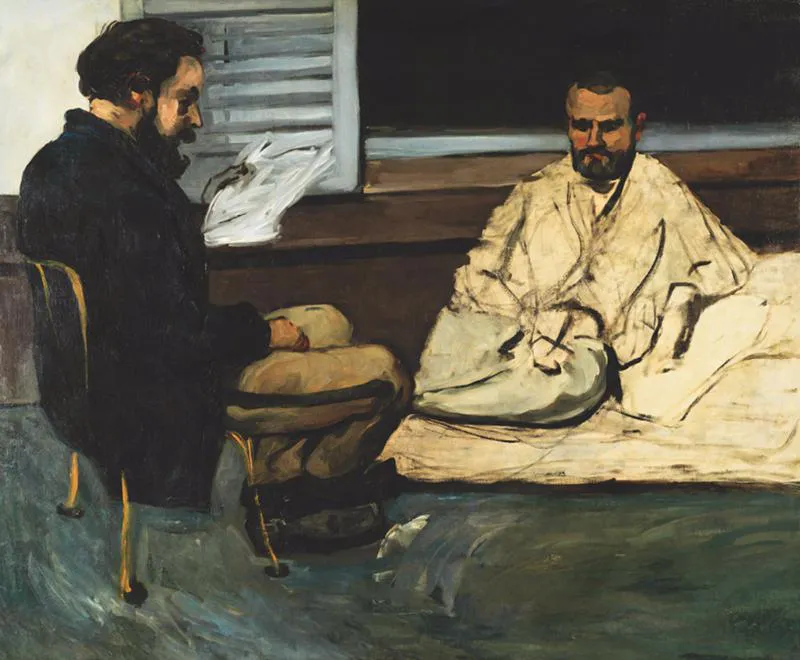
Fortunately for Émile, he found a determined champion in Paul Cézanne. At the age of 13, Paul was almost fully grown – tall, broad and physically confident. Shocked by the cruelty of his fellow pupils, he waded in to protect the younger boy, lashing out at his tormentors. Paul’s outraged defence brought positive results: the bullies retreated and he and Émile became firm friends. The next day, Émile brought Paul a basket of apples as a thank-you present. It was the start of a friendship that would last for over 30 years, as the two remarkable characters nourished each other’s talents.
Rural adventures
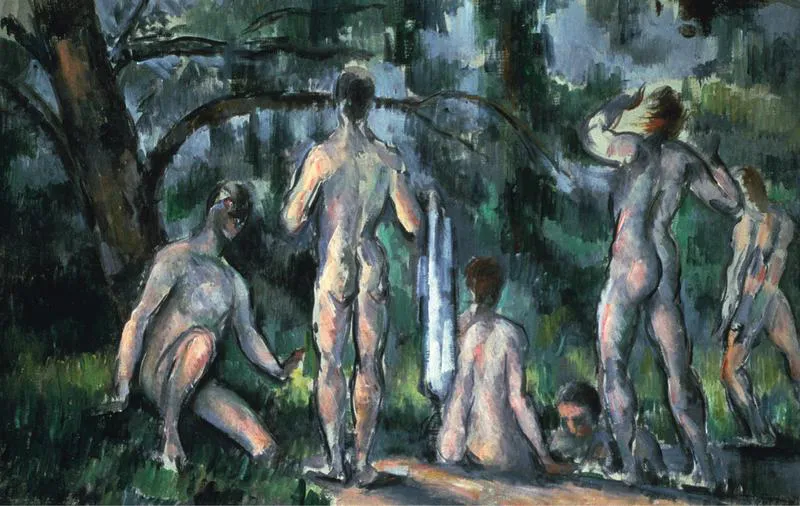
Whenever they had the chance, the three Inseparables would pack up a picnic and a bag of books and escape into the countryside. Often, they left in the early hours of the morning so that they could enjoy the sunrise. In summer, they swam naked in streams, before stretching out in the sun to dry. In winter, they trekked through snowy woods and built fires to cook their simple meals. Even on rainy days, they still ventured out, huddling in gullies and reading poetry to each other. Sometimes they carried their guns and took potshots at birds, but mainly they just talked, sharing their love of poetry and their dreams for the future. It was a magical time that Cézanne would remember for the rest of his life.
Family feelings
By the time Cézanne enrolled at the Collège Bourbon, his father was a very wealthy man. Five years earlier, Aix’s only bank had gone bankrupt and Louis-Auguste had seized the opportunity to take ownership of one of the town’s key institutions. In partnership with the bank’s cashier, Joseph Cabassol, he founded the new bank of Cézanne and Cabassol, offering loans to the people of Aix. The partnership prospered and Louis-Auguste became a leading citizen of Aix – wealthy, respected and a little feared.
Louis-Auguste ruled his family with a firm hand. Generally grim and unbending, he demanded total obedience from his children. He expected them all to be firm and decisive – one of his favourite sayings was ‘Every time you go out, know where you’re going!’ – and his expectations of his only son were especially high. Marie, his favourite child, was sometimes able to humour him out of his grim moods, but Paul would creep away, turning to his more warm-hearted mother for comfort.
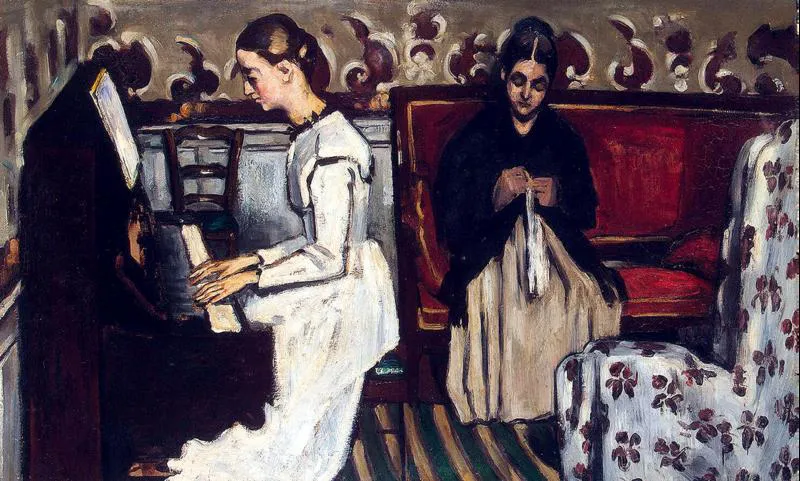
Very little is known about Cézanne’s mother, Elisabeth, but she was clearly not an educated woman. At the time of her marriage, she appears to have been illiterate; while Louis-Auguste signed the marriage documents, it was recorded that his bride and her mother did not have the skill of writing. However, Elisabeth seems to have gained some literacy skills later in life; by the time her son was six years old she was able to write her name in a book that she gave to him. No letters from Elisabeth survive, and her granddaughter reported that she was not in the habit of writing. However, she could certainly read, and Cézanne wrote to her regularly when they were apart. She also appears to have had some feeling for art, subscribing to illustrated magazines – L’Artiste and Le Magasin Pittoresque – which provided a useful source of images for her son.
Unlike her husband, who had no time for artists, Elisabeth fostered Paul’s artistic talents. When he was very young, she encouraged him to...
Table of contents
- Title Page
- Contents
- Introduction
- Chapter 1. Early Years
- Chapter 2. Troubled Times
- Chapter 3. New Directions
- Chapter 4. Explorations
- Chapter 5. The Final Years
- Epilogue
- Timeline
- Further Information
- List of Illustrations
- Copyright
Trusted by 375,005 students
Access to over 1.5 million titles for a fair monthly price.
Study more efficiently using our study tools.
Frequently asked questions
Yes, you can cancel anytime from the Subscription tab in your account settings on the Perlego website. Your subscription will stay active until the end of your current billing period. Learn how to cancel your subscription
No, books cannot be downloaded as external files, such as PDFs, for use outside of Perlego. However, you can download books within the Perlego app for offline reading on mobile or tablet. Learn how to download books offline
Perlego offers two plans: Essential and Complete
- Essential is ideal for learners and professionals who enjoy exploring a wide range of subjects. Access the Essential Library with 800,000+ trusted titles and best-sellers across business, personal growth, and the humanities. Includes unlimited reading time and Standard Read Aloud voice.
- Complete: Perfect for advanced learners and researchers needing full, unrestricted access. Unlock 1.5M+ books across hundreds of subjects, including academic and specialized titles. The Complete Plan also includes advanced features like Premium Read Aloud and Research Assistant.
We are an online textbook subscription service, where you can get access to an entire online library for less than the price of a single book per month. With over 1.5 million books across 990+ topics, we’ve got you covered! Learn about our mission
Look out for the read-aloud symbol on your next book to see if you can listen to it. The read-aloud tool reads text aloud for you, highlighting the text as it is being read. You can pause it, speed it up and slow it down. Learn more about Read Aloud
Yes! You can use the Perlego app on both iOS and Android devices to read anytime, anywhere — even offline. Perfect for commutes or when you’re on the go.
Please note we cannot support devices running on iOS 13 and Android 7 or earlier. Learn more about using the app
Please note we cannot support devices running on iOS 13 and Android 7 or earlier. Learn more about using the app
Yes, you can access Paul Cézanne by Jane Bingham in PDF and/or ePUB format, as well as other popular books in Art & Artist Biographies. We have over 1.5 million books available in our catalogue for you to explore.