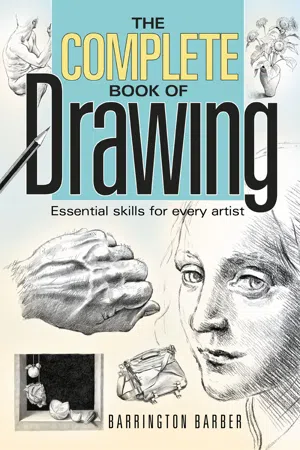
What does every budding artist need to know about drawing? And what quick skills can you pick up to help you on the way? In this instructive book, Barrington Barber shows you just this, offering tips and tricks as he guides you through the fundamental aspects of drawing.
Get to grips with still-life composition, draw dynamic bodies in motion, and capture the spectacular natural world. The Complete Book of Drawing is a distillation of the many skills that the aspiring artist needs to develop.
As Barrington Barber knows from his many years of teaching and practising art, it is crucial for you to develop your own artistic style. And, uniquely among practical art books, this is what The Complete Book of Drawing provides. By revealing the nuances of texture, composition and perspective, this book will enable you to look at the world around you with fresh eyes.
- English
- ePUB (mobile friendly)
- Available on iOS & Android
eBook - ePub
About this book
Information
Topic
ArtSubtopic
Art GeneralChapter One
FIRST STAGES
The first stages of any enterprise are important because often how you start determines the way you learn to adopt for much later stages. So don’t try and rush it. The very first exercises in the book should be done with a fairly calm attitude, setting up your area of drawing so that it is not too messy or cluttered. As you progress keep bringing your attention exactly onto the point of the pencil and taking the work at a steady, rather than frantic, pace. This attitude of calmness is a great asset in doing anything, and is absolutely necessary in drawing if you are going to get enjoyment and the best out of the activity, and ensure that you improve steadily.
The rate of improvement is not a vital factor, but there should be a step-by-step approach and your improvement should happen similarly. You only get good at what you practice, so the more you practice any stage, the better that stage will become.
When you start, equip yourself with the instruments for drawing and paper as advised on pages 8-9. The selection of drawing materials is immense these days, and any art shop can give you advice on which would be the better things to use, depending on what stage you have reached.
Think a bit about how you hold a pencil or pen. Don’t use a tight hold; a pencil will not leap out of your hand of its own accord, so hold it quite loosely, with a relaxed grip. You need to be comfortable with your materials and when you draw you should feel relaxed rather than tense. If you do tense up, stop and make the effort to relax your hand, arm, back or whole body.
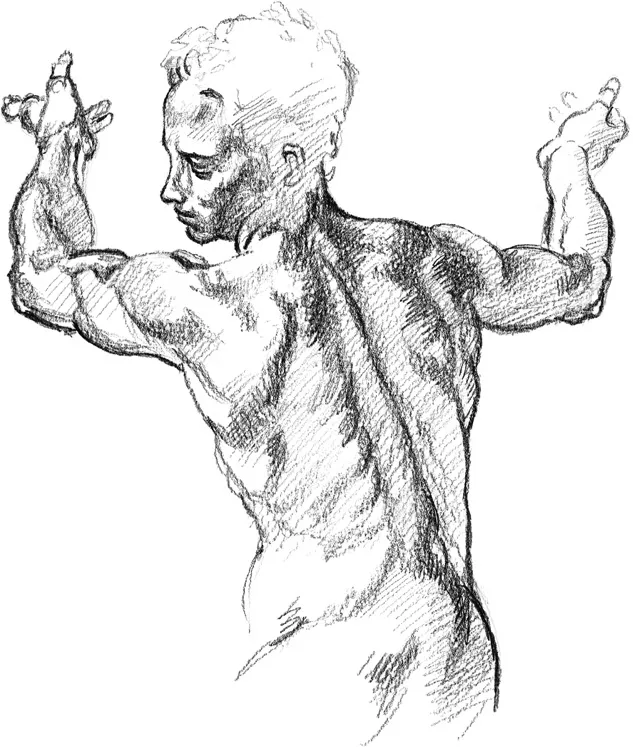
The practice of drawing can be a very pleasant exercise but if at any time you feel that you are having difficulty proceeding, it is probably because you are actually learning something. When it all goes without any effort you may be just repeating your exercise and consolidating, rather than learning. Learn to take the times of ease as a bonus and the times when it is difficult as opportunities.
The following very basic exercises should introduce you to the delightful practice of drawing and, if you take to it, you will realise that your world is opening up visually and you will see much more to enjoy in the world.
Lines and circles
In this first exercise you will learn the most fundamental cornerstone of good drawing: precision of hand and eye. Start by drawing the following geometrical shapes.
As you practise, concentrate on the point of the pencil exactly where the graphite comes off the pencil onto the paper. Don’t be concerned if your attention wanders at first – just practise coming back to the point of the pencil. You will notice wobbles and blips creeping into the drawing whenever your attention strays. When you can keep your attention on the point of the pencil and no other thoughts and expectations intrude, you will find that your drawing will go smoothly. When the eye follows the hand exactly, the hand will perform exactly. Keep practising. Always start drawing sessions with five to ten minutes of practice.

A dot

A vertical line

A horizontal line
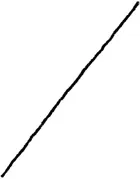
A diagonal line
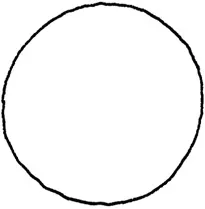
A circle
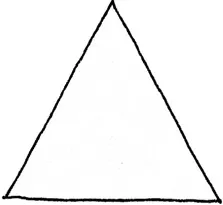
A triangle
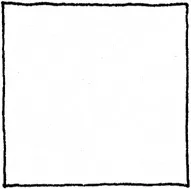
A square
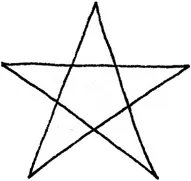
A five-pointed star

A spiral
Control of the hand is a basic technique you must learn if you are to draw well. The more you practise the following exercises, the surer your line will be and the greater the accuracy of your eye in judging space and form.
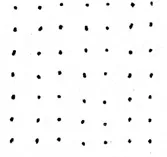
Draw a square of lined-up dots, all the same distance apart and all in a straight line.

Draw a square of straight vertical lines, all the same length and all the same distance apart.
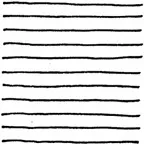
Draw a square of straight horizontal lines, all the same distance apart, all the same length.
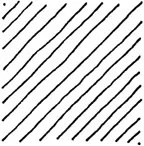
Draw a square of straight diagonal lines, all the same distance apart, of varying lengths.
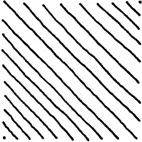
Draw a square of straight diagonal lines, at the opposite angle.

Now draw a circle. Continue drawing circles, trying each time to improve on the one you have drawn before. Keep practising until the circl...
Table of contents
- Title
- Contents
- Introduction
- Chapter One: First Stages
- Chapter Two: Object Drawing and Still-Life Composition
- Chapter Three: The Experience of Drawing
- Chapter Four: Form and Shape
- Chapter Five: Forms of Nature
- Chapter Six: Figure Drawing and Portraiture
- Chapter Seven: Styles and Techniques
- Chapter Eight: Composition
- Chapter Nine: Drawing from the Masters
- Index
- Copyright
Trusted by 375,005 students
Access to over 1.5 million titles for a fair monthly price.
Study more efficiently using our study tools.
Frequently asked questions
Yes, you can cancel anytime from the Subscription tab in your account settings on the Perlego website. Your subscription will stay active until the end of your current billing period. Learn how to cancel your subscription
No, books cannot be downloaded as external files, such as PDFs, for use outside of Perlego. However, you can download books within the Perlego app for offline reading on mobile or tablet. Learn how to download books offline
We are an online textbook subscription service, where you can get access to an entire online library for less than the price of a single book per month. With over 1.5 million books across 990+ topics, we’ve got you covered! Learn about our mission
Look out for the read-aloud symbol on your next book to see if you can listen to it. The read-aloud tool reads text aloud for you, highlighting the text as it is being read. You can pause it, speed it up and slow it down. Learn more about Read Aloud
Yes! You can use the Perlego app on both iOS and Android devices to read anytime, anywhere — even offline. Perfect for commutes or when you’re on the go.
Please note we cannot support devices running on iOS 13 and Android 7 or earlier. Learn more about using the app
Please note we cannot support devices running on iOS 13 and Android 7 or earlier. Learn more about using the app
Yes, you can access The Complete Book of Drawing by Barrington Barber in PDF and/or ePUB format, as well as other popular books in Art & Art General. We have over 1.5 million books available in our catalogue for you to explore.