From the quickest of pencil sketches to inked-up artwork, mastering different drawing techniques is vital to becoming an accomplished artist. In this practical guide, author and illustrator Peter Gray guides you through the different materials available and how to deploy them to best effect. Whether you are an experienced artist or a complete beginner, these tailored step-by-step exercises and practical hints will help you discover the techniques that work for you. Materials include:
• Pencils
• Pen and ink
• Drybrush and wash
• Charcoal and chalk
• Scraperboard ABOUT THE SERIES: The Artist's Workbook series contains practical guides for artists interested in getting to grips with a particular drawing subject. Other books in the series include Drawing Animals, Drawing Portrits, Drawing Landscapes and Drawing Caricatures.
- English
- ePUB (mobile friendly)
- Available on iOS & Android
eBook - ePub
The Practical Guide to Drawing Techniques
About this book
Information
Topic
ArtSubtopic
Art TechniquesDRAWING WITH INK
Ink produces a dense black mark that can be applied as fine as a hair’s breadth or in solid masses depending on the tool employed. A bottle of black drawing ink is not expensive and will last for a long time. When dry, it cannot be erased or washed away, making it convenient when cleaning up pencil marks and for using along with other materials. White drawing ink, applied with a fine brush, is great for correcting mistakes and for adding highlights and accents. Make sure you shake or stir the bottle well before each use.
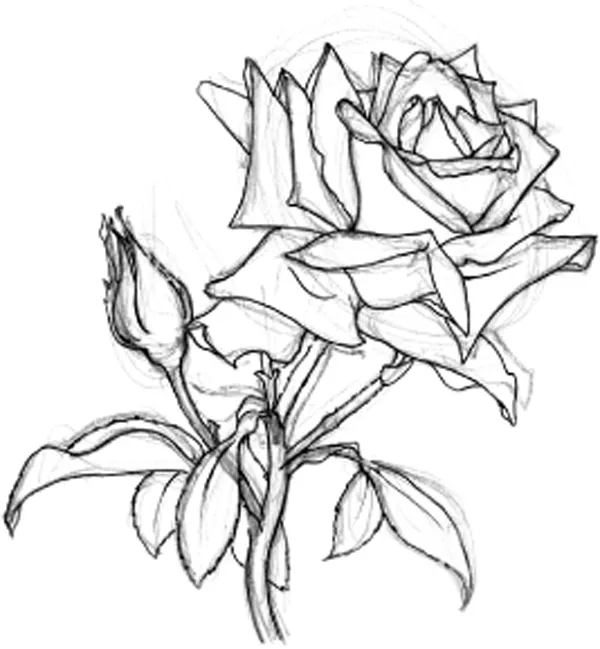
Step 1
The easiest way to ink drawings is with fine-tipped drawing pens, with integral ink reservoirs. Here, I’ve used a 0.3mm pen over fairly rough pencil guidelines.
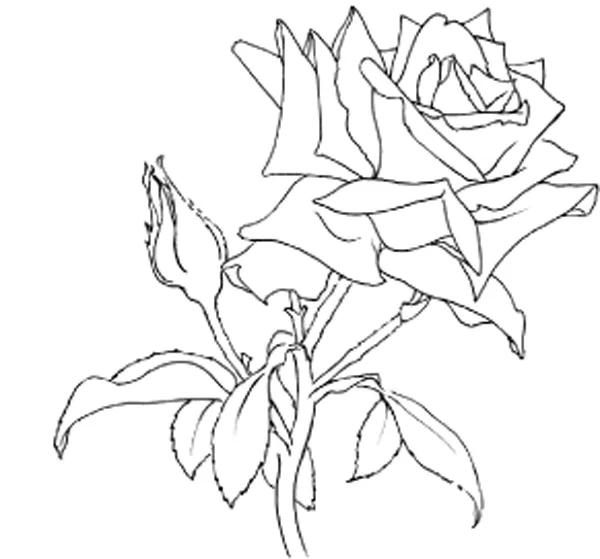
Step 2
The pencil marks can be easily erased in broad strokes across the whole picture area, leaving a clean outline. However, the even line of a pen can look clinical and uninteresting.
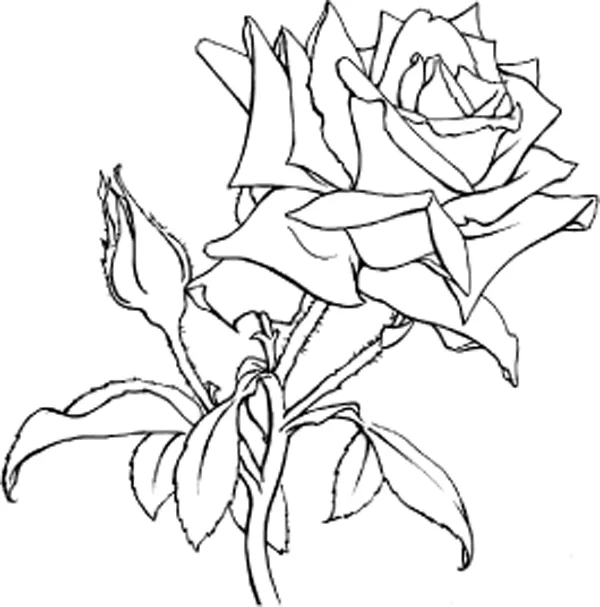
Step 3
Going over some of the lines again with a broader pen (0.8mm) lends the line some variety. The difference is subtle, but the drawing looks more finished.
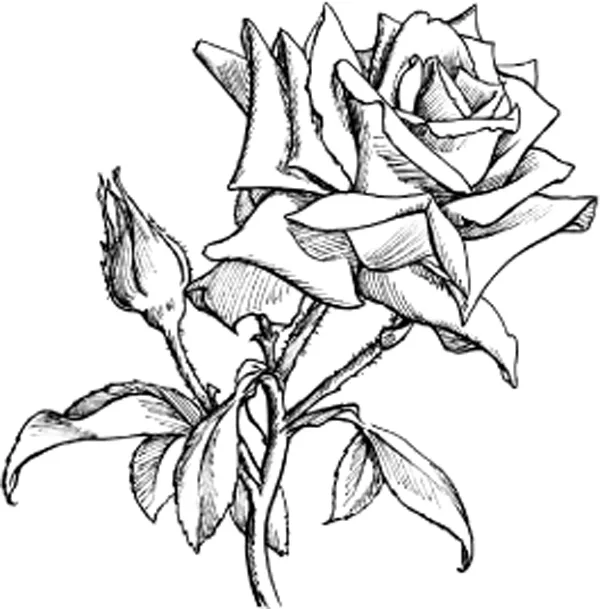
Step 4
Random shading direction is an easy introduction to shading with ink. With my 0.3mm pen, I started the shading with evenly spaced strokes over all the general areas of shade, roughly following the form of the plant.
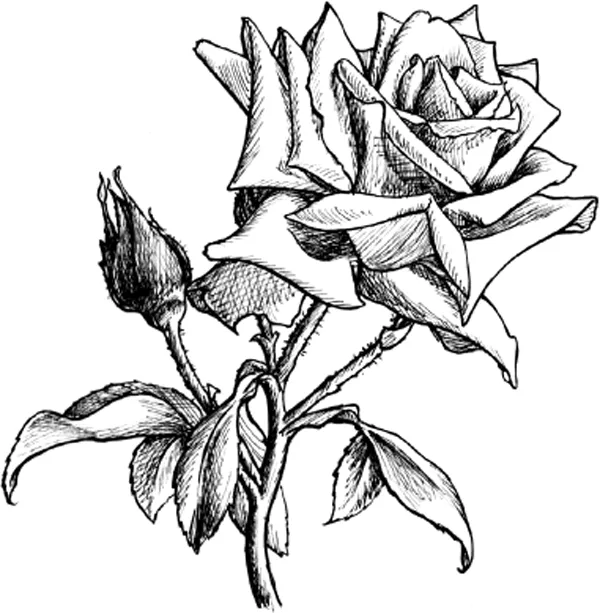
Step 5
To complete the shading, I looked more closely at the subject and identified the variations of shade. Where the shading was darker, I altered the angle of the shading and stroked evenly spaced lines on top of the existing ones. A black pen cannot describe very pale tones, so they should be left white.
HANDY HINT
For more confident inking, turn the paper so that your hand can follow its natural arc for each stroke.
Unlike drawing with a pencil or felt-tip pen, using ink from the bottle requires a greater degree of confidence and steadiness of hand. Handling the free flow of ink is a kind of performance, for which each mark is rehearsed in the mind before being boldly committed to paper.
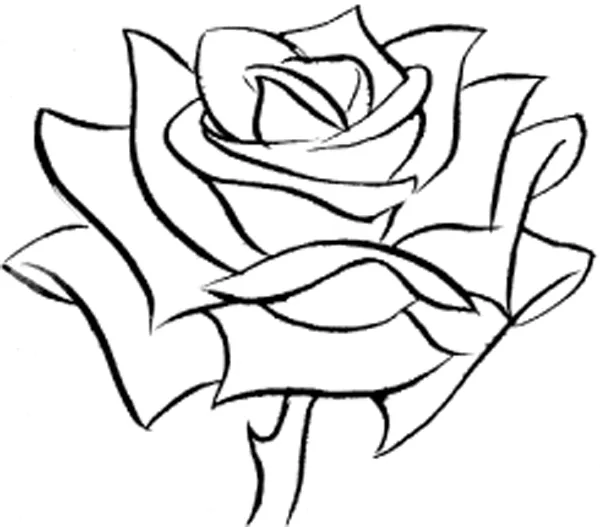
Steel-nibbed drawing pen
These old-fashioned pens have flexible nibs that make lines of varying breadth depending on the pressure you apply. They take a bit of practice to master and can be quite messy. Always wash the nib in clean water after use.
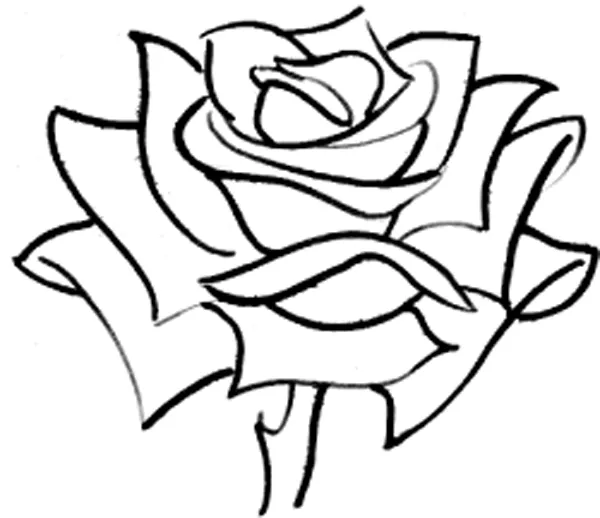
Bamboo pen
This is an excellent tool for thwarting any timid tendencies. Effectively, it’s a shaped stick, dipped into ink. When fully loaded, the line is thick and blobby. As the ink runs low, this pen produces interesting scratchy marks for shading or texture. (See here.)

Brush and ink
One good quality round watercolour brush will do for most jobs, whether inking fine lines or filling in larger areas of solid black. Number 3 or 4 is a versatile size, as long as it has a fine point. Always wash brushes carefully and reshape the point immediately after use.
SOLID BLACK
Another quality of both black and white ink is their dense covering power over larger areas. Thus they lend themselves to more graphic approaches to drawing and design. Here’s a bold graphic treatment of the rose motif drawn and filled in with a brush.
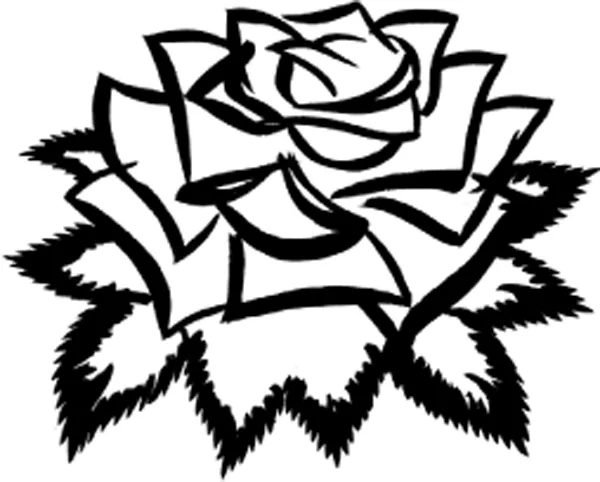
Step 1
Over rough pencil work, the first stage of inking was for the outlines only. For the serrated leaves, I laid down the point of the brush and dragged it away from the outside edges.
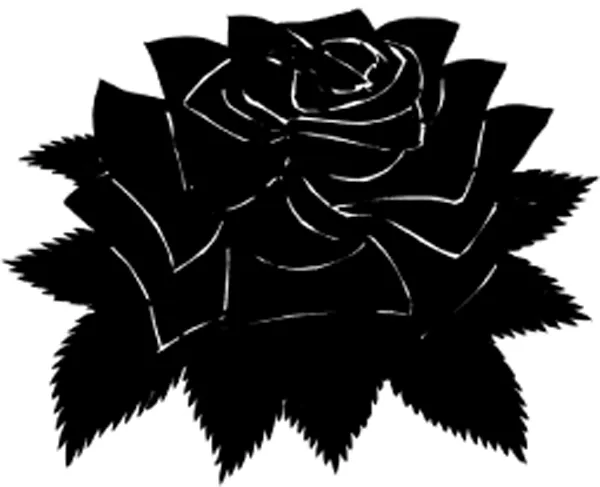
Step 2
Filling in with black was easy enough, but I was careful to leave myself some reminders of where the outlines would go.
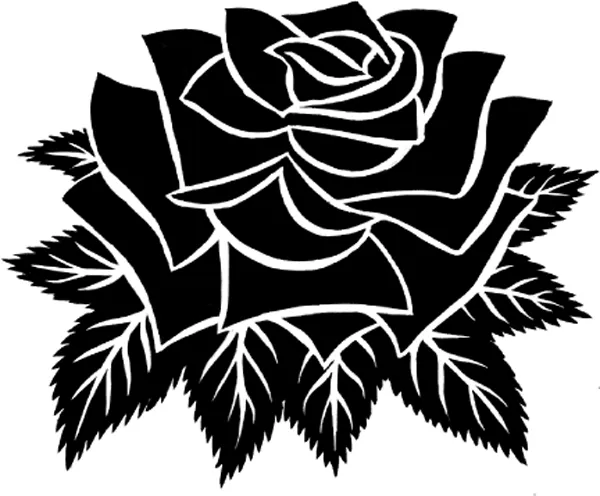
Step 3
I then used white drawing ink to pick out the details, correct mistakes and complete the design. To allow for the white ink’s thick consistency I painted these lines slowly and carefully.
INK DRAWING TECHNIQUES
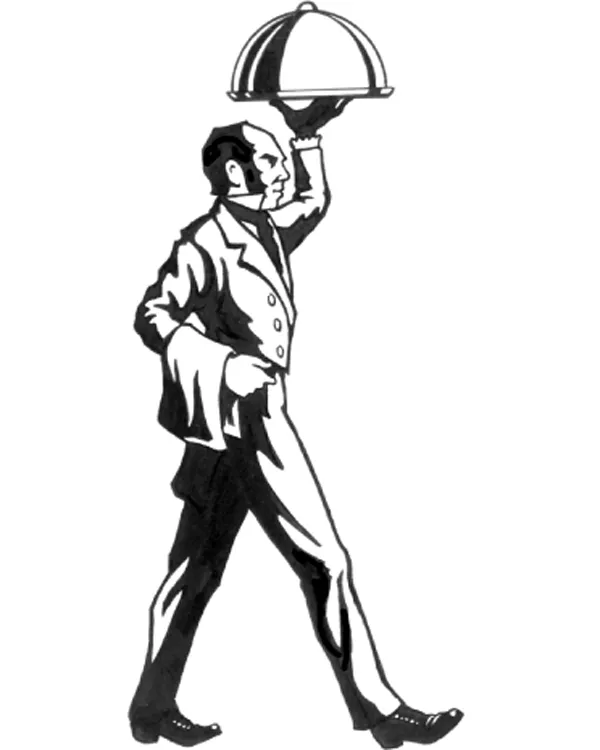
This formal illustration relies on blocks of pure black and white. Simple though it looks, there’s some planning required for this approach.
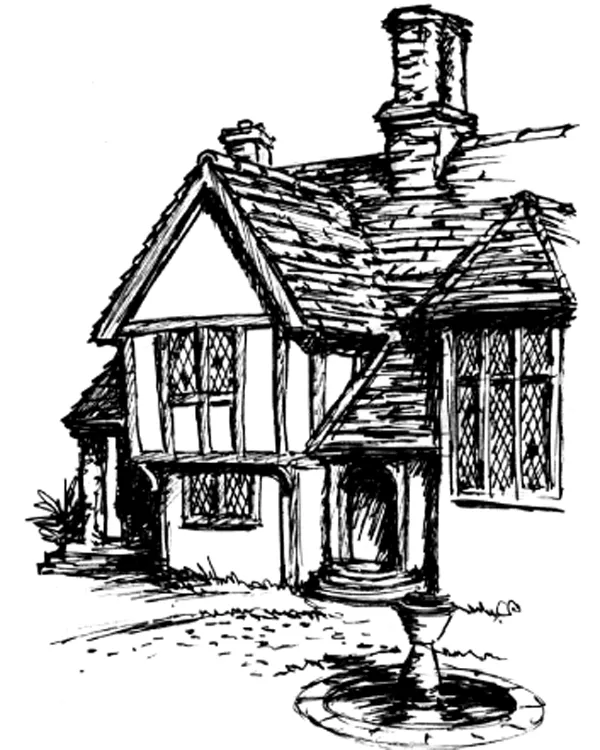
The slightly scratchy line of a drawing pen used rapidly seemed appropriate for this tiny sketch of a Tudor cottage. Most of the shading here takes the form of textural detail.
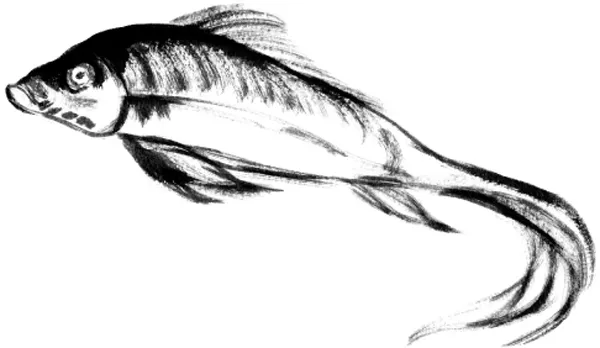
Here I used a ‘drybrush’ technique (see also here), which makes a feature of the brush marks and the texture of the paper.
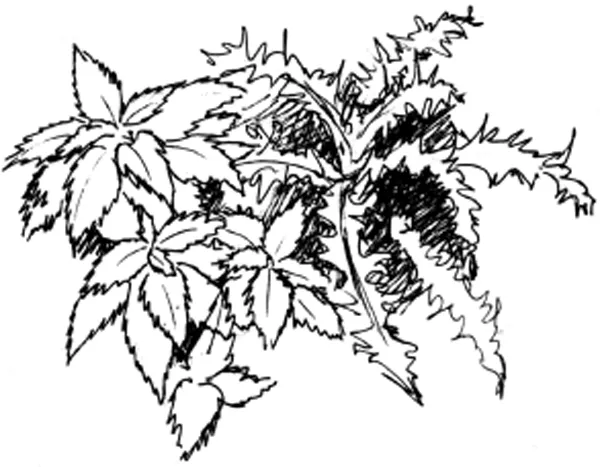
Ink can bring clarity to sketches. After carefully outlining these plant forms with a fine drawing pen, I erased the c...
Table of contents
- Cover
- Title
- Copyright
- Contents
- Introduction
- The Humble Pencil
- Basic Sketching Techniques
- Textured Line
- Tone
- Tonal Drawing
- Drawing with Ink
- Ink Drawing Techniques
- Bamboo Pen And Ink
- Drybrush and Wash
- Perspective – A Quick Guide
- Pen And Wash
- Ink on Toned Ground
- Drawing with Light
- Scraperboard
- Charcoal
- Other Chalk Materials
- Marker Pens
- Felt-Tips and Wash
- Water-Soluble Materials
- Further Investigations
Trusted by 375,005 students
Access to over 1.5 million titles for a fair monthly price.
Study more efficiently using our study tools.
Frequently asked questions
Yes, you can cancel anytime from the Subscription tab in your account settings on the Perlego website. Your subscription will stay active until the end of your current billing period. Learn how to cancel your subscription
No, books cannot be downloaded as external files, such as PDFs, for use outside of Perlego. However, you can download books within the Perlego app for offline reading on mobile or tablet. Learn how to download books offline
Perlego offers two plans: Essential and Complete
- Essential is ideal for learners and professionals who enjoy exploring a wide range of subjects. Access the Essential Library with 800,000+ trusted titles and best-sellers across business, personal growth, and the humanities. Includes unlimited reading time and Standard Read Aloud voice.
- Complete: Perfect for advanced learners and researchers needing full, unrestricted access. Unlock 1.5M+ books across hundreds of subjects, including academic and specialized titles. The Complete Plan also includes advanced features like Premium Read Aloud and Research Assistant.
We are an online textbook subscription service, where you can get access to an entire online library for less than the price of a single book per month. With over 1.5 million books across 990+ topics, we’ve got you covered! Learn about our mission
Look out for the read-aloud symbol on your next book to see if you can listen to it. The read-aloud tool reads text aloud for you, highlighting the text as it is being read. You can pause it, speed it up and slow it down. Learn more about Read Aloud
Yes! You can use the Perlego app on both iOS and Android devices to read anytime, anywhere — even offline. Perfect for commutes or when you’re on the go.
Please note we cannot support devices running on iOS 13 and Android 7 or earlier. Learn more about using the app
Please note we cannot support devices running on iOS 13 and Android 7 or earlier. Learn more about using the app
Yes, you can access The Practical Guide to Drawing Techniques by Peter Gray in PDF and/or ePUB format, as well as other popular books in Art & Art Techniques. We have over 1.5 million books available in our catalogue for you to explore.