In this book, readers are invited into seven classrooms, where teachers share illustrations of practice designed to enable EAL/D learners to engage with curriculum. With contributions by Brian Gray, Beverly Derewianka and Jenny Hammond, among notable others from the field of language education, mentors provide academic context to support transfer to other settings, and an introduction by Susan Feez and Helen Harper offers a thorough overview of EAL/D teaching and learning practice.
eBook - ePub
An EAL/D handbook
Teaching and learning across the curriculum when English is an additional language or dialect
- English
- ePUB (mobile friendly)
- Available on iOS & Android
eBook - ePub
An EAL/D handbook
Teaching and learning across the curriculum when English is an additional language or dialect
About this book
Information
Topic
EducationSubtopic
Education GeneralChapter 1
Learning and teaching English as an additional language or dialect in mainstream classrooms
Susan Feez and Helen Harper
Teachers in Australian schools are more aware than most of Australia’s cultural and linguistic diversity. Students in Australian classrooms are drawn from the many different cultural and language backgrounds woven into the fabric of Australian society. This diversity is captured in the Australian Census (ABS, 2017):
- Aboriginal and Torres Strait Islander peoples are the original Australians by tens of thousands of years and represent 2.8% of our population.
- Australians born overseas come from nearly 200 different countries and make up 49% of our population.
- Across Australia 21% of the population speak a language other than English at home.
Every day, in their families and communities, children and young people all over Australia – in urban, regional and remote areas – are using a rich array of languages and dialects to interact with others, and to engage with and make sense of their experience and the world around them. When they arrive at school, many students are already using multiple languages and dialects. This expertise enables them to adapt their language use to a variety of contexts, including school contexts, whether they have been identified as learning English as an additional language or dialect (EAL/D) or not. Recognising the cultural and linguistic expertise of students from culturally and linguistically diverse backgrounds is the first step towards ensuring they successfully add Standard Australian English to their existing linguistic and cultural repertoires (Bialystok, 2011; D’warte, 2015).
Standard Australian English (SAE), the dialect of English needed to access the Australian Curriculum, is an additional language or dialect for many students in Australian classrooms. Over many decades, Australian educators have been expanding their knowledge about how best to meet the English language learning needs of EAL/D learners and applying that knowledge to the design of innovative teaching practices and resources. This work has produced insights that have enhanced teaching and learning for all students in Australian schools, not only those identified as EAL/D learners. The trajectory of PETAA publications below provides a record of developments in the field over the decades.
This book is the latest in this series, introducing teachers to new directions in English language teaching and learning in schools. The focus in this book is on teachers’ practice, each chapter presenting an illustration of how the authors use principles of EAL/D teaching to meet the needs of their particular group of students. We hope the chapters can serve as practical examples for teachers as they work with EAL/D students to engage with the school curriculum, and ultimately to access the opportunities they are entitled to as members of the Australian community.
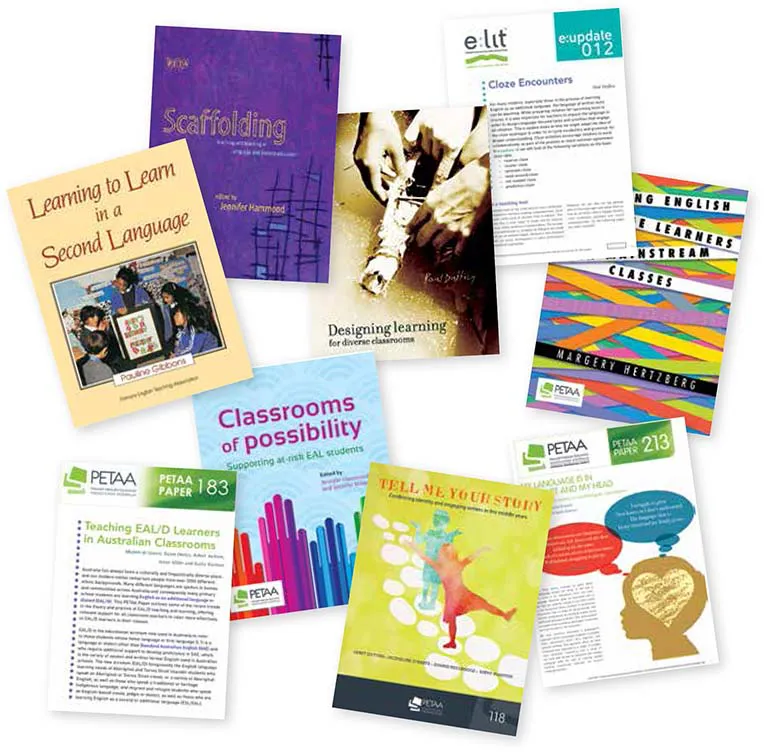
Figure 1.1 PETAA publications about teaching EAL/D learners
Who are EAL/D students?
In the Australian Curriculum, students for whom English is an additional language or dialect (EAL/D) are defined in the following way:
EAL/D students are those whose first language is a language or dialect other than English and who require additional support to develop proficiency in Standard Australian English (SAE). (ACARA, 2010 to presenta)
EAL/D students are also described as learning English as a second language (ESL) or as English language learners (ELLs). The term EAL/D is an acknowledgement that, while these students may not have yet learnt SAE, they nevertheless bring to school a wealth of linguistic and cultural resources. SAE may, in fact, be their third or fourth language or dialect.
According to the Australian Curriculum, those for whom SAE is an additional language or dialect may include:
- Aboriginal and Torres Strait Islander students
- immigrants to Australia and temporary visa holders from non-English speaking countries
- students with a refugee background
- children born in Australia of migrant heritage where English is not spoken at home
- English-speaking students returning to Australia after extended periods in non-English speaking settings
- children of deaf adults who use AUSLAN as their first language
- international students from non-English speaking countries.
A dialect is a variety of language which is habitually used by a speaker. The dialect we speak depends on where we come from geographically (for example, a dialect spoken in a particular region) or socially (for example, our age, gender, community or social class).
Aboriginal English is the name given to dialects of English spoken by Aboriginal people throughout Australia. While these dialects have a lot in common with other varieties of Australian English, they also have distinctive features, for example, accent, grammar, words and meanings. They also often incorporate elements of traditional Aboriginal languages. Some Aboriginal English varieties are similar to SAE, while other varieties may be quite incomprehensible to non-Indigenous Australians; they are more similar to the Creole languages spoken across northern Australia (Kriol and Torres Strait Creole).
Aboriginal English is an expression of Aboriginal identity. It is usually spoken rather than written, but is increasingly being used in published literature. It is the home language of many Aboriginal people in Australia, although in some regions, especially in remote communities, it is a second, third or fourth language for speakers of traditional Aboriginal languages or Australian Kriol (Dickson, 2016).
Many Aboriginal and Torres Strait Island Australians are multilingual and/or bi-dialectal; they can use more than one language (for example, an Aboriginal or Torres Strait Island language and English) and/or more than one dialect of one or more languages (for example, Aboriginal English and SAE) (Eades, 2013; Rodriguez Louro & Collard, 2020).
On average, a quarter of all students in Australian primary and secondary schools are learning SAE as an additional language or dialect. In some schools, up to 90% of the student population may be EAL/D learners (ACARA, 2010 to presenta). Consequently, whether or not they have specialist training in EAL/D education and related pedagogies, almost all Australian teachers will teach EAL/D learners during their career.
For EAL/D students who start school in Australia, it can take all their primary school years for them to develop knowledge and skills in SAE, and more specifically, academic English, to a level commensurate with their Year 7 English-speaking peers. EAL/D students who enter Australian schools in later primary school continue to need specialised EAL/D support beyond Year 9 in order to develop academic English and engage with ‘an increasingly abstract and complex curriculum’ (Creagh et al., 2019, page 154).
Contrary to what might be expected, by Year 7, EAL/D students often achieve higher test scores than their peers who use English as a first language. There are a number of reasons for this success. It may be due to the demonstrated academic benefits of bilingualism and bilingual education (Bialystok, 2011; Cruickshank, 2014; Cummins, 2016; D’warte, 2018). Sociocultural and economic status may also play a role, along with the level of their parents’ education and parental expectations, as well as an initial level of proficiency and experience of educational success and literacy in their first language. At the same time, many EAL/D students in Australian classrooms, such as those from refugee backgrounds, may be at risk because they have experienced dislocation, deprivation and trauma. They may have also suffered minimal or disrupted education, limited, if any, experience of literacy in their families and communities, poverty and social marginalisation (Hammond & Miller, 2015; Hajek, 2018).
In Australia, the level of English EAL/D students have achieved, no matter their age or year of schooling, is usually aligned with one of the four levels in the Australian Curriculum, Assessment and Reporting Authority EAL/D learning progression (ACARA, 2015):
1. Beginning English
2. Emerging English
3. Developing English
4. Consolidating English
Knowing who your students are and how they learn aligns with Standard 1 of the Australian Professional Standards for Teachers (AITSL, 2017). In the elaboration of the standards, showing how they apply to teaching EAL/D students, Standard 1 has been expanded to include (ACTA, 2015):
- recognising EAL/D students’ ‘social and intellectual development’ (page 6), even when students are not able to demonstrate this development through English or in relation to curriculum content
- having empathy and being responsive to the ‘diverse linguistic, cultural and sociohistorical characteristics of EAL/D learners’ (page 8)
- understanding EAL/D learning and how it relates to culture, wellbeing and curriculum access.
Teachers can come to know every student in their class by preparing a profile for all students, of all cultural and linguistic backgrounds, in collaboration with the student, their family, their peers, and with bilingual support as needed (see, for example, D’warte, 2015; 2018). Each profile can be presented as a multilingual, multimodal and multimedia text or portfolio, with information about each student’s birthplace and heritage; the highpoints and challenges of their journey to this classroom; their achievements to date, both personal and academic; and their aspirations and goals. Spoken language recordings and short texts written by the teacher or family members, and the students themselves, can showcase the students’ everyday use of language/s, their current level of proficiency in the languages and dialects they use, and their English language learning needs. Class profiles can reveal how much the experiences of students newly arrived in Australia might have in common with the experiences of earlier generations for those students whose families have lived in Australia for longer. It can become a celebration of some of the 300 different ancestries with which Australians identify (ABS, 2017), while also addressing content from across the curriculum.
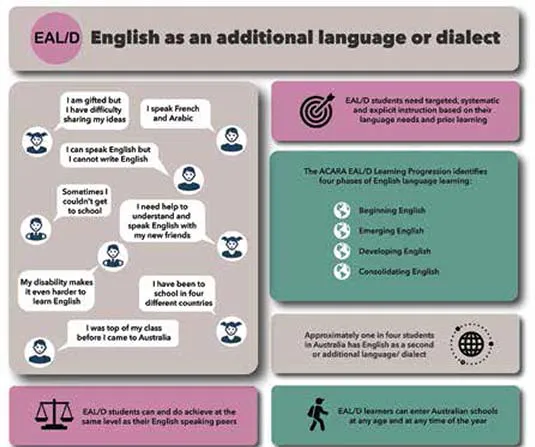
Figure 1.2 EAL/D English as an additional language or dialect
What do EAL/D students bring with them to school?
Most people in the world speak more than one language or dialect, and many languages and dialects are spoken in Australian schools and communities. Nevertheless, too often in Australia, as in many countries where English is the dominant language, a ‘monolingual mindset’ that sees ‘everything in terms of a single language’ (Clyne, 2008, page 348) is evid...
Table of contents
- Cover
- Title Page
- Copyright
- Contents
- Acknowledgements
- Overview of Chapters 2–8
- Part 1: Introduction
- Part 2: Illustrations of practice
- Back Cover
Trusted by 375,005 students
Access to over 1.5 million titles for a fair monthly price.
Study more efficiently using our study tools.
Frequently asked questions
Yes, you can cancel anytime from the Subscription tab in your account settings on the Perlego website. Your subscription will stay active until the end of your current billing period. Learn how to cancel your subscription
No, books cannot be downloaded as external files, such as PDFs, for use outside of Perlego. However, you can download books within the Perlego app for offline reading on mobile or tablet. Learn how to download books offline
Perlego offers two plans: Essential and Complete
- Essential is ideal for learners and professionals who enjoy exploring a wide range of subjects. Access the Essential Library with 800,000+ trusted titles and best-sellers across business, personal growth, and the humanities. Includes unlimited reading time and Standard Read Aloud voice.
- Complete: Perfect for advanced learners and researchers needing full, unrestricted access. Unlock 1.5M+ books across hundreds of subjects, including academic and specialized titles. The Complete Plan also includes advanced features like Premium Read Aloud and Research Assistant.
We are an online textbook subscription service, where you can get access to an entire online library for less than the price of a single book per month. With over 1.5 million books across 990+ topics, we’ve got you covered! Learn about our mission
Look out for the read-aloud symbol on your next book to see if you can listen to it. The read-aloud tool reads text aloud for you, highlighting the text as it is being read. You can pause it, speed it up and slow it down. Learn more about Read Aloud
Yes! You can use the Perlego app on both iOS and Android devices to read anytime, anywhere — even offline. Perfect for commutes or when you’re on the go.
Please note we cannot support devices running on iOS 13 and Android 7 or earlier. Learn more about using the app
Please note we cannot support devices running on iOS 13 and Android 7 or earlier. Learn more about using the app
Yes, you can access An EAL/D handbook by Helen Harper,Susan Feez in PDF and/or ePUB format, as well as other popular books in Education & Education General. We have over 1.5 million books available in our catalogue for you to explore.