Where do I Start? Stimulating ideas for literacy-rich classroomstakes us inside the classrooms of effective, experienced teachers to show exactly what effective literacy teaching and learning looks like in practice. All teachers wishing to improve their literacy teaching will find this book helpful, particularly those at the beginning of their careers who might be full of questions about how best to set-up and organise their literacy learning classrooms.
- English
- ePUB (mobile friendly)
- Available on iOS & Android
eBook - ePub
About this book
Information
Topic
PedagogíaSubtopic
Educación generalsection 1
Introduction
I started teaching way back in 1979 but I still remember clearly what it felt like to walk into my first classroom, as my nerves competed with feelings of excitement and anticipation. These initial feelings were quickly replaced by actions as I began to move furniture and sort through equipment in that very first classroom. I wanted to make the space my own. I set about exploring the school and its resources, as well as getting to know a bit about my new colleagues, my students and their families. I had just a day to get set up before it was all systems go and I had my first class sitting in front of me. I remember that the children and their families were as excited as I was, and their expectations of the school and me were high.
I was pleased that I had gathered together a few pieces of equipment before school began, including books that I thought the kids would enjoy and some pillows for the library corner. I planned a flexible routine for those first few days and weeks and I found that life at school was hectic. I was glad that my studies and my practicum placements had offered suggestions about how to get started.
In my first year of teaching I often felt overawed by the vast array of things that I felt I had to do, as well as excited about all the things that I could do, which would support my students' literacy understandings. I wanted to do it all!
It has taken me years to learn what actually works ... what it is that helps students to become effective, independent readers and writers. I learned this by trial and error, by watching others teach, by asking many questions, by reading as much as I could and by observing my own students closely as they worked.
I learned that:
• reading, writing, talking and listening are intertwined
• development in one area influences development in the others
• teaching specific skills in isolation, away from a purposeful context, actually makes learning harder
• students seem to take new ideas on board more easily when they understand the purpose behind a task
• it is important to teach students when they're ready to learn, with appropriate scaffolding and support.
These understandings informed my philosophy of teaching, influenced how I taught and were reflected in the layout of my classroom and in my choice of resources. As a result, in my literacy classrooms, I try to:
• create an environment that entices students to use language
• observe students as they talk, listen, read and write throughout the day
• design programs that are based on my observations
• design programs that are explicit, systematic and that support learning towards syllabus outcomes
• offer rich tasks that fulfil students' own needs and purposes
• offer students the help they need, when they need it
• use modelled, shared, guided and independent teaching and learning opportunities
• integrate literacy teaching across all subject areas
• share information with families, carers and colleagues ,and
• record my plans clearly, yet briefly.
In this book I want to share what I've learned, in order to help beginning teachers and those teachers new to a year level to get started as effective literacy teachers. For their benefit I have listed some key questions and attempted to answer them as simply and directly as possible. The questions are:
• What do I want my students to be able to do as readers and writers?
• What should I be teaching my students about reading and writing?
• How am I going to teach my students to be confident readers and writers?
• What do I need to do to set myself up for success?
• How could my literacy session be structured?
• How can I create a sequential unit of work?
• What sort of teacher do I want to be?
• What advice can I get from others?
• Where can I go for help?
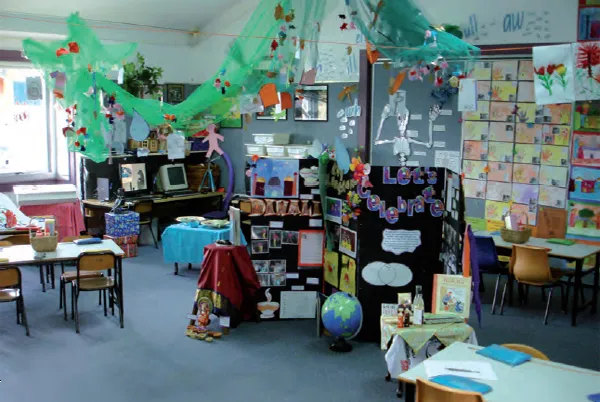
Figure 1 Figures 1, 2 and 3 show enticing classrooms stimulate, support and engage students.
Some wonderfully talented teachers have joined me to explain their routines, describe their literacy sessions, and share their programming and planning ideas. They've identified practical resources, publications and associations that they've found helpful. And most generously, they've invited us into their classrooms to show exactly what effective literacy teaching and learning looks like in practice. This book presents many photographs of their classrooms and resources to inform and inspire you. These K-6 classrooms are designed with care and imagination, and by looking closely at what others have done you may be better able to create your own literacy-rich, stimulating and supportive learning environments. (See Figures 1, 2 and 3 for some samples of classroom arrangements.)
Where do I start? shows you what successful literacy teachers are currently doing and discusses why they're doing it. This book will, I hope, help teachers to get started.
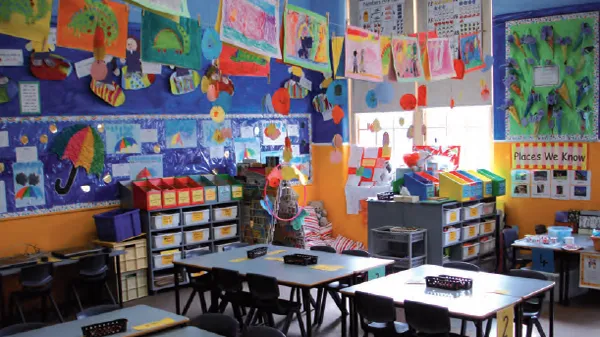
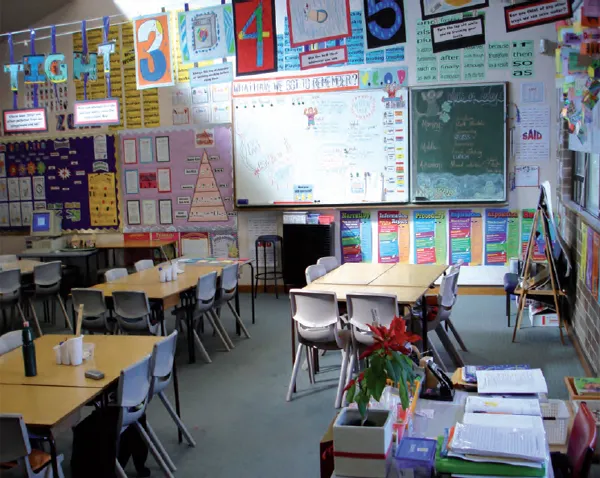
Figures 2 and 3
section 2
What do I want students to be able to do as readers and writers?
English Syllabus and Support documents offer detailed information about what children are expected to be able to do at each stage of their development. These benchmarks or learning outcomes help teachers to identify students who may be experiencing difficulty, others who are exceeding expectations as well as those who are travelling smoothly along the continuum. The syllabus documents help teachers as they program and become familiar with the literacy-learning continuum. It is essential for all teachers to become familiar with these documents.
Our responsibilities however extend beyond teaching just knowledge and understandings about literacy. We also need to encourage our students to develop positive attitudes towards using language and learning about language. We need to ensure that they become confident and independent literacy learners and enjoy interacting with texts. To do this we must provide them with a wide variety of multimodal texts in English and in their first languages.
What should I be teaching my students about reading and writing?
While our philosophies as teachers shape our practice, so too do our understandings. If we know what readers and writers do as they become literate, we will be better able to provide programs that make a difference. Table 1 summarises what we need to teach students about reading and writing and is explained in the following paragraphs.
| Table 1 | |
| Reading | Writing |
| The reading process Integrating the cueing systems Reading strategies Four roles of the reader | The writing process Text types Conventions of writing Writing strategies |
In brief, students need to understand the reading process and how to integrate semantic, graphophonic and syntactic information (i.e. the cueing systems) while reading. They need to be able to use numerous reading strategies and take on different roles as they read. Similarly, they need to develop understandings about the writing process and to identify characteristics of a variety of texts. They need to be able to use various writing conventions (including spelling, grammar, handwriting and punctuation) and be able to draw on a range of strategies as they write.
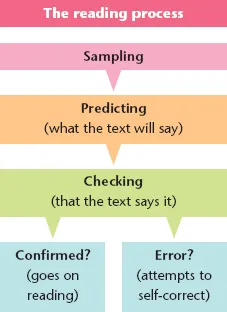
Figure 4 The reading process. Education Department of South Australia (1984)
Reading
We need to show students what successful readers do as they read and gain meaning from print. We need to teach them about the reading process. This process involves sampling the text to identify visual features (e.g. words or letters), predicting what the text will say, checking that the text actually says it and once confirmed, continuing to read. If meaning is lost, a successful reader will attempt to self-correct. (See Figure 4.)
Readers use cues to help them check their predictions and to gain meaning. They check that what they are reading makes sense (i.e. semantically correct), that it matches with the letters and words on the page (i.e. graphophonically correct) and uses the right parts of speech (i.e. syntactically correct). Effective readers integrate these cueing systems while they are predicting and ch...
Table of contents
- Cover Page
- Copyright
- Contents
- Acknowledgements
- 1 Introduction
- 2 What do I want my students to be able to do as readers and writers?
- 3 How am I going to teach my students to be confident readers and writers?
- 4 What do I need to do to set myself up for success?
- 5 How could my daily literacy session be structured?
- 6 How can I create a sequential unit of work?
- 7 What sort of teacher do I want to be?
- 8 What does it mean?
- 9 Where can I go for help?
- Resources
- 10 References
Trusted by 375,005 students
Access to over 1.5 million titles for a fair monthly price.
Study more efficiently using our study tools.
Frequently asked questions
Yes, you can cancel anytime from the Subscription tab in your account settings on the Perlego website. Your subscription will stay active until the end of your current billing period. Learn how to cancel your subscription
No, books cannot be downloaded as external files, such as PDFs, for use outside of Perlego. However, you can download books within the Perlego app for offline reading on mobile or tablet. Learn how to download books offline
Perlego offers two plans: Essential and Complete
- Essential is ideal for learners and professionals who enjoy exploring a wide range of subjects. Access the Essential Library with 800,000+ trusted titles and best-sellers across business, personal growth, and the humanities. Includes unlimited reading time and Standard Read Aloud voice.
- Complete: Perfect for advanced learners and researchers needing full, unrestricted access. Unlock 1.5M+ books across hundreds of subjects, including academic and specialized titles. The Complete Plan also includes advanced features like Premium Read Aloud and Research Assistant.
We are an online textbook subscription service, where you can get access to an entire online library for less than the price of a single book per month. With over 1.5 million books across 990+ topics, we’ve got you covered! Learn about our mission
Look out for the read-aloud symbol on your next book to see if you can listen to it. The read-aloud tool reads text aloud for you, highlighting the text as it is being read. You can pause it, speed it up and slow it down. Learn more about Read Aloud
Yes! You can use the Perlego app on both iOS and Android devices to read anytime, anywhere — even offline. Perfect for commutes or when you’re on the go.
Please note we cannot support devices running on iOS 13 and Android 7 or earlier. Learn more about using the app
Please note we cannot support devices running on iOS 13 and Android 7 or earlier. Learn more about using the app
Yes, you can access Where do I start? by Robyn Wild in PDF and/or ePUB format, as well as other popular books in Pedagogía & Educación general. We have over 1.5 million books available in our catalogue for you to explore.