The book focusses on the challenges faced in the digital age, and the increasing demands for continuous change in an inter-connected digital world. The book presents stories about how leaders have faced significant challenges and pressure, and how they have used these experiences as catalysts to transform, flourish, and develop personal resilience. The book explores the digital journey, ethical issues, teamwork, styles of leadership, agile, collaboration, trust, culture, psychological safety, self-awareness, vulnerability, conversation, positivity, emotional intelligence, creativity, inner knowing and the dark side of leadership.
Drawing on the experiences of leaders in the creative, digital and technology sectors in the UK, and using their voice throughout, has resulted in proposing several internal and external strategic solutions to help the reader become more personally resilient. The book explores the impact of continuous change within a digital age, presenting the facets necessary to become a Digital Sage in an increasingly chaotic world. With a focus on creativity, innovation and mind and body awareness the leader as a Digital Sage arises to encourage resilience in a digital age.
The book does not assume prior knowledge of the field of resilience and is ideal for executive education courses, and for leaders and managers seeking personal and professional transformation.
- 158 pages
- English
- ePUB (mobile friendly)
- Available on iOS & Android
eBook - ePub
Leadership Resilience in a Digital Age
About this book
1
The Journey
DOI: 10.4324/9780367280970-1
The new order
We are stepping into a new world order and digital age. In a climate of increasing complexity and uncertainty, there are global issues to contend with including dwindling resources, natural catastrophes across the globe and climate change (possibly the highest priority that has to be addressed). Pandemics have also arrived to create havoc and fear. Moreover, new technologies bring a blistering pace of change, including the introduction of artificial intelligence and augmented reality. As if this is not enough for humanity to cope with, the new technologies have resulted in changing business models and accelerated trends that impact business at break-neck speed. Today, we need to learn from the lessons of the past and focus on long-term strategies for man’s future evolution for a regenerative and restorative economy where business leaders collaborate to forge a new, harmonious, positive future where initiatives for a regenerative climate change and the natural world are built into the values of the company. We cannot escape the fact that we all too often act in short-sighted self-interest and have difficulty perceiving the greater good as more important than our personal interests (Dobie & Koeplin 2020). As such, we need to be aware of the new paradigms where power and influence change hands.
This world and the business landscape that we operate in are increasingly uncertain and volatile. Decisions are made at break-neck speed; we are increasingly operating within a VUCA (volatile, uncertain, complex and ambiguous) landscape. VUCA was an acronym originally used by the American military to describe extreme conditions. Military leaders coined the term in the early 1990’s to describe the destabilized world conditions precipitated by the fall of communism and the end of the cold war, and today it is used to express the supposedly unique environment facing leaders (Spector 2019). How then do managers and leaders respond to an ever changing and complex environment? How do they prepare for the pace of change in a digital environment? What styles of leadership do we have to develop to survive and de-risk in the future? Leaders have to contend with the onslaught of a blistering pace of change and ever-changing technologies and automation that are creating a complex environment in which to operate. In the new digital world, speed and agility are of the essence.
The backdrop to this complex context, is to consider complexity theory. A way of understanding the difficulties that may be encountered. Complexity leadership theory (CLT) is about balancing formal and informal organization to leverage the dynamics of complex adaptive systems (CAS) and produce learning, creativity, and adaptation in organisations (Bäcklander 2019). The nature of knowledge-oriented organisations and their environments seems to dictate the increased use of networked, collective ways of working where the sum of interactions is greater than the individual parts – called adaptive space in complex leadership theory (Bäcklander 2019). Viewing the environment from the lens of complexity theory helps us to understand the context in which leaders find themselves within management today. By doing so, scholars have begun to embrace complexity within leadership and have begun to explore this concept, albeit tentatively, to try to understand the impact of the rapidly changing business environment.
Managing the change
In management, the theories based on the old static order do not survive anymore. As mentioned above, we are now enveloped in an era of constant change that is spearheaded by the impact of constantly updated technologies. We can no longer look at management theory by using models and tools designed for a traditional and static environment of yesteryear. Today’s leaders will be aware of the impact of change on themselves and staff. The current inter-connected digital i-environment we live in can be viewed as organic and, as such, we must adapt and adjust to the constant change. In the past management was viewed through a static linear lens. This is no longer the case and managers and leaders need to regularly review the impact of change in an evolving, complex and networked i-connected world. We need to view management through a new lens created for a less linear more dynamic environment. How then do leaders ride the tide of change and prepare for the future of work and the impact that these unforeseeable changes have on business and individuals?
As part of the technology evolution, we all participate in stepping outside our comfort zones on a regular basis. The comfort zone is a place where you feel safe and in control, whilst the fear zone shows a lack of self-confidence and is a place where you may be easily affected by other opinions. Extending into a learning zone means that we begin to deal with new challenges and problems. In the learning zone you acquire new skills and extend your comfort zone. In the growth zone you begin to live your purpose, live your dreams, learn and set new goals and conquer objectives. However, if the stretch becomes “stress” then burnout is possible and wellbeing is at risk, as excessive challenges can induce destructive stress. It is important for leaders to appreciate comfort verses stretch and become aware when the stretch expands too far for comfort. Understanding and being aware of the processes involved in managing this change is helpful. Whilst leaders and employers need stretch, they don’t want burnout and it is employing a balance, that can sustain the organisation.
From a theoretical point of view, the Kubler-Ross (1969) five-stage change cycle model can be used to track the leader’s journey through any significant change. The model highlights that until everyone has reached acceptance of the new initiative, the job is not done. Originally, the Kubler-Ross five-stage grief cycle was intended to help people deal with bereavement, however, it was quickly adapted to reflect the stages of any change event in the professional management sector. The five stages of the model include a first stage of denial: which is an initial stage of numbness and sense of disbelief. As such there may be a refusal to accept the imminent change. The second stage is anger: when acceptance of the reality of the situation occurs. At this stage denial turns to anger. The third stage is bargaining: this is intended to resolve the problem faced or put off the inevitable. The next stage is depression: this stage is reached when bargaining fails, and the reality of the situation sets in and as such loss is felt. The final stage five is acceptance: this involves dealing with regret and is a necessary pre-requisite for acceptance. Acceptance is reached when the individual realises that change is permanent. Despite the various stages, Kubler-Ross highlight that individuals don’t move around this in a well-ordered sequential manner, rather they may experience various stages. An understanding of these processes is especially important in a VUCA (volatile, unpredictable, complex, ambiguous) environment where change is happening at rapid speed. Individuals are thus exposed to this cycle of change on a regular basis and as such may need extra support.
John Kotter’s eight-step change approach applies big picture thinking to change management that helps the leader/manager to communicate more effectively to maximise a change project. Kotter’s (1996, 2012) original eight-step process of change involves the following: establish a sense of urgency; form essential coalitions; develop a vision for the change; communicate the vision; remove obstacles; generate short-term wins; build on wins; embed changes into the organisation’s culture. Communicating the change involves communicate, communicate, communicate multiplied by 10 and then 100. In other words when change arises make sure you have communicated what will occur many times over. The Kubler-Ross change cycle and the Kotter stages both help to guide us through the process and reactions that we might encounter as we pass through phases of change. Resilient leaders evolve so that they can ride the waves of change and as such one element may involve incorporating the Kubler-Ross change cycle to help understand the reactions of those around you to major change initiatives. Whilst the above discussion focuses on traditional change management models that are required for management and this may be useful, the real question is how do we respond within the context of continuous, complex rapid change? In the future new models will be needed to feature, address and respond to the continuous climate of change that we are currently witnessing.
Looking to the future
Futurists have a role to play in helping us understand some of these issues. One response is from futurist Cheesewright (2020) who from an organisational perspective talks about responding by creating a change of philosophy. He discusses three different ways to adapt to the new shifts taking place. The first about how we sense the future. This involves looking at what might happen in both the current and near future in the business. He suggests looking at the macro trends in the market and how they might collide with your business (for instance big data, artificial intelligence, augmented reality and the internet of things (IOT). He encourages going out and talking to people and peers for a deep dive into the organisation. In this way, he proposes leaders should scan the horizon every six months and keep these time-scales short. His second point is that companies need fast, accelerated decision-making responses. Cheesewright believes that currently information can move too slowly through organisations and that organisations need to push power to the edge of organisation and give out more autonomy to encourage more responsiveness. Small company founders need to think about how they can release and let go of control and be willing to share power. This may involve a change of behaviour, even when behaviour involves cultural change from those who are invested and embedded in the system and are reluctant to change. Cheesewright argues that in this age of sweeping change, we need adaptability. He argues that you can be great at what you do and still fail, if what you do is not what the customer wants any more. He is of the opinion that the recipe for sustainable success in this age of high frequency change is all about adaptability. His third point involves the shape and structure of the organisation. Cheesewright believes organisations have become too monolithic and centralised and that they need to become smart organisations that are agile and adaptable. Creating an age of adaption not optimisation! As such, an organisation needs to work in functional units, where the units are given greater autonomy and flexibility. Moreover, he argues that you need to streamline your organisation so that it is agile enough to adapt to change, which may involve building a new culture.
Consolidating the above elements helps create new responses required of digital leaders in a fast-paced digital era. This has resulted in Figure 1.1 which highlights the context, the response and resilience aspects in organisations that leaders need to consider in the future.
Attributes of leaders
A contemporary focus on the attributes of leaders from a change, complexity and leadership perspective have been put forward by O’Neill and Nalbandian’s (2018) empirical qualitative research within the public sector. They proposed nine leadership attributes that are required for successful leadership in the complex and highly diffused power structure of local government. They emphasise that no one person would likely possess strengths in all the attributes but believe that it is important to try to develop a leadership team with complementary strengths covering all of them. The nine attributes include: developing design literacy in all leaders; architecture for success; working small to achieve large vision; confronting the brutal facts but staying focused and consistent; creating space for innovation; the power of questions; being decisive; connecting the power of story; and symphonic skills. They emphasise that team leadership as an evolving concept is revealed in the number of metaphors, they have used to describe the profile including for example symphonic, design literacy and architecture of success. The symphonic emphasis is a nod to leading an orchestra with many different instruments and artists who each bring their own talent and skill about how a piece should be played. They argue that behind the scenes rehearsals invoke trial and error and experimentation, which are part of current design thinking. In this respect, they affirm the leader as an artist by nature. In their second observation they stress that leadership puts a premium on personal qualities and a predisposition to self-awareness. This is very likely to draw on personal talents, skills and cognitive maps as guides to action. As such, they propose that in the public sector the overriding leadership quality in the dynamic local government environment is self-awareness. However, one can argue that these are also attributes necessary for the private sector and not just the public sector in a digital business environment.
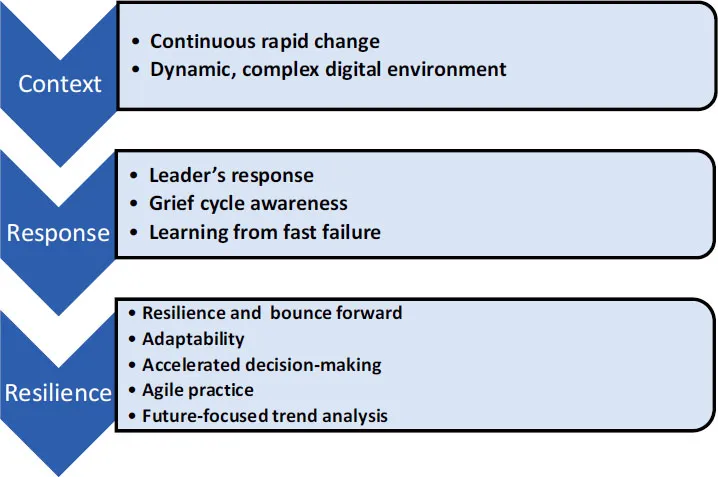
Figure 1.1 Context and responses for resilience in a rapidly changing digital era (Young, 2018–2019)
I am on a journey
Consider the metaphor of the tree. The tree has roots in the ground that allow it to dig deep. It grows new branches, and it sways in the wind but with its strong central core it goes back to its central position when the winds die down. With the different seasons of the year there are different winds of change, but the tree’s deep roots allow it to sway in the wind and still go back to core. We are all impacted by environmental factors in the same ways. For leaders, this could be led by external forces – disruptive change headed by constantly changing technologies. Leaders are on a journey of discovery. They need to understand themselves and both the distractors and attractors of leadership styles. In other words, leaders are Journeyers on a journey of self-discovery, learning and improving along the way as they tap into their inner strength, to ride the tides of change and establish the evolution of new ways of working. Learning and reflecting are a major part of the journey for the leader. The ability to fast fail, learn from failure and reflect on their context is very much part of this. Schon (1984) talks about reflection in terms of reflecting IN and reflecting ON. Reflection can be in the moment (IN); or it can be after the event (ON), as such the ability to continuously reflect and learn is a key management skill. Additionally, reflexive abilities ensure that you can reflect on your own in-built assumptions. In this way, as you change the lens through which you look, you may see your own limiting perspective. Thus, reflective practice can lead to transformational change.
The journey from manager to leader
Stepping up and taking up a new position that involves leadership whether that be in a team or leading the company means that the old skill set many not suffice. Whilst many business and management schools are still teaching business models suitable for a static approach to management, these approaches may not be adaptable to the new context, where hybrid working in virtu...
Table of contents
- Cover
- Half Title
- Title
- Copyright
- Dedication
- Contents
- List of figures
- Preface
- 1 The journey
- 2 The digital age: change, culture and ethics
- 3 Leading digital teams
- 4 Exploring personal resilience (PRQ) by riding the waves
- 5 Self-awareness, vision, values and self-knowledge
- 6 Contemporary styles of leadership: assess your style and create your brand!
- 7 Conversation and kindness in leadership
- 8 Tapping into creativity for wellbeing
- 9 Dark side to light: How dark can it get?
- 10 Personal resilience strategies for leaders: internal and external wellbeing
- 11 The leader as a Digital Sage
- Index
Trusted by 375,005 students
Access to over 1.5 million titles for a fair monthly price.
Study more efficiently using our study tools.
Frequently asked questions
Yes, you can cancel anytime from the Subscription tab in your account settings on the Perlego website. Your subscription will stay active until the end of your current billing period. Learn how to cancel your subscription
No, books cannot be downloaded as external files, such as PDFs, for use outside of Perlego. However, you can download books within the Perlego app for offline reading on mobile or tablet. Learn how to download books offline
Perlego offers two plans: Essential and Complete
- Essential is ideal for learners and professionals who enjoy exploring a wide range of subjects. Access the Essential Library with 800,000+ trusted titles and best-sellers across business, personal growth, and the humanities. Includes unlimited reading time and Standard Read Aloud voice.
- Complete: Perfect for advanced learners and researchers needing full, unrestricted access. Unlock 1.5M+ books across hundreds of subjects, including academic and specialized titles. The Complete Plan also includes advanced features like Premium Read Aloud and Research Assistant.
We are an online textbook subscription service, where you can get access to an entire online library for less than the price of a single book per month. With over 1.5 million books across 990+ topics, we’ve got you covered! Learn about our mission
Look out for the read-aloud symbol on your next book to see if you can listen to it. The read-aloud tool reads text aloud for you, highlighting the text as it is being read. You can pause it, speed it up and slow it down. Learn more about Read Aloud
Yes! You can use the Perlego app on both iOS and Android devices to read anytime, anywhere — even offline. Perfect for commutes or when you’re on the go.
Please note we cannot support devices running on iOS 13 and Android 7 or earlier. Learn more about using the app
Please note we cannot support devices running on iOS 13 and Android 7 or earlier. Learn more about using the app
Yes, you can access Leadership Resilience in a Digital Age by Janette Young in PDF and/or ePUB format, as well as other popular books in Business & Business General. We have over 1.5 million books available in our catalogue for you to explore.