The Irish Neolithic has been dominated by the study of megalithic tombs, but the defining element of Irish settlement evidence is the rectangular timber Early Neolithic house, the numbers of which have more than quadrupled in the last ten years. The substantial Early Neolithic timber house was a short-lived architectural phenomenon of as little as 90 years, perhaps like short-lived Early Neolithic long barrows and causewayed enclosures. This book explores the wealth of evidence for settlement and houses throughout the Irish Neolithic, in relation to Britain and continental Europe. More importantly it incorporates the wealth of new, and often unpublished, evidence from developer-led archaeological excavations and large grey-literature resources.
The settlement evidence scattered across the landscape, and found as a result of developer-funded work, provides the social context for the more famous stone monuments that have traditionally shaped our views of the Neolithic in Ireland. It provides the first comprehensive review of the Neolithic settlement of Ireland, which enables a more holistic and meaningful understanding of the Irish Neolithic.
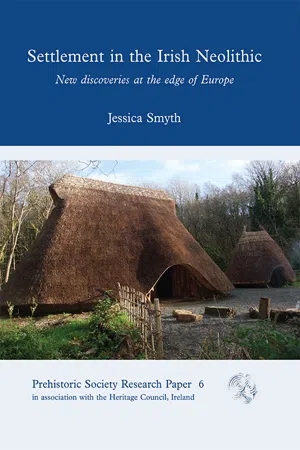
- 208 pages
- English
- ePUB (mobile friendly)
- Available on iOS & Android
eBook - ePub
About this book
Information
Subtopic
Ancient HistoryIndex
Social Sciences1
Populating the past: settlement archaeology in Ireland and Britain
‘Yet Neolithic remains must of necessity be somewhere in the country. We may make the most extreme concessions: we may admit that the Neolithic population was of the scantiest, both in numbers and in culture: we may admit that much of the country was at the time unfit for habitation, being covered with forests infested with wolves and other dangerous beasts: but we must still claim that a considerable number of relics of all kinds cannot but have accumulated during the irreducible minimum of 1000 years. There must somewhere be hut-sites, comparable with those which have given us rich information about the Neolithic period in Belgium and elsewhere. These must be sought for, and, when found, scientifically excavated before we can claim to know anything at all about Neolithic Ireland’.
The above plea was made by Professor R.A.S. Macalister to the Royal Irish Academy in February 1927, in a presidential address entitled ‘Some Unsolved Problems in Irish Archaeology’ (Macalister 1927, 250). The accompanying image (Fig. 1.1), is a photo taken post-excavation of the 67th Early Neolithic timber house uncovered in Ireland, at Kilkeasy, Co. Kilkenny, abandoned to the ‘dangerous beasts’. What the juxtaposition of these two snapshots – one from 1927 and the other from 2006 – is intended to show is the enormous amount of Neolithic settlement evidence that has accumulated in the intervening 80 years, far more than the hut-sites hoped for by Macalister.
A defining element of this settlement evidence, and of archaeological discovery in Ireland in the past 20 years, has been the rectangular, timber Early Neolithic house. A review of such houses in 1980 listed four or five examples (Grogan 1980). By 1989 this had increased to approximately seven and in 1996 to at least 14 (Grogan 1989; 1996, 41). From the late 1990s, the rate of discovery of these buildings increased dramatically, in step with the growth in infrastructural development and in 2002 over 40 houses were recorded, with at least 46 rectangular houses counted in 2004 (Grogan 2002; 2004). Over the past ten years this number has grown to over 90 (Smyth 2006; 2011). This flood of new data has inevitably brought new research questions bobbing to the surface. How do these houses fit into our established picture of the Irish Neolithic? Are they characteristic of the entire 1500 year period? What do their form, layout and construction tell us about Irish Neolithic society? How do they relate to other forms of settlement evidence and to Neolithic stone architecture? The Irish Neolithic, it can be argued, has been largely defined through its stone architecture – the court tombs, portal tombs and passage tombs that feature so prominently on the landscape. While such monuments can be useful indicators of population densities in the past, and undoubtedly communicated powerful ideas about place, tenure and group history, this volume works from the premise that people did not live in monuments, nor, quite possibly, did they spend a large of time around them. The following chapters thus represent an attempt to foreground the non-monumental, non-megalithic aspects of the Irish Neolithic, and to address a more everyday and routine lived reality. The upsurge in the rate of discovery of timber houses initially prompted this review of Irish Neolithic settlement, and houses are the subject of several chapters. However, it is acknowledged that houses were not the only mark early farmers made on their landscape; the archaeological record contains evidence of many different kinds of activity, conducted at different scales, in different locations and, it would seem, at varying levels of intensity and to different ends. In an attempt to capture these various types of evidence and to weave them together into a narrative, the term ‘settlement’ is here taken to mean not just dwellings – so-called domestic sites – but is employed in the wider sense of forming an attachment to place, as has been explored by human geographers (eg, Tuan 1977; Robinson 1986; 1995). The parameters of the volume thus extend to all traces of activity left by Neolithic groups, from causewayed enclosures to pit clusters to megalithic monuments, as they can all be viewed as part of the same process of coming to know one’s environment, and consequently as an act of settling.
In terms of time frame, the Neolithic in Ireland, as in many other regions, is defined by the appearance in the archaeological record of a range of novel things and practices that include domesticated animals and plants, pottery, specific tool types and tomb building. 4000 cal BC has traditionally been seen as the date at which these things appear, although there are a number of current hypotheses on the exact timing of the process of Neolithisation, which, depending on the model, fall in the centuries either side of this date (eg, Pailler & Sheridan 2009; Sheridan 2010; Whittle 2007; Cooney et al. 2011). The statistical models generated in a recent major dating programme of Early Neolithic enclosures (Whittle et al. 2011) suggest a start date for the Irish Neolithic in the 38th century cal BC, although the authors acknowledge that their attempts have been frustrated somewhat by the lack of reliable radiocarbon dates falling in the first two centuries of the fourth millennium BC and a reliance on radiocarbon dates from Early Neolithic houses (Cooney et al. 2011, 664–6). An additional 185 dates on cereal remains, obtained for another recent project – Cultivating Societies – examining the nature and timing of Neolithic farming in Ireland (Whitehouse et al. 2010; 2013), similarly did not produce ranges within the first two and a half centuries of the fourth millennium, although again house sites have been sampled extensively. The end of the Neolithic in Ireland is defined here as the date of the first evidence of metalworking on the island, which has been quite securely established at c. 2500 cal BC (O’Brien 1995; 2012). In social or cultural terms, this is taken to mean the appearance of Beaker cultural material, as Beaker pottery has been found in association with metalworking/mining debris at, for example, Ross Island, Co. Kerry (O’Brien 2004). Only pre-Beaker activity has thus been included in the study. Such a division is made easier by the fact that Grooved Ware and Beaker pottery sherds are rarely found in contextual association in Ireland, a frequency that is surprisingly low when compared to the number of sites on which these ceramics have both been found (Carlin 2011). This need not mean that there existed a significant chronological gap between the use of Grooved Ware and the use of Beaker pottery. There appears to be substantial continuity between Late Neolithic and Chalcolithic society in Ireland (eg, Carlin & Brück 2012), and the distinction made between non-metal-using and metal-using groups may be an arbitrary, if necessary, division.
There are some major data and interpretative gaps in the settlement archaeology of the Irish Neolithic, and the volume seeks to address this. For much of the twentieth century, settlement evidence was little discussed in the archaeological literature, due in large part to the low number of sites recorded. As the nature of archaeological prospection and excavation has changed, with ever more refined recovery techniques and with large transects of the landscape opened up ahead of infrastructural projects, settlement remains have become far more visible. Much of this material has been uncovered in the past 15 to 20 years and much is unpublished. A key objective of the volume was thus to present as much primary data as possible through tables, charts and line drawings, and where this was not possible, to provide a clear paper trail of references and resources for researchers. On an interpretative level, the volume also argues for a more non-functionalist reading of the settlement record, delving more deeply into the social significance and symbolism not only of domestic architecture, but settlement practices in general. Static site classifications are played down in favour of an approach, informed by anthropology, philosophy and human geography, that focuses on process and activity and how people engage with their material world.
Approaches to settlement archaeology on the islands of Ireland and Britain have also changed quite dramatically from the early twentieth century to the present day, and so this volume begins with a brief review of the key discoveries and agendas that have shaped our views on how we think our earliest farmers lived. The following chapter (Chapter 2) looks at possible ways into the Neolithic house via ethnographic analogy. The practices and beliefs surrounding vernacular Irish houses are compared with those from house-building societies across South-East Asia, in particular how these groups view their houses, how they tie them into seasonal, religious and lifecycles, and how they use houses as metaphors for social organisation and symbols of clan continuity, in some cases imbuing them with an animacy or life-force of their own. Special attention is given to the physical manifestation of these practices and how they might survive in the archaeological record. Chapters 3 and 4, on the Irish Early Neolithic house, combine the insight gained from ethnographic analogy with excavation data, much of it unpublished. Chapter 3 examines the current evidence for Irish Neolithic houses, much of which has been gleaned from the excavations of the past two to three years. This new material is compared with that from older excavations and established views on the nature of the material are re-examined. Chapter 4 examines the possible reasons behind the construction of these buildings in the Early Neolithic and the functions they may have served in society. Attention is drawn to the more unusual, apparently systematic, practices in evidence in these houses, in particular the deposition of certain items at certain stages in the building’s life and the deliberate burning of many of these houses upon their abandonment. It is suggested that these acts are related to how houses were viewed in society, and that these buildings provided far more than shelter in the Neolithic.
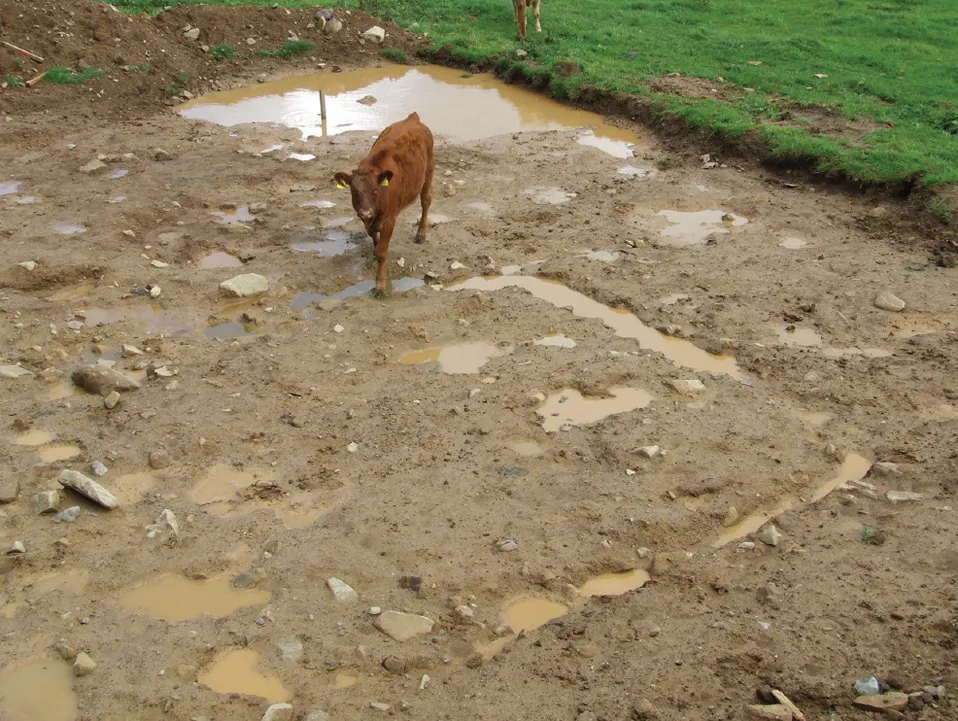
Figure 1.1: An inspection of the Early Neolithic house at Kilkeasy, Co. Kilkenny (photograph: James Eogan)
The detail emerging from Early Neolithic houses, and the questions arising out of their study, could easily fill the pages of several volumes of research. However, it was thought important from the outset to relate these early houses not only to the architecture from later periods in the Neolithic, but to other forms of settlement evidence across the landscape. Hence Chapters 5 to 7 deal with the wider settlement picture in Ireland, chronologically and spatially. Chapter 5 reviews the evidence for houses in the later fourth and third millennium BC, examining whether the robust timber architecture of the Early Neolithic can be paralleled in later centuries and, in particular, whether the important social functions suggested for the Early Neolithic house are carried through into the later Neolithic. Chapter 6 casts the net of enquiry even further and examines whether timber houses comprise the only form of settlement evidence in the Early Neolithic, a simple question perhaps but one that is frequently glossed over in accounts of the period. A review of the Neolithic material uncovered in Irish excavations over the past 40 years is used to gain an idea of the proportion of housebuilding activity to other, so-called temporary or ephemeral settlement activity represented, for example, by scatters of stone-working debris, outdoor hearths, arcs of stake-holes and pit clusters. This review of Neolithic sites also builds up a picture of the ebb and flow of activity through the Neolithic, whether it is the erection of timber buildings, the use of caves, the exploitation of certain stone sources or the enclosure of fields. Chapter 7 returns to a level of detail explored in Chapters 3 and 4, with a study area in eastern Leinster informing a discussion on the links between different settlement signatures across a landscape; for example, how the acts of digging, deposition and burning seen at houses might compare with activity at megalithic monuments or quarries, and what these repeated, everyday acts can tell us about the attitudes of Neolithic groups to their material, physical environment. Finally, Chapter 8 examines the extent to which our established views of the Irish Neolithic have changed in recent years, and suggests where future research should now be directed.
Neolithic settlement archaeology in Ireland and Britain
Compared with the solid three-dimensionality of the megalithic tombs spread across Ireland and Britain, traces of Neolithic settlement on these islands have never been the most visible. Through the twentieth and into the twenty-first century, attempts to uncover where and how people lived in the Neolithic have thus focused on other aspects of the archaeological and palaeoecological record, from artefacts to monuments to pollen levels and, only more recently, through domestic architecture. Within much of the literature there can be traced a firm belief in the Neolithic Revolution, in the fundamental change to society brought about by farmers, fields and livestock and a new, sedentary way of life. There has perhaps been a latent urge to link these first farmers to a long tradition of agriculture in Britain and Ireland and thus to a wider sense of national identity. From the early twentieth century onwards, the idea of the house as a key, though elusive, component of the Neolithic, a focus for permanent settlement in the landscape, was equally widely held. The large timber longhouses of the continental European Neolithic and the impressive tell sites of south-east Europe bolstered this viewpoint and archaeologists were acutely aware of the lack of comparable houses and settlements in the Irish and British Neolithic (Curwen 1929, 26; Clark 1937; Macalister 1927, 250). In Britain, the ditches of causewayed enclosures were among the first locations where Neolithic occupation material was recovered and the monuments were interpreted a priori as settlement sites. The interrupted ditches were thought to be the remains of subterranean dwellings, what Evans (1988, 55) has termed a ‘Piltdown Man-like’ solution for the British Neolithic. The idea of pit-dwellings was common in European archaeology prior to the Second World War and in Britain remained an accepted interpretation until as late as 1940 (Childe 1940, 36). Through the 1930s and 40s, the discovery of rectangular, non-subterranean houses across Europe gradually changed this perception, as did the excavation of pits that were clearly not dwellings, such as those within the Iron Age enclosure at Little Woodbury (Bersu 1938; 1940). By the early 1950s, causewayed enclosures were seen as the cattle corrals and seasonal meeting places of nomadic pastoralists (Piggott 1954, 29; Smith 1965, 19). Even less was known, and written, about Neolithic settlement evidence from Ireland during this period, although the excavation of an enclosure on Lyles Hill, Co. Antrim in the 1930s (Evans 1953), drew comparisons with the causewayed enclosures from southern Britain, while the clusters of buildings excavated on the Knockadoon peninsula, Lough Gur, Co. Limerick were recognised as Neolithic soon after their discovery in the 1930s (Ó Ríordáin 1946; 1950, 39). Both sites subsequently appeared in Piggott’s 1954 review of Neolithic Britain and Ireland. The pattern of settlement for both islands was framed, for the most part, in terms of the economy, the prevailing view of which saw Neolithic farmers engaged in a shifting or swidden-style of agriculture, moving on as soils became exhausted and crop yields declined (Childe 1929, 46; Clark 1952, 92). From the mid twentieth century, this view was supported by the work of Danish palynologists arguing that shifting agriculture had taken place in the Danish Neolithic, and who regarded the contemporary nomadic practices of northern and tropical farmers as analogues for the Neolithic. Particularly influential was Boserup’s (1965) model of agricultural development which provided an evolutionary scheme for the gradual shortening of fallow regimes, the earliest regimes involving the longest fallow.
Palaeoecological approaches to Neolithic settlement became increasingly popular through the 1960s and 1970s and the work of the Belfast Palaeoecology Laboratory during this period, providing dated pollen levels for a large part of northern Ireland, was especially significant. With the numbers of documented settlement sites still low, clearances in the vegetation detectable in the pollen record came to function as proxies for human activity and settlement (eg, Whittle 1978). The idea of slash-and-burn shifting agriculture and settlement mobility was abandoned from the early 1970s onwards (eg, Pennington 1970; Smith 1970; Fleming 1972), replaced by a model of a largely sedentary Neolithic associated with intensive garden horticulture, which was gaining ground on the European continent (eg, Kruk 1980). The sense of more people in the Neolithic landscape, and population stresses, accompanied a greater awareness of territoriality (eg, Renfrew 1976). The prevailing model of Neolithic sedentary mixed farming convinced some writers that permanent settlements were still to be discovered, very likely buried under colluvium and alluvium in river valleys. The discovery of a timber Neolithic house at Ballynagilly, Co. Tyrone in the late 1960s finally provided the much-looked for link to the timber longhouses of the European continent (eg, Cole 1970, 57; cf Cole 1967, 55; Whittle 1980, 330). Increased research into past pollen records also resulted in a distinction being drawn between the earlier and later Neolithic in terms of subsistence and settlement patterning, with a period of fixed settlement, intensive cereal cultivation and population growth eventually collapsing to be replaced with a largely pastoral economy and, in southern Britain at least, a nomadic society (Wainwright & Longworth 1971, 266; Whittle 1978, 34; Megaw & Simpson 1979, 168). This period division also appeared in syntheses of the Irish Neolithic. As in the British literature, there was confidence in the original proliferation of Neolithic farmsteads, with ‘burials and industrial sites … undoubtedly matched in antiquity by habitations and farmsteads outnumbering these at least tenfold’ (Herity & Eogan 1977, 44) but which due to taphonomic factors did not now survive. In contrast to British overviews however, there were now at least four Neolithic houses that could be identified, both circular and rectangular, plank-built and post-built, as well as emerging evidence for extensive pre-bog field systems at Céide, Co. Mayo (Herity 1971), later argued to be Neolithic (Caulfield 1978; 1983).
The discovery of the Céide fields was a significant development, providing what appeared to be definitive proof for the intensification of land use. Provisionally dated to the later Neolithic and thought to have been used for grazing (Caulfield 1983), the fields seemed part of the period of recovery, detected in pollen diagrams across many parts of Britain and the supposed shift to pastoral farming activity (Whittle 1980, 334). Indeed, for some writers these fields opened up the possibility of finding even earlier field systems, which like Neolithic houses remained buried beneath erosion deposits across lowland England (Fowler 1981, 39). Through the 1980s, the influence of palaeoecology and palaeoeconomics remains evident in several accounts of the period and in the attempts to model settlement patterns and population levels. In Britain, both archaeological and palynological evidence is used to argue for an early ‘pioneering’ Neolithic characterised by small-scale farming settlement scattered widely across Britain, originating in southern and midland England (Darvill 1987). Once established, this farming society is organised into small family groups occupying single farmsteads, houses like those uncovered at Fengate, Llandegai and the Knap of Howar, surrounded by fields and grazing areas. This permanent pattern of settlement is complemented by more temporary activity in upland regions, in caves and along the coast, and by the use of causewayed enclosures. In Ireland, models of Neolithic settlement run along very similar lines. The introduction of agriculture and sedentary life are seen as synchronic, and there is a similar emphasis on palynological data and the significance of clearances in past vegetation records, thought to have been created by early farming groups practising slash-and-burn agriculture across the island. Comparisons continue to be made between the plank-walled house at Ballynagilly and the LBK houses of Central Europe, although again these continental village communities are thought to have split into smaller family groups once reaching Ireland and Britain, occupying isolated houses. Like Britain, a pioneer, shifting agriculture phase is seen to be followed by a phase of more permanent settlement that in Ireland is marked by megalithic tombs and field systems (Harbison 1988, 27–35).
Paths dividing
Approaches to Neolithic settlement in Britain and Ireland diverged greatly in the early 1990s and it is worth examining this important period in more detail. The paucity of structural evidence of a domestic ...
Table of contents
- Cover
- Dedication
- Title Page
- Copyright
- Contents
- List of Figures, Tables, Appendices and Author details
- Abstract
- Acknowledgements
- Preface
- Chapter 1: Populating the past: settlement archaeology in Britain and Ireland
- Chapter 2: The house and society
- Chapter 3: The Irish Early Neolithic house
- Chapter 4: The role of the Early Neolithic house
- Chapter 5: Beyond the ‘house horizon’
- Chapter 6: Settling the island: activity and place
- Chapter 7: A landscape in small acts
- Chapter 8: After the flood: re-assessing the Irish Neolithic
- Appendices
- Bibliography
Trusted by 375,005 students
Access to over 1.5 million titles for a fair monthly price.
Study more efficiently using our study tools.
Frequently asked questions
Yes, you can cancel anytime from the Subscription tab in your account settings on the Perlego website. Your subscription will stay active until the end of your current billing period. Learn how to cancel your subscription
No, books cannot be downloaded as external files, such as PDFs, for use outside of Perlego. However, you can download books within the Perlego app for offline reading on mobile or tablet. Learn how to download books offline
We are an online textbook subscription service, where you can get access to an entire online library for less than the price of a single book per month. With over 1.5 million books across 990+ topics, we’ve got you covered! Learn about our mission
Look out for the read-aloud symbol on your next book to see if you can listen to it. The read-aloud tool reads text aloud for you, highlighting the text as it is being read. You can pause it, speed it up and slow it down. Learn more about Read Aloud
Yes! You can use the Perlego app on both iOS and Android devices to read anytime, anywhere — even offline. Perfect for commutes or when you’re on the go.
Please note we cannot support devices running on iOS 13 and Android 7 or earlier. Learn more about using the app
Please note we cannot support devices running on iOS 13 and Android 7 or earlier. Learn more about using the app
Yes, you can access Settlement in the Irish Neolithic by Jessica Smyth in PDF and/or ePUB format, as well as other popular books in Social Sciences & Ancient History. We have over 1.5 million books available in our catalogue for you to explore.