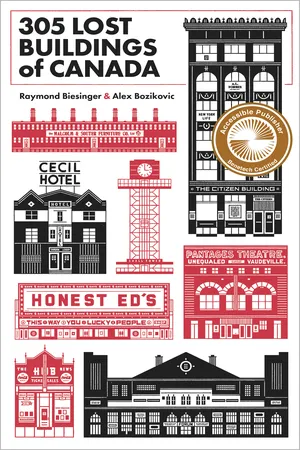
The legacies of theaters, hotels, fire stations, flour mills, and more — torn down, burned down, and otherwise lost — are uncovered in this bittersweet collection. Using archival photographs, blueprints, and written reports, Raymond Biesinger has rendered a selection of Canada's most iconic lost buildings in his signature minimalist style.
Accompanying Biesinger's illustrations are Alex Bozikovic's descriptions which capture each building's historical, cultural, and architectural significance. Bozikovic draws on local histories, archived building permits and his own extensive knowledge of the Canadian urban architectural landscape and its history — from the letters passed through Kelowna's unlikely art deco post office to the destruction of a home in Halifax's Africville — to offer fascinating, sometimes forgotten stories about each building and its significance.
An impossible architectural walking tour, 305 Lost Buildings of Canada spans the country, its cities and countryside, and its history. Cities change, buildings come and go, but in this fact-filed compendium, you'll find the lost wonders of Canada's architecture.
The first settlers in Saskatoon were bent on self-denial. A group of Ontarians from the Temperance Colonization Society selected the site for a town, Nutana, in 1883. In 1890, the Qu’Appelle, Long Lake, and Saskatchewan Railway Company arrived here. Its station prompted growth on the west side of the river, where the liquor flowed freely while Nutana remained dry. The unified town incorporated in 1906, now with 4,500 people and the name of Saskatoon, after the Cree word for the abundant local berry. In the next decade, the optimistic city built Chicago Style loft buildings and castle-like high schools — stopped suddenly by the economic crash of 1913. In the next decades the city would grow, diversify, and sprawl. Many of the buildings of its first decades were wrecked as the fashion of urban renewal took hold, even here.
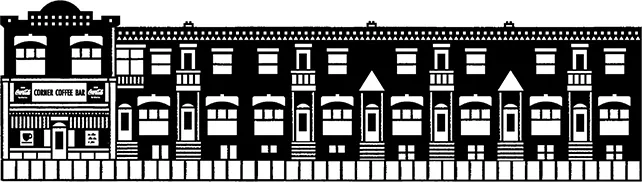
Crowe Block 1910-1984
A rare example of row houses in Saskatoon, Crowe Block was capped by a corbelled brick cornice and bookended by a restaurant that became the Corner Coffee Bar. A twin block to this one still stands across the street. The block had been recommended to council for heritage preservation before it was pulled down. 310-314 25th Street East; now a strip mall.
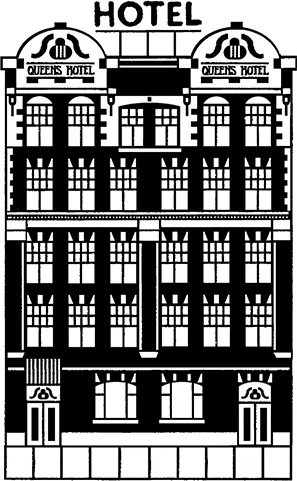
Queen’s Hotel 1912-1980. Designed by Frank P. Martin.
The original Queen’s Hotel was one of the first hotels in Saskatoon, built in 1892, just after the railway arrived. This larger five-storey replacement was a Beaux-Arts brick building with terracotta trim and pediments. By 1980, the Queen’s was catering to long-term residents. On May 31, a major fire broke out, probably in the sauna. Forty-six firefighters came to battle it; two of them, Victor Budz and Dennis Guenter, perished. In the wake of the fire, the Saskatoon Fire Department changed its breathing equipment and increased its inspections of saunas. 1st Avenue South at 20th Street; now a parking garage.
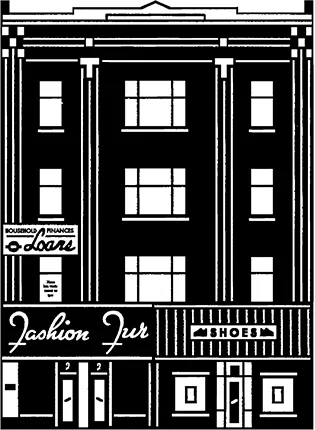
Central Chambers 1911-1998. Designed by Thompson, Daniel & Colthurst.
Central Chambers was a workhorse of a downtown building and a fine example of what city planners call mixed use. Over the years it housed apartments, offices, restaurants, a furrier, and from 1924 to 1927, the Hotel Central. In 1927 and 1928, the city’s public library found a temporary home in the building. A local developer bought the aging structure in the 1990s and demolished it for a single-storey retail strip.219 22nd Street East; now stores.
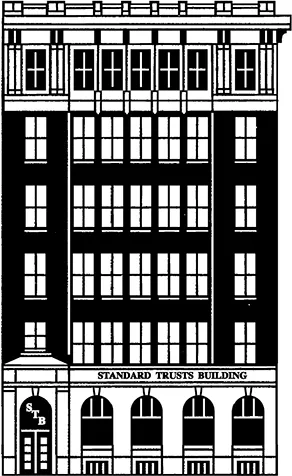
Standard Trusts Building 1913-1976. Designed by William Fingland.
This six-storey tower went up during a major real estate boom before the First World War. The Winnipeg-based Fingland delivered a forward-looking architecture inspired by the Chicago School, its base and capital wrapped in expanses of terracotta. It was expected to be surrounded by even taller buildings, which never came. But the Saskatoon Art Centre started here in 1944; that artist-run centre would eventually became the Mendel Art Gallery. The Standard Trusts Building was eventually replaced by the Sturdy Stone Centre, after a huge controversy that helped birth the Saskatoon Heritage Society. 102 3rd Avenue North; now Sturdy Stone Centre.
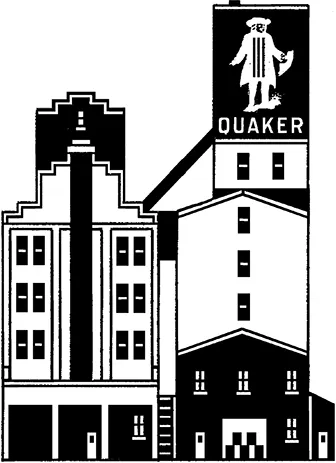
Parrish & Heimbecker Mill 1906-2015
Wheat helped build the city. Archie McNab built this mill for the Saskatoon Milling Company to process it — on his way to a career in business and politics, including as lieutenant-governor of Saskatchewan. Quaker Oats bought the Saskatoon Milling Company and ran it for most of a century, for many years as the Parrish & Heimbecker Company.Avenue N South at 18th Street.
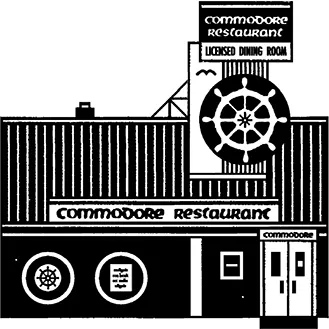
Commodore Restaurant 1947-2007
Steve Leakos left the Greek mainland as a boy of fourteen and wound up in Saskatoon; here he was one of a half-dozen countrymen to run restaurants in the downtown. This one Leakos called the New Commodore to distinguish it from its predecessor on 21st Street. It was a hangout for the cooler high school kids, including, apparently, a young Joni Mitchell. The restaurant’s name also appeared on sports jerseys: in the 1950s owner Spero Leakos was general manager of the semi-pro Saskatoon Commodores baseball team. The building became a Chinese restaurant, Chau’s Commodore, and was demolished after a fire in 2007. 108 2nd Avenue North; now a parking lot.
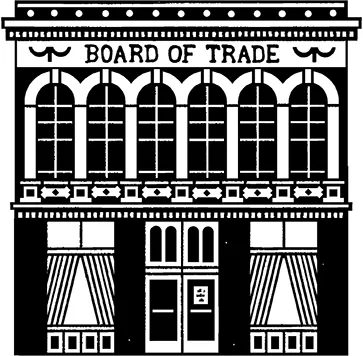
Board of Trade Building 1909-1938. Designed by Herbert J. Payton.
The birth of the Board of Trade reflected the success of the city: Saskatoon’s population nearly tripled between 1909 and 1912. Located right in the path of arriving CN passengers, the board’s building was all boomtown bluster: it had very tall floors (but only two of them), six Palladian windows (very close together), and a very small interior. 1st Avenue South between 20th and 21st Streets; now Midtown Plaza.
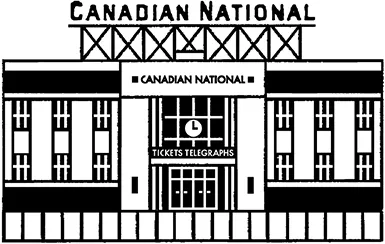
CN Railway Station 1938-1966. Designed by John Schofield.
Saskatoon was known as Hub City for its place in the rail network that crossed the Prairies. By 1908, three railways were here, including CN. This stripped-classical station by CN’s Schofield replaced an older station on the site, and it fell quiet when CN moved out of downtown in 1963. Midtown Plaza replaced this station and most of the yards behind it; meanwhile its predecessor, the 1908 CPR station, was saved from demolition in 1970 and is a recognized heritage building. 1st Avenue and 22nd Street; now Midtown Plaza.
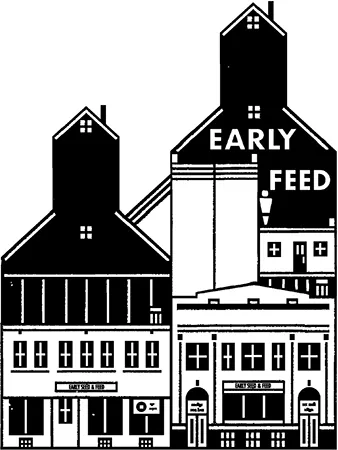
Early Seed & Feed 1914-1985
The Early family’s hay, grain, and seed business became a staple in Saskatoon starting in 1907. (This was an era when every major city in the country had seed businesses in prominent locations.) In 1914 the Earlys built their new complex downtown, including a grain elevator painted with a large sign that advertised the business. Early’s Farm and Garden Centre moved to a new location in the 1980s and is still operating today. 198 Idylwyld Drive South; now a Cactus Club Café.
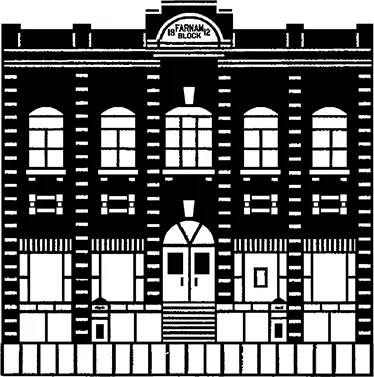
Farnam Block 1912-2015. Designed by Bugenhagen & Turnbull.
Here was a boom-time build that you would think had good bones. Its main architect, George Bugenhagen, was a trained bridge designer and structural engineer. A century later it housed Lydia’s Pub, a beloved bar and music venue, and its owners thought it was unsalvageable. The brewery that replaced it uses some of the old building’s wooden beams. 650 Broadway Avenue; now Prairie Sun Brewery.
C...
Table of contents
Cover
Title Page
Copyright Page
Map of Canada
Dedication
Contents
Introduction
ST. JOHN’S, Newfoundland and Labrador
HALIFAX, Nova Scotia
CHARLOTTETOWN, Prince Edward Island
FREDERICTON, New Brunswick
MONCTON, New Brunswick
SAINT JOHN, New Brunswick
MONTRÉAL, Quebec
QUEBEC CITY, Quebec
SHERBROOKE, Quebec
GUELPH, Ontario
HAMILTON, Ontario
KINGSTON, Ontario
KITCHENER, Ontario
LONDON, Ontario
OSHAWA, Ontario
OTTAWA, Ontario
PETERBOROUGH, Ontario
SARNIA, Ontario
SUDBURY, Ontario
TORONTO, Ontario
WINDSOR, Ontario
WINNIPEG, Manitoba
REGINA, Saskatchewan
SASKATOON, Saskatchewan
CALGARY, Alberta
EDMONTON, Alberta
LETHBRIDGE, Alberta
KELOWNA, British Columbia
VANCOUVER, British Columbia
VICTORIA, British Columbia
Glossary
Acknowledgements
About the Author
Trusted by 375,005 students
Access to over 1.5 million titles for a fair monthly price.
Study more efficiently using our study tools.
Frequently asked questions
Yes, you can cancel anytime from the Subscription tab in your account settings on the Perlego website. Your subscription will stay active until the end of your current billing period. Learn how to cancel your subscription
No, books cannot be downloaded as external files, such as PDFs, for use outside of Perlego. However, you can download books within the Perlego app for offline reading on mobile or tablet. Learn how to download books offline
Perlego offers two plans: Essential and Complete
Essential is ideal for learners and professionals who enjoy exploring a wide range of subjects. Access the Essential Library with 800,000+ trusted titles and best-sellers across business, personal growth, and the humanities. Includes unlimited reading time and Standard Read Aloud voice.
Complete: Perfect for advanced learners and researchers needing full, unrestricted access. Unlock 1.5M+ books across hundreds of subjects, including academic and specialized titles. The Complete Plan also includes advanced features like Premium Read Aloud and Research Assistant.
Both plans are available with monthly, semester, or annual billing cycles.
We are an online textbook subscription service, where you can get access to an entire online library for less than the price of a single book per month. With over 1.5 million books across 990+ topics, we’ve got you covered! Learn about our mission
Look out for the read-aloud symbol on your next book to see if you can listen to it. The read-aloud tool reads text aloud for you, highlighting the text as it is being read. You can pause it, speed it up and slow it down. Learn more about Read Aloud
Yes! You can use the Perlego app on both iOS and Android devices to read anytime, anywhere — even offline. Perfect for commutes or when you’re on the go. Please note we cannot support devices running on iOS 13 and Android 7 or earlier. Learn more about using the app
Yes, you can access 305 Lost Buildings of Canada by Raymond Biesinger,Alex Bozikovic,Raymond Biesinger in PDF and/or ePUB format, as well as other popular books in Architecture & Architecture General. We have over 1.5 million books available in our catalogue for you to explore.