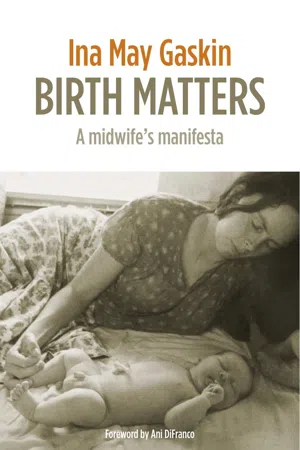
Upbeat and informative, Gaskin asserts that the way in which women become mothers is a women's rights issue, and it is perhaps the act that most powerfully exhibits what it is to be instinctually human. Birth Matters is a spirited manifesta showing us how to trust women, value birth, and reconcile modern life with a process as old as our species. Renowned for her practice's exemplary results and low intervention rates, Ina May Gaskin has gained international notoriety for promoting natural birth. She is a much-beloved leader of a movement that seeks to stop the hyper-medicalization of birth-which has lead to nearly a third of hospital births in America to be cesarean sections-and renew confidence in a woman's natural ability to birth.
- English
- ePUB (mobile friendly)
- Available on iOS & Android
eBook - ePub
About this book
Information
Subtopic
NursingIndex
Social SciencesCHAPTER 1
The Importance of Birth and Birth Stories
Birth matters. It matters because it is the way we all begin our lives outside of our source, our mothers’ bodies. It’s the means through which we enter and feel our first impression of the wider world. For each mother, it is an event that shakes and shapes her to her innermost core. Women’s perceptions about their bodies and their babies’ capabilities will be deeply influenced by the care they receive around the time of birth.
No matter how much pressure our society may bring upon us to pretend otherwise, pregnancy, labor, and birth produce very powerful changes in women’s bodies, psyches, and lives, no matter by which exit route—natural or surgical—babies are born. It follows then that the way that birth care is organized and carried out will have a powerful effect on any human society. A society that places a low value on its mothers and the process of birth will suffer an array of negative repercussions for doing so. Good beginnings make a positive difference in the world, so it is worth our while to provide the best possible care for mother and babies throughout this extraordinarily influential part of life.
Birth also matters because the journey through pregnancy and birth offers an irreplaceable way for women to explore their deepest selves—their minds, bodies, and nature. Such a journey of self-discovery can help them prepare for the hard and underappreciated job of motherhood in a world now full of historically unique and complex challenges. There is a sacred power in the innately feminine capacity of giving birth. It is one of the elemental, continuing processes of nature that women have the chance to experience, and it is the one act of human creation that is not shared by men. Why would we not want to explore this territory?
My use of the word “sacred” as applied to birth in this book is intentional and nonreligious. It implies that birth is an event important enough to warrant special consideration from those who are involved in the care of women during this time of life. It indicates that disrespect of the power of giving birth creates profound disharmony and ignorance in the world.
Giving birth can be the most empowering experience of a lifetime—an initiation into a new dimension of mind-body awareness—or it can be disempowering, by removing from new mothers any sense of inner strength or capacity and leaving them convinced that their bodies were created by a malevolent nature (or deity) to punish them in labor and birth. Birth may be followed by an empowering joy, a euphoria that they will never forget, or by a depression that can make the mother a stranger to herself and everyone who knows her. There is an enormous range of “birth effects,” depending on each woman’s experience, her lifestyle, the state of her health during her pregnancy, the choices she is able to make regarding the maternity care available to her, and the way she is treated when her time comes.
Traditional cultures throughout the world have always considered birth to be within the domain of women. Because only women give birth, indigenous cultures that were widely separated from each other all considered it obvious that women were the people most qualified to decide what sort of care was necessary during pregnancy, birth, and the newborn period. Even in those tribal cultures in which men had important roles to play around the time of pregnancy and birth, women—and in particular, those serving as midwives—had (and in some remote places still have) a great deal of influence in mapping out what these male roles ought to be.
What a contrast there is between these kinds of assumptions and those that are entertained by much of the public in the US. Here and in a growing number of countries, women have very little, if any, decision-making power about how they will be treated during pregnancy or birth. These are the countries in which midwifery either doesn’t exist anymore or is so marginalized as to be without influence. This kind of extremely medicalized maternity care has become common in urban areas of Mexico, Brazil, China, Venezuela, and Thailand, for example, where rates of C-sections have risen to four or five times more than the rates considered safe by the World Health Organization (WHO). In 1985 and again in 2007, the WHO convened consensus conferences to review scientific evidence on technologies used in childbirth. These conferences made a series of recommendations, including that the rate of C-sections should never be more than 10 to 15 percent of all births.1 Many private hospitals in the countries mentioned above have cesarean rates of 90 to 95 percent. The doctors who were my mentors during the 1970s would have been horrified to know that such high rates of surgery could be allowed to happen for no medical reason in any country, because they knew that unnecessary surgery puts lives at risk—the opposite of what medical care is supposed to do.
Just after I was given a tour of a birthing room at a high-volume Brazilian hospital in 2004, I had a chance to witness a scheduled C-section. The nervous husband of the mother-to-be and I peered through the window in the door of the operating room as we stood in the corridor outside. Trembling with fear, the mother lay on the T-shaped operating room table, her arms outstretched and tied to the table at her wrists. A nurse quickly shaved and swabbed her belly. There were no words of comfort given the mother through her ordeal. It seemed clear to me that while she was terrified of having the C-section, she must have been even more scared of experiencing labor or she wouldn’t have agreed to the surgery. This hospital did have a birthing room, but I was shown the log of births that had occurred in it for the previous month, and only two women had made that choice. Several hundred others had opted for C-sections that were rarely medically indicated. I found myself wondering if this mother knew anyone who had given birth the way her grandmothers or great-grandmothers had. She must not have known that it could be within her capability to give birth vaginally without harm to herself or her baby, or that a joyful birth was a possibility.
Watching her, I remembered the lecture on birth that I had been invited to give to a roomful of psychology students in Brasília a couple of days earlier. Each one of the women students who were mothers had had C-sections. When I told the class that it was possible for women to give birth vaginally without anesthesia and to enjoy such experiences, most looked at me in disbelief. When I showed them a photo of an unmedicated woman giving birth with a look of ecstasy on her face, only the men in the class had the courage to look at it. Several seemed interested in knowing more. What took me aback was that each of the women closed her eyes and refused to take even a glimpse of the photo, even though I had assured them that the woman had required no stitches and lost no blood during the process of giving birth. Unlike some US women of the same age whom I had previously shown the photos, these young Brazilian students had become so deeply afraid of giving birth that any sense of curiosity about how this woman’s body had accomplished it was overwhelmed by fear and a superstitious and unquestioning faith in technology. That’s real fear.
While it is true that in several of the countries with high C-section rates many healthy women are actively choosing to have C-sections that aren’t medically necessary, it can be argued that in the majority of such cases, their choices aren’t truly choices because they are based upon superstitions about technology and surgery, coupled with erroneous assumptions and fears about their own bodies and the process of birth. The same goes for those women who submit to choices made by their husbands or other family members, and those who have been persuaded by popular media and rather recent cultural fashions with no scientific basis that C-sections are safer than vaginal birth. In most cases, this is not true, and C-sections come with greater dangers for mother and child. It is time for people to be educated about this fact. Too much surgery is dangerous, and this is one of the reasons for the relatively high maternal death rates in the countries mentioned above. In contrast, countries that trust the natural process of birth and where midwives attend most of the births have better results. Finland, Iceland, Norway, Denmark, Sweden, the Netherlands, Belgium, Germany, the four countries of the United Kingdom (UK), and at least twenty-eight other countries all do better in this respect than we do in the US, although even these countries are being affected by the increasing use of birth technologies that tend to undermine the confidence of many women in their innate ability to give birth. When cesarean surgery becomes the norm for birth, maternal death rates inevitably rise.
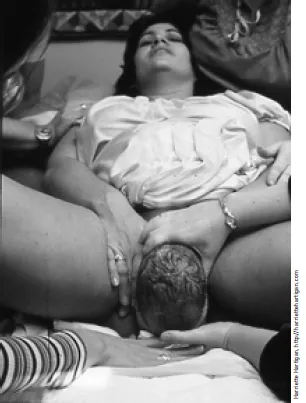
We now find ourselves in a situation in the US and in many other parts of the world where women are increasingly being denied what is perhaps the most powerful and primal experience a woman can have: the right to give birth without the use of medical interventions unless these prove necessary. Women have been taught to believe that they must sacrifice themselves in important ways in order to have a baby—that the greater good for the baby means that the mother must submit herself to greater risk, even if that means a C-section for which there is no medical reason. For instance, many women are taught to think that it is automatically dangerous to a baby to be born vaginally if the cord is wrapped around the neck, when in fact almost all babies with the cord around the neck (perhaps one-fifth of all births) can safely be born vaginally. Others are taught that there is something so inherently dangerous about being forty-two weeks pregnant that justifies the induction of labor, even though that often leads to a C-section; in fact, an “estimated due date” is a guess that turns out to be wrong more often than most people realize.
My intention in this book is to call for greater involvement of women in the formulation of maternity care policy and in the education of young women and men about birth. Women who are fully informed about the capacities of women’s bodies should lead the way, and all women who care about social justice and human rights should be involved. The way a culture treats women in birth is a good indicator of how well women and their contributions to society are valued and honored. Of course, fathers, husbands, brothers, and all other men who care about the women in their lives need to be involved as well. This should happen in every country, but it is particularly important that the involvement of a partnership of mothers and midwives be increased in those countries in which there are either too few of the interventions that are sometimes needed during the process of birth or too many of these interventions, because both kinds of system errors cost women their lives.
I do want women who have already had C-sections to know that I am not judging them for having had surgical births. I understand that there are a lot of complicated reasons for having C-sections, and I make it a point to refrain from sitting in judgment on other women’s choices. At the same time, much of the information that is dispensed about C-sections is incomplete or distorted, and this can lead to women making choices without all of the facts.
The latest figures indicate that all is not well with motherhood in the US—the maternal mortality rate has risen sharply in some states at the same time as maternity care costs per capita have escalated to levels two to three times as high as those in nations of comparable wealth. Some of our cities have maternal death rates that are worse than those in countries with far fewer resources; Costa Rica, Cuba, Bulgaria, Croatia, Hungary, Macedonia, and Slovenia are just a few examples of countries that are spending their resources designated for maternity care in a better way.
My intention in this book is not to persuade those women who want to avoid pregnancy to change their minds—far from it. But I do want to convince even women with no interest in motherhood that the right to a positive and safe birth is just as important as the right to choose whether or not to have a child. I do think that there is great value in taking a deeper look at motherhood and trying to discover what it might have to do with women’s empowerment. We need to deepen our understanding of where we have been as women in the past and how the past has shaped and often distorted our knowledge of our bodies and ourselves, especially in the realm of pregnancy and birth.
THE PHILOSOPHY OF THE NATURAL BIRTH MOVEMENT
The natural birth philosophy that had its origins in the 1950s and 1960s in the US and continues today in many countries around the world is based upon a fundamental respect for nature that recognizes that nature mostly gets it right in birth. According to this philosophy (I’m actually more inclined to say “observation”), pregnancy is not an illness in need of treatment, and nature’s design of women is not considered flawed. The late Professor G. J. Kloosterman, an influential and eloquent Dutch obstetrician, perhaps said it best when he wrote: “By no means have we been able to improve spontaneous labor in healthy women. Spontaneous and normal labor is a process, marked by a series of events so perfectly attuned to one another that any interference only deflects them from their optimum course.”2 Such a philosophy, of course, does recognize that a pathological or dangerous complication can occasionally develop even in healthy women, and that the application of a powerful technology (surgery, for example) ca...
Table of contents
- Cover
- Title
- Copyright
- Dedication
- Contents
- Foreword by Ani DiFranco
- Chapter 1: The Importance of Birth and Birth Stories
- Chapter 2: Second-Wave Feminism, Birth, and Motherhood
- Chapter 3: Sexuality and Birth
- Chapter 4: A Brief Look at the History of Midwives and Medical Men
- Chapter 5: Technology and Empowerment
- Chapter 6: Gathering the Power of Sisterhood
- Chapter 7: What’s a Father-to-Be to Do?
- Chapter 8: My Vision for the Future
- Chapter 9: The Kind of Obstetrics I Miss, and Its Great Defenders
- Appendix A: The Mother-Friendly Childbirth Initiative
- Appendix B: List of Resources Pertinent to the Midwifery Model of Care
- Appendix C: Further Reading/Films
- Appendix D: The Farm Midwifery Center: Preliminary Report of 2,844 Preganancies, 1970–2010
- Glossary
- Acknowledgments
- Index
Trusted by 375,005 students
Access to over 1.5 million titles for a fair monthly price.
Study more efficiently using our study tools.
Frequently asked questions
Yes, you can cancel anytime from the Subscription tab in your account settings on the Perlego website. Your subscription will stay active until the end of your current billing period. Learn how to cancel your subscription
No, books cannot be downloaded as external files, such as PDFs, for use outside of Perlego. However, you can download books within the Perlego app for offline reading on mobile or tablet. Learn how to download books offline
Perlego offers two plans: Essential and Complete
- Essential is ideal for learners and professionals who enjoy exploring a wide range of subjects. Access the Essential Library with 800,000+ trusted titles and best-sellers across business, personal growth, and the humanities. Includes unlimited reading time and Standard Read Aloud voice.
- Complete: Perfect for advanced learners and researchers needing full, unrestricted access. Unlock 1.5M+ books across hundreds of subjects, including academic and specialized titles. The Complete Plan also includes advanced features like Premium Read Aloud and Research Assistant.
We are an online textbook subscription service, where you can get access to an entire online library for less than the price of a single book per month. With over 1.5 million books across 990+ topics, we’ve got you covered! Learn about our mission
Look out for the read-aloud symbol on your next book to see if you can listen to it. The read-aloud tool reads text aloud for you, highlighting the text as it is being read. You can pause it, speed it up and slow it down. Learn more about Read Aloud
Yes! You can use the Perlego app on both iOS and Android devices to read anytime, anywhere — even offline. Perfect for commutes or when you’re on the go.
Please note we cannot support devices running on iOS 13 and Android 7 or earlier. Learn more about using the app
Please note we cannot support devices running on iOS 13 and Android 7 or earlier. Learn more about using the app
Yes, you can access Birth Matters by Ina May Gaskin in PDF and/or ePUB format, as well as other popular books in Social Sciences & Nursing. We have over 1.5 million books available in our catalogue for you to explore.