Transformative Pathways to Sustainability
eBook - ePub

Transformative Pathways to Sustainability

Learning Across Disciplines, Cultures and Contexts

  1. 238 pages
  2. English
  3. ePUB (mobile friendly)
  4. Available on iOS & Android
eBook - ePub

Transformative Pathways to Sustainability

Learning Across Disciplines, Cultures and Contexts

About this book

Transformations to sustainability are increasingly the focus of research and policy discussions around the Sustainable Development Goals. However, the different roles played by transdisciplinary research in contributing to social transformations across diverse settings have been neglected in the literature. Transformative Pathways to Sustainability responds to this gap by presenting a set of coherent, theoretically informed and methodologically innovative experiments from around the world that offer important insights for this growing field.

The book draws on content and cases from across the 'Pathways' Transformative Knowledge Network, an international group of six regional hubs working on sustainability challenges in their own local or national contexts. Each of these hubs reports on their experiences of 'transformation laboratory' processes in the following areas: sustainable agricultural and food systems for healthy livelihoods, with a focus on sustainable agri-food systems in the UK and open-source seeds in Argentina; low carbon energy and industrial transformations, focussing on mobile-enabled solar home systems in Kenya and social aspects of the green transformation in China; and water and waste for sustainable cities, looking at Xochimilco wetland in Mexico and Gurgaon in India. The book combines new empirical data from these processes with a novel analysis that represents both theoretical and methodological contributions. It is especially international in its scope, drawing inputs from North and South, mirroring the universality of the Sustainable Development Goals.

The book is of vital interest to academics, action researchers and funders, policy makers and civil-society organisations working on transformations to sustainability.

The Open Access version of this book, available at

www.taylorfrancis.com/books/oa-edit/10.4324/9780429331930/transformative-pathways-sustainability-pathways-network, has been made available under a Creative Commons Attribution-Non Commercial-No Derivatives 4.0 license
Frequently asked questions

Yes, you can cancel anytime from the Subscription tab in your account settings on the Perlego website. Your subscription will stay active until the end of your current billing period. Learn how to cancel your subscription.
No, books cannot be downloaded as external files, such as PDFs, for use outside of Perlego. However, you can download books within the Perlego app for offline reading on mobile or tablet. Learn more here.
Perlego offers two plans: Essential and Complete
  • Essential is ideal for learners and professionals who enjoy exploring a wide range of subjects. Access the Essential Library with 800,000+ trusted titles and best-sellers across business, personal growth, and the humanities. Includes unlimited reading time and Standard Read Aloud voice.
  • Complete: Perfect for advanced learners and researchers needing full, unrestricted access. Unlock 1.4M+ books across hundreds of subjects, including academic and specialized titles. The Complete Plan also includes advanced features like Premium Read Aloud and Research Assistant.
Both plans are available with monthly, semester, or annual billing cycles.
We are an online textbook subscription service, where you can get access to an entire online library for less than the price of a single book per month. With over 1 million books across 1000+ topics, we’ve got you covered! Learn more here.
Look out for the read-aloud symbol on your next book to see if you can listen to it. The read-aloud tool reads text aloud for you, highlighting the text as it is being read. You can pause it, speed it up and slow it down. Learn more here.
Yes! You can use the Perlego app on both iOS or Android devices to read anytime, anywhere — even offline. Perfect for commutes or when you’re on the go.
Please note we cannot support devices running on iOS 13 and Android 7 or earlier. Learn more about using the app.
Yes, you can access Transformative Pathways to Sustainability by Adrian Ely in PDF and/or ePUB format, as well as other popular books in Economics & Development Economics. We have over one million books available in our catalogue for you to explore.

Information

Publisher
Routledge
Year
2021
Print ISBN
9780367355227
eBook ISBN
9781000465174

SECTION I

Introduction

1

INTRODUCTION

Adrian Ely
DOI: 10.4324/9780429331930-2

Sustainable development: universal goals across a divided world

The Sustainable Development Goals (SDGs), which grew out of the Rio+20 UN Summit in Rio da Janeiro in 2012 and were agreed at the UN General Assembly in 2015, represent potentially the most ambitious, comprehensive and internationally recognised development agenda that the world has ever seen. In comparison to their forerunners the Millennium Development Goals (MDGs), the 2030 Agenda and the SDGs are ‘universal’ and are envisaged to be implemented by “all countries and all stakeholders” through to 2030 (United Nations 2015). They are also transformative in their ambition, requiring systemic changes that go beyond incremental shifts in policy, behaviour or the use of technology – changes that empower the most vulnerable and genuinely “leave no-one behind”.
Five years later, unity around the goals has been unsettled by the shock of Covid-19, an infectious agent responsible for numerous medical crises, economic recessions and socio-political upheavals across the world. At the time of writing this chapter (September 2020) the ability of national governments to adopt a collaborative rather than a competitive approach to addressing Covid-19 hangs in the balance, and in many ways the world looks more divided than ever. International networks of scientists and researchers are struggling to overcome this division.
As with Covid-19 and, earlier, the MDGs, the current international development agenda poses questions for the global research community. What does this idea of “Transforming our World” (the title of the 2030 Agenda) actually mean when it is translated to the very different contexts in which we find ourselves? How can we understand and help to bring about the kinds of transformative change that the SDGs necessitate? What is the role of research – in particular research that is rooted within the social sciences but extends to incorporate other disciplinary and practice-based inputs – in these transformations?
This book tries to address these questions. The research detailed in this volume (which took place pre-Covid-19) engages with the specificities of different contexts around the world, while seeking general lessons that can be drawn about transformations to sustainability and the role of research within them. It thus documents a new approach (or approaches) that contribute to the enterprise of “transdisciplinary” research, in which collaborations between academic and non-academic partners attempt not only to understand the world and diagnose systemic challenges of sustainability, but also to contribute to overcoming them.
The next section of this chapter firstly outlines the rationale and emergence of the ‘Pathways’ Transformative Knowledge Network, from which the co-authors are drawn, and highlights the sustainable development challenges with which it engaged between 2014 and 2020. In the following section, we point to some of the theoretical concepts and transdisciplinary approaches that the network applied across and beyond traditional schools of social and natural science. These provided a basis for significant cross-learning between the network hubs – a key objective of the network. We next explore the role that research and researchers can play in contributing to transformations to sustainability, posing questions that will be answered in the next nine chapters of this volume. Each of these sections directs the reader to the most relevant chapters, in which the issues are discussed in much greater detail. Acknowledging the multiple potential audiences to the volume (open access online), we lastly summarise the organisation of this book and provide a roadmap to its use.

Introducing the ‘Pathways’ network

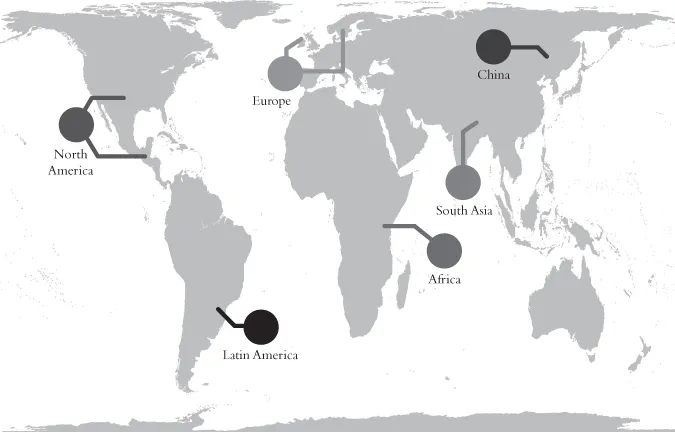
This book draws upon a five-year period of transdisciplinary research that has involved over a hundred researchers across five continents in the ‘Pathways’ transformative knowledge network (TKN). The background and configuration of the TKN and the approaches to organising its work over the five years in question are detailed in Chapter 2. Emerging out of a set of collaborations involving the following organisations and the STEPS Centre (a collaboration between SPRU – the Science Policy Research Unit and the Institute of Development Studies at the University of Sussex), the network was established to undertake cutting edge, independent, critical, engaged research, to offer a common facility for communication, impact and engagement with action and policy and to create a joint platform for learning and exchange between members, including faculty, students. Through the generous support of the ‘Transformations to Sustainability’ programme, the network was able to experiment with these and other activities in a network that spanned various regions across the globe (see Figure 1.1).
FIGURE 1.1 The organisations that are members of the ‘Pathways’ Transformative Knowledge Network and their geographical distribution.
The nodes in the network above are represented by the following hubs and organisations:
  • Latin America hub
    • Centre for Research on Transformation (CENIT), Buenos Aires, Argentina
  • Europe hub
    • STEPS Centre, University of Sussex, UK
    • Stockholm Resilience Centre, Sweden
  • Africa hub
    • African Centre for Technology Studies, Nairobi, Kenya
    • African Technology Policy Studies Network, Nairobi, Kenya
    • Stockholm Environment Institute Africa Centre, Nairobi, Kenya
  • China hub
    • Beijing Normal University School of Social Development and Public Policy, China
  • South Asia hub
    • Transdisciplinary Research Cluster on Sustainability Studies, Jawaharlal Nehru University, New Delhi, India
  • North America hub
    • Arizona State University, USA
    • National Autonomous University of Mexico, Mexico
The STEPS Centre’s ‘pathways’ approach (Leach et al. 2010), discussed further in Chapter 3, provided some of the conceptual grounding for the work by highlighting the importance of (indeed the necessity for) multiple ‘pathways’ of social-technological-environmental change, combining to serve the interlinked challenges of environmental sustainability, poverty alleviation and social justice. This plurality was also reflected in the TKN’s activities, and the diversity of contexts in which we worked.
The early phases of the ‘Pathways’ TKN adopted a distributed and bottom-up approach to identifying the sustainability challenges that would be the focus of each hub. These foci were organised around three broad themes that cut across many of the Sustainable Development Goals detailed in Table 1.1. In the individual hubs, the research involved transdisciplinary networks selected by teams from each of the six hub organisations listed in Figure 1.1 and below:
TABLE 1.1 The Sustainable Development Goals (United Nations 2015)
Goal 1 End poverty in all its forms everywhere
Goal 2 End hunger, achieve food security and improved nutrition and promote sustainable agriculture
Goal 3 Ensure healthy lives and promote well-being for all at all ages
Goal 4 Ensure inclusive and equitable quality education and promote lifelong learning opportunities for all
Goal 5 Achieve gender equality and empower all women and girls
Goal 6 Ensure availability and sustainable management of water and sanitation for all
Goal 7 Ensure access to affordable, reliable, sustainable and modern energy for all
Goal 8 Promote sustained, inclusive and sustainable economic growth, full and productive employment and decent work for all
Goal 9 Build resilient infrastructure, promote inclusive and sustainable industrialisation and foster innovation
Goal 10 Reduce inequality within and among countries
Goal 11 Make cities and human settlements inclusive, safe, resilient and sustainable
Goal 12 Ensure sustainable consumption and production patterns
Goal 13 Take urgent action to combat climate change and its impacts*
Goal 14 Conserve and sustainably use the oceans, seas and marine resources for sustainable development
Goal 15 Protect, restore and promote sustainable use of terrestrial ecosystems, sustainably manage forests, combat desertification, and halt and reverse land degradation and halt biodiversity loss
Goal 16 Promote peaceful and inclusive societies for sustainable development, provide access to justice for all and build effective, accountable and inclusive institutions at all levels
Goal 17 Strengthen the means of implementation and revitalise the Global Partnership for Sustainable Development
* Acknowledging that the United Nations Framework Convention on Climate Change is the primary international, intergovernmental forum for negotiating the global response to climate change.
  • Theme 1 – Sustainable agricultural and food systems for healthy livelihoods (SDGs 1, 2, 3, 9, 11, 12, 15)
    • Transformations to sustainable food systems in Brighton and Hove/ Europe hub – STEPS Centre, University of Sussex, UK with inputs from Stockholm Resilience Centre, Sweden
    • The future of seeds (and agriculture) in Argentina/South America hub – Centre for Research on Transformation (CENIT), Buenos Aires, Argentina
  • Theme 2...

Table of contents

  1. Cover
  2. Fm-Chapter
  3. Half Title
  4. Series Page
  5. Title Page
  6. Copyright Page
  7. Table of Contents
  8. Acknowledgements
  9. Abbreviations and acronyms
  10. List of contributors
  11. List of figures
  12. List of tables
  13. Preface
  14. SECTION 1 Introduction
  15. SECTION 2 Emerging themes across the transformative knowledge network
  16. SECTION 3 Insights from different international contexts
  17. Section 4 Conclusion: transformative pathways to sustainability
  18. Index