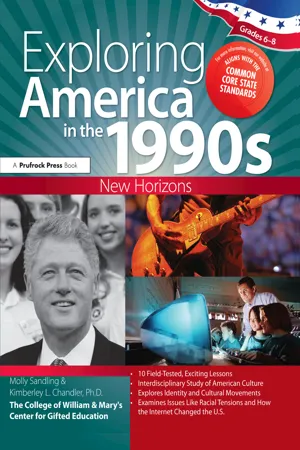
Exploring America in the 1990s: New Horizons is an interdisciplinary humanities unit that looks at literature, art, and music of the 1990s to provide an understanding of how those living through the decade experienced and felt about the world around them. Through the lens of "identity," it explores life in America and the myriad groups that coexisted in harmony and, often, with friction. Cultural movements like grunge and Generation X will be examined alongside larger issues such as rising racial tensions following the O.J. Simpson trial and Rodney King riots, the conflict between progress and morality as scientific advances in cloning and the Internet changed the U.S., and the growing debate over previously marginalized identities and gay rights following "Don't Ask, Don't Tell" and DOMA. The unit uses field-tested instructional strategies for language arts and social studies from The College of William and Mary, as well as new strategies, and it includes graphic organizers and other tools for analyzing primary sources.
Grades 6-8
eBook - ePub
Exploring America in the 1990s
New Horizons (Grades 6-8)
- 154 pages
- English
- ePUB (mobile friendly)
- Available on iOS & Android
eBook - ePub
About this book
Information
LESSON 1
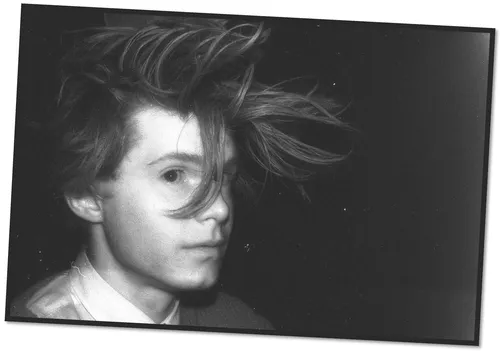
Grunge and Generation X
DOI: 10.4324/9781003235101-3
Alignment of Unit Goals
- » Goal 1: To understand the concept of identity in 1990s America.
- » Goal 2: To develop skills in historical analysis and song and artwork interpretation.
- » Goal 4: To develop an understanding of historical events occurring in the United States during the 1990s.
Unit Objectives
- » To describe how the American identity changed during the 1990s.
- » To describe how changes in American identity in the 1990s were revealed in the music, art, and literature of the decade.
- » To define the context in which a song or piece of art was produced and the implications of context for understanding the artifact.
- » To describe a writer’s or artist’s intent in producing a given song or piece of art based on understanding of text and context.
- » To describe major historical events during the 1990s that affected the American identity.
- » To describe music, art, and literature of the 1990s that reflected the American identity.
Resources for Unit Implementation
- » Handout 1.1: 1989
- » Handout 1.2: Identity Chart
- » Handout 1.3: Music Analysis Model
- » Handout 1.4: “Thirteeners” Questions
- » Handout 1.5: Identity Generalizations
- » Handout 1.6: Unit Project: Webpages
- » Read: President George H. W. Bush’s (1989) inaugural address (available at http://www. bartleby.com/124/pres63.html), paragraphs 6–16 and 26–27.
- » Listen: “We Didn’t Start the Fire” by Billy Joel (1989), “Another Day in Paradise” by Phil Collins (1989), and “Blame It on the Rain” (Warren, 1989) by Milli Vanilli. All songs are available on YouTube.
- » View: Julia Wachtel’s (1990) portfolio, precariously close to 5 billion points of confusion, available at http://www.moma.org/collection/artist.php?artist_id=37643.
- » Read: Information on bank deregulation and the savings and loan crisis, available at http://www.socialstudieshelp.com/Eco_Deregulation.htm.
- » Listen: “Smells Like Teen Spirit” (Cobain, Grohl, & Novoselic, 1991) and “Lithium” (Cobain, 1992) by Nirvana; “Even Flow” (Vedder & Gossard, 1992) by Pearl Jam; and “Outshined” (Cornell, 1992) by Soundgarden. All songs are available on YouTube.
- » Read: “Thirteeners” from The Atlantic Monthly by Neil Howe and William Strauss (1992), available at http://www.theatlantic.com/past/docs/issues/92dec/9212genx2.htm.
Key Terms
- » Service sector: the part of the economy that produces intangible goods, such as recreation services, health care, and professional and technical services
- » Terrorism: the use of violence in the pursuit of political goals
Learning Experiences
- Explain to students that changing international relations in the 1990s with the collapse of the Soviet Union and the rise of terrorism directed at Americans, along with changing technology, created new challenges for the United States and led to a new definitio of us as a society. In this unit, students will look at the changes confronting the United States and how those changes led to tensions and the redefinition of American identity in the 1990s. Review with students the fall of the Berlin Wall in 1989 and explain that in that same year in his inaugural address, President George H. W. Bush (1989) challenged the citizens of the U.S. to be a “thousand points of light.” Have students read Bush’s inaugural address and answer the questions about it on Handout 1.1 (1989) either individually or with a partner. Ask: Why was this a moment rich with promise? Why did Bush say, “We are not the sum of our possessions”? What point was he trying to make? What problems did he see? How were these problems similar of/different from the problems Americans had faced in the past? What were the old solutions to the problems? What was Bush’s new solution? What were the “thousand points of light”? What was he asking of Americans? What was the new chapter? What was the mood of this speech? What was the mood of Americans in 1989? Why?
- Tell students that to measure the mood of Americans in 1989, they are going to look at three of the most popular songs and artwork from 1989–1990: “We Didn’t Start the Fire” by Billy Joel (1989); “Another Day in Paradise” by Phil Collins (1989); and “Blame It on the Rain” (Warren, 1989) by Milli Vanilli. Have students read the lyrics and listen to the songs. Have students then view the portfolio precariously close to 5 billion points of confusion by Julia Wachtel (1990) and answer the following questions on their own. Ask: What is the topic of each song? Why did Billy Joel list all these events? What was he saying about America in the 1980s? What is the mood of each song? How did these songs fit with Bush’s inaugural address? What images did Julia Wachtel include? What do they have in common? What does her title reveal about her views of life in 1989? What can students conclude about America in 1989?
- Tell students that as they study the 1990s, they will focus on American identity and how it changed throughout the end of the 20th century and how those changes were revealed in the music, art, and literature of the time. In a whole group, brainstorm together responses to the following questions and put student responses on the board to examine. Ask: What is identity? What are the various aspects or parts of someone’s identity? Why is a person’s identity important? What role does a person’s identity play in how he or she acts or what he or she does? Discuss student responses as a class.
- Distribute the Handout 1.2 (Identity Chart) to students and explain that some scholars have developed categories of elements that define identity, such as: family, race, ethnicity, individual beliefs, values, nationality, social class, time, and place. Use this to try to define American identity in 1989. As a whole group, work through the pieces of the chart and ask:
- Time and place: What were our national symbols and sources of pride? What shared symbols or traditions represented American identity and were seen as meaningful by most Americans?
- History and myths: What was the shared background or heritage of the U.S.? What recent events or experiences shaped American views?
- Culture and traditions: What traits were shared across America? What were American values in 1989?
- Race and ethnicity: What was the status of the races in 1989? What was the role of ethnicity in 1989?
- Civic identity: What was the role of the citizen in America? What were our rights and duties as citizens?
- International role: What beliefs did America have about itself and others in the world?
- Economy: What did the U.S. produce? How did the U.S. generate revenue? What types of jobs did most people have? What was the status of the U.S. economy?
- Explain to students that after President Bush took office in 1989, the Savings and Loans Crisis led to an economic downturn in the U.S. Using your textbook or the information at Social Studies Help (http://www.socialstudieshelp.com/Eco_Deregulation.htm), summarize the causes and effects of the Savings and Loans Crisis. Explain to students that the collapse of the savings and loans banks meant people lost their savings in those banks, but the government repaid depositors the money that had been lost. Repaying depositors cost taxpayers $60 billion. On Friday, October 13, the stock market fell dramatically, which marked the start of a recession during which unemployment rose and real estate prices dropped. At that same time came the rise of a new music genre called grunge. Have students listen to “Smells Like Teen Spirit” (Cobain, Grohl, & Novoselic, 1991) and “Lithium” (Cobain, 1992) by Nirvana; “Even Flow” (Vedder & Gossard, 1992) by Pearl Jam; and “Outshined” (Cornell, 1992) by Soundgarden. Give students Handout 1.3 (Music Analysis Model) to complete as they listen. Ask: What was the mood of these songs? How did they fit with Bush’s inaugural address? Why? What does this tell us about America in the early 1990s? Who would most relate to these songs? How is this music similar to the three songs you started with at the beginning of the unit? How is grunge different from those songs?
- Explain to students that the group of people who reached adulthood in the 1990s was given the name “Generation X.” Have students read “Thirteeners” in The Atlantic Monthly by Neil Howe and William Strauss (1992). Have students answer the questions on Handout 1.4 (“Thirteeners” Questions) individually or in a small group. Ask: How do students feel the current generation was different from previous generations? What characteristics defined Generation X or the “thirteeners”? How did thirteeners view the future? How has history shaped “thirteeners”? What types of events had they lived through? What had thirteeners learned from their parents and upbringing? How had family culture and childhood changed for thirteeners from previous generations? How had the U.S. economy shaped the thirteeners? What were the emotional, economic, and social results of these events for the thirteeners? What obstacles did the thirteeners feel they face and how did that affect them and their views of the future and of America? Why was grunge music appealing to the thirteeners?
- Explain that in order to analyze how the events and experiences of the 1990s altered American identity, students will use a set of generalizations. Distribute Handout 1.5 (Identity Generalizations) to students and explain that they will work through it together using Handout 1.1.
- The first generalization is “Identity changes with new ideas, experiences, conditions, or in response to other expressions of identity.” Ask: What new ideas, experiences, or conditions had Generation X faced that changed their views? Use answers from the reading on “Thirteeners.” Have students hypothesize about how these views and attitudes might have a...
Table of contents
- Cover
- Half Title
- Title Page
- Copyright Page
- Contents
- Acknowledgement
- Unit Overview
- Implementation Guide
- Lesson 1: Grunge and Generation X
- Lesson 2: The Persian Gulf War
- Lesson 3: Rodney King and O. J. Simpson
- Lesson 4: Speeding Along the Information Superhighway : Changing Technology and Identities of the 1990s
- Lesson 5: Art in the Digital Age: Video and Internet Art
- Lesson 6: The Changing Face of Music
- Lesson 7: Coming Out of the Closet: Gay Rights in the 1990s
- Lesson 8: Terrorism Comes Home: Attacks on American Soil
- Lesson 9: Changing Ethnic Composition of the U.S.A
- Lesson 10: 1999
- References
- Appendix: Unit Glossary
- About the Authors
- Common Core State Standards Alignment
Trusted by 375,005 students
Access to over 1.5 million titles for a fair monthly price.
Study more efficiently using our study tools.
Frequently asked questions
Yes, you can cancel anytime from the Subscription tab in your account settings on the Perlego website. Your subscription will stay active until the end of your current billing period. Learn how to cancel your subscription
No, books cannot be downloaded as external files, such as PDFs, for use outside of Perlego. However, you can download books within the Perlego app for offline reading on mobile or tablet. Learn how to download books offline
Perlego offers two plans: Essential and Complete
- Essential is ideal for learners and professionals who enjoy exploring a wide range of subjects. Access the Essential Library with 800,000+ trusted titles and best-sellers across business, personal growth, and the humanities. Includes unlimited reading time and Standard Read Aloud voice.
- Complete: Perfect for advanced learners and researchers needing full, unrestricted access. Unlock 1.5M+ books across hundreds of subjects, including academic and specialized titles. The Complete Plan also includes advanced features like Premium Read Aloud and Research Assistant.
We are an online textbook subscription service, where you can get access to an entire online library for less than the price of a single book per month. With over 1.5 million books across 990+ topics, we’ve got you covered! Learn about our mission
Look out for the read-aloud symbol on your next book to see if you can listen to it. The read-aloud tool reads text aloud for you, highlighting the text as it is being read. You can pause it, speed it up and slow it down. Learn more about Read Aloud
Yes! You can use the Perlego app on both iOS and Android devices to read anytime, anywhere — even offline. Perfect for commutes or when you’re on the go.
Please note we cannot support devices running on iOS 13 and Android 7 or earlier. Learn more about using the app
Please note we cannot support devices running on iOS 13 and Android 7 or earlier. Learn more about using the app
Yes, you can access Exploring America in the 1990s by Molly Sandling,Kimberley Chandler in PDF and/or ePUB format, as well as other popular books in Éducation & Éducation générale. We have over 1.5 million books available in our catalogue for you to explore.