Differentiation That Really Works: Math (6-12) provides time-saving tips and strategies from real teachers who teach math in grades 6-12. These teachers not only developed the materials and used them in their own classes, but they also provided useful feedback and comments about the activities. The strategies included in the book are tiered lessons, cubing, graphic organizers, exit cards, learning contracts, and choice boards. Every strategy includes directions and offers opportunities for differentiation.
Grades 6-12
- 186 pages
- English
- ePUB (mobile friendly)
- Available on iOS & Android
eBook - ePub
About this book
Information
CHAPTER 1
INTRODUCTION
DOI: 10.4324/9781003234654-1
Why We Wrote This Book
Many years ago, we were classroom teachers ourselves, and we spent time working with students, trying to understand their needs. We read some of the early work of A. Harry Passow and Sandy Kaplan coming out of the National/State Leadership Training Institute of the 1970s, and thus began our journey toward learning how to differentiate instruction to meet the needs of all of the learners in our classrooms. We both found early on in our teaching careers that giving all students the same assignment resulted in some students doing well while others were bored or frustrated. Thus, we learned how to differentiate as a means of surviving and allowing students to thrive. We learned that "more" and "faster" were not better for our gifted students, but that we needed qualitatively different work that centered on broad-based themes, issues, and problems. We learned that, in order to achieve, all of our students required choice and challenge. Now that we have left the precollege classroom and teach at the university level, we still have to differentiate to meet the needs of our undergraduate and graduate students.
Currently, we work together at the Center for Gifted Studies and Talent Development on a number of projects related to differentiated instruction and meeting the needs of learners in the classroom. The center is located in Burris Laboratory School on the campus of Ball State University. The proximity of the center to the Laboratory School provides us the opportunity to work with teachers and students on a regular basis so that we do not lose the important connection to what is actually happening in classrooms today. Working in the Laboratory School and in other schools throughout the United States, we have been able to use our practitioners' and researchers' lens to identify strategies that work well in the classroom.
The strategies that we have chosen to include in this book had to meet several criteria: (1) be easy to implement, (2) be easy to modify, (3) encourage student engagement, (4) have inherent opportunities for differentiation, and (4) be appropriate for multiple grade levels. The strategies we've selected are not an exhaustive list of differentiation strategies, but they are the ones that we see most often being used by real teachers who differentiate well. Although there is little empirical evidence to support the use of these strategies, the practice-based evidence is widespread (Coil, 2007; Gregory & Chapman, 2002; Kingore, 2004; Tomlinson, 2003; Winebrenner, 1992). We think these strategies are vital for teachers to have in their bag of tricks if they want to provide choice and challenge for all learners in their classrooms. However, quality differentiation requires more than just a simple bag of tricks.
Working with teachers for more than 14 years nationally and internationally, we found some who were differentiating to a high degree and some who were just beginning to differentiate. We found some who did it well and some who struggled. Comparing and contrasting those teachers who differentiated well from their colleagues who struggled allowed us to zero in on classroom components that seemed to make the difference. What we found is that many teachers were using strategies to differentiate instruction but lacked the management to facilitate multiple groups working on different activities. Others had interesting lessons and activities but when some students finished early, chaos was present. Some teachers differentiated a lesson by providing several paths to reach the same goal, but all students were required to complete the same assessment. Those teachers who had the most successful classrooms not only used differentiated learning strategies but also made use of anchoring activities, classroom management, and differentiated assessment. Realizing that these four components are necessary led to the development of our model, Creating an Integrated Response for Challenging Learners Equitably: A Model by Adams and Pierce (CIRCLE MAP; Adams & Pierce, 2006). We have realized that when teachers have all four components clearly articulated and they implement them, the stage is set for successful differentiation.
We learned something else with our teachers: No matter the level of experience or the effectiveness of differentiation, everyone's issue was time. We have had the privilege to come in contact with teachers who differentiate in their classrooms on a daily basis. These classrooms are "pockets of excellence," where teachers embrace the differentiation mindset and look at everything they do through the differentiation lens. We felt other teachers could gain some time by using lessons that practicing professionals have already created and tested in their own classrooms. The lessons in this book focus on middle and high school mathematics and can be used as written or can be modified to meet the needs of your own mathematics classroom. We have provided templates that can be used to develop your own materials using the strategies included here.
In this volume we have also included an appendix that shows how one teacher created differentiated lessons using only materials from her textbook. Teachers have the textbook on hand and readily accessible; thus, we wanted to provide some examples of textbook-based lessons, rather than exclusively lessons designed using supplemental materials. We hope that you find this additional resource helpful on your differentiation journey.
How Is This Book Different From Every Other Book on Differentiated Strategies?
This book is different because real teachers designed the lessons. Practicing professionals (everyday classroom teachers in the trenches) tested them in their own heterogeneous classrooms. These professionals differentiate on a regular basis. We have included comments for each lesson from the teacher who developed it, describing how to use the strategy and how his or her students responded to the activity. In addition, on many lessons, we have included comments from other teachers who reacted to it.
How to Use This Book
The following steps should be kept in mind as you make your way through the book:
- Choose the strategy you want to implement.
- Look at the sample lessons.
- Don't be afraid to modify a lesson to fit your grade level and the needs of your own students.
- Use the template to design your own lesson.
- Use it in your classroom and enjoy!
CIRCLE MAP Model
What Is Differentiation?
Although its early focus denoted modifying curricula to meet the needs of the gifted and talented (Passow, 1982; Ward, 1980), differentiation has since taken center stage as a means of meeting the needs of academically diverse students in the heterogeneous classroom through modifying the curriculum and learning experiences of these students (Tomlinson, 1999, 2001, 2003). Differentiation is not a collection of strategies; it is not simply offering students choices; it is not group work. Although these options may be found in a differentiated classroom, differentiation involves finding multiple ways to structure learning so that each student has an opportunity to work at a moderately challenging level. It is an organized, yet flexible, way of proactively adjusting teaching and learning to meet students where they are, while helping all students achieve maximum growth as learners (Tomlinson, 1999). Put succinctly, differentiation is a mindset, a lens to use in examining every aspect of the classroom. Instruction may be differentiated in content, process, product, learning environment, and affect according to the students' readiness, interest, or learning profiles. For example, all of the students may be studying force and motion (content), but the laboratory experiments in which they participate may be at varying levels of complexity to accommodate their academic readiness for a particular task (process).
Successful differentiation will occur in the classroom when a number of essential elements also are addressed. These essential elements include specific classroom management techniques that address the special needs of a differentiated classroom through flexible use of time, space, and student groups; planned use of anchoring activities; a variety of differentiated instructional strategies; and differentiated assessment (Adams & Pierce, 2006).
The Model
Having worked with preservice and in-service teachers over the last decade to help implement differentiated instructional strategies in their classrooms, we have noticed several commonalities among teachers who are successful. As a result of this research, we developed the CIRCLE MAP model. The CIRCLE MAP, shown in Figure 1, is appropriate for any grade level and content area. It weaves together four elements—classroom management techniques, anchoring activities, differentiated instructional strategies, and differentiated assessment—that we found as the commonalities among teachers who differentiated successfully. Having observed teachers across the country and internationally, we found these elements consistently in classrooms that addressed the needs of all children. For a complete discussion of the model, see Adams and Pierce (2006).
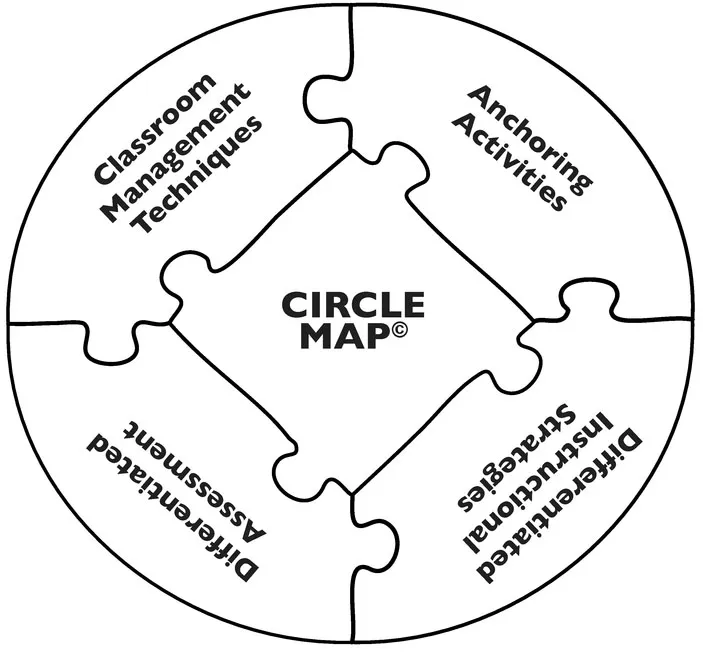
Figure 1. Creating an Integrated Response for Challenging Learners Equitably: A Model by Adams and Pierce ©.
Our purpose in writing this book is to introduce you to a variety of strategies that may be used to assist you in differentiating curriculum and instruction in your own classroom. We make the assumption that you have a good working knowledge of the differentiation mindset. If you don't, we would encourage you to read Carol Tomlinson's (1999, 2001, 2003) work for a complete discussion of the topic.
CHAPTER 2
EXIT CARDS
DOI: 10.4324/9781003234654-2
Overview
An exit card is a tool used by teachers to gather data about student learning. Generally, exit cards are used to gather formative data that a teacher can then use to plan the next step. The exit card is provided to students at the end of a lesson and the teacher collects the cards as students either exit the classroom or exit one activity before going on to the next in the same classroom. Exit cards also may be known by other names, such as ticket to leave or door pass. Exit cards generally only have a few questions for students to answer. Sometimes the card may ask students to respond to an overall idea that was discussed in class; at other times students may have two or three math problems to work on that are similar to problems demonstrated in class.
How and When to Use Exit Cards
Exit cards are used at the end of a class, an activity, or a lesson. The teacher collects the completed exit cards and sorts the cards into piles based on the students' responses. There may be a group of students who clearly understand the ideas presented in the lesson and another group of students who clearly have gaps in their knowledge. There may be other students who fall between the two groups. The information from the exit cards allows the teacher to plan the next steps of instruction to address the different learning needs of the students.
Directions for Making Exit Cards
Exit cards are simple to design. For example, an exit card can be a piece of paper that the student uses to write down answers to a set of questions dictated by the teacher. Students may use their own paper or the teacher may hand out paper from the classroom recycle box. Index cards and Post-It® Notes also are simple and easy to use as exit cards, although somewhat more expensive. Some teachers may wish to customize their exit cards for a specific lesson or activity.
Ho...
Table of contents
- Cover
- Half Title
- Title Page
- Copyright Page
- Dedication
- Contents
- Acknowledgements
- CHAPTER 1 Introduction
- CHAPTER 2 Exit Cards
- CHAPTER 3 Choice Boards
- CHAPTER 4 Cubing
- CHAPTER 5 Graphic Organizers
- CHAPTER 6 Learning Contracts
- CHAPTER 7 Tiered Lessons
- References
- APPENDIX Transforming Textbook Materials Into Differentiated Lessons
- About the Authors
Trusted by 375,005 students
Access to over 1.5 million titles for a fair monthly price.
Study more efficiently using our study tools.
Frequently asked questions
Yes, you can cancel anytime from the Subscription tab in your account settings on the Perlego website. Your subscription will stay active until the end of your current billing period. Learn how to cancel your subscription
No, books cannot be downloaded as external files, such as PDFs, for use outside of Perlego. However, you can download books within the Perlego app for offline reading on mobile or tablet. Learn how to download books offline
Perlego offers two plans: Essential and Complete
- Essential is ideal for learners and professionals who enjoy exploring a wide range of subjects. Access the Essential Library with 800,000+ trusted titles and best-sellers across business, personal growth, and the humanities. Includes unlimited reading time and Standard Read Aloud voice.
- Complete: Perfect for advanced learners and researchers needing full, unrestricted access. Unlock 1.5M+ books across hundreds of subjects, including academic and specialized titles. The Complete Plan also includes advanced features like Premium Read Aloud and Research Assistant.
We are an online textbook subscription service, where you can get access to an entire online library for less than the price of a single book per month. With over 1.5 million books across 990+ topics, we’ve got you covered! Learn about our mission
Look out for the read-aloud symbol on your next book to see if you can listen to it. The read-aloud tool reads text aloud for you, highlighting the text as it is being read. You can pause it, speed it up and slow it down. Learn more about Read Aloud
Yes! You can use the Perlego app on both iOS and Android devices to read anytime, anywhere — even offline. Perfect for commutes or when you’re on the go.
Please note we cannot support devices running on iOS 13 and Android 7 or earlier. Learn more about using the app
Please note we cannot support devices running on iOS 13 and Android 7 or earlier. Learn more about using the app
Yes, you can access Differentiation That Really Works by Cheryll M. Adams,Rebecca L. Pierce in PDF and/or ePUB format, as well as other popular books in Education & Education General. We have over 1.5 million books available in our catalogue for you to explore.