eBook - ePub
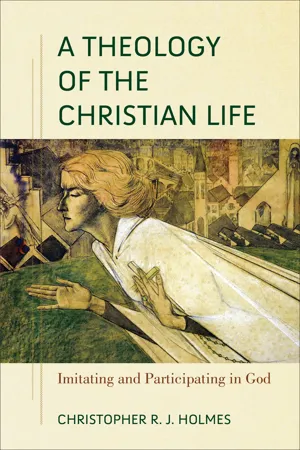
A Theology of the Christian Life
Imitating and Participating in God
- 192 pages
- English
- ePUB (mobile friendly)
- Available on iOS & Android
eBook - ePub
About this book
This book gets at the heart of the Christian life by considering some of the great truths of God's existence. Christopher Holmes, an expert in contemporary theology, engages with the church fathers along with Augustine and Aquinas to offer a rich, accessible account of the triune God and the divine perfections. Holmes shows how we share in the life of God through imitation and participation and how the doctrines of the triune God and the divine attributes shape our understanding of the Christian life. Throughout, Holmes demonstrates the importance of theology for Christian faith and practice.
Information
Topic
Theology & ReligionSubtopic
Christian TheologyPart One
1
The Existence of God and the Christian Life
Fools say in their hearts, “There is no God.”
—Psalm 53:1
God exists. This is where we begin our spiritual journey. God’s existence is our first step toward imitating and participating in God. Let us think about this. Our pilgrimage begins with God, the reality of his existence. And it will finish with God, seeing him face to face. God is our beginning, middle, and end. God exists, and on this basis God speaks, communicates, and reveals himself to us in order that we might love him and, in turn, enjoy him.
Existence, in the case of God, is a name. We mean by this that existence is not a quality of God. Rather, existence is God himself. Existence is a name for being, not an inert conceptual property of being.1 God shows himself to be one who, following Gregory of Nyssa, “possesses existence in [his] own nature.”2 Existence is a divine name, meaning that God is existence itself; existence is supremely true of God.
This work considers existence (a name) as a first priority, even in advance of love and power, because this is where Scripture begins. Scripture teaches us that God is the highest cause of all things.3 Our treatment of God and the shape of life in relation to God rest on an understanding of God as the cause of our existence. Because God exists in and of himself, he is able to grant existence to what is not himself. God creates. The narrative pattern of Scripture begins there. God causes things other than himself to exist. Because of God, there is something rather than nothing. And God needs no other thing in order to be, for God just is. Summarizing Martin Heidegger, David Bentley Hart puts it this way: “Nothing that is (including becoming) is able to account for itself.”4
To speak of God in this way is not a “natural” way of thinking. We are not contemplating God in a way that is independent of divine revelation in scriptural form. We are beholden to scriptural truth. Scripture summons us to confess God as the highest cause. Description of God as “the highest cause” (altissima causa) and as “deepest origin and highest end” is indicative of truths that exceed human reason without being contrary to it. Indeed, this is true of all matters pertaining to sacred doctrine, and not just the matter of recognizing God as our origin and end. Thinking about God in causal terms under the tutelage of the Scriptures means that we affirm God’s existence and that we recognize him as the great “I AM” of Exodus 3:14, the one who causes all things.5
We know God exists because of what God has made, following Romans 1:20.6 Creation’s origin and end of things—the technical Thomistic term is “effects,” whether of nature or of grace—is God, and the truth of our existence lies in God. Created things announce that they are made. They bear the likeness of their Creator. Even more, they “participate in manifold ways in that which is one in God.”7 Because created things participate in their cause, they are the means through which we understand God.
Recall that God is unseen (John 1:18). We cannot see God’s essence “as it is in itself one.”8 Such uninterrupted seeing is for the life of the world to come. But we can, through created things, take “the first step towards understanding it [God’s essence].”9 The first attribute we derive from visible created things is that of existence. We proceed “from the features of the existence of the world [to] the principles of the world.”10 The features of the world manifest their ground—existence itself—and they do so naturally.
God knows himself to be existence itself, and God “discloses [this] for others to share.”11 Existence is convertible with God. God exists in relation to himself and is not caused by something outside himself. When we say God, we say the name existence. We indicate thereby that God is self-existent, needing nothing outside himself in order to be. Even more, God causes things whose existence lies in himself.
There is a crucial distinction at work here, and it is heuristic. We are talking about the distinction between existence (the that of God) and essence (the what of God). Visible things give us understanding of God, that God is. But they do not enable us “to know him comprehensively for what he is.”12 In scriptural terms, “no one has ever seen God” (John 1:18), and so we, on this side of glory, do not know him in a direct sense. This eschatological reserve is at work from the start. We know God to be identical with his goodness, life, and power, for example, but we do not know how. That is for heaven. In this life, we speak and sing of God’s existence, recognizing the inadequacy of what we voice. That said, a discourse that takes the form of “worship, prayer, and rejoicing” is less inadequate than any other—hence the form that this book takes.13
I AM
The first Scripture Thomas cites in his treatment of the self-evident character of God’s existence is, not surprisingly, Psalm 53:1.14 It is a foolish thing to say that there is no God because it goes against reality itself. All things exist in relation to God. The key to avoiding foolishness and thus to becoming wise is to recognize that God exists and exists otherwise than we do. For example, God is not capable of either doing or saying anything that is false, whereas we are. Though God’s effects demonstrate God’s existence, we can and often do ignore their testimony, and that is because we are, frequently, foolish. Our foolishness, however, does not obviate, entirely, the witness of created things to God. That is why the fool speaks only to himself—in his heart. The fool denies his creatureliness. He ignores the Creator-creature distinction. The fool exists, therefore, in gross violation of the first commandment.
The first step toward genuine Christian existence is to acknowledge God’s existence. Scripture starts with the twofold assumption that God exists and reveals himself. Neither God’s existence nor God’s speech is without effect. This is in contradiction to the fool’s speech. It has no power, whereas God’s word comes about—“Let there be . . .” The fool’s judgments regarding God are false. He treats fallible human reason as if it were infallible. He speaks in relation to himself and not God. He is like the one who builds on sand, thinking sand is as stable as rock (see Matt. 7:24–27; Luke 6:47–49). The fool ignores the Book of Nature and thus is indifferent and even hostile toward the Scriptures.
The Scriptures, especially the Old Testament Scriptures, delight in recording how God speaks through created things. A donkey—Balaam’s—speaks God’s message; the heavens declare God’s majesty; prophets like Jeremiah declare searing words from the Lord to stubborn kings. Created things, incarnate and discarnate, animals, humans, to say nothing of angels, speak words that are not their own but from the Lord God. When they do so, their words have effect; they do not come back empty, for they bear the Lord’s voice (see Isa. 55:11).
Accordingly, it is fitting to begin treatment of the Christian life with God’s existence. This name above all others instructs us in the nature of the relationship between the created and uncreated.15 This relationship, we discover, is a participatory one. For example, God is life. Life belongs to God, and life, whether it be human or the life of living things such as trees, exists only in relation to God. God is life, and the lives of creatures have a certain likeness to God insofar as the life they have is a participation in God. Created things (works of nature) as well as supernatural things (works of grace) participate in their cause. The same is true of creatures’ goodness. Life and goodness are true of creatures. To be a creature is to participate “in that which is one in God.”16
We exist and God exists, but there is always a great dissimilarity between God’s mode of existence and our own.17 God is supereminent. Existence is not something common to both God and us, as if existence were outside and beyond God. Thomas’s treatment of God’s one essence, as we shall see, is satisfying, biblically speaking, because it recognizes how t...
Table of contents
- Cover
- Endorsements
- Title Page
- Copyright Page
- Dedication
- Contents
- Acknowledgments
- Introduction
- Part One
- Part Two
- Conclusion
- Scripture and Ancient Writings Index
- Author Index
- Subject Index
- Back Cover
Trusted by 375,005 students
Access to over 1.5 million titles for a fair monthly price.
Study more efficiently using our study tools.
Frequently asked questions
Yes, you can cancel anytime from the Subscription tab in your account settings on the Perlego website. Your subscription will stay active until the end of your current billing period. Learn how to cancel your subscription
No, books cannot be downloaded as external files, such as PDFs, for use outside of Perlego. However, you can download books within the Perlego app for offline reading on mobile or tablet. Learn how to download books offline
Perlego offers two plans: Essential and Complete
- Essential is ideal for learners and professionals who enjoy exploring a wide range of subjects. Access the Essential Library with 800,000+ trusted titles and best-sellers across business, personal growth, and the humanities. Includes unlimited reading time and Standard Read Aloud voice.
- Complete: Perfect for advanced learners and researchers needing full, unrestricted access. Unlock 1.5M+ books across hundreds of subjects, including academic and specialized titles. The Complete Plan also includes advanced features like Premium Read Aloud and Research Assistant.
We are an online textbook subscription service, where you can get access to an entire online library for less than the price of a single book per month. With over 1.5 million books across 990+ topics, we’ve got you covered! Learn about our mission
Look out for the read-aloud symbol on your next book to see if you can listen to it. The read-aloud tool reads text aloud for you, highlighting the text as it is being read. You can pause it, speed it up and slow it down. Learn more about Read Aloud
Yes! You can use the Perlego app on both iOS and Android devices to read anytime, anywhere — even offline. Perfect for commutes or when you’re on the go.
Please note we cannot support devices running on iOS 13 and Android 7 or earlier. Learn more about using the app
Please note we cannot support devices running on iOS 13 and Android 7 or earlier. Learn more about using the app
Yes, you can access A Theology of the Christian Life by Christopher R. J. Holmes in PDF and/or ePUB format, as well as other popular books in Theology & Religion & Christian Theology. We have over 1.5 million books available in our catalogue for you to explore.