The Very Best Bad Idea
eBook - ePub

The Very Best Bad Idea

Innovation, Creativity, and Making Friends with the Mouse

  1. English
  2. ePUB (mobile friendly)
  3. Available on iOS & Android
eBook - ePub

The Very Best Bad Idea

Innovation, Creativity, and Making Friends with the Mouse

About this book

Do you like to be wrong?
Shouldn’t you?
Why do you think “wrong” is “bad”? In The Very Best Bad Idea, Kirk Westwood steamrolls the long-held premise that right is good and wrong is bad. He paves the way to give anyone who sees situations differently the permission to be proud of their brilliantly unbridled “ bad ideas.” In this book, you'll learn about:

  • The History of Thinking, and how we might be wired incorrectly for the society we live in today.
  • An in depth analysis of popular cliches like “don’t reinvent the wheel” and “build a better mousetrap” and why we might need to “make friends with the mouse”.
  • Why people should start embracing their unique views of the world as they are the true genesis of innovation and creativity.
  • And so much more!

This book speaks to the entrepreneurs, the creatives, the innovators, and the outcasts as they seek out the secret to conquering innovation. It’s an unconventional look at a conventional problem. If you’re ready to release the “Kreative” and embrace your individual perspective, get ready for the The Very Best Bad Idea.

Frequently asked questions

Yes, you can cancel anytime from the Subscription tab in your account settings on the Perlego website. Your subscription will stay active until the end of your current billing period. Learn how to cancel your subscription.
No, books cannot be downloaded as external files, such as PDFs, for use outside of Perlego. However, you can download books within the Perlego app for offline reading on mobile or tablet. Learn more here.
Perlego offers two plans: Essential and Complete
  • Essential is ideal for learners and professionals who enjoy exploring a wide range of subjects. Access the Essential Library with 800,000+ trusted titles and best-sellers across business, personal growth, and the humanities. Includes unlimited reading time and Standard Read Aloud voice.
  • Complete: Perfect for advanced learners and researchers needing full, unrestricted access. Unlock 1.4M+ books across hundreds of subjects, including academic and specialized titles. The Complete Plan also includes advanced features like Premium Read Aloud and Research Assistant.
Both plans are available with monthly, semester, or annual billing cycles.
We are an online textbook subscription service, where you can get access to an entire online library for less than the price of a single book per month. With over 1 million books across 1000+ topics, we’ve got you covered! Learn more here.
Look out for the read-aloud symbol on your next book to see if you can listen to it. The read-aloud tool reads text aloud for you, highlighting the text as it is being read. You can pause it, speed it up and slow it down. Learn more here.
Yes! You can use the Perlego app on both iOS or Android devices to read anytime, anywhere — even offline. Perfect for commutes or when you’re on the go.
Please note we cannot support devices running on iOS 13 and Android 7 or earlier. Learn more about using the app.
Yes, you can access The Very Best Bad Idea by Kirk Westwood in PDF and/or ePUB format, as well as other popular books in Business & Decision Making. We have over one million books available in our catalogue for you to explore.

Information

Year
2020
eBook ISBN
9781641375252
Edition
1

Chapter Thirteen

We Don’t Need No Education


TL;DR—Schools were developed as a way to make good employees. Our education system doesn’t encourage deviation. Charter schools sweep the nation. Summit Public Schools and Trellis approach the problems in education.
While I was giving a presentation on innovation and thought diversity to a group of educators, someone posed the following question to me:
“But don’t we need to teach children the system before we teach them to look outside of it? Don’t they need to know the rules in order to break them?”
The question filled me with delight. It was the most amazing question.
“No,” I replied excitedly. “NO! We don’t need to give them systems to chase out their originality before letting them solve the problem themselves.”
“Let me give you an alternative approach,” I excitedly professed …
Let’s say you are an art teacher, and the curriculum says you are going to teach impressionism. On the first day, you pull up a picture of Van Gogh on the board, most likely his iconic self-portrait, and next to it you display Starry Night and his sunflowers.
The way our education system is currently set up, you’d then explain the medium he used, oils on canvas. You might go into the chemical breakdown of his particular type of oils or even the method of his canvas stretching.
His technique would be analyzed. His use of color dissected. His genius and process utterly (albeit incompletely) explained, with a makeshift structure attempting to teach would-be artists how to replicate the greats in a general paint-by-numbers application.
At the end of the lecture that would last forty minutes to four hours depending on the curriculum, the assignment would be issued: take a set amount of time and produce an image in the impressionist style like that of Vincent Van Gogh.
The students would then, as taught, follow the structure as explained, asking for assistance as they struggled, and would be redirected onto the path of the structure as needed.
At the end, some would have accomplished their assigned goal, while others would have “failed,” had their inadequacies marked, and been given direction on how to correct them.
The structure in place, the rubric established, no room for personal experimentation. No space for failure.
BUT! What if, instead, you didn’t do any of that?
What if you showed them the works of the impressionists, explained generally what the impressionist movement was, and gave them a table full of supplies with the only assignment being: figure it out.
A student would look at Monet’s Water Lilies, not with the words of the teacher telling them how it was done, but with a critical eye and a goal of understanding and cracking the code. Some students would figure it out, others would fail. Not at a system explained to them, but they would succeed or fail at an approach of their own devising—how wonderful for both!
When the student approached the teacher with a canvas resembling a kindergarten finger painting … the educator would hand them a clean canvas and say, “Let’s try that again.”
After two or three attempts, deep analysis, and studying the “problem,” a student of any form would be primed for information in a way that they weren’t before. The neural pathways would be established, and a genuine question would exist, as opposed to an assignment with a predetermined goal.

But it isn’t just ART!

How amazing would the insights of the uninitiated be if instead of starting with the Pythagorean theorem or the established systems of old, we simply posed a quandary that said: how could we approach this?
Both Isaac Newton and Gottfried Wilhelm Leibniz nearly simultaneously developed calculus.99 My favorite part of that fact is that, whereas the core math and results are in fact, the same, the processes, symbols, and general structure weren’t.100
Both Leibniz and Newton developed the same system, but very much in their own way. For what it’s worth, Isaac Newton is largely credited for being the father of calculus, but the form that was widely adopted and is currently taught is actually that of Leibniz (#TeamLeibniz).101
I have never been particularly adept at math, which is a polite way of saying that I have deeply struggled with math the entirety of my life.
However, for the most part, my hang-ups were in not understanding the...
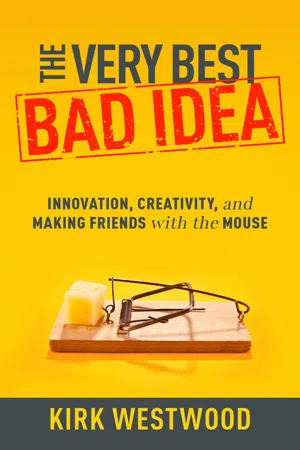
Table of contents

  1. Contents
  2. You’re Doing That Wrong
  3. The History of Thinking
  4. History 001
  5. Change Your Mind
  6. Extra Bacon, hold the Greece
  7. Everything Right is Wrong Again
  8. Credit Misfiled
  9. —Glyphs on Walls—
  10. Cognition, Communication, and Close-ups
  11. Make Friends with the Mouse
  12. I’m not Pedantic, just overly precise
  13. Isn’t “Nepotism”a type of ice cream?
  14. Lateral Thinking of Withered Technology
  15. Don’t reinvent the Wheel
  16. Stop Crying and Start Thinking
  17. We Don’t Need No Education
  18. G.I. Beans and G.I. Gravy, Gee I wish I’d Joined the Navy
  19. Grey Matter,Grey Area,and Grey Poupon
  20. Release the Kreative
  21. Let’s Get Kraken
  22. Cinnamon snaps, Synapse, and Synonyms
  23. You Are Who Your Friends Are
  24. Reality TV is Stranger than Fiction
  25. Defining Gravity: Communication at Play
  26. Stick the Landing
  27. Acknowledgments
  28. Bibliography