A Field Guide to Gifted Students
eBook - ePub

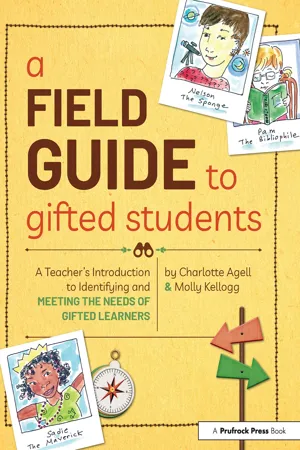
A Field Guide to Gifted Students

A Teacher's Introduction to Identifying and Meeting the Needs of Gifted Learners

  1. 320 pages
  2. English
  3. ePUB (mobile friendly)
  4. Available on iOS & Android
eBook - ePub

A Field Guide to Gifted Students

A Teacher's Introduction to Identifying and Meeting the Needs of Gifted Learners

About this book

A Field Guide to Gifted Students is a practical manual to the unique characteristics of gifted and advanced learners. Presented as a concise 32-page, full-color booklet available in sets of 10 print copies or a single eBook copy, this resource:

  • Can be used in teacher workshops and other group professional learning settings.
  • Assists educators in understanding and meeting the academic and social-emotional needs of gifted students.
  • Includes a companion online facilitator's guide.
  • Features practical tips based on current research and best practices.
  • Is packed with illustrations, checklists, space to write notes, and a glossary of terms.

School can feel like the wrong fit for many gifted learners, but through learning how to notice and support gifted students' diverse traits and needs, educators can build ideal classroom climates for student success. Readers will understand how to identify giftedness and related traits, including twice-exceptionality, introversion and extroversion, perfectionism, sensitivity, and intuitiveness. The online facilitator's guide includes everything workshop leaders need to conduct a brief course for classroom teachers, coordinators, counselors, or even parents.
Frequently asked questions

Yes, you can cancel anytime from the Subscription tab in your account settings on the Perlego website. Your subscription will stay active until the end of your current billing period. Learn how to cancel your subscription.
No, books cannot be downloaded as external files, such as PDFs, for use outside of Perlego. However, you can download books within the Perlego app for offline reading on mobile or tablet. Learn more here.
Perlego offers two plans: Essential and Complete
  • Essential is ideal for learners and professionals who enjoy exploring a wide range of subjects. Access the Essential Library with 800,000+ trusted titles and best-sellers across business, personal growth, and the humanities. Includes unlimited reading time and Standard Read Aloud voice.
  • Complete: Perfect for advanced learners and researchers needing full, unrestricted access. Unlock 1.4M+ books across hundreds of subjects, including academic and specialized titles. The Complete Plan also includes advanced features like Premium Read Aloud and Research Assistant.
Both plans are available with monthly, semester, or annual billing cycles.
We are an online textbook subscription service, where you can get access to an entire online library for less than the price of a single book per month. With over 1 million books across 1000+ topics, we’ve got you covered! Learn more here.
Look out for the read-aloud symbol on your next book to see if you can listen to it. The read-aloud tool reads text aloud for you, highlighting the text as it is being read. You can pause it, speed it up and slow it down. Learn more here.
Yes! You can use the Perlego app on both iOS or Android devices to read anytime, anywhere β€” even offline. Perfect for commutes or when you’re on the go.
Please note we cannot support devices running on iOS 13 and Android 7 or earlier. Learn more about using the app.
Yes, you can access A Field Guide to Gifted Students by Charlotte Agell,Molly Kellogg in PDF and/or ePUB format, as well as other popular books in Education & Education General. We have over one million books available in our catalogue for you to explore.

Information

Publisher
Routledge
Year
2021
eBook ISBN
9781000491074
Edition
1

HAVE YOU MET ...

DOI: 10.4324/9781003232599-2

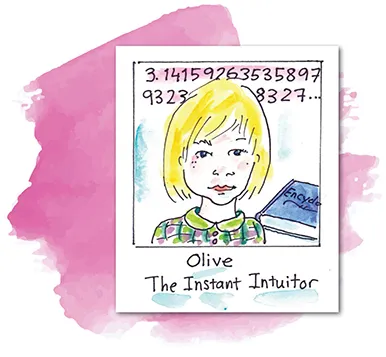
Olive, the Instant Intuitor?

perceptive β€’ expeditious β€’ ready
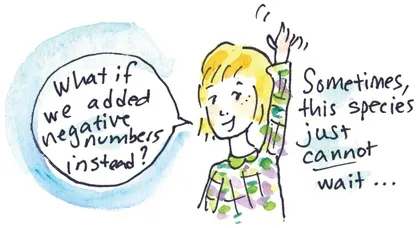
Olive's got a knack for absorbing information. Classroom procedures? She knows them. Stories you read aloud? She can recite them. Facts and figures? She's filed them away. She has a memory like an elephant. She is ready for the second step almost before you've finished showing her step one. If she's absent, it only takes 5 minutes for her to catch up with the class. Reviewing for a test? Practicing a skill for the third or fourth time? Better give Olive something else to do because she's already got it.

Interactions With an Olive

One Olive we met had such an intense appetite for knowledge and a rapid pace for absorbing math that we quickly learned to preassess her on every math unit so she could learn the new material and spend the rest of the unit working on an in-depth project. She needed this even after being accelerated a year in math. The higher level material was appropriate, but it didn't change her swift pace of learning. She was relieved to have the freedom to let her brain work at its own speed.
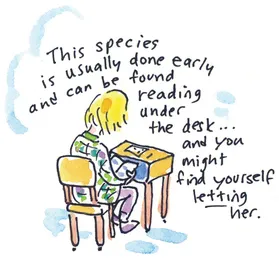
Another Olive we met struggled to pay attention during spelling lessons. The regular spelling program was all review for her, so she often read a book beneath her desk during the lessons. She was an avid reader who devoured books 2-3 grades above her age-mates. Even the challenge words were familiar to her. So, we replaced her weekly spelling list with a study of root words. She was thrilled to learn where words came from, and she quickly developed her own weekly lists of fascinating words to learn. After that, she was always engaged during spelling.

Tips for Working With an Olive

  • Give Olive the freedom to move on to the next phase of learning while other students review ana practice.
  • Structure mini Learning opportunities for Olive so she can connect her interests and/or curiosities to the topic. She could explore websites, read books, check out videos or museums online, and fill out an exit slip to share her learning. Remember, she still needs teacher guidance.
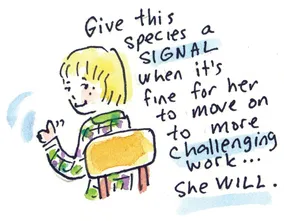
  • Establish appropriate ways for Olive to let you know she knows something so that she can move on.
  • Make sure Olive fills out an exit ticket so you know that Olive understands the topic. Ask her to explain why she finds the topic "easy."
  • Instead of having Olive review material she already knows, ask her to fill out a proposal for an alternate project that will show she can apply her learning. Note that some Olives may not have the spatial skills to complete a project without scaffolding.
  • Provide Olive with an audience to share her skills and learning. This audience may vary depending on if your Olive is of the extroverted or introverted variety.

Field Notes

────────────────────────────────────────────────────
────────────────────────────────────────────────────
────────────────────────────────────────────────────
────────────────────────────────────────────────────
HAVE YOU MET . . .

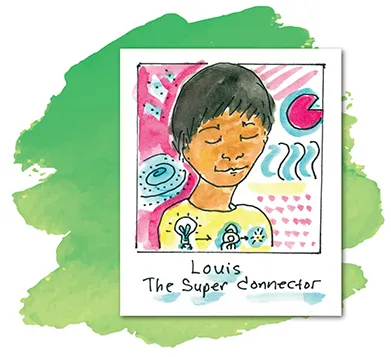
Louis, the Super Connector?

DOI: 10.4324/9781003232599-3
philosopher β€’ arguer β€’ aesthete
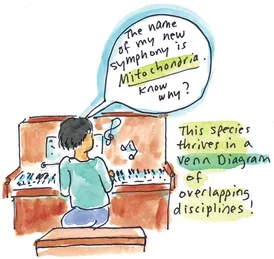
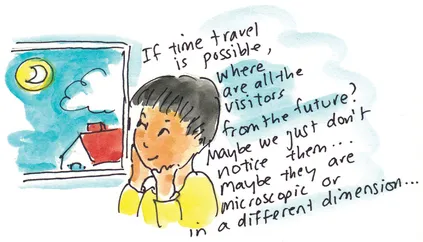
Louis understands complex ideas and objects, Like che workings of a computer or a foreign Language, at first glance. He sees connections between ideas, like the math behind music, and explains abstract concepts with analogies or examples. He can picture fractional parts of things in his head, discuss the concept of black holes comfortably, and tell you everything about time travel. Asking big questions is a social-emotional need for this species. Alternate realities? The meaning of life? Bring it on! Louis loves to gnaw on complex, abstract ideas!

Interactions With a Louis

One Louis we met was a fifth-grade genetics enthusiast. He came in one day, completely enamored with a documentary on the subject. At the end of a long share with the teacher, he proclaimed with a satisfied sigh, "It's so nice to finally talk to somebody who understands what I'm talking about." This same Louis went on to take online courses in genetics, starting in seventh grade. His science teachers quickly realized that they needed to provide more in-depth options for school projects, given Louis's ability to instantly understand concepts, connect them, and ask deeper questions. This child was also a beautiful classical pianist, demonstrating his ability to access the overarching music theory framework even as he let his emotions flow. He didn't just play; he understood the language and patterns of music.
Another super connector we met was a middle school girl. She had an innate drive to ask the big questions. She had not outgrown her childhood wonder. She got swept up in wanting to explore science-based and philosophical questions about the limits of human capability. At her initiative, a lunch science group was born in which she and other like-minded girls pursued these deep, connected, and fundamentally existential questions. This weekly forum and the encouragement of her classroom teacher made it okay for this super connector to ask such questions in school. For this sort of thinker, this was like getting permission to breathe.

Tips for Working With a Louis

  • Provide Louis with avenues to move to higher Levels of thinking quickly because he'll master basic concepts at first glance. Be prepared: He may try to argue his way out of drill-and-practice activities, and application is always more valuable.
  • Give Louis room to wonderβ€”he's full of interesting questions! Provide him with appropriate tools, like a notebook or sticky notes to record thoughts.
  • Keep an open mindβ€”Louis is bound to pose unexpected questions or share big thoughts with you. Provide parameters for sharingβ€”could he pose one farflung query a day ... leave you one sticky note per class... swap a communication log with you?
  • Consult with the foreign language teacher to brainstorm language enrichment options. Free language websites can be a fine resource
  • Invite Louis to research a topic of his interest related to the curriculum and create a presentation for the class.
  • Provide Louis with reading and other research material that connects disparate disciplines, such as science and history. He will appreciate the context because he is hungry for materials that provide this sort of connective tissue.
  • Introduce Louis to complex strategy games (beyond chess) in which multiple elements are in interdependent motion. swap a communication

Field Notes

──────────────────────────────────────────────────────────────────
──────────────────────────────────────────────────────────────────
──────────────────────────────────────────────────────────────────
──────────────────────────────────────────────────────────────────
──────────────────────────────────────────────────────────────────
HAVE YOU MET . . .

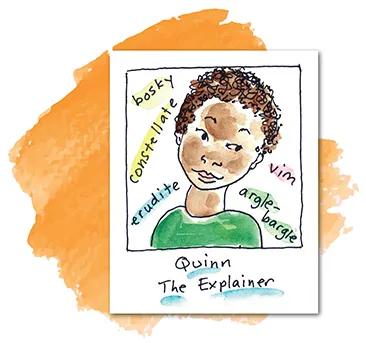
Quinn, the Explainer?

DOI: 10.4324/9781003232599-4
hilarious β€’ living dictionary β€’ literati
Quinn sounds Like an adult, but he's only 8 years old. His daily vocabulary is full of words like discombobulated, ironic, and hypothesis. He could beat you at a game of Scrabb...

Table of contents

  1. Cover
  2. Title Page
  3. Dedication
  4. Copyright Page
  5. Table of Contents
  6. Introduction
  7. HAVE YOU MET . . .?
  8. Other Learners to Consider
  9. Logistical Suggestions
  10. Resources and References