- 256 pages
- English
- ePUB (mobile friendly)
- Available on iOS & Android
eBook - ePub
About this book
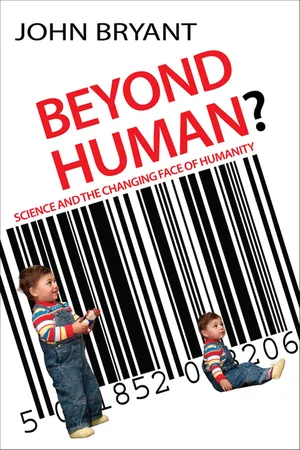
As the news constantly reminds us, recent advances in the biomedical sciences have brought within reach things that were unthinkable only a few years ago: designer babies, genetically enhanced athletes, human clones, stem cell treatment, medical technology, transhumanism. All these issues raise huge questions. Our power to intervene in the natural course of human life is immense: but what should we be doing and what should we avoid? And what about the inequalities of technological power across the globe? Biologist and ethics expert Dr John Bryant begins by placing modern biomedical science in its recent social history context, before moving on to discuss ethics and whether our normal ethical frameworks can cope with the questions thrown up by these huge issues. Throughout the book, Bryant encourages the reader to engage with the questions he addresses.
Trusted by 375,005 students
Access to over 1.5 million titles for a fair monthly price.
Study more efficiently using our study tools.
Information
Topic
Theology & ReligionSubtopic
Religion & Science1
STARTING FROM THE BEGINNING
For the first time since life began, a single animal is utterly dominant: the ape species Homo sapiens. Evolution has equipped us with huge brains, stunning adaptability and brilliantly successful prowess.
Mark Lynas, The God Species, 2011
The past is but the beginning of a beginning, and all that is or has been is but the twilight of the dawn.
H.G. Wells, The Discovery of the Future, 1902
1.1 BEYOND WHAT?
The title of this book suggests that we are in some ways moving to change or transcend the human condition. However, there are fundamental questions to think about first. If we wish to discuss whether we are moving “beyond human”, it is surely necessary to think about what we are going beyond. What does it mean to be human? How do humans function? What are the special features of humans? These questions are complex and invite answers at different levels.
In terms of biology, humans are mammals, warm-blooded animals that nurture their embryos within the body of the female and suckle their young. Thus, many of our genetic functions are held in common with all mammals. Of the animals alive today, the nearest relatives of humans are the great apes, especially the chimpanzees. The evolutionary pathways to chimpanzees and humans diverged about 5 million or so years ago. So, what are the biological features that mark us out as humans? We are bipedal (walk on two legs) but the specific mode of bipedal motion is unique. We have very big brains, three and a half times the size of an average chimpanzee brain, contained in a balloon-shaped cranium. We have high foreheads, but no protruding eyebrow ridges; we have chins and small teeth. Both sexes are relatively hairless; the two sexes diverge from each other in size and musculature. Thus we can define humans anatomically but that is not enough. At the very least we need to add that our large brain size has conferred on us an intelligence far superior to that of any other creature on earth. That intelligence has allowed the development of language, abstract thought, technical and technological skills and thus a general ability to dominate and modify the planet. We also have a strong sense of self-awareness or consciousness of self, although some regard this as just a quantitative difference from the small number of other species which also exhibit some consciousness of self.
However, we have still not defined what it is to be human. We have imagination and aesthetic sense, we have created art and music and we have developed a whole range of activities that have nothing to do with our survival as individuals or as a species. Yes, it is true that hints of these things may be seen in some animals but their development in humans goes far, far beyond anything seen in the animal kingdom. We have a rich emotional life as is evidenced by the wide range of words we have to describe and to define an equally wide range of feelings. Further, we have “emotional intelligence” that enables us to discern the feelings of others. Again, some animals, especially the higher apes (as shown, for example, by the work of Jane Goodall on chimpanzees), do exhibit emotions but we should not exaggerate this to claim that all mammals experience the range and depth of human feelings and emotions.
But there is still more to being human. In general we have a strongly developed moral sense, leading to the concepts of right and wrong. Indeed, many commentators, including the author C.S. Lewis, the ethicist David Cook and the former director of the Human Genome Project, Francis Collins, have suggested that all humans have an inbuilt moral code.1 Whether or not this is so, it is clear that humankind exhibits altruism that extends far beyond the altruistic behaviours seen in many animals. We do not encounter potentially or actually self-sacrificial behaviour, undertaken consciously and deliberately in order to save the life of a total stranger, in other animals. Such behaviour is indicative of empathy, one of the virtues that characterize human behaviour at its best. Charles Darwin put it this way: “We are compelled to relieve the sufferings of another, in order that our own painful feelings may be at the same time relieved.”2 These words were echoed recently by the Dalai Lama: “… ‘the seed of compassion’ is the discomfort we experience when we see someone suffering. We are thus impelled to relieve the suffering of another so that our own painful suffering may be relieved.”
Our behaviour often falls far short of the best; we are also capable of hostility, cruelty and violence towards our fellow-humans. Nevertheless, the very fact that we can acknowledge this is an indication of our moral sense or moral awareness. We know the difference between right and wrong, even if, too often, we choose the wrong. This brings me to the final, and for some, controversial point in this section. For adherents of the Jewish, Christian and Islamic faiths, the features discussed in this paragraph are indicators of being made in the image of God and able to relate in some way to God. This brings in first the concept of a supreme being, God, and secondly the idea that humans have a spiritual dimension. In twenty-first-century Britain, many may regard these concepts as archaic (but see Chapter 3, section 3.9.3). However, a majority of the world’s population are in some sense religious and do acknowledge a spiritual dimension. Thus, the psychologist Carl Jung suggested that we all have a “God-image” within us that is central to our well-being.
I have attempted to define what it is to be human but has it always been this way? Have we changed since the origin of our species, over the history of humankind? How has “being human” panned out over the millennia? We start our search for answers by considering the emergence of our species, Homo sapiens, in Africa, and the subsequent spread of the species over the planet. It may seem strange to start a book concerned with modern technology by going back so far, but the general message from the first 160,000 years or so of our history is an important one. It is that the human species has changed and there is no reason to suppose that our capacity for change has disappeared. Indeed, there are clear indications that it has not and this has obvious implications on whether or not we are moving beyond human.
1.2 BEING HUMAN: THE ORIGINS AND EARLY EVOLUTION OF HUMANKIND3
1.2.1 Back to basics
“Anatomically modern” human beings, i.e. members of the species Homo sapiens, are currently thought to have originated in Africa about 165,000 years ago. In lifestyle, they were hunter-gatherers. Social groups consisted of networks of families, although the latter were not the direct equivalent of modern nuclear families. It is also surmised that the differences in size and musculature between males and females allowed division of labour, supporting the development of larger population groups. The hunter-gatherer lifestyle is often nomadic or partly nomadic but the travels of these early humans were unusually extensive. There is evidence for journeys of up to 200 km to obtain and/or trade materials that were needed, for example for tool-making. To put this in context, this is at least twice as far as any hunter-gatherer group extant in the twenty-first century is known to travel. The “travelling man” tendencies of early humans would later lead them to colonize most of the rest of the world. In the meantime, an aesthetic sense was developing. Beads, made from shells, discovered in North and South Africa have been dated respectively at 82,000 and 77,000 years ago. The South African site also yielded clear examples of geometric art. Life was already more than a matter of basic survival.
Tools also became more sophisticated and, over 100,000 years, progressed from hand-axes to spears, harpoons, fishing hooks and sewing needles. The harpoons and hooks enabled them to add fish to the wide range of hunted animals. Many tools show evidence that the tool makers carried designs in their heads and were able to execute them from a range of raw materials.
1.2.2 Out of Africa: the invasion of Europe
As the population of Homo sapiens grew, so they started to migrate out of Africa. The means by which they reached the furthest regions of the globe make a fascinating study but here we just focus on the move into Europe. About 47,000 years ago, humans had reached the Near East (which today, somewhat confusingly, is often called the Middle East) and from there it was a relatively short step into Europe. Neanderthals were still there,4 albeit in smaller fragmented populations. They survived, as far as we can tell from archaeological evidence, until about 30,000 years ago. The specific reason for their extinction remains unclear. From there, Homo sapiens went from strength to strength. Weapons for hunting became more efficient while the use of ornaments and other forms of art became increasingly sophisticated and beautiful. Cave paintings, the earliest dating back 31,000 years, were so accurate that it has been possible to gain some idea of the population composition of the various game animals. Further, it is clear that the artists could carry accurate images in their heads because these paintings were executed underground, far from the hunting grounds.
There is one more element to consider, namely religion. It is of course impossible to tell from an ancient skeleton whether an individual had a sense of a spiritual dimension. Indeed, until the invention of writing, the only clues come from archaeological remains. It was about 37–40,000 years ago that representations of unknown beings were first constructed. The earliest were female-like figurines with grossly exaggerated sexual characteristics, suggesting some sort of fertility cult but there were also lion-headed men and other semi-mythical creatures. Soon after this, about 28,000 years ago, the first “ceremonial” burials occurred, with valuable “grave goods” accompanying the deceased person in the grave.5 Ceremonial burials with grave goods indicate a belief in an afterlife and at this point we can regard Homo sapiens as a religious species. That is not to say that religion developed in the same way in all the different populations dispersed around the world but, nevertheless, development of religion seems to have been a general feature of human evolution.
1.2.3 So, are humans special?
We can set the origin and early development of humans very much into an evolutionary framework. This does not diminish us as a species. If other species have come into being by evolution why would we suppose that humans have not, especially with the range of scientific evidence supporting that view? I have also suggested that in the short time during which humans have been on the planet, characteristics like art and religion have also evolved. What I am not saying here is that art, or an aesthetic sense of religion can be ascribed to particular genes that are directly subject to natural selection. Although the general media love the simplicity of an “art gene” or a “religion gene”, it is simply not like that. What I am saying is that art and religion have arisen, developed and become more sophisticated as part of human evolution. However, that does not in any way invalidate them.
1.3 CORN AND COMMUNITY, CITIES AND CIVILIZATION
1.3.1 Introduction
We have reached a time when we were still dispersing over the globe. From that point, different populations developed in different ways, both physically and culturally. Differences in physique and skin colour, very much a feature of the wonderful variety of the current state of our species, would feature in that divergence. There are clear evolutionary reasons for these differences but space does not permit a discussion of them here. So, keeping this wonderful variety at the back of our minds, I will focus on the main events that led to the development of civilization and culture in Europe. Other cultures developed in different ways, but our main interest lies with Europe. How did “being human” play out as we occupied this part of the world? What factors affected our development?
1.3.2 The coming of agriculture
At about 10000 BC, a major change occurred in the way that humans obtained their food. Agriculture was invented in the region called the Fertile Crescent, probably in the part that is now northern Syria. Exactly what triggered the change is debatable and, indeed, there may have been several triggers. It is clear, however, that the “founder crops” of agriculture included pulses, cereals and flax, the latter used to make fabric. Excavated plant remains show that humans began to impose selection, presumably choosing the plants that exhibited better yields. Over the centuries, the selection imposed by farmer choice induced some dramatic changes in wheat, so the crop had changed significantly many centuries before the advent of modern plant breeding. Nevertheless, einkorn wheat is still grown in parts of the Near East, albeit that the cultivated varieties are higher yielding than the wild varieties. Further, domestication was not confined to crop plants. Animals were also domesticated, starting with sheep, then cows and goats and, in some cultures, pigs. All this shows humans were moving from harvesting nature to modifying nature, a process that led eventually to the biomedical technologies discussed in later chapters.
The adoption of an agrarian lifestyle had another effect. As noted, many hunter-gatherer communities were nomadic or semi-nomadic, although some lived more settled lives in areas with plentiful year-round...
Table of contents
- Cover
- Praise for
- Title Page
- Copyright
- Contents
- Foreword
- 1 Starting from the Beginning
- 2 The Way We Were
- 3 The Way We Are
- 4 Morals, Ethics and Complex Issues
- 5 Genes, Genetics and Human Disease
- 6 Genetic Testing and Diagnosis: The Good, the Bad and the Muddly
- 7 Medical Technology: From Gamete to Grave
- 8 Chips with Everything: Computers, Information and Communications Technologies
- 9 Transhumanism: Stronger, Faster, Better, Older?
- 10 Beyond Human?
Frequently asked questions
Yes, you can cancel anytime from the Subscription tab in your account settings on the Perlego website. Your subscription will stay active until the end of your current billing period. Learn how to cancel your subscription
No, books cannot be downloaded as external files, such as PDFs, for use outside of Perlego. However, you can download books within the Perlego app for offline reading on mobile or tablet. Learn how to download books offline
Perlego offers two plans: Essential and Complete
- Essential is ideal for learners and professionals who enjoy exploring a wide range of subjects. Access the Essential Library with 800,000+ trusted titles and best-sellers across business, personal growth, and the humanities. Includes unlimited reading time and Standard Read Aloud voice.
- Complete: Perfect for advanced learners and researchers needing full, unrestricted access. Unlock 1.5M+ books across hundreds of subjects, including academic and specialized titles. The Complete Plan also includes advanced features like Premium Read Aloud and Research Assistant.
We are an online textbook subscription service, where you can get access to an entire online library for less than the price of a single book per month. With over 1.5 million books across 990+ topics, we’ve got you covered! Learn about our mission
Look out for the read-aloud symbol on your next book to see if you can listen to it. The read-aloud tool reads text aloud for you, highlighting the text as it is being read. You can pause it, speed it up and slow it down. Learn more about Read Aloud
Yes! You can use the Perlego app on both iOS and Android devices to read anytime, anywhere — even offline. Perfect for commutes or when you’re on the go.
Please note we cannot support devices running on iOS 13 and Android 7 or earlier. Learn more about using the app
Please note we cannot support devices running on iOS 13 and Android 7 or earlier. Learn more about using the app
Yes, you can access Beyond Human? by John Bryant in PDF and/or ePUB format, as well as other popular books in Theology & Religion & Religion & Science. We have over 1.5 million books available in our catalogue for you to explore.