- English
- ePUB (mobile friendly)
- Available on iOS & Android
eBook - ePub
Information
Topic
Personal DevelopmentSubtopic
CareersFormal Interviews
A formal interview is a meeting between a potential job candidate and the prospective employer. Formal interviews can be conducted in any business or trade. Formal interviews are traditional and the most common form of interviewing
Phone interviews
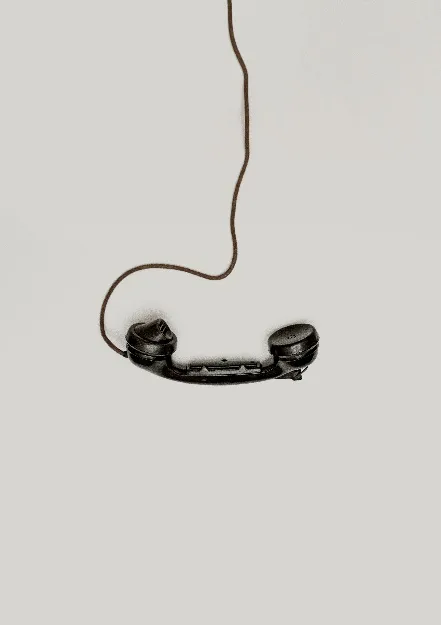
A phone interview is typically called a screening interview and the first stage in the interview process. Usually, a phone interview includes a brief review of your experience and you’ll be asked questions intended to determine if you're a suitable candidate for the position. Phone interviews tend to last between 10 to 20 minutes.
When you have a phone interview, the interviewer can't see your facial expressions, hand gestures or other body language signals. The tone of your voice is vital, so make sure you sound enthusiastic, engaged and interested. Let your personality shine through. The interviewer wants to get a feel for who you are as a person.
- If you have a phone interview booked in, find out how long the interview time is planned for.
- Find a quiet place where you won’t be interrupted. The worst thing is when an interviewer can hear screaming kids, animals, or other loud noises in the background. It comes across as very unprofessional.
- I used to find that when I was a bit nervous on the phone, I would forget what I wanted to say, or wouldn’t be able to get my point across in the right manner. Print a copy of your resume out so you have it in hand, and you can refer to it if you get lost words.
- Have a notepad ready to jot down any notes or questions you might think of.
- Start with saying, "Thank you for taking time out of your busy schedule to talk with me today. I've been looking forward to this call".
- Know the details of the job you have applied for. If you have a copy of a job description, read that fully and have a copy printed out so you can refer to it if needed.
- Candidates I coach, I tell them that interviewers can "hear your smile" over the phone. Consider how you sound when you talk about something exciting with one of your friends.
- Stand up when you’re on the call, this places a reduced amount of tension on your diaphragm than sitting down. Your voice will be clearer and psychologically, you’ll feel more confident and in control. You’re more likely to embrace a natural form of dialogue.
- Be prepared to talk about salary. The interviewer may ask you what your salary expectations are. So, make sure you have done your research into what the industry is paying for the role you are applying for.
- Towards the end of the interview, always ask about the next steps, so when you are likely to hear back whether you have succeeded to the next interview stage. Always, always, always thank the interviewer for their time.
Video and Virtual Job Interviews
A virtual interview, also known as digital or video interview, allows people to conduct an interview in an automatic manner by conducting it online. The interviewers use a virtual interview as a standard way of assessing the potential of the candidates.
A one-way video interview is an asynchronous video interview in which job candidates record video responses to interview questions in their own time. One-way video interviews are also called pre-recorded video interviews because they don't require the interviewer to be present.
On the day of the interview, dress professionally, wearing the same interview attire you would for an in-person interview. While the camera angle should show you from the waist up (your face is the real focal point), if there is any possibility you will need to stand up, make sure you are wearing pants or a skirt and it’s professional.
Tips for a virtual interview:
- Double-check your audio, video, and internet connection an hour or two before your scheduled interview time
- Pick a plain or distraction-free background
- Dress for the job you want
- Make sure you're in a well-lit room and the interviewer can see you clearly
- Keep your body language open
- Keep your hands in view
- Angle and eye contact are critical
- Frame yourself from the chest up

Group Interviews
Employers conduct group interviews to see how candidates engage and interact in unfamiliar environments. Employers may have many candidates for the same role and instead of having individual interviews, they group people so they can disregard those who are not right for the position. Doing it this way saves a huge amount of time. Most people become rather shy and timid in this kind of situation. People are less reluctant to discuss previous employment experience in front of a group of people they don’t know.
The strategy for this type of interview is to find the right balance of being extroverted and introverted. In this type of interview, you will be watched as soon as you walk through the building door, or even earlier. Be the first one to introduce yourself to people, such as the receptionist, other people that might be interviewing with you, other employees and the cleaners. Do this in a way where you are not being overly loud. Open body language, communication and the way you interact with others is extremely important. Make sure you listen to other people and respond accordingly and encourage other people to join in and participate in any discussions.
One on One Interviews
The one to one job interview is the most common style of interview, where only the interviewer and the interviewee are present. The structure of the interview is where the interviewer is directing the discussion initially and the interviewee is asking questions towards the end.
The best way is to have a conversational type interview, back and forth with questions and answers from both sides, so it’s a flow of information. If you can control the interview in a subtle way you’re 90% there to landing the job of your dreams.
Panel Interviews
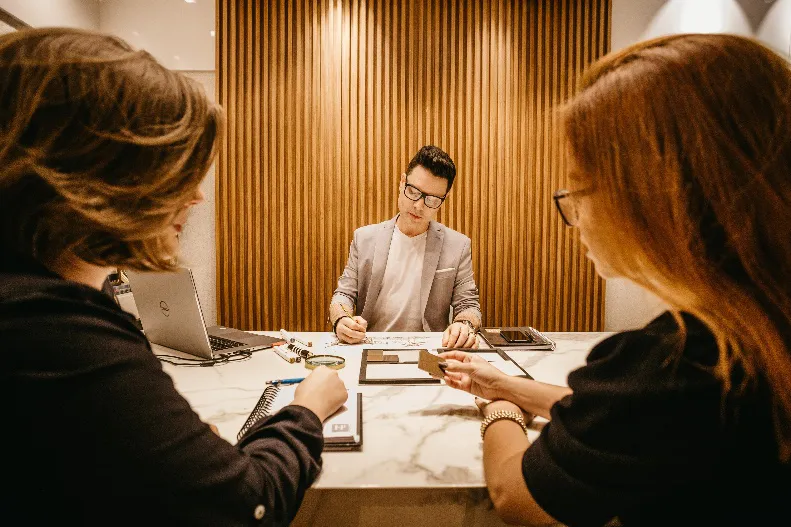
Panel interviews are conducted by a group of two to five people, sometimes more. Often, you'll be in a room with several people who work at the company and these interviewers make up the panel. Your panel of interviewers will represent multiple areas of the company, and they will come from different backgrounds and roles. Each of them will view your resume and responses in a different way.
Companies like this style of interview because it saves a huge amount of time. The company can book one interview instead of coordinating several one-on-one meetings. It allows all the company’s representatives to reach an agreement before making a hiring decision.
Panel interviews can be extremely nerve-racking and intimidating. To prepare for this style of interview. Find out who will be present at your interview. Ask your company contact to give you a bit of background on each of the panel.
Your opening introductions with the panel will be crucial. If you’re terrible at remembering names, you will need to flip your mindset. Tell yourself that you are great at remembering names. To really stand out from the crowd and impress during the interview, you must remember and use each interviewer’s name and role throughout the meeting.
If you’re adamant you won’t be able to remember and recite the panel’s names, at the start of the interview, ask the interviewers if they mind if you take down some notes. This is almost always acceptable. Once you know who’s who in the zoo, you can build rapport by connecting and engaging with the interviewers as a group and individually.
Answer each question precisely while adding points to tackle the different viewpoints of the other interviewers. For example, one interviewer might ask you about how you work effectively within a team. Other department managers will be more concerned with how you would engage with their teams. So, you could say something like, “Working effectively in a team is a necessity; everyone should have clearly defined roles and responsibilities. This helps to improve communication within the team and collaboration across other teams”.
When replying, direct your answer to the person who asked the question, as you continue to go into detail and provide examples, address the rest of the panel by making eye contact, moving your shoulders so that you’re directly facing each person. If they look down and mak...
Table of contents
- Disclaimer
- Acknowledgements
- About The Author
- Introduction
- What To Expect
- 3 Stages To The Interview
- Different Types of Job Interviews
- Assessment Centres
- Informal Interviews
- Formal Interviews
- Potential Interviews From Job Searching
- Booking The Interview
- A Professional Voicemail & Email Address
- Multiple Interview Invitations
- Research The Company
- Research The Interviewer
- Do You Know The Interview Process?
- Do You Know Your Resume Inside Out?
- Do You Want To Get Over Your Nerves & Feel More Confident?
- How To Avoid These Common Interview Mistakes
- Interview Guidelines
- Are You Prepared For The Interview?
- Personal & Professional Social Media Profiles
- The Law of Reciprocity
- Control The Conversation
- Verbal Communication - Be Careful What You Say & How You Say It
- How Much Should You Share During the Interview?
- Practice Makes Permanent, Not Perfect
- Use The Interviewers Name In Conversation
- How To Answer Challenging Behavioural Interview Questions?
- S stands for SITUATION
- T stands for TASK
- A stands for ACTION
- R stands for RESULT
- What Is Emotional Intelligence?
- Do You Know How To Mirror and Match To Build Rapport?
- Examples of Nonverbal Communication Skills
- How to Ensure Interview Success?
- Attitude is Everything
- Action Verbs
- Action Verb Examples
- Commonly Asked Interview Questions
- Additional Interview Questions You Might Be Asked
- Prepare Your Own Quality Questions
- Quality Questions To Ask The Interviewer
- Possible Questions Include:
- First Impressions Count
- Should You Ask About Pay?
- Closing Out The Interview
- Interview Hints & Tips
- Self-Assessment Framework
- Should I Say Yes To Accepting The Job Offer
Trusted by 375,005 students
Access to over 1.5 million titles for a fair monthly price.
Study more efficiently using our study tools.
Frequently asked questions
Yes, you can cancel anytime from the Subscription tab in your account settings on the Perlego website. Your subscription will stay active until the end of your current billing period. Learn how to cancel your subscription
No, books cannot be downloaded as external files, such as PDFs, for use outside of Perlego. However, you can download books within the Perlego app for offline reading on mobile or tablet. Learn how to download books offline
Perlego offers two plans: Essential and Complete
- Essential is ideal for learners and professionals who enjoy exploring a wide range of subjects. Access the Essential Library with 800,000+ trusted titles and best-sellers across business, personal growth, and the humanities. Includes unlimited reading time and Standard Read Aloud voice.
- Complete: Perfect for advanced learners and researchers needing full, unrestricted access. Unlock 1.5M+ books across hundreds of subjects, including academic and specialized titles. The Complete Plan also includes advanced features like Premium Read Aloud and Research Assistant.
We are an online textbook subscription service, where you can get access to an entire online library for less than the price of a single book per month. With over 1.5 million books across 990+ topics, we’ve got you covered! Learn about our mission
Look out for the read-aloud symbol on your next book to see if you can listen to it. The read-aloud tool reads text aloud for you, highlighting the text as it is being read. You can pause it, speed it up and slow it down. Learn more about Read Aloud
Yes! You can use the Perlego app on both iOS and Android devices to read anytime, anywhere — even offline. Perfect for commutes or when you’re on the go.
Please note we cannot support devices running on iOS 13 and Android 7 or earlier. Learn more about using the app
Please note we cannot support devices running on iOS 13 and Android 7 or earlier. Learn more about using the app
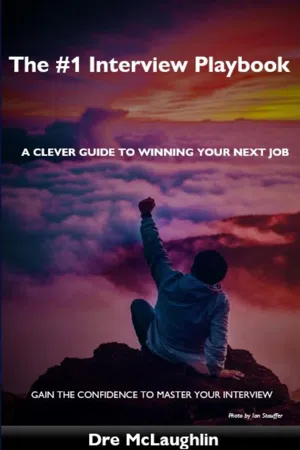
Yes, you can access The #1 Interview Playbook by Dre McLaughlin in PDF and/or ePUB format, as well as other popular books in Personal Development & Careers. We have over 1.5 million books available in our catalogue for you to explore.