- English
- ePUB (mobile friendly)
- Available on iOS & Android
eBook - ePub
Information
Topic
LiteraturaCHAPTER I
THE FIRST MOVE
Elmer Passage was an alley leading down to the river which, since the boat builder’s yard at the end had become derelict, was practically a cul-de-sac. As there were no chance passers-by there were no chance customers at the second-hand furniture and book shop that was wedged in there between the high blank walls of warehouses, but old John Borlase, who had inherited the business from his grandfather, had an enviable reputation with that fairly numerous class of small collectors who like to feel sure that they are not being cheated. He did not belong to the ring of furniture and art dealers, and, perhaps owing to that fact, had never been very prosperous, but the shop with the house and the yard at the back were his own property, and since Anne, his only child, had left school and was helping him in the shop he had not to pay the wages of an assistant. He suffered a good deal from sciatica, and sometimes lately she had gone in his stead to sales and auctions all over the country. The big dealers, those swarthy men with guttural voices and fur-lined coats, who smoked expensive cigars and travelled in huge glittering cars, regarded her with good-natured amusement. She was so small and so fearless that they nicknamed her the robin, and she was allowed to pick up the crumbs they let fall, so that often she came home in triumph in her aged and battered Ford with a Victorian firescreen or some scraps of old lace, or a bundle of books acquired for a few shillings.
Anne was alone in the shop one afternoon in October when a woman came in and asked for Russian embroideries. She was a big woman with a deep, hoarse voice. Her face was thickly powdered and her big mouth was smeared with streaks of red. She wore a fox fur wound round her throat, and a black coat, and a black velvet beret pulled well down to her eyes. Anne thought she was the most repulsive-looking person she had ever seen.
“Russian, madam? I’m afraid not. I have a strip of Flemish lace.” She unfolded a roll of the cobweb stuff carefully on the counter. “Isn’t that lovely?”
The strange customer touched the lace with a black gloved forefinger. Anne noticed that she had enormous hands.
“Yes,” she said, but she did not seem really interested. She was darting glances here, and there into the dark recesses of the shop. “You are Miss Borlase?”
“Yes.”
“I saw the name of Borlase over the shop front. It is an unusual name, is it not?”
“Perhaps it is.”
“You live here all alone with your father?”
“Yes.” Anne was beginning to resent this cross-examination.
“And your aunt?” The woman in black seemed to attach importance to Anne’s answer, for she leaned towards her across the counter.
Anne shrank a little instinctively.
“Aunt Mary? She died years ago.”
“Here?”
“Yes, she’d only just come back to England. Why do you—”
She broke off as the shop door bell rang again and another customer came in. This time it was an old gentleman well known to her. who had picked out some books from the shelves a week before and had now returned to pay for them. The woman put down the lace quickly and with a murmured “Thank you. Good afternoon,” left the shop. Anne, relieved by her departure, took the old gentleman’s money, receipted his bill, and, after the usual interchange of remarks about the weather, which was cold and wet, saw him off the premises. Big Ben, across the river, was striking six. Anne locked the shop door and drew down the blinds. Then she went into the living-room at the back of the house where her father was making toast for tea.
“Who was that just now, Anne?”
“Mr. Belsize.”
“I heard him too. Before that.”
“A woman. She asked for Russian embroideries. And then she asked for Aunt Mary. Mind, Father, the toast is burning.”
“Dear me!” said John Borlase. “Your aunt had lived so long in Russia that she had no friends left in England. In all these years not a soul has enquired after her. I wish I had seen this lady. Was she Russian, do you think?”
“I don’t know. She kept asking questions, and then Mr. Belsize came in, and she left. I wasn’t sorry. There was something funny about her. Mr. Belsize has taken that copy of Eothen. Will you be wanting me to go to the library to change your novel?”
“No. I haven’t finished the last one yet. But you ought to go out and get a breath of fresh air, my dear. I don’t like you being shut up in this musty dark little shop day after day. It’s all very well for an old man like me, but not for a pretty young girl.”
Anne laughed. “Thanks for the bouquet, but I’m all right. I love my job. Don’t worry, darling.”
Anne made the tea and they sat down to their evening meal. The living-room was dark for there was only one window facing the yard, and the yard was surrounded by the high walls of warehouses, and it was too full of furniture, but the fire burning in the old-fashioned grate made it seem cosy, and Anne had covered her father’s armchair with bright flowered chintz. John Borlase was small and frail and bent, with eyes brown as Anne’s, but tired and faded. His daughter looked at him with veiled anxiety as she passed him his cup.
“How are you now, Father?”
“Better, my dear, much better. I shall be well enough to look after the shop tomorrow.”
“Then I can go to that sale at Horsham. We’ll see.”
When they had finished their tea the old man turned to his chair by the fire and lit his pipe. “About that woman,” he said, “Was she a foreigner?”
“I thought there was something foreign about her,” said Anne. She added in her downright way—“I didn’t take to her.”
She went out to the scullery to wash the tea things. When she came back she noticed that her father, who usually was an inveterate reader, had laid aside his book and was gazing thoughtfully at the fire. He glanced up as she entered.
“You haven’t forgotten your Aunt Mary?”
“I was only ten when she came back from Russia, Father, but I do remember it quite well. She arrived after dark one evening in the autumn of 1918. I can see her sitting where you are sitting now, shaking with cold and clutching a bundle. Her clothes were sticky with sea water. The charwoman had gone home and I had to get the spare room ready for her and heat some milk for her to drink. I remember feeling very excited and important. But it was the end of my holidays and I had to go back to school the next day. And ten days later you wrote to tell me she had died of pneumonia.”
John Borlase drew at his pipe. “Aye. The doctor called it that. Myself, I think she died of fright.”
Anne’s eyes opened very wide. “What was she frightened of?”
“That’s what I don’t know,” he said. “I fancied at the time that she was delirious. She was very ill, poor thing. She’d suffered great hardships. I never knew how she got out of Russia. She had been first nursery governess and then maid companion to a young Russian lady belonging to one of the great land-owning families, who was maid of honour to the Tsarina. Nadine her name was, and Mary said she was a lovely girl. Mary told me the revolutionaries broke into their house on the Nevski Prospect and lined the whole family up against the wall in the ball-room and shot them. Mary, poor soul, seemed to imagine she was in danger even here. She made me promise not to let anyone into the house. She didn’t want me to fetch the doctor. The second night she got out of bed and went down to the shop. I found her lying there in her nightgown when I went to look for her. She was unconscious, but when she came to she kept on about taking messages to somebody. It was terribly important, she said, but it was all muddled up and I couldn’t make head or tail of it.”
“And she died without explaining?” said Anne, who was deeply interested.
“Yes. She kept on trying to the very end, clinging to my hand with her weak fingers, and her lips moving, but she couldn’t make a sound. I expect it was just feverish fancies, Anne. Nothing in it. But this woman coming has brought it all back to my mind. A bit of a mystery, but it never will be solved now.”
“What had she got in that bundle? I remember she wouldn’t let you take it from her.”
“Nothing much,” he said. “Old clothes, a brush and comb, a pair of shoes. Everything she’d been able to bring away with her. I was so upset about it all that I shoved the things away in a drawer where they’ve been ever since.”
“Might I have a look at them, Father?”
“You can if you like,” he said. “The bottom drawer in the chest in the spare room. We don’t have visitors, Anne, and no one has slept there since. Bring the stuff down here.”
Anne ran upstairs and came down again presently with an untidy bundle of clothing.
“Moth has got into the woollen things, Father. They ought not to have been left there so long. If I had known—”
The old man watched her sorting out ragged vests and black stockings green with age. A moth flew up and Anne caught it. There was an ivory-backed brush with the initials M.B. on it in tarnished silver.
“Mary told me the little countess Nadine gave her that.”
He leaned forward. “What is it, Anne?”
There was one dress in the bundle, an old-fashioned black cloth dress with a lined bodice. Anne held it up for him to see. The moths, eating into the material, had made a large hole under one arm.
“Look, Father, there’s paper between the stuff and the lining! Wait a minute.” She fetched her scissors from her work basket, enlarged the hole, and drew out an envelope. “It’s addressed to Colonel Drury at the Dower House, Ladebrook, Sussex.” She turned it over and looked at the seal of blue wax. “An N with a little crown over it. Oh, I suppose it’s a coronet. Father,” the girl’s voice shook with excitement, “this must be the message Aunt Mary was so worried about, and it’s been lying in the spare room drawer, undelivered, for fourteen years. Oh, I’m not blaming you, darling, you couldn’t possibly know. I’ll just go thoroughly through everything now.”
But there was only that one letter.
“I should slit up every seam,” advised Borlase.
“All right, Father.” She snipped away busily. “But what else could there be?”
“Well—you never know. I wish now that I had listened more carefully to her wandering talk, but I had my hands full with the shop to mind and all. That was the dress she was wearing. I daresay she was searched more than once on frontiers on her way across Europe. To think they never found that letter.”
Anne rolled up the heap of shredded clothing in a newspaper.
“No use keeping this,” she said. “I’ll burn it in the copper next time it’s lit. The moth might get into something else. Father, do you know what I’ll do? I’m going into Sussex to that sale to-morrow. I’ll take this letter and deliver it myself on my way home.”
“Not a bad idea. Then you can explain the delay.”
“A letter from the dead,” said Anne slowly. “That N must stand for Nadine. I wonder who this Colonel Drury is.”
“You may not find him,” said Borlase. “Fourteen years is a long time. He may have left the neighbourhood. Whereabouts is Ladebrook? I never heard of it.”
Anne got a map from the bookcase and pored over it.
“Here it is,” she said presently. “If I take the Petworth road from Pulborough and branch off here I ought to get to it. I must allow plenty of time. Poor Aunt Mary! She said it was terribly important, didn’t she? I wonder if it is still. It’s funny how things happen. If that woman had not come into the shop this afternoon we might never have found this letter.”
“No,” said her father. He was frowning a little. “I rather wish we hadn’t. I don’t like mysteries.”
“Oh, Father!” The girl’s face was flushed and eager. “I think it’s awfully thrilling. It’s quite an adventure.”
He smiled faintly at her enthusiasm. “Yes. I suppose I’m old and unenterprising. But I can’t help remembering that Mary was afraid.”
“But, Father,” Anne argued, “that was the war and the revolution. I daresay she went through a lot, poor dear, but that’s all over long ago. There’s absolutely nothing to worry about now. Anyhow, we’re bound to deliver this letter if we can, aren’t we, and I don’t feel like posting it. We’re bound to explain how we came by it and that would mean writing pages. Besides, I’m curious. I want to see this Colonel Drury.”
“Very well,” he said, “but promise you’ll be careful.”
She laughed. “Of course. If I meet any dragons I’ll run away.”
CHAPTER II
THE LETTER
Anne made an early start, reaching Horsham soon after eleven, and slipped into the marquee in which the sale was being held in time to bid for the three lots she had marked in her catalogue. Two were knocked down to her, but she lost the third which was put up just before the lunch interval. As she passed out with the crowd she found herself next to a famous art dealer whose name was almost as well known to connoisseurs all over the world as that of the Duveens.
“Ah, my little chirping friend,” his black eyes twinkled good-naturedly as he looked down at her, “still hopping about our feet, eh? How is your good father?”
“Not too well, Mr. Kafka. And I’m not going to thank you for that inlaid tea caddy that was knocked down to me because I know you didn’t want it.”
He chuckled. “Impudence. But there is a firescreen. I know you like little things that you can carry away without any trouble. You shall have that too.”
“Thank you, Mr. Kafka, but I’m going now.”
“So early? That is foolish.”
“I can’t help it. I’m going somewhere else. We’re blocking the way.”
Some men behind were laughing. Old Kafka talking to the little Borlase girl reminded them of a liner with a dinghy in tow. Kafka’s huge bulk was increased by his fur-lined coat. His size was portentous, but mind still ruled matter. Nothing escaped him.
“They laughed; let them laugh,” he said equably. “Good-bye, little birdkin.”
She ...
Table of contents
- Cover
- Title Page/About the Book
- Contents
- Introduction by Curtis Evans
- PROLOGUE
- CHAPTER I THE FIRST MOVE
- CHAPTER II THE LETTER
- CHAPTER III THE SECOND MOVE
- CHAPTER IV THE BIRD AND THE FOWLERS
- CHAPTER V THE BROTHERS
- CHAPTER VI ASK A POLICEMAN
- CHAPTER VII JOCELYN BUTTS IN
- CHAPTER VIII LOVE IN THESE DAYS
- CHAPTER IX INSUFFICIENT EVIDENCE
- CHAPTER X MARTIN DOES HIS BEST
- CHAPTER XI THE BREAKING POINT
- CHAPTER XII THE HIKER
- CHAPTER XIII THE EMPTY HOUSE
- CHAPTER XIV THE BELL
- CHAPTER XV WHERE IS ANNE?
- CHAPTER XVI THE QUARRY
- CHAPTER XVII THE VERDICT
- CHAPTER XVIII COLLIER CARRIES ON
- CHAPTER XIX FATHER AND SON
- CHAPTER XX THE QUESTION
- CHAPTER XXI JOCELYN AND OTHERS
- CHAPTER XXII MATERIAL EVIDENCE
- CHAPTER XXIII COLLIER IS WARNED
- CHAPTER XXIV CLOSING IN
- CHAPTER XXV ANNE SPEAKS
- CHAPTER XVI THE UNKNOWN QUANTITY
- CHAPTER XVII NIGHT WORK
- CHAPTER XVIII STEPHEN’S SHARE
- CHAPTER XXIX THE MARCH OF NEMESIS
- CHAPTER XXX PORTRAIT OF A GIRL IN GREEN
- CHAPTER XXXI INSPECTOR COLLIER’S WATERLOO
- CHAPTER XXXII MR. X
- About The Author
- Titles by Moray Dalton
- Copyright
Trusted by 375,005 students
Access to over 1.5 million titles for a fair monthly price.
Study more efficiently using our study tools.
Frequently asked questions
Yes, you can cancel anytime from the Subscription tab in your account settings on the Perlego website. Your subscription will stay active until the end of your current billing period. Learn how to cancel your subscription
No, books cannot be downloaded as external files, such as PDFs, for use outside of Perlego. However, you can download books within the Perlego app for offline reading on mobile or tablet. Learn how to download books offline
Perlego offers two plans: Essential and Complete
- Essential is ideal for learners and professionals who enjoy exploring a wide range of subjects. Access the Essential Library with 800,000+ trusted titles and best-sellers across business, personal growth, and the humanities. Includes unlimited reading time and Standard Read Aloud voice.
- Complete: Perfect for advanced learners and researchers needing full, unrestricted access. Unlock 1.5M+ books across hundreds of subjects, including academic and specialized titles. The Complete Plan also includes advanced features like Premium Read Aloud and Research Assistant.
We are an online textbook subscription service, where you can get access to an entire online library for less than the price of a single book per month. With over 1.5 million books across 990+ topics, we’ve got you covered! Learn about our mission
Look out for the read-aloud symbol on your next book to see if you can listen to it. The read-aloud tool reads text aloud for you, highlighting the text as it is being read. You can pause it, speed it up and slow it down. Learn more about Read Aloud
Yes! You can use the Perlego app on both iOS and Android devices to read anytime, anywhere — even offline. Perfect for commutes or when you’re on the go.
Please note we cannot support devices running on iOS 13 and Android 7 or earlier. Learn more about using the app
Please note we cannot support devices running on iOS 13 and Android 7 or earlier. Learn more about using the app
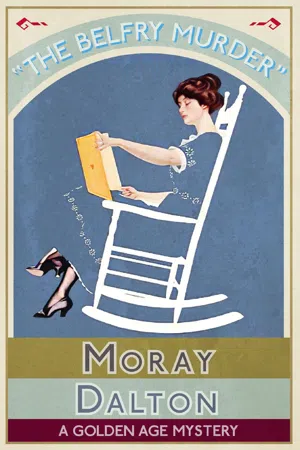
Yes, you can access The Belfry Murder by Moray Dalton in PDF and/or ePUB format, as well as other popular books in Literatura & Literatura de crímenes y misterio. We have over 1.5 million books available in our catalogue for you to explore.