With its many diagnostic categories, relevant variants, and rare tumors, soft tissue pathology is one of the most challenging areas of surgical pathology. Focusing on the cutaneous soft tissue specimens and reactive mimics most likely to be encountered by pathologists and dermatopathologists, Diagnostic Atlas of Cutaneous Mesenchymal Neoplasia is a superbly illustrated, easy-to-use atlas designed to be used beside the microscope for efficient diagnosis and classification of soft tissue tumors of the skin.- Features high-quality histologic and clinical images of multiple examples of each tumor, with captions and bulleted text for quick reference.- Uses a high-yield format that facilitates a rapid and accurate diagnosis, including: - Characteristic clinical setting- Key morphologic features- Immunohistochemical properties- Molecular diagnostic testing (where applicable)- Offers the most complete presentation available of this complex family of tumors, authored by renowned experts in dermatopathology.
eBook - ePub
Diagnostic Atlas of Cutaneous Mesenchymal Neoplasia E-Book
- 736 pages
- English
- ePUB (mobile friendly)
- Available on iOS & Android
eBook - ePub
Diagnostic Atlas of Cutaneous Mesenchymal Neoplasia E-Book
About this book
1
Adipocytic tumors
Benign tumors and reactive conditions
Lipoma
Definition
- • A benign dermal or subcutaneous mesenchymal tumor composed of mature adult-type adipose tissue
Clinical features
Epidemiology
- • The most commonly encountered mesenchymal tumor
- • Majority of patients are adults
- • No sex predilection
Presentation
- • Most cases are asymptomatic
- • Occasionally painful when compressing nerves
- • Slowly growing, but size is variable
- • Usually solitary
- • Multiple lipomas may be associated with neurofibromatosis, multiple endocrine neoplasia syndromes, or Bannayan syndrome (hemangiomas and multiple lipomas)
Prognosis and treatment
- • Treated mostly for aesthetic reasons
- • Cured by conservative surgical excision
- • Recur only if incompletely excised and then only rarely
- • Not associated with progression to liposarcoma
Pathology
Histology
- • Resemble normal adult-type adipose tissue
- • Lobules of adipocytes bounded by thin fibrous septa
- • Adipocytes have large single lipid vacuole in their cytoplasm and eccentrically located small nuclei
- • May show areas of fat necrosis and increased fibrosis after trauma
- • No atypia, pleomorphism, mitoses, or hyperchromasia
Immunohistochemistry/special stains
- • Adipocytes express S100 protein
Genetic profile
- • True neoplasms
- • Translocation at 12q14 involving HMGA2 gene is the most common aberration, often with LPP (3q27)
- • 6p21-23 rearrangements involving HMG1B gene are also seen
Main differential diagnoses
- • Normal adipose tissue
- • Pseudolipomatosis cutis
- • Atypical lipomatous tumor
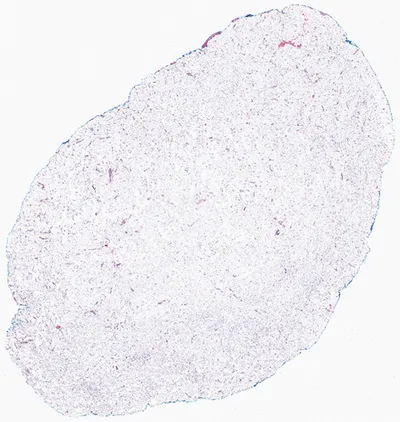
Fig. 1 Lipoma. Deeper lipomas are well-circumscribed neoplasms composed of mature adipose tissue essentially indistinguishable from normal fat.
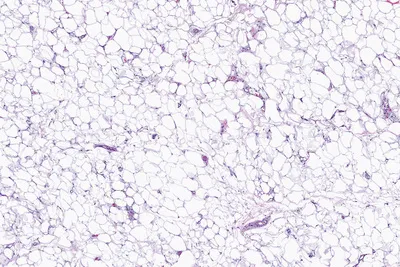
Fig. 2 Lipoma. High-power view of mature adipocytes exhibiting minimal size variatio...
Table of contents
- Cover image
- Title Page
- Table of Contents
- Copyright
- Preface
- Acknowledgements
- Dedication
- 1 Adipocytic tumors
- 2 Fibroblastic and myofibroblastic tumors of the skin
- 3 Fibrohistiocytic tumors
- 4 Cutaneous smooth muscle tumors
- 5 Pericytic (perivascular) tumors
- 6 Skeletal Muscle Tumors
- 7 Tumors of vascular origin
- 8 Bone- and cartilage-forming tumors and tumors of joints
- 9 Tumors of neuroectodermal origin
- 10 Miscellaneous Tumors of Uncertain Differentiation
- Index
Trusted by 375,005 students
Access to over 1.5 million titles for a fair monthly price.
Study more efficiently using our study tools.
Frequently asked questions
Yes, you can cancel anytime from the Subscription tab in your account settings on the Perlego website. Your subscription will stay active until the end of your current billing period. Learn how to cancel your subscription
No, books cannot be downloaded as external files, such as PDFs, for use outside of Perlego. However, you can download books within the Perlego app for offline reading on mobile or tablet. Learn how to download books offline
Perlego offers two plans: Essential and Complete
- Essential is ideal for learners and professionals who enjoy exploring a wide range of subjects. Access the Essential Library with 800,000+ trusted titles and best-sellers across business, personal growth, and the humanities. Includes unlimited reading time and Standard Read Aloud voice.
- Complete: Perfect for advanced learners and researchers needing full, unrestricted access. Unlock 1.5M+ books across hundreds of subjects, including academic and specialized titles. The Complete Plan also includes advanced features like Premium Read Aloud and Research Assistant.
We are an online textbook subscription service, where you can get access to an entire online library for less than the price of a single book per month. With over 1.5 million books across 990+ topics, we’ve got you covered! Learn about our mission
Look out for the read-aloud symbol on your next book to see if you can listen to it. The read-aloud tool reads text aloud for you, highlighting the text as it is being read. You can pause it, speed it up and slow it down. Learn more about Read Aloud
Yes! You can use the Perlego app on both iOS and Android devices to read anytime, anywhere — even offline. Perfect for commutes or when you’re on the go.
Please note we cannot support devices running on iOS 13 and Android 7 or earlier. Learn more about using the app
Please note we cannot support devices running on iOS 13 and Android 7 or earlier. Learn more about using the app
Yes, you can access Diagnostic Atlas of Cutaneous Mesenchymal Neoplasia E-Book by J. Eduardo Calonje,Alexander J Lazar,Bostjan Luzar in PDF and/or ePUB format, as well as other popular books in Medicine & Pathology. We have over 1.5 million books available in our catalogue for you to explore.