This brand-new, full-color reference is a foundational text for veterinarians and veterinary students learning about companion exotic animal diseases. Organized by body system, Current Therapy in Exotic Pet Practice walks students through the most relevant information concerning the diagnosis and treatment of exotic animals — including the most relevant information on anatomy, physical examination, diagnostic testing, disease conditions, therapeutics, epidemiology of diseases, and zoonoses. Topics such as captive care, current standards of care for all exotic species, veterinary clinical epidemiology, and the effective prevention and management of infectious diseases are also included.- Expert guidance on treating various disease conditions provides authoritative support for veterinarians who are less experienced in companion exotic pet care.- Renowned authors and editors carefully selected topics of real clinical importance.- Detailed coverage on how to identify and treat diseases (from common to rare) helps alleviate apprehension a veterinarian may feel when treating an unfamiliar species.- Includes the latest information from the current scientific literature and addresses hot topics associated with treating companion exotic animals today.- Vivid full-color images demonstrate the unique anatomic and medical features of each group of animals covered.
- 512 pages
- English
- ePUB (mobile friendly)
- Available on iOS & Android
eBook - ePub
Current Therapy in Exotic Pet Practice
About this book
Information
Topic
MedicineSubtopic
Veterinary MedicineChapter 1
Introduction
Mark A. Mitchell DVM, MS, PhD, DECZM (Herpetology), Thomas N. Tully Jr., DVM, MS, DABVP (Avian), DECZM (Avian)

Veterinarians working with exotic animals face many challenges. From attempting to interpret how an animal's husbandry may affect its health to determining the most appropriate diagnostic tests required to confirm a specific condition, there are many different questions that veterinarians need to answer to successfully treat their patients. The real challenge for those of us working with exotic animals is that with over 64,000 different species of vertebrates, and another 1,000,000 plus species of invertebrates, developing a knowledge base capable of managing this broad number of species seems impossible. Fortunately, evolution is our friend. Across invertebrates and vertebrates there are patterns in morphology and physiology that have evolved. For example, while a Chilean rose-hair giant spider (Grammostola rosea) may have a very different circulatory system (e.g., open system, nonchambered tubular heart) from a bearded dragon (Pogona vitticeps; closed system, 3-chambered heart) (Figure 1-1), their basic function is the same: to circulate hemolymph or blood, respectively, and assist with delivering and removing nutrients and gases (see Chapter 5). Using a comparative approach, it is possible to rely on experiences with one species to interpret the needs of another. Of course, there are some limits to this (e.g., hemolymph in spiders and blood in bearded dragons) when dealing with the broad diversity of species; thus the focus of this book, reviewing the similarities and differences among these species using a comparative systems-based approach. By using a systems-based approach, veterinary clinicians can quickly review the differences between phyla or classes of animals and then apply this knowledge to the care of the animals they are managing. For example, clinicians with a strong understanding of the mammalian pulmonary system (e.g., rabbit, ferret) can use their foundation of knowledge with this class of animals to help them to understand the basics of the respiratory system of birds, learn what makes avian respiratory systems unique compared with other vertebrates (see Chapter 3), and apply it to a cockatiel case presenting for respiratory disease (Figure 1-2).
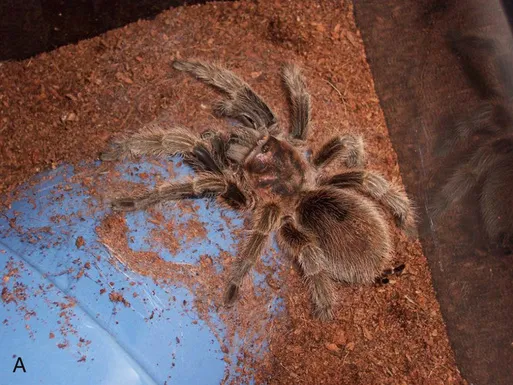
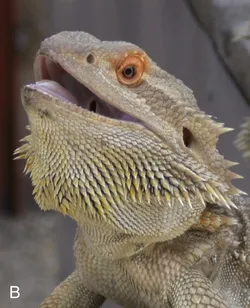
FIGURE 1-1 A, Chilean rose-hair giant spider (Grammostola rosea); B, bearded dragon (Pogona vitticeps). While these animals have evolved to be very different, they share many commonalities regarding the basic “functions” of their different body systems.
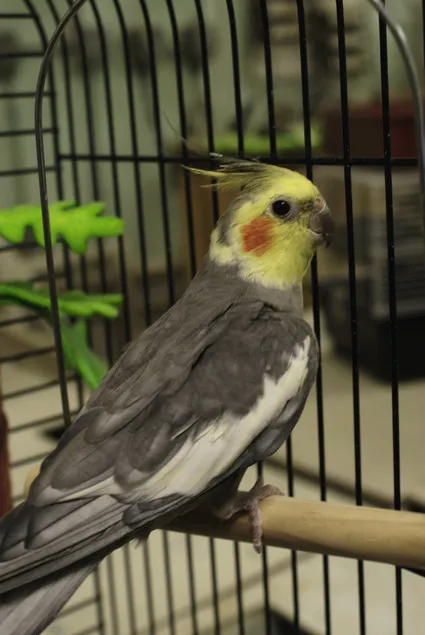
FIGURE 1-2 Birds, like this cockatiel (Nymphicus hollandicus), have the most elaborate respiratory system in the animal kingdom. While most veterinarians are comfortable with how the mammalian respiratory system works (e.g., larynx, trachea, and lungs), they may not realize that birds have major morphologic (e.g., air sacs) and physiologic (e.g., air movement through lungs and air sacs) differences compared with their mammalian counterparts. By taking a systems-based approach, a veterinarian can build on their foundation of knowledge with one group of animals to help manage a diverse number of other species.
Taking a Problem-Oriented Case Approach: Hypothetical-Deductive Reasoning
While exotic animal medicine can seem daunting because of the large number of species that may be presented to a veterinary hospital, it is important to recognize that veterinarians can manage these many different species if they rely on the hypothetical-deductive reasoning that they use when working with species they are familiar with, such as dogs and cats. This type of approach, regardless of species, directs the veterinarian to identify a problem or problems with the patient, develop a specific hypothesis or hypotheses to solve the problems, perform appropriate diagnostic and therapeutic trials to evaluate each hypothesis or hypotheses, and prove or disprove each hypothesis through critical evaluation of the results. Using a systems-based approach to problem solving will help the veterinarian focus on the fundamentals of medicine, especially when he or she is not familiar with a species. Thus allowing him or her to separate out the physiologic complexity of the patient into its “more digestible” components.
The best method for veterinarians to use when treating an animal species for the first time is to organize the collected data into the standard problem-oriented veterinary record framework. The more we get away from paper-based records, the easier it is for some veterinarians to document more, although some use this as an excuse to document less. In a busy practice, it is essential to document our findings and follow up. This is especially important with new species or species we see infrequently, as it serves as a ready source of knowledge on how we should or should not handle the next case.
Anamnesis (History)
Problem-oriented veterinary medical records are very important for exotic species, because there is often much more information (e.g., husbandry and nutrition) required to determine the underlying cause of the problems identified. To begin with, husbandry-related issues have been and continue to be an important area of concern related to the health of exotic species. When was the last time substrate or perching material had an effect on a dog or cat case? Also, dietary deficiencies are rare in domestic pets but remain a major concern for many exotic species such as reptiles (e.g., insectivores and secondary nutritional hyperparathyroidism), birds (e.g., all-seed diets), and exotic mammals (e.g., hypovitaminosis C in guinea pigs). It is for this reason that the anamnesis (history) is so essential for exotic species. Since husbandry plays such an important role in the well-being of these animals, it is essential that veterinarians take the time to collect information that will help them identify disease problems and the hypotheses required for diagnosis and treatment. Figures 1-3 to 1-7 are examples of history collection sheets that may be used by veterinarians or veterinary technicians to identify potential deficiencies in the husbandry of animals presented to their clinic. These “problems” can then be recorded and used in combination with the physical examination findings to direct the case.
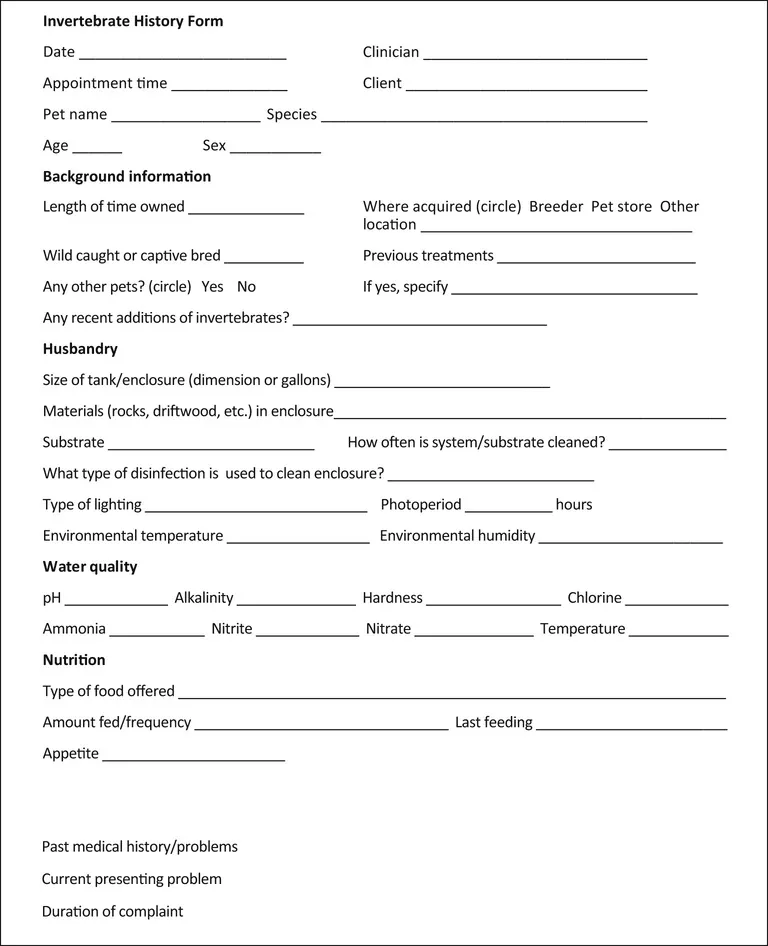
FIGURE 1-3 Questions to consider when assessing the history of an invertebrate patient.
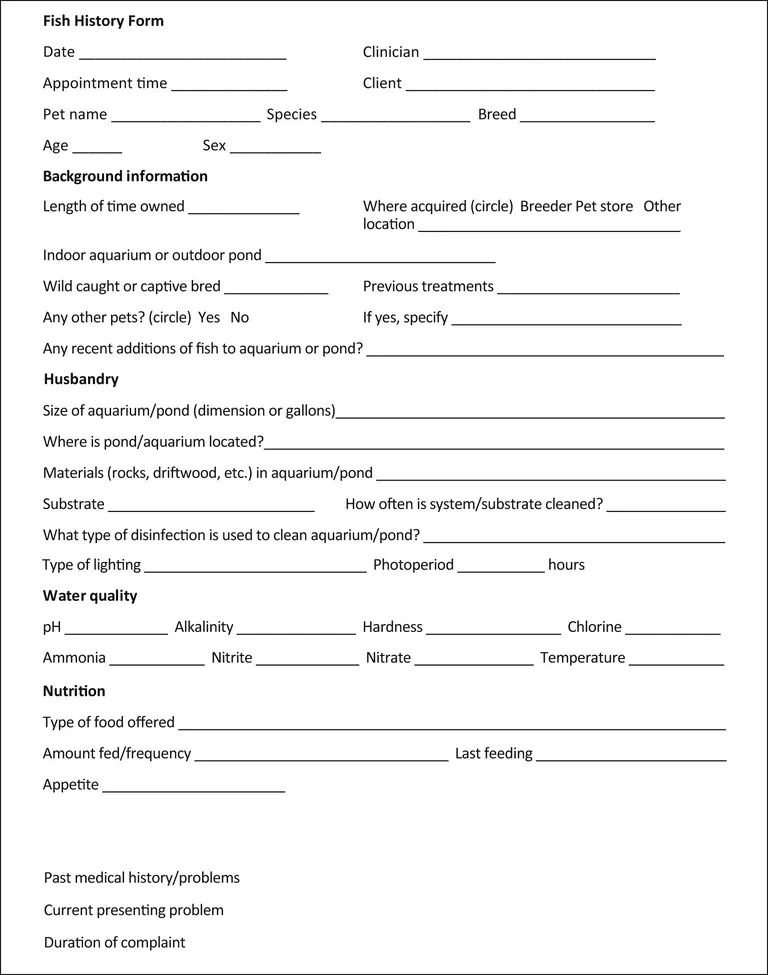
FIGURE 1-4 Questions to consider when assessing the history of a fish patient.
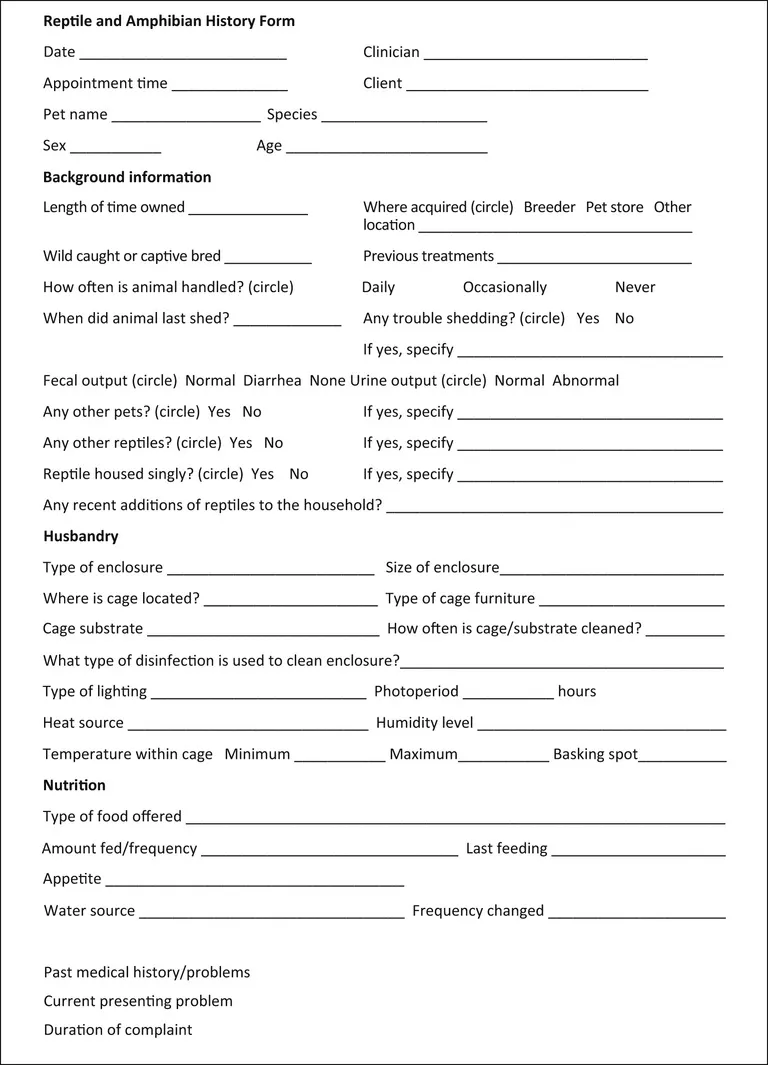
FIGURE 1-5 Questions to consider when assessing the history of an amphibian or reptile patient.

FIGURE 1-6 Questions to consider when assessing the history of a bird patient.
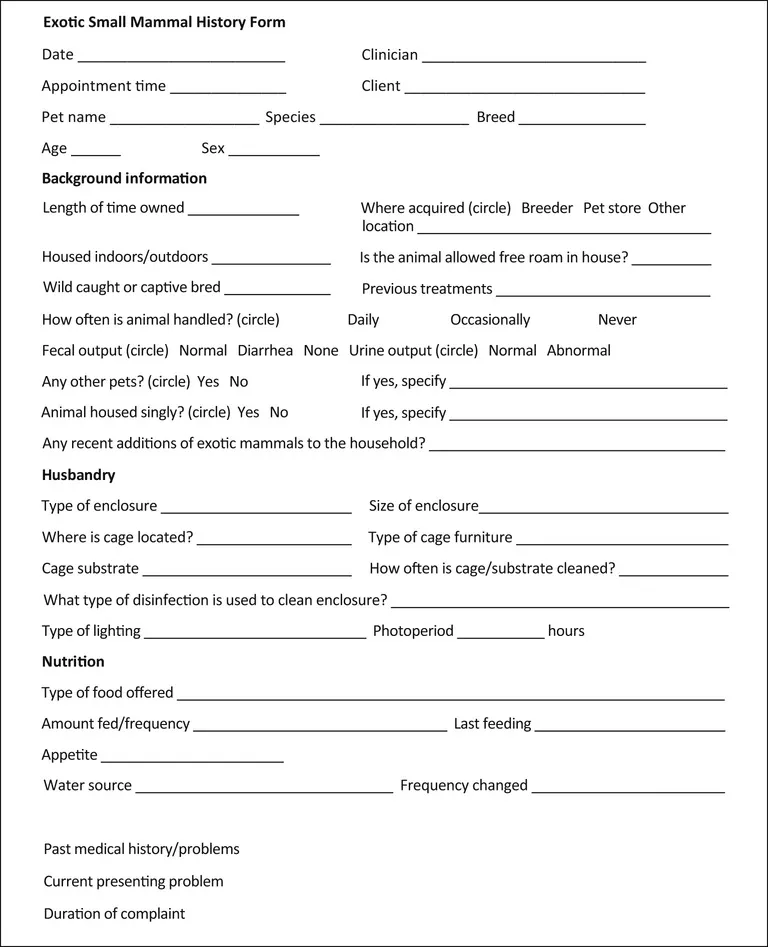
FIGURE 1-7 Questions to consider when assessing the history of an exotic mammal patient.
An important component of the history to collect for every patient is the signalment; however, this is especially important for exotic animal cases. Knowing the species, age (relative or absolute), and sex will allow the veterinarian to start to organize his or her thoughts on the husbandry needs of the animal, the unique morphologic and physiologic characteristics of the animal, and the potential problems that may exist based on the animal's age (e.g., relative: juvenile, adult, geriatric; absolute: captive born, date of birth known) or sex (e.g., dystocia in a female). Unfortunately, clients may not be able to answer a veterinarian's questions regarding their pet's signalment. In these cases, it is important for the veterinarian to have a basic knowledge about the different species that they may treat to determine the needs of their patients. As noted earlier, husbandry plays an important role in the welfare of captive exotic animals, therefore it is important to know which species is being examined. When a “turtle” is presented, it may be a species that lives exclusively on land (tortoise), shares a terrestrial and aquatic existence (terrapin), or is exclusively aquatic (turtle). Not being able to differentiate these different “lifestyles” could lead to unreliable information. Fortunately, there are many textbooks available to assist veterinarians with identifying animal species they have not seen before, and the Internet is also a valuable resource for that purpose. However, it is important to recognize that the Internet and some textbooks may provide less than ideal information regarding the care of some animal species. Consequently, veterinarians may want to rely on reference sources to help determine the difference between “valid” and “invalid” information. Ultimately, knowing the signalment allows the veterinarian to determine the husbandry needs of the animal and what may make it unique (morphologically and physiologically). The latter is important when performing a physical examination and determining diagnostic (e.g., where to collect a blood sample from for a complete blood count and biochemistry panel) and therapeutic plans (e.g., using an antibiotic bath for a frog because of its ventral abdominal patch).
Knowing the age of a patient is important because there are certain diseases that are age specific. For example, congenital anomalies are typically identified early in life (juveniles), while reproductive diseases (e.g., dystocia) occur in adult animals. The problem with many exotic species is that it is difficult to accurately age the animal unless a specific date of birth is known. For these cases, being able to categorize an exotic animal as a juvenile or adult will suffice. However, it may also be possible to further categorize “adult” status by reviewing how long an animal has been under the care of its owner. For example, a ferret (Mustela putorius furo) that...
Table of contents
- Cover image
- Title page
- Table of Contents
- Copyright
- Dedication
- Contributors
- Preface
- Acknowledgments
- 1 Introduction
- 2 Integumentary System
- 3 Respiratory System
- 4 Cardiovascular System
- 5 Gastrointestinal System
- 6 Endocrine System
- 7 Musculoskeletal System
- 8 Central Nervous System
- 9 Special Senses: Eyes
- 10 Reproductive System
- 11 Urinary System
- Index
Trusted by 375,005 students
Access to over 1.5 million titles for a fair monthly price.
Study more efficiently using our study tools.
Frequently asked questions
Yes, you can cancel anytime from the Subscription tab in your account settings on the Perlego website. Your subscription will stay active until the end of your current billing period. Learn how to cancel your subscription
No, books cannot be downloaded as external files, such as PDFs, for use outside of Perlego. However, you can download books within the Perlego app for offline reading on mobile or tablet. Learn how to download books offline
We are an online textbook subscription service, where you can get access to an entire online library for less than the price of a single book per month. With over 1.5 million books across 990+ topics, we’ve got you covered! Learn about our mission
Look out for the read-aloud symbol on your next book to see if you can listen to it. The read-aloud tool reads text aloud for you, highlighting the text as it is being read. You can pause it, speed it up and slow it down. Learn more about Read Aloud
Yes! You can use the Perlego app on both iOS and Android devices to read anytime, anywhere — even offline. Perfect for commutes or when you’re on the go.
Please note we cannot support devices running on iOS 13 and Android 7 or earlier. Learn more about using the app
Please note we cannot support devices running on iOS 13 and Android 7 or earlier. Learn more about using the app
Yes, you can access Current Therapy in Exotic Pet Practice by Mark Mitchell,Thomas N. Tully in PDF and/or ePUB format, as well as other popular books in Medicine & Veterinary Medicine. We have over 1.5 million books available in our catalogue for you to explore.