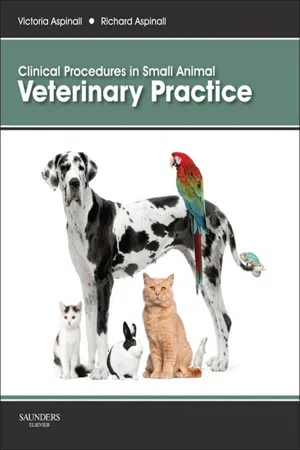
Clinical Procedures in Small Animal Veterinary Practice is your straightforward refresher in basic veterinary procedures. If as a veterinary student or graduate have you ever struggled to connect all your learning to concrete clinical practice, or felt an overpowering and urgent need for a quick, clear and reliable reprisal of basic clinical procedures, then this is the book for you. All the clinical procedures fundamental to the success of the student and practitioner are covered in clear, step-by-step format and with a wealth of colour illustrations for maximum clarity and understanding. Dogs, cats, rabbits and avian species are all dealt with.Everything you need to know about basic procedures, but may have been afraid to ask, is presented here in one convenient volume, authored by two noted veterinary educators with years of teaching experience between them.- All the principal basic procedures covered- Step-by-step 'action/rationale' approach- Full colour format illustrated with 250 colour figures- Authors have long experience of teaching and training vets Never struggle to find definitive information on basic procedures again
eBook - ePub
Clinical Procedures in Small Animal Veterinary Practice
- 336 pages
- English
- ePUB (mobile friendly)
- Available on iOS & Android
eBook - ePub
Clinical Procedures in Small Animal Veterinary Practice
About this book
Information
Topic
MedicineSubtopic
Veterinary MedicineChapter 1
Restraint, handling and administration of medication
Chapter Contents
Procedure: Muzzling a dog
Restraint for General Examination
Dogs
Procedure: To examine the cranial end of the body
Procedure: To examine the caudal end of the body or take the rectal temperature
Procedure: To examine the dog on its side or to provide stronger control
Procedure: To examine or restrain a dog on its back
Cats
Procedure: Restraint for the examination of a friendly cat
Procedure: Restraint for examination of a fractious cat
Procedure: Lifting a friendly cat used to being handled
Procedure: Lifting a frightened or aggressive cat
Procedure: Carrying a cat
Rabbits
Procedure: To restrain a rabbit
Procedure: To differentiate the sex of rabbits
Administration of Medication
Dogs
Procedure: Administering a tablet
Procedure: Administering a liquid feed or medication
Procedure: Applying ear medication
Procedure: Applying eye medication
Procedure: Administering a subcutaneous injection. Site: Scruff of the neck
Procedure: Administering an intramuscular injection. Site: Quadriceps femoris muscle
Procedure: Administering an intravenous injection. Site: Cephalic vein
Procedure: Collection of a blood sample from the cephalic vein
Procedure: Administering an intravenous injection. Site: Jugular vein
Procedure: Administering an intravenous injection. Site: Lateral saphenous vein
Procedure: Placement of an intravenous catheter in a peripheral vein
Procedure: Placement of an intravenous catheter in the jugular vein using the modified Seldinger technique
Cats
Procedure: Administering a tablet
Procedure: Administering liquid medication or oral fluids
Procedure: Applying ear medication
Procedure: Applying eye medication
Procedure: Administering a subcutaneous injection. Site: Scruff of the neck
Procedure: Administering an intramuscular injection. Site: Quadriceps femoris muscle
Procedure: Administering an intravenous injection. Site: Cephalic vein
Procedure: Administering an intravenous injection. Site: Jugular vein
Procedure: Administering an intravenous injection. Site: Lateral saphenous vein
Rabbits
Procedure: Administering fluids or liquid medication
Procedure: Administering a subcutaneous injection. Site: Scruff of the neck
Procedure: Administering an intramuscular injection. Site: Quadriceps femoris muscle
Procedure: Administering an intravenous injection. Site: Marginal ear vein
Procedure: Administering an intraperitoneal injection. Site: Mid abdomen
Procedure: Placing an intraosseus catheter
Correct handling and restraint of the patient are essential if you are to perform any procedure effectively. If the animal is allowed to move it may hurt itself or you. An animal that is held firmly will feel much more secure and will be less inclined to struggle or to make an escape.
The majority of animals that are brought into the surgery are used to being handled, but this does not mean that they necessarily enjoy having things done to them, especially by a ‘strange-smelling stranger’. There will also be a small proportion of animals that are wary of human contact and this includes stray dogs and feral cats. These animals may be unpredictable and potentially dangerous and you must protect your own safety and that of anyone around you.
When handling any species you must approach quietly and confidently; you must know exactly what you are going to do and get it right the first time – the more often you have to attempt a procedure the more frightened or aggressive an animal becomes and the more likely you or the animal are to get hurt. Animals become very upset by clumsy inept handling, but ...
Table of contents
- Cover
- Title page
- Table of Contents
- Copyright
- Preface
- Acknowledgements
- Illustrations resources
- Chapter 1: Restraint, handling and administration of medication
- Chapter 2: Basic consulting room techniques
- Chapter 3: First aid and other emergencies
- Chapter 4: Bandaging techniques
- Chapter 5: Laboratory techniques
- Chapter 6: Diagnostic imaging
- Chapter 7: Medical diagnostic and treatment techniques
- Chapter 8: Administration of anaesthesia
- Chapter 9: Theatre practice
- Chapter 10: Suturing techniques and common surgical procedures
- Bibliography
- Index
Trusted by 375,005 students
Access to over 1.5 million titles for a fair monthly price.
Study more efficiently using our study tools.
Frequently asked questions
Yes, you can cancel anytime from the Subscription tab in your account settings on the Perlego website. Your subscription will stay active until the end of your current billing period. Learn how to cancel your subscription
No, books cannot be downloaded as external files, such as PDFs, for use outside of Perlego. However, you can download books within the Perlego app for offline reading on mobile or tablet. Learn how to download books offline
Perlego offers two plans: Essential and Complete
- Essential is ideal for learners and professionals who enjoy exploring a wide range of subjects. Access the Essential Library with 800,000+ trusted titles and best-sellers across business, personal growth, and the humanities. Includes unlimited reading time and Standard Read Aloud voice.
- Complete: Perfect for advanced learners and researchers needing full, unrestricted access. Unlock 1.5M+ books across hundreds of subjects, including academic and specialized titles. The Complete Plan also includes advanced features like Premium Read Aloud and Research Assistant.
We are an online textbook subscription service, where you can get access to an entire online library for less than the price of a single book per month. With over 1.5 million books across 990+ topics, we’ve got you covered! Learn about our mission
Look out for the read-aloud symbol on your next book to see if you can listen to it. The read-aloud tool reads text aloud for you, highlighting the text as it is being read. You can pause it, speed it up and slow it down. Learn more about Read Aloud
Yes! You can use the Perlego app on both iOS and Android devices to read anytime, anywhere — even offline. Perfect for commutes or when you’re on the go.
Please note we cannot support devices running on iOS 13 and Android 7 or earlier. Learn more about using the app
Please note we cannot support devices running on iOS 13 and Android 7 or earlier. Learn more about using the app
Yes, you can access Clinical Procedures in Small Animal Veterinary Practice by Victoria Aspinall,Richard Aspinall in PDF and/or ePUB format, as well as other popular books in Medicine & Veterinary Medicine. We have over 1.5 million books available in our catalogue for you to explore.