The Routledge Handbook on Islam in Asia offers both new and established scholarship on Muslim societies and religious practices across Asia, from a variety of interdisciplinary angles, with chapters covering South, Central, East and Southeast Asia, as well as Africa–Asia connections.
Presenting work grounded in archival, literary, and ethnographic inquiry, contributors to this handbook lend their expertise to paint a picture of Islam as deeply connected to and influenced by Asia, often by-passing or reversing relationships of power and authority that have placed 'Arab' Islam in a hierarchically superior position vis-à-vis Asia. This handbook is structured in four parts, each representing an emergent area of inquiry:
Frames
Authority and authorizing practices
Muslim spatialities
Imaginations of piety
Dislodging ingrained assumptions that Asia is at the periphery of Islam – and that Islam is at the periphery of Asia's cultural matrix – this handbook sets an agenda against the 'center-periphery' dichotomy, as well as the syncretism paradigm that has dominated conversations on Islam in Asia. It thus demonstrates possibilities for new scholarly approaches to the study of Islam within the 'Asian context.'
This ground-breaking handbook is a valuable resource to students and scholars of Asian studies, religious studies, and cultural studies more broadly.
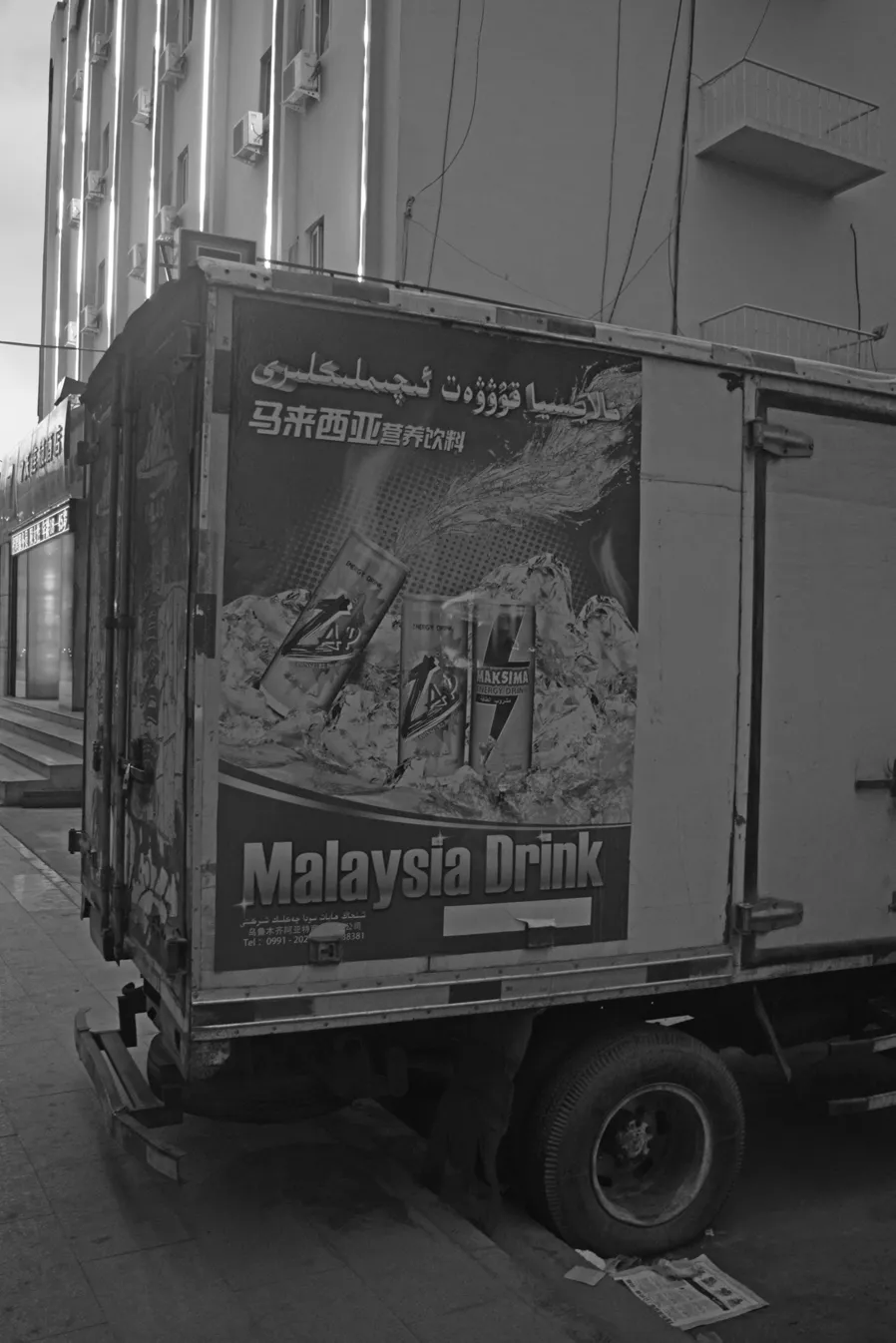
Walking around a predominantly Muslim neighborhood in Turfan, Xinjiang, I found myself surprised at the sight of a truck advertising a “Malaysia Drink” in Mandarin, English and Uyghur script (see Figure 1.1).1 Why focus on a drink’s putative geographical origin, and why Malaysia? Unable to locate the reason for my surprise, I instinctively wondered if it were halal (“permissible according to Islamic laws”). As I scrutinized the truck, I could not discern any explicit sign of its being halal (nor its Chinese equivalent, qingzhen), but two further observations emerged. I noticed that the pictured cans featured the tagline “Energy Drink” in Arabic (mashroob attaaqa), making them recognizable as products also exported to the Middle Eastern market; the use of Arabic might have also indexed its suitability to Muslims. But this detail was eclipsed by the much larger font used for “Malaysia drink.”
Having emerged as a leading player in the global halal market in the 1990s, Malaysia is at the forefront of the standardization of halal production, and has become a major certifier and producer of halal foods and cosmetics. Capitalizing on its strategic geographical location, already recognized as such by European travelers in the fifteenth and sixteenth centuries, Malaysia has been able to both export its halal products and offer “halal logistics” on a global scale, from the Gulf states to Japan and New Zealand. On May 14, 2018, a container ship filled with halal products inaugurated the “Halal Silk Route” with a voyage from western Malaysia’s North Port to Weifang, Shandong, in Northeastern China. Its cargo was destined to reach China’s Muslim provinces of Shaanxi, Ningxia, Gansu, Qinghai and Xingjian, as “the first step towards linking the approximately 2.1 billion global Muslim population through the trade of halal products.”2 Besides providing the goods, Malaysia’s Islamic Development Department (Jabatan Kemajuan Islam Malaysia, JAKIM) has also certified Weifang as the first Chinese halal port operator, qualifying it fit to retain the purity of the products.3
The status of Malaysia’s halal certification in China points at the emergence of this Southeast Asian country as a new site of Islamic authority beyond the confines of its own territory. A similar dynamic has also become evident in the field of women’s religious authority, for example. As in the 1980s Zainah Anwar, in collaboration with five other Malaysian women and the African-American Muslim scholar amina wadud, had created Sisters in Islam (a group interested in promoting women’s rights within the framework of Islam), in 2007–2009 she contributed to the creation of Musawah (Arabic for “equality”) as “a global movement to bring together activists and scholars to shape a new dominant discourse that reconciles Islam with human rights.”4 Musawah was launched at a gathering in Kuala Lumpur attended by over 250 participants from more than 40 countries (Mir-Hosseini, Al-Sharmani, and Rumminger, 2015: xi). In April 2017, a group of Indonesian religious scholars, academic researchers, and activists hosted the Kongres Ulama Perumpuan Indonesia (KUPI), or Indonesia’s Conference of Female Ulama. The conference took place in a rural Islamic boarding school (pesantren) in West Java, and while the initiative was led by two of Indonesia’s most well-known Islamic feminist organizations, it attracted women from many Muslim-majority countries (including Saudi Arabia, Pakistan, Sudan, and Kenya). Malaysia’s halal standardization and broader regional trends advancing female religious authority are two open challenges to discourses and attitudes that for centuries have privileged an Arab “center” over Asian “peripheries,” the former identified as “authentic,” and the latter as “derivative” or “syncretic.”
Notwithstanding the number of Muslims living “across the river” – as the Romans and Arabs referred to the lands of Central Asia and beyond – the aura of authority carried by all things Arab is an established reality among Muslims and non-Muslims alike. In the early seventh century, the message of Islam was revealed in the Arabic language to Muhammad (c. 580–632), an Arab living in Arabia. According to a recent survey of individuals living in the Middle East and North Africa (MENA), where Arabic is the official language, 93% of those polled identified as Muslims.5 The Qur’an is recited in Arabic across the world, and the question of its translation has been a hotly debated one for well over a century; daily prayers are called for, and conducted, in Arabic; Arabic greetings and baby names are increasingly common among Muslims everywhere; after years of failure, in 2015, the Bangladesh Minister of Religious Affairs launched a new campaign against public urination, this time using Arabic signs: his motto was “same message, holier language.”6
But it is not only believers who have ascribed exclusive authority and importance to Arabic. At its inception in European universities, the academic study of Islam was rooted in philological and other literary analyses of Arabic texts; later in the nineteenth century, this methodology was carried across the Atlantic and has since imbued public debates, outreach education, and everyday conversations on Islam. Ethnographic interest in Muslim societies emerged as a hallmark of Euro-American colonial scholarship and administration across Africa and Asia, and it was sustained until the mid-twentieth century. Muslims (and other subjects) were being observed and studied to guarantee territorial control over the colonies. In addition to the political framing of their scholarship, these scholars applied their exoticizing gaze: as Arabs were othered through several Orientalist tropes, so Asian subjects’ identities were understood through the lenses of Hindu, Buddhist, and “spiritual” mysticism. Islam was foreign, and often portrayed as a threat to colonial order (see also Morgenstein Fuerst in this volume for the reverberations of this narrative on the creation of racialized and “problematic” Muslim minorities).
This approach to knowledge production did not change with the end of colonial regimes. In the late 1970s, Edward Said (1978) pointed the finger at the legacy of colonial ethnographies in anthropological writings published in the previous 20 years. The publication of Clifford Geertz’s The Religion of Java had opened the field of anthropology to the study of “Muslim societies,” but there Geertz concluded that “It is very hard for a Javanese to be a ‘real Moslem’” because of the persistence of older cultural and religious norms (1960: 160). This was no different from the assessment made a century earlier by Protestant missionaries, who had described “the religion of present-day Java [a]s the product of Buddhism, Brahmanism, Shivaism, Mohammedanism, etc. not processed and brought together into a whole, but all mixed together and wonderfully confused” (Poensen 1865: 178). Similar polarizations between “authentic” Islamic practices in Arabia and derivative or syncretic practices at the peripheries were prominent in Geertz’s second monograph, Islam Observed (1968), as well as Ernest Gellner’s Saints of the Atlas (1969).
Scholarly engagements with Islam thus splintered between studies of texts and studies of practices; and because of the historical trajectory of Islam, authenticity was interlocked with seventh-century Arabia, its language, and its customs (see Khan, this volume, for the implications of this duality on understandings of Islamic finance in Pakistan). Far from being limited to universities, this idea that Islam was coterminous with the Middle East has had lasting influences on museums, for example, where Islamic art galleries across Euro-America continue to display predominantly artifacts originating from the (greater) Middle East, with occasional nods to Spain (as Andalusia) and (Mughal) South Asia. In its own galleries, Asia remains squarely framed as Hindu, Buddhist and Confucian, and over the decades artifacts from China or Southeast Asia marked as “Islamic” were often treated as curiosities or imported objects (Formichi 2016; Shatanawi 2015; for a parallel analysis of Islamic music, see Rasmussen in this volume). Museums in Australia and other countries in the Asia-Pacific region have veered in a different direction for over a decade now, and the British Museum’s new Albukhary Foundation Gallery of the Islamic World (opened in late 2018) remains a lonely exception in Europe (Norton-Wright 2020). Intellectual practices rooted in a dichotomous and polarized vision of Islamized territories that differentiated between a center – putatively holding the standard of authentic and pure Islam – and peripheries – where Islam was “mystical,” “syncretic,” or “deviationist,” have been unsettled by extraordinary scholarship produced in the new millennium, and focusing on movement, flows, exchanges, and conversations (among many I cite Ho (2006) and Ricci (2011) because of their influence on my own thinking; this issue is at the core of Torsten Tschacher’s contribution to this volume, with extensive discussion of and engagement with, the extant literature).
This volume, then, aims at subverting the established approach that studies and presents Islam as a primary feature of the Middle East and as foreign to Asia, where manifestations of Muslimness are seen as “syncretic.” Islam is the primary frame for analyses of Asia’s societies and histories, and Asia is the stage for various explorations of Islamic/Muslim rituals, aesthetics, textualities, and identities. Without denying the historical and devotional importance of Mecca, or the role played by Middle Eastern Muslims, the contributors to this Handbook lend their expertise to paint a picture of “Islam” as deeply and thoroughly connected to, and influenced by, Asia, and vice versa, often by-passing or reversing the relationships of power and authority that most often place “Arab” Islam in a hierarchically superior, or at least dominant, position vis-à-vis Asia. Here, we – the editor and contributors – collectively chart an agenda that shows possibilities for new scholarly endeavors.
Finding a Malaysian product on the streets of Turfan is not a mere outcome of modern-day globalization, Western-mediated mobility, or capitalism with Chinese characteristics. As I illustrate in this opening chapter, various parts of Asia have been connected through networks of trade for over a thousand years. Caravans crossed the Central Asian deserts and mountains trading silk and porcelain between the Mediterranean and China; dhows followed the monsoon across the western and eastern sides of the Indian Ocean, carrying spices and bodies between the Horn of Africa, the Arabian gulf, and Southeast Asia, stopping on the coasts of India. From the ninth century onwards, these connections were also mediated by Muslims. By the fifteenth century, Muslims dominated intra-Asian trading networks.
Muslims in Asia
Within a century of Muhammad receiving the first revelation (dated at about 610 CE), the Muslim empire had reached as far west as Spain and as far east as Multan, in today’s Pakistan. Even though the Quranic message had stated the importance of rejecting tribalism and embracing a “brotherhood of faith,” the social, political, and...
Table of contents
Cover
Endorsement
Half-Title Page
Title Page
Copyright Page
Table of Contents
List of Figures
Editorial Board
List of Contributors
Acknowledgements
Part I Frames
Part II Authority and authorizing practices
Part III Muslim spatialities
Part IV Imaginations of piety
Glossary
Index
Trusted by 375,005 students
Access to over 1.5 million titles for a fair monthly price.
Study more efficiently using our study tools.
Frequently asked questions
Yes, you can cancel anytime from the Subscription tab in your account settings on the Perlego website. Your subscription will stay active until the end of your current billing period. Learn how to cancel your subscription
No, books cannot be downloaded as external files, such as PDFs, for use outside of Perlego. However, you can download books within the Perlego app for offline reading on mobile or tablet. Learn how to download books offline
Perlego offers two plans: Essential and Complete
Essential is ideal for learners and professionals who enjoy exploring a wide range of subjects. Access the Essential Library with 800,000+ trusted titles and best-sellers across business, personal growth, and the humanities. Includes unlimited reading time and Standard Read Aloud voice.
Complete: Perfect for advanced learners and researchers needing full, unrestricted access. Unlock 1.5M+ books across hundreds of subjects, including academic and specialized titles. The Complete Plan also includes advanced features like Premium Read Aloud and Research Assistant.
Both plans are available with monthly, semester, or annual billing cycles.
We are an online textbook subscription service, where you can get access to an entire online library for less than the price of a single book per month. With over 1.5 million books across 990+ topics, we’ve got you covered! Learn about our mission
Look out for the read-aloud symbol on your next book to see if you can listen to it. The read-aloud tool reads text aloud for you, highlighting the text as it is being read. You can pause it, speed it up and slow it down. Learn more about Read Aloud
Yes! You can use the Perlego app on both iOS and Android devices to read anytime, anywhere — even offline. Perfect for commutes or when you’re on the go. Please note we cannot support devices running on iOS 13 and Android 7 or earlier. Learn more about using the app
Yes, you can access Routledge Handbook on Islam in Asia by Chiara Formichi in PDF and/or ePUB format, as well as other popular books in Social Sciences & Islamic Theology. We have over 1.5 million books available in our catalogue for you to explore.