This book takes a holistic approach by providing insight into the behavior and nature of sex offenders within the church. The text covers various types of sex offenders as well as their criminal propensities and methods of acquiring victims. Warning signs associated with sex crimes within the church are explained as well as security measures and prevention strategies that church leaders and criminal justice professionals can utilize to minimize risk to congregants. Discussion questions and case study scenarios are provided to allow the reader to examine relevant issues and explore a range of potential solutions and interventions.
This comprehensive book is intended for criminal justice academicians who teach courses on sex crimes and sex offenders, criminal justice agents (police and investigators), seminary professors and students, and clergy members. It can also assist security teams, church board members, leaders, and teachers in developing intervention and prevention strategies.
My family and I had started attending a new church. I grudgingly went every Sunday, knowing that my old friends from our last church wouldn’t be there. I begged my mom to go back, but she insisted that we leaving was for the best.
It only took a few months before we started getting close to our new pastor. He was in his mid-60s with a charming smile—he wore a different tie every Sunday. His hair was always styled to perfection and his cologne was strong. Whenever we walked through the church doors, he would always high-five me and tell me his “joke of the day.” Silly things, really, but he never did this with the other kids my age. All of his attention really made me feel like I was a special person, especially as an insecure 13-year-old girl.
My parents adored him. I mean, who wouldn’t? He would come to our house regularly for dinner, and he even let me work for him to make some extra spending money. It was odd though, because it seemed like there was never anyone else working with us. It felt like it was always just the two of us.
I didn’t think anything of it at first. I didn’t think of how weird it was that he treated me differently or how he only hired me to work for him. I didn’t blink an eye at the fact that he was getting close to my parents for only one disgusting reason…to get closer to me.
After the abuse began, I never stopped thinking about how my pastor was supposed to be someone I could trust, someone I could talk to. He was supposed to be a “man of God,” not a man that caused me to live a life of absolute hell. He was so manipulative and constantly instilled in me this horrible sense of fear. He even quoted scripture to me to justify what he was doing. I wondered if I was the only one that really knew how evil he truly was. How was everyone else so blinded by his charm and charisma? I think what killed me the most was the fact that I couldn’t tell a single soul about him … about what he was doing to me. He was a beloved pastor; a “man of God” … what would my parents think? What would all of our church family think? Would anyone believe me? I mean … I could hardly believe it myself. The abuse lasted for several years, but the secret lasted even longer. I lived a life of constant fear, turmoil, dread, and confusion (anonymous victim).
Sexual abuse has been a long-standing problem in our society and its institutions. From team physicians sexually abusing female Olympic athletes to school teachers seducing underage students in their classes to health care personnel sexually assaulting disabled patients under their care, sexual offenses and crimes have increasingly emerged front and center in our collective consciousness. Unfortunately, stories of abuse within churches across the United States, similar to the one shared by the anonymous victim cited previously, are becoming all too familiar. It is difficult to determine exactly how many sexual predators are attending churches, but what is known is they are found in every type of position. In a study of sexual abuse originating in Protestant churches, of 328 male offenders, 34.9 percent were lead pastors, 31.4 percent were youth ministers, with associate and worship pastors, church volunteers, deacons, Bible study leaders, and church members making up the rest (Denney, Kerley, & Gross, 2018). Data collected through the Center for Applied Research in the Apostolate (CARA, 2019), specifically focusing on Catholic churches, reveal over 6,000 reported allegations of sexual abuse of a minor by a Catholic authority before 2003 (CARA, 2019). More recent statistics reveal over 5,500 allegations were made against Catholic leaders between 2004 and 2018. These allegations are only those related to American Catholic authorities and do not include the allegations that have been made regarding sexual abuse in the Catholic Church worldwide (CARA, 2019). Through these types of studies, we are able to see that successful predators are often those in positions of trust and authority in churches. They are able to utilize their position to gain the confidence of fellow leaders and church members, thereby, gaining access to victims without raising concerns. Many sex offenders report religious people as being much easier to deceive than other types of individuals (Salter, 2003). This seems to be due in part to many church leaders and members having a misguided assumption that if an individual is associated with their faith-based community or church, they must hold similar values and beliefs. It is often thought that they must have a love for God, church, and family when that may not be the case at all. Sex offenders take advantage of this type of thinking and naiveté. Churches are often loving and accommodating places—accepting and trusting of outsiders, especially if the outsider claims to be a fellow believer. Sexual predators know this. So, what better way to create a facade of trust and respectability than to be a church member or better yet, become a Bible study leader, pastor, elder, or hold another position of trust and authority?
Biblical teachings of love and forgiveness, which are consistently taught in churches, are qualities that often result in fellow parishioners ignoring warning signs within the church. While most parishioners may assume that others attend church to worship God and become a part of their spiritual community, sexual predators and offenders utilize these cultural beliefs to their advantage in order to gain access to potential victims. Sex offenders know churches are directed to accept outsiders, to welcome the stranger, offer support, and provide them opportunities to become part of the church family. Without appropriate knowledge and awareness of sexual crimes and offenders, churches can unintentionally cultivate an environment ripe for sexual victimization.
Ancient and Contemporary Perspectives
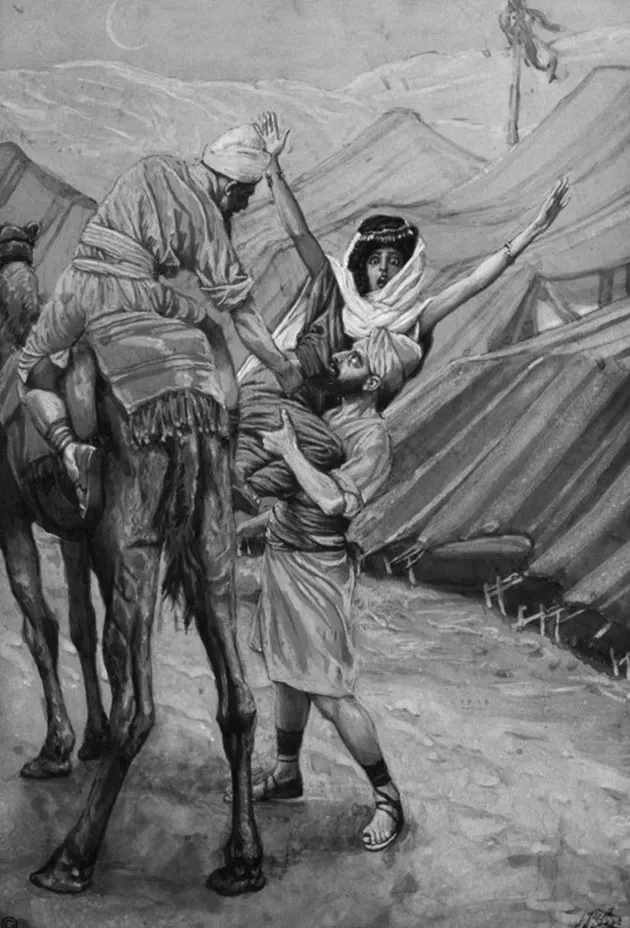
Sexual victimization within the Christian culture is not a new phenomenon. The Bible speaks of various women who were sexually assaulted. In the Old Testament, the story of Dinah was the first incident of rape spoken of in the Bible. Dinah’s story is documented in Genesis 34. At the time, Dinah was traveling with women in the region. She was overpowered and raped by Shechem, who happened to be the son of a Prince. After raping Dinah, Shechem felt remorse and wanted to marry her and make her his wife. Though aggrieved, Dinah’s father, Jacob, agreed to allow the marriage to take place. Part of the agreement required the circumcision of all males in Shechem’s tribe. Shortly following the males’ circumcision, Dinah’s brothers took advantage of the tribe’s weakness and massacred all of the males and plundered their city as an act of revenge for their sister’s rape. The Bible does not address how the family found out about Dinah’s rape or how Dinah felt as a result of being victimized in this manner. All we know is that her rape resulted in the annihilation of the offender (Shechem), his family, and his community. What is clear even in a historical perspective was that this one act of violence usually does not end there, but instead, often leads to a wider arc of violence (Figure 1.1).
Figure 1.1Abduction of Dinah—depicted by James Tissot.
Source: Wikipedia.
Not long after the record of Dinah’s assault, Hebrew law, as noted in Deuteronomy, specifically addressed cases of rape and sexual abuse. Deuteronomy 22:25–27 states:
But if a man finds a betrothed young woman in the countryside, and the man forces her and lies with her, then only the man who lay with her shall die. But you shall do nothing to the young woman; there is in the young woman no sin deserving of death, for just as when a man rises against his neighbor and kills him, even so is this matter. For he found her in the countryside, and the betrothed young woman cried out, but there was no one to save her.
(KJV, 1996)
The Hebrew word used in this passage to indicate rape is chazaq, which suggests force, violence, or overpowering someone. This is by definition nonconsensual because the individual overpowered the victim against their will. According to this scripture, the punishment for this type of offense was death.
We see similar responses to rape in the story of the unnamed concubine in Judges. This story is considered by many to be the most violent incidence of rape recorded in the Bible. According to the text, the unnamed concubine and her husband, a Levite, were traveling when they stopped for the night in the city of Gibeah. There, a man offered the couple a place to stay the night. While they were eating their evening meal, a group of men surrounded the home attempting to coax the Levite outside to rape him. The host attempts to dissuade the men of the city from raping his male guest, offering to them his own daughter and the Levite’s concubine in place of the Levite. When the men of Gibeah refused to accept the two women, one of the men inside the house threw the concubine outside. The men proceeded to violently rape her throughout the night to the point of death. These acts of rape resulted in violence and civil war throughout the various cities in the area (Figure 1.2).
Figure 1.2Rape of Tamar by Eustache Le Sueur.
Source: Wikipedia.
What may be the most well-known account of rape in the Bible is that of King David’s daughter, Tamar. In II Samuel 113, the scriptures tell us that Amnon, the son of David, plotted to get his half-sister, Tamar, alone in order to have sex with her.
But when she brought them near him to eat, he took hold of her, and said to her, “Come, lie with me, my sister.” She answered him, “No, my brother, do not force me; for such a thing is not done in Israel; do not do anything so vile!”…But he would not listen to her; and being stronger than she was, he forced her and lay with her…Her brother Absalom said to her, “Has Amnon your brother been with you? Be quiet for now, my sister; he is your brother; do not take this to heart.” So Tamar remained, a desolate woman, in her brother Absalom’s house.
(II Samuel 13:11–12, 14, 20)
We see through this scripture that even during this time, victims were instructed to keep their abuse a secret. In addition, Tamar was instructed not to take the abuse “to heart,” which reveals how Absalom attempted to attenuate the magnitude of this act. Interestingly enough, scripture continues to talk about the brothers, the father, and the consequences for them, but little is said of Tamar. Scripture simply explains that she remained desolate in her brother’s house, locked in the silence, shame, violation, and trauma of the abuse she suffered at the hands of her half-brother.
When church families allow this kind of abuse to be inflicted on one another, when families and church families look the other way, cover it up, or ignore the magnitude of such acts, as was true in ancient times, these behaviors can easily perpetuate and lead to long-simmering resentment and potentially greater acts of violence. Similar to Tamar, victims of sex abuse in the church often do not feel as though they can vocalize or report their abuse. As a result, they can experience an even greater sense of isolation and desolation than some other sexual abuse victims have to contend with. They are not only affected physically, emotionally, and psychologically, but spiritually as well. Many sex offenders in churches utilize scripture to manipulate their victims. They prey on the victim’s love of God, which can result in victims internalizing a distorted view of the church, God, and their faith.
In recent years, sexual assaults perpetrated by leaders within the Catholic Church have received substantial media attention. Multiple documentaries, investigative series, and movies have attempted to shed light on the abuse of power by portraying the victims’ stories and cover-ups by church authorities. Investigative reporting by the Boston Globe in 2002 led to widespread media coverage in the United States (Rezendes, 2018). In 2019, more recent investigations led to five former Catholic priests in Michigan being charged with criminal sexual conduct and rape. In these cases, many of the clergy preyed on young children and on vulnerable adults. They manipulated, threatened, sometimes drugged, and sexually assaulted their victims. These predator priests were often hiding in plain sight, comforting their parishioners and hearing their confessions while taking advantage of their position of faith and authority in the church (Zauzmer, 2019).
The Michigan investigation of clergy sexual abuse in the Cath...
Table of contents
Cover
Endorsement
Half Title
Title Page
Copyright Page
Table of Contents
A Note from the Authors
Chapter 1 A Christian Perspective: Historical and Modern Contexts
Chapter 2 Sex Crimes and Sex Offenders in the United States
Chapter 3 In the Name of the Father: Sex Crimes in the Church
Chapter 4 Predators Among Us: Church Leaders and Parishioners
Chapter 5 The Victim’s Lament: Warning Signs and Consequences
Chapter 6 An Essential Priority: Maintaining Church Security
Chapter 7 Protect This House: Leadership Prevention Strategies
Chapter 8 What Will the Neighbors Think: The Church’s Response to Sex Crimes
Chapter 9 All God’s Children: A Known Sex Offender in the Church
Chapter 10 The Scales of Justice: Legal Issues for the Church
Chapter 11 #CHURCHTOO: A Way Forward
Index
Trusted by 375,005 students
Access to over 1.5 million titles for a fair monthly price.
Study more efficiently using our study tools.
Frequently asked questions
Yes, you can cancel anytime from the Subscription tab in your account settings on the Perlego website. Your subscription will stay active until the end of your current billing period. Learn how to cancel your subscription
No, books cannot be downloaded as external files, such as PDFs, for use outside of Perlego. However, you can download books within the Perlego app for offline reading on mobile or tablet. Learn how to download books offline
Perlego offers two plans: Essential and Complete
Essential is ideal for learners and professionals who enjoy exploring a wide range of subjects. Access the Essential Library with 800,000+ trusted titles and best-sellers across business, personal growth, and the humanities. Includes unlimited reading time and Standard Read Aloud voice.
Complete: Perfect for advanced learners and researchers needing full, unrestricted access. Unlock 1.5M+ books across hundreds of subjects, including academic and specialized titles. The Complete Plan also includes advanced features like Premium Read Aloud and Research Assistant.
Both plans are available with monthly, semester, or annual billing cycles.
We are an online textbook subscription service, where you can get access to an entire online library for less than the price of a single book per month. With over 1.5 million books across 990+ topics, we’ve got you covered! Learn about our mission
Look out for the read-aloud symbol on your next book to see if you can listen to it. The read-aloud tool reads text aloud for you, highlighting the text as it is being read. You can pause it, speed it up and slow it down. Learn more about Read Aloud
Yes! You can use the Perlego app on both iOS and Android devices to read anytime, anywhere — even offline. Perfect for commutes or when you’re on the go. Please note we cannot support devices running on iOS 13 and Android 7 or earlier. Learn more about using the app
Yes, you can access Sexual Abuse Within the Church by Chris Rush Burkey,Michael C. Braswell,John T. Whitehead in PDF and/or ePUB format, as well as other popular books in Social Sciences & Criminology. We have over 1.5 million books available in our catalogue for you to explore.