Intelligent Connectivity
eBook - ePub

Intelligent Connectivity

AI, IoT, and 5G

  1. English
  2. ePUB (mobile friendly)
  3. Available on iOS & Android
eBook - ePub

Intelligent Connectivity

AI, IoT, and 5G

About this book

INTELLIGENT CONNECTIVITY AI, IOT, AND 5G

Explore the economics and technology of AI, IOT, and 5G integration

Intelligent Connectivity: AI, IoT, and 5G delivers a comprehensive technological and economic analysis of intelligent connectivity and the integration of artificial intelligence, Internet of Things (IoT), and 5G. It covers a broad range of topics, including Machine-to-Machine (M2M) architectures, edge computing, cybersecurity, privacy, risk management, IoT architectures, and more.

The book offers readers robust statistical data in the form of tables, schematic diagrams, and figures that provide a clear understanding of the topic, along with real-world examples of applications and services of intelligent connectivity in different sectors of the economy.

Intelligent Connectivity describes key aspects of the digital transformation coming with the 4th industrial revolution that will touch on industries as disparate as transportation, education, healthcare, logistics, entertainment, security, and manufacturing.

Readers will also get access to:

  • A thorough introduction to technology adoption and emerging trends in technology, including business trends and disruptive new applications
  • Comprehensive explorations of telecommunications transformation and intelligent connectivity, including learning algorithms, machine learning, and deep learning
  • Practical discussions of the Internet of Things, including its potential for disruption and future trends for technological development
  • In-depth examinations of 5G wireless technology, including discussions of the first five generations of wireless tech

Ideal for telecom and information technology managers, directors, and engineers, Intelligent Connectivity: AI, IoT, and 5G is also an indispensable resource for senior undergraduate and graduate students in telecom and computer science programs.
Frequently asked questions

Yes, you can cancel anytime from the Subscription tab in your account settings on the Perlego website. Your subscription will stay active until the end of your current billing period. Learn how to cancel your subscription.
No, books cannot be downloaded as external files, such as PDFs, for use outside of Perlego. However, you can download books within the Perlego app for offline reading on mobile or tablet. Learn more here.
Perlego offers two plans: Essential and Complete
  • Essential is ideal for learners and professionals who enjoy exploring a wide range of subjects. Access the Essential Library with 800,000+ trusted titles and best-sellers across business, personal growth, and the humanities. Includes unlimited reading time and Standard Read Aloud voice.
  • Complete: Perfect for advanced learners and researchers needing full, unrestricted access. Unlock 1.4M+ books across hundreds of subjects, including academic and specialized titles. The Complete Plan also includes advanced features like Premium Read Aloud and Research Assistant.
Both plans are available with monthly, semester, or annual billing cycles.
We are an online textbook subscription service, where you can get access to an entire online library for less than the price of a single book per month. With over 1 million books across 1000+ topics, we’ve got you covered! Learn more here.
Look out for the read-aloud symbol on your next book to see if you can listen to it. The read-aloud tool reads text aloud for you, highlighting the text as it is being read. You can pause it, speed it up and slow it down. Learn more here.
Yes! You can use the Perlego app on both iOS or Android devices to read anytime, anywhere — even offline. Perfect for commutes or when you’re on the go.
Please note we cannot support devices running on iOS 13 and Android 7 or earlier. Learn more about using the app.
Yes, you can access Intelligent Connectivity by Abdulrahman Yarali in PDF and/or ePUB format, as well as other popular books in Computer Science & Artificial Intelligence (AI) & Semantics. We have over one million books available in our catalogue for you to explore.

1
Technology Adoption and Emerging Trends

1.1 Introduction

In the last few decades, the world has been changing at a faster rate than before. The immense growth in the global network has left billions of people hyper‐connected to each other. Thus, there has been tremendous growth and spread of new ideas and technological innovations (Desjardins 2018). Due to different technological trends, changes in high‐tech advances, and demographics, it is expected that the next two decades will experience an exponential and historic transformation (Bayern 2019). The advancement of networking and serverless computing is expected to reshape all the business processes in the next few years. Even though technology has been disrupting different industries, it will reshape gradually in the coming decades since players have been forced to integrate technological advances in their businesses (Arnold and Shadnam 2014). New technologies and scientific breakthroughs have been paraded since they are relentless, and they continue to unfold. Technological advancements are achieved every day, and thus it is expected that they will continue to disrupt people, businesses, and the world at large. Policymakers and different societies need to prepare for technology's future since it is expected that our economy's current status quo will keep changing in the coming years. Ad technology continues to grow so the government should create an environment where citizens will continue to prosper even after different emerging technologies disrupt people's lives and businesses (Bayern 2019). In today's world, we are in the middle of the business revolution, where technology is transforming different business entities. Different businesses will continue to focus on different core technological trends such as mobility, cloud computing, and big data (UN 2018).
In the last few years, there has been a proliferation and convergence of mobile networks, devices, applications, and operating systems. Thus, most businesses around the world are willing to take advantage of and expand their mobile technology (Arnold and Shadnam 2014). As a result, the consumerization of Information Technology (IT) devices and trends in BYOD (Buy Your Own Device) has enabled people to use their devices to work while in motion; this has led to an increase in employee's productivity since they can respond to all the market changes and embrace all the opportunities that might arise. The emergence of mobility as a business tech model has played a significant role in reducing equipment costs and has provided the employees with a sense of employment (Desjardins 2018). They have the freedom to work from any location, and they have an increased level of accessing information. Therefore, employees in different business entities can perform more tasks outside their offices than before. The emergence of big data is expected to change business dynamics in various organizations. In the next two decades, the volume of data available to different enterprises will grow dramatically (Kambala 2018). Big data is expected to change insights about the customers, operational costs, and all the relevant aspects of different business models worldwide. The emergence of cloud computing has enabled businesses to compete at a higher level since the traditional software and systems are no longer required. In the next two decades, cloud computing is expected to grow at a higher level since organizations will focus on business models that they can use to reduce operational costs. In today's world, cloud technology enables organizations to segment and use diverse resources easily and at a lower cost. It has also enabled the implementation of high‐performing infrastructures that can be accessed by using mobile devices, and thus they have had widespread adoption.
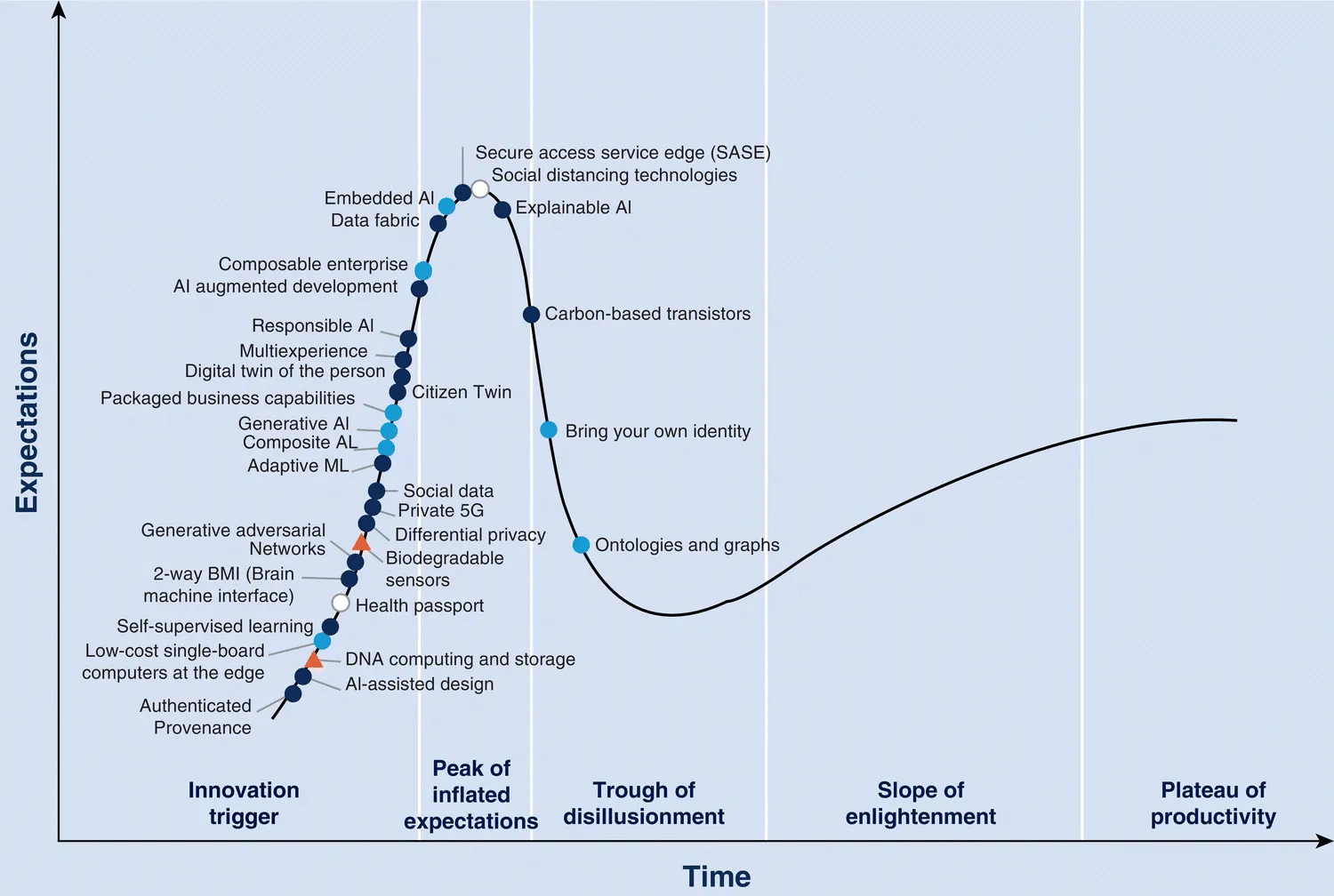
The future of business technology is expected to get better. In the next two decades, different trends will define business and change all the dynamics of business operations worldwide. Some businesses have already begun integrating their core business process and products with Artificial Intelligence (AI) (Kambala 2018). This indicates that AI will be used to influence and run different business resources in the future. The emergence of cloud computing has fueled the automation of the business process, and thus the outcomes of business processes are expected to change in the next two decades. The connectivity of tomorrow is another key aspect that is expected to transform businesses shortly. The establishment of different technologies such as 5G networks, mesh networks, and edge computing is expected to enhance new products and services whereby they will be completed efficiently and reliably. The presence of intelligent interfaces is expected to transform how people interact with different machines and data while, at the same time, moving beyond marketing will contextualize customer experience and establish closer relationships between customers and the organizations. It is essential to acknowledge that technology is proliferating and more breakthroughs will be realized. The presence of disruptive technologies is a demonstration that there will be a rapid rate of changes. Organizations should identify different approaches to enhance their performance and implement changes due to technological changes. Change is inevitable, and thus organizations should be flexible and be ready for the ever‐changing technological advancements (Makela 2012). This research paper will focus on the future of business technology and how adopting different technology trends will define the next two decades. Figure 1.1 is a Gartner Hype Cycle depicting some 30 technology profiles that will significantly change society and business over the next 5–10 years (Panetta 2020).

1.2 Trends in Business Technology

There have been many technological breakthroughs in the last decade, including advanced smartphones, Internet of Things (IoT), AI, self‐driving cars, and now 5G and 6G cellular technologies. Development of IoT, 5G, and AI continues to evolve to the point of convergence on preexisting tech and future technologies as a whole, evolving to the point of everyday life, which encompasses everything from health to industrial systems. The implementation of 5G coming into place allows devices to push data across networks at bigger capacities. However, with devices and systems converging, security implementations need to be in the for‐front for IoT, 5G, and AI, which will play a huge role in the future of communications of systems and continue to evolve for a more sophisticated and efficient system throughout the world.
Schematic illustration of hype cycles for emerging technologies, 2020.
Figure 1.1 Hype cycles for emerging technologies, 2020 (Panetta 2020).

1.2.1 Trends that Could Disrupt the Industry

Various vital trends will disrupt the industry in the future. In this case, some of these trends include AI, where it is expected to benefit businesses and society at large, extended reality, data veracity, frictionless business, and the IoT. The emergence of AI has promised to change the world, and in the last few years, it has positively impacted people's lives. Different businesses are currently capitalizing on the potentials of AI; hence they acknowledge that it will revolutionize many different businesses in the next two decades. AI is more than a tool, and has changed the functionalities of different businesses (Kambala 2018). AI will continue to revolutionize digital marketing and ads based on a business or an organization's core values. The presence of extended reality aimed at ending the distance has transformed the way people work and live. In the next few years, this form of technology is expected to limit people's distance, information, and experiences. As a result, the business will benefit from these changes since employees can work from any location, resulting in higher productivity and turnover (Manyika et al. 2013). In two decades, data veracity will transform how people run data and help businesses deal with different vulnerabilities.
Data veracity is an emerging trend meant to determine if business insights may be corrupted and help the management avoid skewed decisions. It is essential for the organizations to address the issues associated with data bias, inaccurate and manipulated data trends, and ensure they run the organization effectively. Organizations need to redesign themselves as they get ready to embrace frictionless businesses to build to a partner at scale. One of the emerging trends is that businesses are depending on technology‐based partnerships as they seek to grow. The associations are meant to expand the partner networks faster than before (Manyika et al. 2013). The establishment of robust digital ecosystems will enhance business relationships between the organizations, which will guarantee a brighter future. IoT is another emerging technology that will continue to revolutionize business in the next two decades (Kambala 2018). It involves the interconnection of different devices over the internet, allowing people to communicate and run various applications. IoT will enable people to control their home heating, lighting, sprinklers, and many other appliances through their mobile devices (Manyika et al. 2013). These solutions have revolutionized business, and it is a trend that is expected to grow tremendously in the next few decades. It is expected that the integration of IoT will affect and disrupt many businesses since it provides unprecedented opportunities through process automation and data‐gathering processes.

1.2.2 Adopting New Technologies

The emergence of new technologies has forced businesses, competitors, and other industries to adapt to remain relevant in the market. Over the last few years, organizations have been integrating the upcoming technologies to gain a competitive advantage as they strive to increase their return on investment (Ramey 2012). They are using the latest tech to enhance the attention of the customers towards their products and services. Some have already implemented smart manufacturing, digital marketing, and many other emerging technologies to promote their brand as they strive to increase their market share (Manyika et al. 2013). Before adopting new technologies, businesses are considering several processes and steps to ensure successful integration. The first step is to establish the organization's technology and evaluate how it will change the organization. Based on priorities, the organization will opt for the systems that are accessible, reliable, and affordable. Once it has been established, the organization then considers productive support where difficulties are mitigated during integration (Makela 2012). Employees are trained, and user manuals are provided to have an easier time implementing the new technology. The next step is ensuring there...

Table of contents

  1. Cover
  2. Table of Contents
  3. Title Page
  4. Copyright Page
  5. Dedication Page
  6. Preface
  7. Acknowledgement
  8. Introduction
  9. 1 Technology Adoption and Emerging Trends
  10. 2 Telecommunication Transformation and Intelligent Connectivity
  11. 3 The Internet of Things (IoT): Potentials and the Future Trends
  12. 4 The Wild Wonders of 5G Wireless Technology
  13. 5 Artificial Intelligence Technology
  14. 6 AI, 5G, and IoT: Driving Forces Towards the Industry Technology Trends
  15. 7 Intelligent Connectivity: New Capabilities to Bring Complex Use Cases
  16. 8 IoT : Laws, Policies, and Regulations
  17. 9 Artificial Intelligence and Blockchain
  18. 10 Digital Twin Technology
  19. 11 Artificial Intelligence, Big Data Analytics, and IoT
  20. 12 Digital Transformation Trends in the Automotive Industry
  21. 13 Wireless Sensors/IoT and Artificial Intelligence for Smart Grid and Smart Home
  22. 14 Artificial Intelligence, 5G, and IoT: Security
  23. 15 Intelligent Connectivity and Agriculture
  24. 16 Applications of Artificial Intelligence, ML, and DL
  25. 17 Big Data and Artificial Intelligence: Strategies for Leading Business Transformation
  26. Index
  27. End User License Agreement