Intelligent Modeling, Prediction, and Diagnosis from Epidemiological Data
eBook - ePub

Intelligent Modeling, Prediction, and Diagnosis from Epidemiological Data

COVID-19 and Beyond

  1. 214 pages
  2. English
  3. ePUB (mobile friendly)
  4. Available on iOS & Android
eBook - ePub

Intelligent Modeling, Prediction, and Diagnosis from Epidemiological Data

COVID-19 and Beyond

About this book

Intelligent Modeling, Prediction, and Diagnosis from Epidemiological Data: COVID-19 and Beyond is a handy treatise to elicit and elaborate possible intelligent mechanisms for modeling, prediction, diagnosis, and early detection of diseases arising from outbreaks of different epidemics with special reference to COVID-19. Starting with a formal introduction of the human immune systems, this book focuses on the epidemiological aspects with due cognizance to modeling, prevention, and diagnosis of epidemics. In addition, it also deals with evolving decisions on post-pandemic socio-economic structure.

The book offers a comprehensive coverage of the most essential topics, including:

  • A general overview of pandemics and their outbreak behavior
  • A detailed overview of CI techniques
  • Intelligent modeling, prediction, and diagnostic measures for pandemics
  • Prognostic models
  • Post-pandemic socio-economic structure

The accompanying case studies are based on available real-world data sets.

While other books may deal with this COVID-19 pandemic, none features topics covering the human immune system as well as influences on the environmental disorder due to the ongoing pandemic.

The book is primarily intended to benefit medical professionals and healthcare workers as well as the virologists who are essentially the frontline fighters of this pandemic. In addition, it also serves as a vital resource for relevant researchers in this interdisciplinary field as well as for tutors and postgraduate and undergraduate students of information sciences.
Frequently asked questions

Yes, you can cancel anytime from the Subscription tab in your account settings on the Perlego website. Your subscription will stay active until the end of your current billing period. Learn how to cancel your subscription.
No, books cannot be downloaded as external files, such as PDFs, for use outside of Perlego. However, you can download books within the Perlego app for offline reading on mobile or tablet. Learn more here.
Perlego offers two plans: Essential and Complete
  • Essential is ideal for learners and professionals who enjoy exploring a wide range of subjects. Access the Essential Library with 800,000+ trusted titles and best-sellers across business, personal growth, and the humanities. Includes unlimited reading time and Standard Read Aloud voice.
  • Complete: Perfect for advanced learners and researchers needing full, unrestricted access. Unlock 1.4M+ books across hundreds of subjects, including academic and specialized titles. The Complete Plan also includes advanced features like Premium Read Aloud and Research Assistant.
Both plans are available with monthly, semester, or annual billing cycles.
We are an online textbook subscription service, where you can get access to an entire online library for less than the price of a single book per month. With over 1 million books across 1000+ topics, we’ve got you covered! Learn more here.
Look out for the read-aloud symbol on your next book to see if you can listen to it. The read-aloud tool reads text aloud for you, highlighting the text as it is being read. You can pause it, speed it up and slow it down. Learn more here.
Yes! You can use the Perlego app on both iOS or Android devices to read anytime, anywhere — even offline. Perfect for commutes or when you’re on the go.
Please note we cannot support devices running on iOS 13 and Android 7 or earlier. Learn more about using the app.
Yes, you can access Intelligent Modeling, Prediction, and Diagnosis from Epidemiological Data by Siddhartha Bhattacharyya in PDF and/or ePUB format, as well as other popular books in Medicine & Computer Science General. We have over one million books available in our catalogue for you to explore.

Information

1 Human Immune System and Infectious Disease

Faruk Bin Poyen
The University of Burdwan
DOI: 10.1201/9781003158684-1

CONTENTS

  1. 1.1 Introduction
  2. 1.2 Human Immune System
    1. 1.2.1 Components of the Immune System
    2. 1.2.2 Disease and Treatment of the Immune System
  3. 1.3 Infectious Diseases
    1. 1.3.1 Occurrences of Pandemic
  4. 1.4 Vaccines—Strengthening of the Adaptive Immune System:
    1. 1.4.1 Vaccine Manufacturing
    2. 1.4.2 Working of Vaccines
    3. 1.4.3 Vaccine Administration
    4. 1.4.4 Current Approved Vaccines against COVID-19
  5. 1.5 Conclusion
  6. References

1.1 Introduction

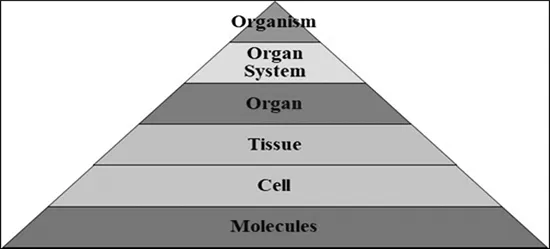
For any living organism, it is absolutely essential to protect itself from both the visible predators and threats as well as the attacks from microbial organisms that are primarily responsible for ailments and organ failures, eventually leading to death. Over millions of years of evolution, Homo sapiens have come on top of all the other living multicellular organisms and the single-cellular viruses and established their superiority over the entire animal kingdom. One interesting trivia about virus is that it does not qualify as a living organism but a packet of genetic information evolving through natural selection. All living organisms have their own defense mechanisms against other microorganisms, but the human race is blessed with the gift of superior intelligence with which they develop vaccines and drugs and medicines to keep the otherwise dreadful entities at bay to a great extent. However, it is a continuous battle that the human race always has indulged in to keep itself healthy and safe from falling prey to physically more superior predators and functionally more complex microorganism like bacteria, viruses, parasites, and worms. The human body is made up of cells that come together based on their functionalities to form organs, and subsequently organs form organ systems to perform various specific tasks for proper sustenance of the body. The hierarchical build-up from cells to organisms to kingdoms is illustrated in Figure 1.1.
FIGURE 1.1 Hierarchical organization of the species.
As defined by the US National Library of Medicine, an organ is defined as an exclusive anatomic structure comprising an assemblage of tissues functioning together to accomplish precise purposes. There are about twelve organ systems in the human body.[1] As a quick reference for the readers, the twelve organ systems are tabulated in Table 1.1.
TABLE 1.1 Summary of Human Organ Systems and Their Functions
Sl. No.
System Name
Function
Principal Organs
1.
Cardiovascular System
  • Circulation of blood in and out of the heart.
  • Transportation of nutrients.
  • Body temperature regulation.
  • Removal of metabolic waste products.
  • Blood clotting to prevent bleeding.
  • Heart
  • Blood vessel
  • Blood
2.
Respiratory System
  • Pulmonary ventilation, i.e., inhalation of oxygen and exhalation of carbon dioxide.
  • Gaseous exchange between bloodstream and lungs.
  • Lungs
  • Nasal cavity
  • Larynx
  • Pharynx
  • Trachea
  • Bronchial tubes
  • Air sacs.
3.
Digestive System
  • Ingestion of solid food.
  • Digestion of food.
  • Absorption of nutrients.
  • Defecation of waste material.
  • Mouth
  • Esophagus
  • Stomach
  • Liver
  • Gall bladder
  • Pancreas
  • Small intestine
  • Large intestine
  • Rectum
  • Anus
4.
Urinary or Excretory System
  • Waste product removal.
  • Regulation of body pH.
  • Balance of body fluids.
  • Blood pressure regulation.
  • Kidney
  • Urethra
  • Urinary bladder
  • Ureter
5.
Nervous System
  • Control of entire body activities.
  • Sensing of external stimulus.
  • Information processing.
  • Brain
  • Spinal cord
  • Nerves
  • Sensory organs (visual, olfactory, hearing, taste, touch)
6.
Skeletal System
  • Body chassis.
  • Structural support.
  • Protection of vital organs.
  • Blood formation.
  • Bones
  • Cartilages
  • Ligaments
  • Tendons
  • Bone marrow
7.
Muscular System
  • Body movement.
  • Body heat production.
  • Muscles
  • Cardiac muscles.
  • Smooth muscles
8.
Reproductive System
  • Production of eggs and sperm.
  • Production of off-spring.
  • Ovaries
  • Testes
  • Genitals
  • Prostate
  • Mammary gland
9.
Integumentary System
  • Thermal regulation.
  • Protection of exterior body.
  • Connection to sensory receptors.
  • Regulation of body’s water loss.
  • Protection from UV rays.
  • Protection against infectious organisms.
  • Skin
  • Hair
  • Nails
  • Exocrine glands (mammary, mucous, sweat, salivary gland, ceruminous gland, lacrimal gland, sebaceous gland).
10.
Endocrine System
  • Hormone secretion to control metabolism, growth, development, reproduction, and body activities.
  • Hypothalamus.
  • Pituitary gland
  • Pineal gland
  • Thyroid
  • Parathyroid
  • Adrenal gland
  • Ovaries
  • Testes
11.
Lymphatic System
  • Formation of White Blood Cell.
  • Return of lymph to blood.
  • Aid in immune response.
  • Spleen
  • Lymph node
  • Lymphatic vessel
  • Thymus
  • Tonsil
12.
Immune System
  • Innate and adaptive immune responses.
  • Record of microbes.
  • Destruction of compromised and infected cells.
  • No specific organ
  • Network of biological processes
Out of these twelve systems, the immune system in conjunction with the lymphatic system takes up the responsibility to fight against germs and other harmful foreign elements and keep the body fit and healthy. However, the lymphatic and the immune systems are not exactly the same as they perform related yet different functions. More accurately said, the lymphatic system acts as a sub-system of the immunity system, and its principal functions are maintaining the body fluid levels, eradicating cellular waste, and digesting body fats. The “lymph” (Latin for “water”) flows through the network of capillaries and vessels, and nodes throughout the body. This “lymph” is very vital for the immunity system operability as it transports the various infection-fighting agents in the form of white blood cells across the body.[2,3,4,5]

1.2 Human Immune System

The sole responsibility of the immune system is to protect the body against all kinds of diseases and potentially all harmful microorganisms and foreign bodies. It guards our body against bacteria, viruses, and parasites and has the ability to distinguish between the healthy cells and the infected ones. Two terms are particularly important while discussing the immune system: pathogen and antigen. A pathogen can be a bacteria, protozoa, worm, fungi, or virus that can make us severely sick. An antigen is a protein substance that is found of the surface of pathogens or body cells and is toxic in nature and can cause ailment. Antigens are basically of three types, i.e., exogenous, endogenous, and auto-antigens.[6]
The human body has two types of the immune system: innate immunity, one a child is born with, and adaptive immunity, which is formed when the body is exposed to a foreign entity. The skin, skin oils, mucus, enzymes, stomach acid, and chemical components like interleukin-1 and interferon form the part of the innate immunity. In case the body detects a threat from any foreign object that has breached the body, specific antibodies are created to neutralize the threat. This mechanism is called adaptive immunity. Even after the antibody has neutralized the threat, the system remembers the threat,...

Table of contents

  1. Cover
  2. Half Title
  3. Series Page
  4. Title Page
  5. Copyright Page
  6. Dedication
  7. Contents
  8. Preface
  9. Editor
  10. Contributors
  11. 1. Human Immune System and Infectious Disease
  12. 2. A Systematic Review of Predictive Models on COVID-19 with a Special Focus on CARD Modeling with SEI Formulation—An Indian Scenario
  13. 3. Data Analytics to Assess the Outbreak of the Coronavirus Epidemic: Opportunities and Challenges
  14. 4. Leveraging Artificial Intelligence (AI) during the Coronavirus Pandemic: Applications and Challenges
  15. 5. Early Prediction of Coronavirus Epidemic Outbreak Using Stacked Long Short-Term Memory Networks
  16. 6. Use of Satellite Sensors to Diagnose Changes in Air Quality in Africa Before and During the COVID-19 Pandemic
  17. 7. Public Sentiments Analysis through Tweets on the COVID-19 Pandemic: A Comparative Study and Performance Assessment
  18. 8. Exploring Twitter Data to Understand the Impact of COVID-19 Pandemic in India Using NLP and Deep Learning
  19. 9. Novel Coronavirus (COVID-19): Tracking, Health Care Precautions, Alerts, and Early Warnings
  20. 10. Edge Computing-Based Smart Healthcare System for Home Monitoring of Quarantine Patients: Security Threat and Sustainability Aspects
  21. Index