An enlightening guide and refreshing approach to sugar. This book, scientifically backed and complete with infographics born of decades of research and experience, aspires to inform both professionals and lay people alike on the controversial topic of sugar in health and nutrition, debunking common fearmongering myths in the process. It:
- answers that important question of what you need to know about sugar
- poses and then answers the question – what is the connection between sugar and energy?
- reveals the answer to that all-important question – what does a teaspoon of sugar weigh and how many calories/kilojoules does it contain?
- discusses the important role of leftovers
- explains how to read the food label of common drinks and foods containing sugar
- identifies the connection between atmospheric carbon dioxide and sugars
- suggests the important information on how to lose and maintain weight. What is the sugar-free diet?
- informs about the power of marketing of sugar-containing foods
- answers the questions you have always wanted to ask but didn't know where to go.
- 180 pages
- English
- ePUB (mobile friendly)
- Available on iOS & Android
eBook - ePub
About this book
Trusted by 375,005 students
Access to over 1.5 million titles for a fair monthly price.
Study more efficiently using our study tools.
Information
Topic
MedicineSubtopic
Nutrition, Dietics & BariatricsChapter 1
Why Another Book on Sugar?
Much of the literature out there on sugar is based on opinion, hope and marketing hype. This book, For Goodness’ Sake, Let’s Talk Sugar, distils the essence of what is important to know about sugar. I answer those questions for which you have sought answers but didn’t know who to ask based on science.
Sugar is the vehicle which transports the sun’s energy in our bodies so that we can work and reproduce. In addition, sugars provide the largest carbon sink on earth at a time when climate change is an issue which interests us all. Therefore, sugar is important to us.
The book discusses our food, our behaviours around food intake, and the importance of sugars and other carbohydrates in our diet – what they are, how and where they are made in living organisms, what happens in the body, the foods in which they are found, and their central role and control in maintaining the equilibrium of both the individual and the earth.
Control of energy intake and taste are key concepts around which much of the text revolves. It’s important to educate your taste buds to be sensitive and discriminating. The book tells you how. It proposes an alternative strategy to beating sugar addiction.
The book differs from most health and nutrition books in that it allows you to make the informed decisions which are right for you. It talks about the interrelationship of health and nutrition rather than treating them in isolation. It tells you how we are tied to the earth, air pollution and climate change via sugar, and how the lack of equilibrium in the environment is mirrored in our bodies. At another level, it is very much a book on the science of nutrition – presented in a simple and understandable form – and practical dietetics.
The book takes a practical approach to such matters as food preparation and good food choice. You are taken on a journey to learn how to read and interpret food labels, what words indicate that foods contain ‘sugar’, the surprising role of leftovers for weight control, food production, budgeting and good consumerism and how to choose recipes that fit your lifestyle. You learn where to find the nutritional values of the natural foods that you eat. In the final chapter, we explore topical questions in a wider context: Is sugar a poison? Should I snack? Should we have a sugar tax?
You are asked to change some of your behaviours around food: to sit at a table, preferably with others, to eat, to eat a smaller amount of almost everything, and to eat more plant-based foods than foods sourced from animals. However, you don’t have to give up eating meat and animal-based foods if you enjoy them!
Sugar and salt have been used as natural preservatives since pre-biblical times. Populations around the world flourished – or not – depending on the availability of these substances and the accessibility of food supply. Fruits were dried so their sugar concentration increased in a relative sense and the fruits could be stored over winter or in years of abundance.
The science of sugar chemistry and the refining of sugar began in the late 19th century. Before this time, only the rich could afford to use it as a preservative. The fine art of cooking with sugar was developed by the famous French chefs of the time – Escoffier and others. Fruits were boiled slowly for long periods; sugar was added, and so the fruits kept their shape, colour and taste for a long time.
In times of war, particularly during the Second World War, the role of sugar in providing essential energy for war work was understood. Sugar could be stored in a way that animal fats or unstable plant fats could not. Technology had advanced so much that sugar had an almost unlimited shelf life. In Britain during rationing, enormous effort was put into making sugar available for all and the women’s magazines strongly promoted cooking dishes containing sugars, such as cakes and pastries. The population had to be healthy and capable of defending the country. In fact, records show that the British people have never been so healthy, either before or since the war, at this time of heavy carbohydrate intake in the form of sugar and flour.
Therefore, the notion that ‘Sugar is poison’ doesn’t seem right. Yet so many books and other literature now promote this very idea.
During the war, homemakers everywhere, including Australia, shopped from lists based on what they had used up at home. The amounts bought and used remained much the same, often governed by the household finances.
After the war, the food industry, particularly in the US, expanded remarkably, since they now had food surpluses. Advertising, promotion and marketing of foods became an aspirational career goal for many. And so the modern food label was born.
At the same time, governments needed their populations to spend in order to increase post-war productivity. Women’s magazines such as The Australian Women’s Weekly encouraged shoppers to change their food-buying habits and to peruse the shelves of the big new grocery stores called supermarkets for new products. The marketers of these products developed strategies to engage the shopper to buy and try. Cooking doyens such as Australia’s Margaret Fulton emerged. Beautiful coffee table cookery books were published; their enticing photography showed how every housewife could throw dinner parties based on the latest fashion in food – how to become a desirable ‘Hostess with the mostest’!
Courses in food technology became popular at universities, turning out graduates who could oversee the manufacture of a range of products. Amongst these were pure, refined, clean white sugar, which had an unlimited shelf life, and refined white flour with almost an unlimited shelf life because of its tiny white particles.
Food was everywhere. When visiting the supermarket, the shopper could stop and enjoy a cup of coffee with a sweet treat – usually a muffin, cake or scone with jam and cream.
Food became so cheap that the labour to prepare it was the biggest cost. Commercial kitchen managers realised they were more likely to recoup their kitchen costs if they increased the price of their creations. Nevertheless, at the same time, consumers had cottoned on to the ‘value for money’ idea. By increasing the portion size slightly, the labour costs could stay the same but the price to the consumer could be raised by a few cents, increasing the profit. Therefore, people were unwittingly consuming more and more food.
This practice was even taught at business schools. The idea of big serves, big plate, big everything associated with food service was born. Nowadays the café that serves the biggest cups of coffee and the biggest slice of cake for the right price gets the biggest crowd. However, at the same time, we drive to the supermarkets and cafes to have that large coffee and buy all that food – just one of the many ways in which our energy expenditure has decreased.
So we have a dilemma!
Meanwhile, the food industry wants to keep up demand and has introduced terms such as superfoods and probiotics, and uses ticks, stars and traffic lights to get the consumer’s eye.
The health industry also has products to sell: everything from exercise machinery to all types of pills and potions. Did you know that drinks now marketed as healthy ‘exercise drinks’ at a premium price contain little more than salt, sugar and water?
To complicate matters, people we look to for advice about food– farmers, journalists, doctors, pharmacists and allied health professionals – are consumers too and are bombarded with questionable information. A whole new genre of writing based on opinions of opinions, or worse, is cleverly marketed as books with glossy covers that offer ‘advice’ on health and nutrition. In addition, there is a plethora of diets, products, clinics and philosophies, all promoting their way to be healthy.
As we eat more and more and do less and less physical activity, the energy we consume that is contained in all living food – animal or vegetable – is excess to our requirements. We store it as fat. In my professional life, I believed that many of my clients genuinely desired to lose weight and be healthy. They had spent much time, effort and money in buying foods advertised as burning or dissolving fat, or making other dodgy claims. Of course, no food will do this for you.
Unfortunately, research shows that consumers baulk at paying more than $1 for a piece of delicious premium fresh fruit. Yet they don’t hesitate to pay $2.50 for half a pear in water and sugar syrup in a container with a picture on it! Our behaviours are inconsistent. Perhaps we are behaving without thought or logic. This book will show you how to identify that expensive sugar syrup and other ways you are being hoodwinked.
The old ‘sinner’ idea says that anything good or that tastes good has to be bad for you. You have to be punished by eating dreadful concoctions, by starving, by turning vegan, or by having some other restrictions placed on you. These practices set you up for failure: while you keep to your program, you lose weight. However, at some stage, the restrictions are broken and, thankfully, you go back to the ‘problem eating’.
Another quaint idea is that if you are tired you need an input of high-energy food. Energy is seen as a ‘good’ concept while calories and kilojoules are undesirable. Energy is measured as kilojoules! So confusion reigns. One chapter in the book describes where the energy in sugar comes from and how your body benefits from this.
My advice, on which this book is based, is underpinned by science that has been confirmed through research. I redirect the arguments over health and nutrition back to the central issue of food intake, including sugar. The book does not demonise any food, including sugar. However, a food classified as ‘good’ does not give permission for unlimited intake. All food contains energy. Some more, some less.
My recommendations for good health and nutrition are based on managing your food intake and exercise. It doesn’t make anyone much money but it costs you less. You are on the right track if you are saving $10 per week on your food shop. Buy less of every food, buy smaller packets, and cook less for each meal. In addition, take a tablespoon of food off the plate for breakfast or lunch tomorrow.
This little book is about how to enjoy sugar and all the foods you eat. If you understand why I make my recommendations, and learn why and how to read those important food labels, you will have all the information you need to help you adopt a healthy lifestyle, the lifestyle of your healthy ancestors.
Chapter 2
Why Do We Like It Sweet?
Taste Buds
Stand in front of a mirror, open your mouth and poke your tongue out. What do you see?
The tongue is covered by what look like pin pricks. These are special structures called taste buds. The average human tongue has 2000–8000 taste buds! However, taste buds are not only found on the tongue. They are also found in the lining of the oesophagus (gullet), soft palate and cheeks. Now scientists have found them in the gut and the pancreas. What are they doing in the gut? We have some suspicions but as yet do not know definitely. Certainly, we know that down there they are not involved with taste!
How Do Taste Buds Work?
Taste buds consist of lots of receptors, which are the endings of bundles of specialised nerve fibres that register the type of taste in your mouth. These small nerve fibres all collect into a large nerve fibre that goes to the taste centre of our brain. Here the messages are interpreted – rather like an astronomer who collects signals from the stars, sends them to a computer, and then the computer interprets the signals for him so he knows what he is hearing and seeing.
Because taste buds are part of the nerves, they respond in what we call an all or none way. That is, if a stimulus is strong enough, it causes the nerve to fire. If it’s not strong enough, then the nerve won’t fire. The reason that we can get a gradation or variation in taste is because the threshold for each nerve fibre to fire is slightly different. Some fire before others at lower levels of stimulation, until the taste stimulus is strong enough to cause all the nerves to fire. This is interpreted as the full taste.
Take the example of sugar in your coffee. According to the All or None Law, once you have added enough sugar to cause all the nerve fibres to fire, adding more sugar will make no difference. If all your sweet taste buds are firing and your coffee still tastes bitter, perhaps it is time to make your coffee less bitter, that is, less strong. Adding extra sugar is useless.
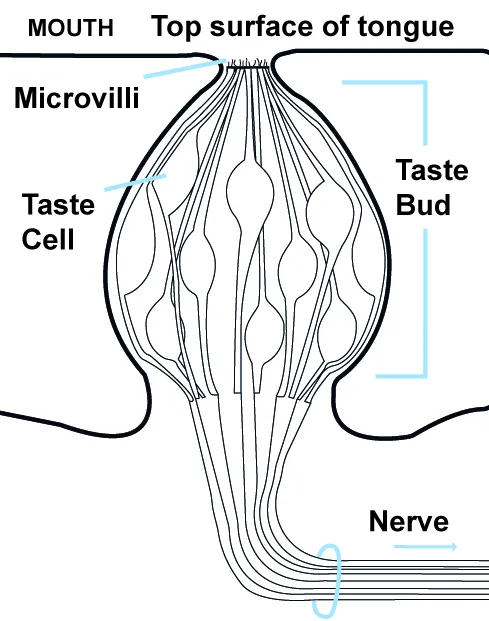
Figure 1: A taste bud as seen under a microscope.
What Can We Taste?
The four main kinds of taste are sweet, sour, salt and bitter. There are specific taste buds for each taste, which tend to be grouped on specific areas of the tongue. So if you wish to experience the full gamut of taste, move the food or drink around in your mouth.
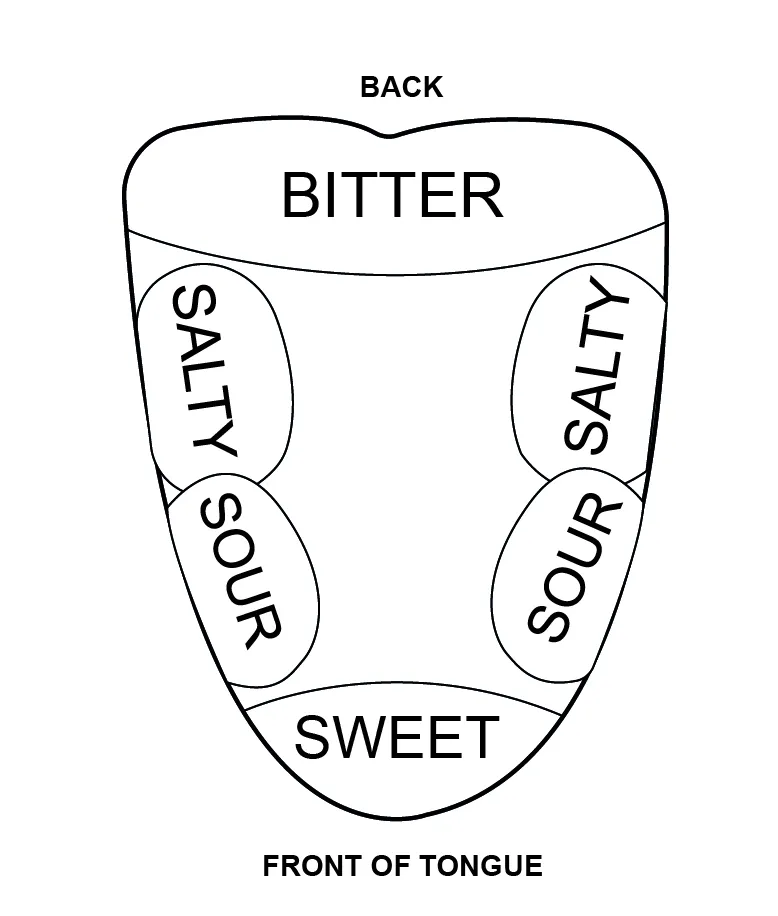
Figure 2: Map of the taste areas on the surface of the tongue.
Sweet taste buds are concentrated at the tip of the tongue, bitter ones at the back of the tongue, and salt and sour ones on the sides of the tongue. Many poisonous plants are bitter. Interestingly, the types of receptors that are stimulated by sweet tastes and those stimulated by bitter tastes seem to signal the same nerves but in slightly different ways. The brain is the computer which decodes the signals.
What we normally describe as taste is really the sum of many sensations in the mouth. Besides sweet, salt, sour and bitter, we can identify a ‘metallic taste’ which stimulates not the taste buds but the secretion of saliva.
Foods such as chili or garlic stimulate a variety of sensory receptors in the mouth, including those that detect heat, which then seem to act in concert with the primary taste. If salivary secretion is stimulated, then the substance dissolves in the saliva and the primary taste buds will fire.
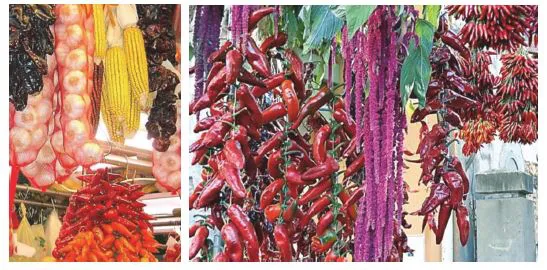
Figure 3: Spanish flavours of garlic, chili and amaranth
People have identified other factors involved in taste too, including umami. Umami seems to add a deliciousness or ‘...
Table of contents
- Title Page
- About the Author
- Dedication
- Copyright Information ©
- Acknowledgement
- Chapter 1
- Chapter 2
- Chapter 3
- Chapter 4
- Chapter 5
- Chapter 6
- Chapter 7
- Chapter 8
- Chapter 9
- Chapter 10
- Chapter 11
- Chapter 12
- Chapter 13
- Chapter 14
- Chapter 15
- Bibliography and Suggested Reading
Frequently asked questions
Yes, you can cancel anytime from the Subscription tab in your account settings on the Perlego website. Your subscription will stay active until the end of your current billing period. Learn how to cancel your subscription
No, books cannot be downloaded as external files, such as PDFs, for use outside of Perlego. However, you can download books within the Perlego app for offline reading on mobile or tablet. Learn how to download books offline
Perlego offers two plans: Essential and Complete
- Essential is ideal for learners and professionals who enjoy exploring a wide range of subjects. Access the Essential Library with 800,000+ trusted titles and best-sellers across business, personal growth, and the humanities. Includes unlimited reading time and Standard Read Aloud voice.
- Complete: Perfect for advanced learners and researchers needing full, unrestricted access. Unlock 1.5M+ books across hundreds of subjects, including academic and specialized titles. The Complete Plan also includes advanced features like Premium Read Aloud and Research Assistant.
We are an online textbook subscription service, where you can get access to an entire online library for less than the price of a single book per month. With over 1.5 million books across 990+ topics, we’ve got you covered! Learn about our mission
Look out for the read-aloud symbol on your next book to see if you can listen to it. The read-aloud tool reads text aloud for you, highlighting the text as it is being read. You can pause it, speed it up and slow it down. Learn more about Read Aloud
Yes! You can use the Perlego app on both iOS and Android devices to read anytime, anywhere — even offline. Perfect for commutes or when you’re on the go.
Please note we cannot support devices running on iOS 13 and Android 7 or earlier. Learn more about using the app
Please note we cannot support devices running on iOS 13 and Android 7 or earlier. Learn more about using the app
Yes, you can access For Goodness' Sake, Let's Talk Sugar by Yvonne Webb in PDF and/or ePUB format, as well as other popular books in Medicine & Nutrition, Dietics & Bariatrics. We have over 1.5 million books available in our catalogue for you to explore.