Some utopian plans have shaped our cities —from England’s New Towns and Garden Cities to the Haussmann plan for Paris and the L’Enfant plan for Washington, DC. But these grand plans are the exception, and seldom turn out as envisioned by the utopian planner. Inviting city neighborhoods are more often works of improvisation on a small scale. This type of bottom-up development gives cities both their character and the ability to respond to sudden change.
Hank Dittmar, urban planner, friend of artists and creatives, sometime rancher, “high priest of town planning” to the Prince of Wales, believed in letting small things happen. Dittmar concluded that big plans were often the problem. Looking at the global cities of the world, he saw a crisis of success, with gentrification and global capital driving up home prices in some cities, while others decayed for lack of investment.
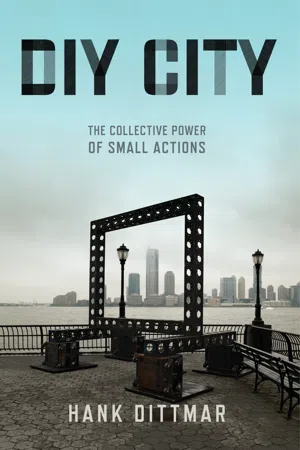
In DIY City, Dittmar explains why individual initiative, small-scale business, and small development matter, using lively stories from his own experience and examples from recent history, such as the revival of Camden Lock in London and the nascent rebirth of Detroit. DIY City, Dittmar’s last original work, captures the lessons he learned throughout the course of his varied career—from transit-oriented development to Lean Urbanism—that can be replicated to create cities where people can flourish.
DIY City is a timely response to the challenges many cities face today, with a short supply of affordable housing, continued gentrification, and offshore investment. Dittmar’s answer to this crisis is to make Do-It-Yourself the norm rather than the exception by removing the barriers to small-scale building and local business. The message of DIY City can offer hope to anyone who cares about cities.
- 166 pages
- English
- ePUB (mobile friendly)
- Available on iOS & Android
eBook - ePub
About this book
Information
Topic
ArchitectureSubtopic
Architecture GeneralChapter 1
Cities Are Back
One of the strangest controversies in America in the Clinton years was the furor over “Midnight Basketball.” This innocuous community-based initiative aimed to give inner-city youth something to do in the evenings in order to keep them away from gang life and off the streets. Yet it became a symbol for Democrats’ coddling of urban youth, and it perfectly expressed the distaste and fear of cities that characterized the American national discourse up through the mid-1990s. Similar dystopian imaginings ruled in Great Britain during the Thatcher years, with fears about so-called sink estates (public housing with high rates of poverty) and the decline of once-powerful manufacturing centers.
Within a decade, however, Americans elected a community organizer from Chicago as president, and within two decades pundits were decrying gentrification and rising home prices in inner cities in the United States and Canada, Europe, and Australia.
Here and now, in what is already being called the Century of the City, it seems mighty strange that during the eight years of his presidency (1993–2001), William Jefferson Clinton never used the words city or urban in his speeches or other public utterances. The stock of cities had sunk so low that Clinton’s message mavens decreed that he could mention communities or neighborhoods but not the cities of which they were a part. Urban places prompted mental images of crime, riots, and menacing people of color.
This public relations dictum was a legacy of decades of city shaming, from the race riots of the sixties through the well-chronicled garbage strikes and bankruptcies of New York City, and of public policy favoring the growing suburbs. Cities were characterized as dangerous places and were thought to be in terminal decline, and politicians of both parties competed for the suburban vote.
As a city lover, I hated all the demonizing. To me, cities were lively cultural centers and places of diversity and promise. I had begun my career as an outreach worker with street-gang kids in Chicago’s inner city and had lived in Los Angeles and San Francisco. During Bill Clinton’s presidency, I was leading a nonprofit coalition in Washington, DC, focused on urban transportation policy. True, when I moved to DC, it was led by a crack-addicted night owl of a mayor, and the drinking water was intermittently polluted with E. coli bacteria, but the townhouses of Capitol Hill and the apartments of DuPont Circle and Kalorama offered a quality of life that couldn’t be beat.
Among the public policies that fueled the suburban explosion in postwar America were low-interest Veterans’ Administration loans enabling returning servicemen to buy homes, the mortgage interest tax deduction favoring home ownership, and the building of interstate highways that offered quick access to these new bedroom communities. These subsidies all primed the pump for suburbia and prompted the middle-class flight and tax drain that left the inner cities increasingly segregated and poor.
I would like to think that our campaigns against sprawl and for better urban transport, improved public housing, and city living in mixed-use neighborhoods were the determining factor in a profound urban rebirth. It would be nice to believe that research and activism helped to reverse the anti-urban prejudice that had infected the home-buying public, the media, and national politicians.
Actually, though, I suspect that it was television and films that turned the tide, by depicting city living as alluring and attractive to my generation of young adults. Yes, I put the urban revival down to TV series like Seinfeld, Sex and the City, and Friends and to films like Bridget Jones’s Diary.
Hollywood had produced decades of films like Panic in Needle Park, Taxi Driver, and Escape from New York that painted a dystopian vision of urban conditions, alongside long-running series such as My Three Sons, The Brady Bunch, and Family Ties that idealized life in leafy white suburbs.
Seinfeld and Friends changed all that, depicting smart, quippy, and good-looking young singles who lived in apartments and hung out in diners, cafés, and bars. They were having fun, doing interesting work, and seemed to live in a milieu filled entirely with other attractive, friendly young adults. A generation growing up in the suburbs saw this picture and responded.
The lifestyle of these urban sitcoms was a sanitized version of what my generation had experienced moving to inner-city Manhattan, London, San Francisco, or Los Angeles in the seventies and eighties. City living offered excitement, music, art, and above all, cheap rent. People inhabited disused warehouses, storefronts, walk-up apartments, and residential hotels. Perhaps we were “slumming,” but it turns out that we were taking the time to explore just what we wanted to be and using what seemed to be the open terrain of the city to do so.
The people who wrote those sitcoms and films, acted in them, and composed the soundtracks lived in warehouses and walk-ups and worked at Second City or the Actor’s Studio or scrabbled around LA trying to sell a script. When it came time to write the story, they wrote the story of their city life, cleaned up and romanticized for TV.
The effect began to be noticeable in the nineties, as young bankers, lawyers, and media types started pricing out both working-class people and artists for flats in Manhattan, San Francisco, and London’s Islington. Favorite restaurants began to fill up, and new ones opened as steak-and-sushi joints, and concept restaurants with ambitious chefs moved in. Storefronts once occupied by makeshift galleries or flats got remade into upscale chain retail. And former shot-and-beer bars and working people’s pubs began to feature designer cocktails.
The twenty-somethings were followed by middle-class hipsters sniffing out where to invest. The government took note as well, seeking to prop up the newly fashionable creative economy with cultural institutions and support for tech businesses.
Cities were cool, and certain cities were especially cool; cities with downtown cred, universities, and cultural institutions all seemed to launch first in the urban revival. It turned out that the presence of both mainstream arts culture and a productive arts environment was as important to city vitality as bridges, tunnels, and subway systems.
Close-in urban neighborhoods once thought too gritty became desirable, and the old four-step gentrification process—risk-oblivious artists and gays, followed by risk-aware young people, then by risk-averse dentists investing in property, and finally by big developers and chain stores—became a two-step process, with government-backed regeneration companies and investors paving the way for the big property developers.
So the thing city lovers had long been waiting for finally happened, and urban districts were on the upswing, initially in world-facing metropolises including London, New York, the San Francisco Bay Area, Singapore, Vancouver, Toronto, Melbourne, and Berlin. Real estate companies began to tout investing in the twenty-four-hour city. Posh magazines began to publish city livability indexes, and cities began to compete to get on them.
Urban rock stars emerged to guide city leaders in becoming cool. Urban theorist Richard Florida promoted the “creative economy,” a concept based on academic research showing that cities with clusters of so-called cultural creatives—media, architects, and professionals like accountants and bankers—were outperforming cities without such agglomerations. Jan Gehl got famous reminding everyone of what used to be common sense: that streets were for people, not cars. Various South American mayors developed lucrative speaking careers and obtained Harvard posts based on building busways and pedestrianizing city precincts.
When centuries of soot were scraped off St. Paul’s Cathedral, Sir Christopher Wren’s masterpiece in London, it seemed a metaphor for the bright and shiny future that was in store for historic cities worldwide as the century turned. City-center populations were growing in big and even medium-sized cities in the developed world. City economies were booming in these so-called creative cities, which were magnets for young people, tech industry, and finance and media. Crime was way down.
Cities that had been seen as dangerous, dirty, and polluting were now considered vibrant, lively, and sustainable. Research began to show that urban residents contribute fewer pollutants on a per capita basis than suburbanites, as they drive less, occupy less space, and are more likely to live in multifamily dwellings. Business responded, with many of the new tech giants choosing to locate in urban centers. Facebook and Google notably shunned the suburban corporate campuses favored by companies in the late twentieth century. Many Fortune 500 companies that had built such campuses have chosen to relocate to downtowns. In recent years, McDonald’s, Motorola, General Electric, Aetna, and Marriott International all have abandoned the suburbs for city centers in Chicago, Boston, and Manhattan.
These trends combined with an explosion of mobile investment capital across the world, generated by an emergent Asian middle class and by the concentration of wealth in the Middle East, in former Soviet Bloc countries, and in booming Asian countries. After the major recession that began in 2007, it seemed that property investment in “hot” cities in stable countries like Britain, the United States, Canada, and Australia was the best way to secure one’s capital and generate double-digit returns.
The glass-sheathed residential tower—a property type developed in Singapore—soon began to pop up in all of the popular cities: Melbourne and Sydney in Australia, Vancouver and Toronto in Canada, London, and New York. Funded by offshore companies and marketed overseas, these luxury towers became ubiquitous. According to the Guardian, 40 percent of all new-build properties in 2016 in the London Borough of Westminster went to foreign buyers, and all of the apartments in the Heygate development in South London went to foreign buyers.
In Canada, Vancouver and Toronto have been particular targets for foreign buyers, with many luxury properties marketed solely in Asia. Data from Vancouver shows that 40 percent of the high-end market was owned by offshore investors prior to the imposition of a recent “empty homes” tax on nonresident owners.1 (The Province of British Columbia has also instituted a tax on speculative investment; both taxes aim to raise revenue to support the development of affordable housing while encouraging absentee owners to rent out their properties.) This point was driven home to me one evening in 2008 when I dined at the Vancouver home of my colleague and collaborator Dr. Anthony Perl. Anthony lives in a so-called point tower (a tall, slender building with floors built around a central elevator core and minimal hallways) on the Vancouver waterfront. When I arrived I noticed how quiet his neighborhood was, even in the early evening. Anthony confirmed that he was one of only a few people resident in his tower and that most units were bought and sold as investments without ever being occupied.
As I walked back to my hotel through a dense district of tall buildings, I reflected on how similar the eerie quiet was to that I experienced when I visited my friend Dominic Richards just off Sloane Square in London, another district largely in the hands of wealthy absentee owners as second and third homes.2 This pattern of ownership is being repeated in big cities around the world, with predictable consequences for city neighborhoods. In addition to the affordable-housing crunch created if much of the available housing stock is owned by people who never occupy it, crime or at least neighborhood decay hurts the entire community. A group of citizens in Vancouver created a blog called Beautiful Empty Homes to call attention to neighborhoods where older people who were surrounded by unoccupied houses felt unsafe and to such extreme examples as a million-dollar house that had become home to a den of coyotes.3
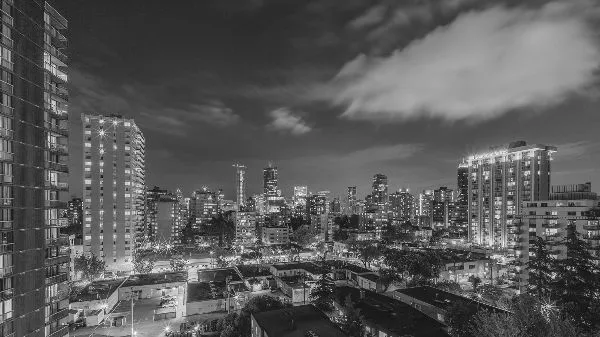
Residential towers along the Vancouver, BC, waterfront. (Credit: photo by Christopher Woo.)
Throughout most of history, housing was shelter, and even for those who made their livings as builders and developers, the aim was to produce a steady income from rents. Even pension funds held property to derive predictable income from rents, not from uplift in value. In fact, value remained mostly static.
In the past thirty years, though, property has been transformed and commodified into a number of well-defined investment vehicles. For most Britons and most North Americans, their biggest investment is in their home—more than their savings or retirement accounts. In big, successful cities, property and land have become the place for international investors to stash cash, in hopes of a quick and significant return and also because real estate is seen as a safe harbor.
This has led to two major crises: unaffordable housing and increased inequality. At the same time, this conversion of property into investment undermines cities as successful places to live, work, and create. The impact is especially severe for young adults, the so-called millennial generation. A report by the United Kingdom’s Resolution Foundation found
the generation currently aged 18–36 are typically spending over a third of their post-tax income on rent or about 12 percent on mortgages, compared with 5–10 percent of income spent by their grandparents in the 1960s and 1970s. Despite spending more, young people today are more likely to live in overcrowded and smaller spaces, and face longer journeys to work—commuting for the equivalent of three days a year more than their parents.4
In 1996, it took 3.6 times the annual wage to buy a home in the UK; in mid-2019, it takes 6 times annual earnings and 8 times annual wages in London. The picture is equally dire when it comes to renting, with average renters in London spending up to 61 percent of their income on rent, depending on neighborhood. Of course, as we enter 2020 and Britain awaits the resolution of Brexit, there is some fluctuation in these numbers, but the overall change in affordability over two decades still excludes those not in the highest-earning categories from urban life.
The affordability crunch hits “hot” metro areas in the United States just as hard. According to the Paragon Real Estate Group, just 21 percent of San Francisco Bay Area households could afford to buy a house at the median sales price in 2017, and in the city and county of San Francisco, just 12 percent could afford the median-priced home.
As home prices increase, the...
Table of contents
- Cover
- Title Page
- Copyright Page
- Contents
- Acknowledgments
- Introduction
- Chapter 1: Cities Are Back
- Chapter 2: Sometimes the Small Stuff Sticks: Learning to Improvise
- Chapter 3: Do It Yourself: An Enduring Idea
- Chapter 4: Doubling Up: Lessons for Cities from Life during Wartime
- Chapter 5: Slack Is a Good Thing
- Chapter 6: When Meanwhile Becomes Permanent: Eric Reynolds and London’s Revival
- Chapter 7: Making Spaces for the Arts
- Chapter 8: Filling in the Missing Pieces: Lean Urbanism
- Chapter 9: Too Small to Matter? The Persistence of the Informal
- Notes
- About the Author
- Photo Insert
Trusted by 375,005 students
Access to over 1.5 million titles for a fair monthly price.
Study more efficiently using our study tools.
Frequently asked questions
Yes, you can cancel anytime from the Subscription tab in your account settings on the Perlego website. Your subscription will stay active until the end of your current billing period. Learn how to cancel your subscription
No, books cannot be downloaded as external files, such as PDFs, for use outside of Perlego. However, you can download books within the Perlego app for offline reading on mobile or tablet. Learn how to download books offline
Perlego offers two plans: Essential and Complete
- Essential is ideal for learners and professionals who enjoy exploring a wide range of subjects. Access the Essential Library with 800,000+ trusted titles and best-sellers across business, personal growth, and the humanities. Includes unlimited reading time and Standard Read Aloud voice.
- Complete: Perfect for advanced learners and researchers needing full, unrestricted access. Unlock 1.5M+ books across hundreds of subjects, including academic and specialized titles. The Complete Plan also includes advanced features like Premium Read Aloud and Research Assistant.
We are an online textbook subscription service, where you can get access to an entire online library for less than the price of a single book per month. With over 1.5 million books across 990+ topics, we’ve got you covered! Learn about our mission
Look out for the read-aloud symbol on your next book to see if you can listen to it. The read-aloud tool reads text aloud for you, highlighting the text as it is being read. You can pause it, speed it up and slow it down. Learn more about Read Aloud
Yes! You can use the Perlego app on both iOS and Android devices to read anytime, anywhere — even offline. Perfect for commutes or when you’re on the go.
Please note we cannot support devices running on iOS 13 and Android 7 or earlier. Learn more about using the app
Please note we cannot support devices running on iOS 13 and Android 7 or earlier. Learn more about using the app
Yes, you can access DIY City by Hank Dittmar in PDF and/or ePUB format, as well as other popular books in Architecture & Architecture General. We have over 1.5 million books available in our catalogue for you to explore.